As shadows lengthened on the evening of September 26, 1580, the weary residents of Plymouth Harbour witnessed an extraordinary sight: the battered silhouette of the Golden Hind emerging from the horizon, sails tattered but spirit unbroken. Onboard was Francis Drake, a man who had left these shores as a humble mariner and now returned triumphant, the first Englishman to navigate the globe. It was not just a homecoming but the culmination of a saga woven with peril, discovery, and audacity. Let us step aboard and journey through history to uncover the untold legend of how a Tudor sailor came home after circling the world.
The Voyage Begins
In the December chill of 1577, five ships set sail from Plymouth under the command of Francis Drake, a merchant’s son born in Tavistock. The mission, carefully shrouded in secrecy, was authorized by Queen Elizabeth I herself. While officially aimed at exploring the South American coastline, rumors of a more daring intention whispered through the corridors of power—raiding Spanish ports and treasure fleets.
The fleet faced immediate challenges; storms battered the Expedition and forced the Marigold and the Elizabeth to break formation, never to reunite. By the time Drake reached the treacherous waters of the Strait of Magellan, only the Golden Hind held fast. Yet even nature's tempests could not deter Drake, who pressed on into the Pacific, a place no Englishman had yet ventured.
Jewels of the Pacific
A daring pirate to the Spanish, a hero to the English—Drake’s exploits in the Pacific have entered into legend. The plunder of the Spanish galleon Cacafuego off the coast of Peru in March 1579 was a particular triumph. Laden with more than 26 tons of silver, gold, and precious stones, the hold of the Golden Hind sparkled with a wealth that promised to fill Queen Elizabeth’s coffers or bankrupt Spain. The bounty from this single capture was worth half of England’s annual revenue at the time.
Read next: The Day a Stuart King Walked Calmly to His Own Execution
But Drake’s journey was not purely about avarice. He became the first Englishman to visit the Spice Islands, where he forged treaties with local rulers. These agreements secured valuable knowledge and resources, boosting England’s mercantile interests while unwittingly laying the groundwork for future imperial ambition.
The “Crowning” Moment
Each dawn brought new uncertainties as sailing unexplored waters tested the hardy sailors’ mettle. Yet finally, with Asia vanished astern and Africa slipping by to port, Europe’s recognized coastline drew them home. Nearly three years had passed since Drake’s departure, and by autumn 1580, the trials had whittled the Golden Hind down to a resilient core of 56 men.
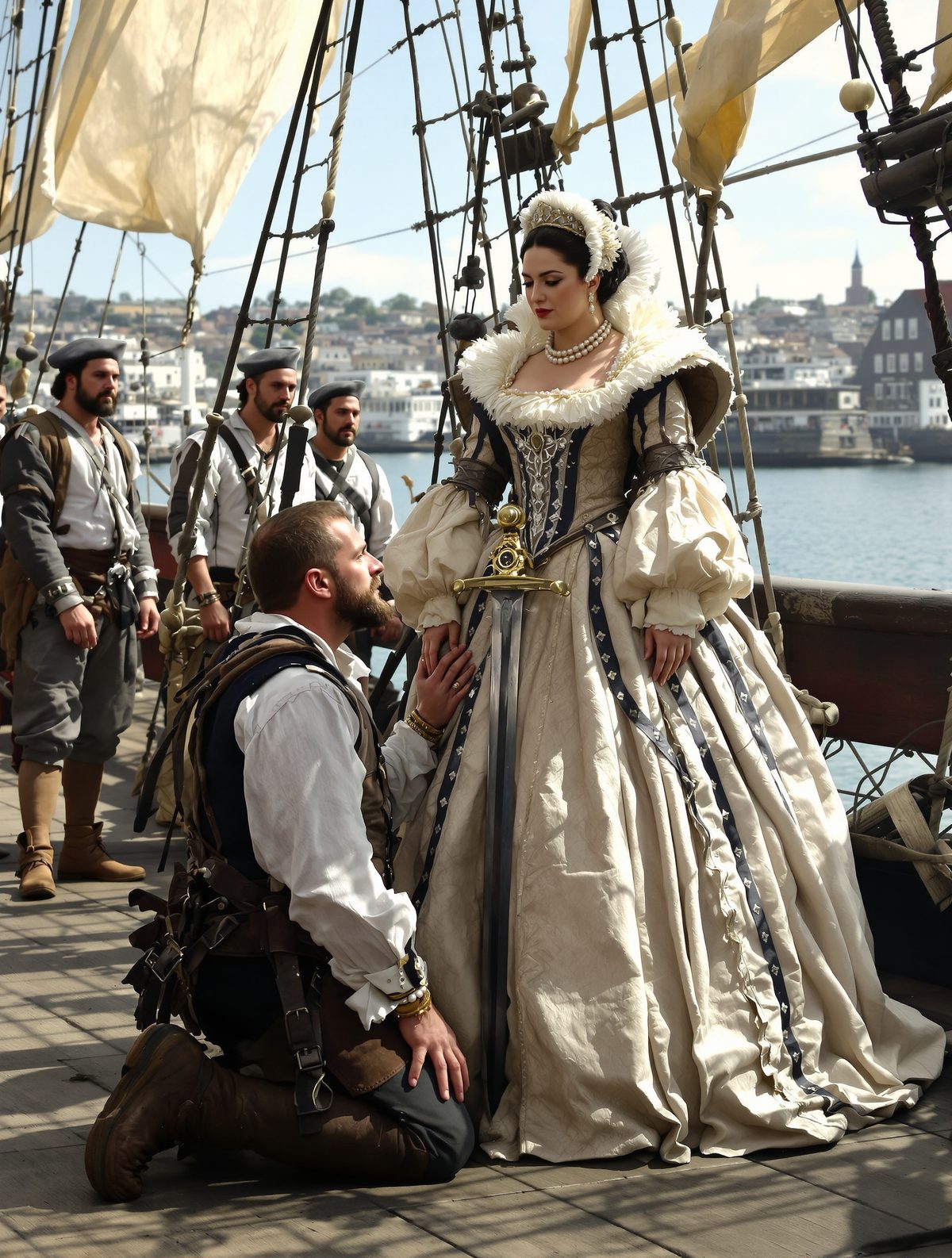
Drake’s homecoming was of such significance that Queen Elizabeth herself came to Plymouth. The audacity of the voyage, the riches it had amassed, turned skepticism into admiration. Elizabeth ascended onto the barnacled deck and, in a theatrical gesture of royal approval, knighted Drake onboard. It was an honour that not only affirmed the legitimacy of his actions but also signaled England's rising willingness to challenge Iberian dominance at sea.
Echoes in the Wind
To step into the shoes of an Englishman in 1580 was to find oneself at a seismic shift in national identity and ambition. Francis Drake’s circumnavigation did more than enrich coffers; it opened the realm’s eyes to global possibilities. He had proven that England could navigate beyond the cape of continental Europe, unlocking a new world and setting a course symbolically realized by the future British Empire.
A little-known but poignant fact about Drake’s return is that aboard the Golden Hind was a young black slave named Diego, who had joined the crew during their South American escapades. History remembers him as the first African to circumnavigate the globe, an extraordinary though often-overlooked detail which highlights the interconnectedness of global narratives long before modern dialogues of diversity and inclusion.
Why This Matters Today
The voyage of Francis Drake was more than a nautical accomplishment; it was a declaration of spirited resilience and daring in the face of the unknown. It reminds us today of the power of human curiosity, the audacity to venture beyond one's horizon despite the cost, an ethos that continues to drive explorers of both the seas and the stars.
As the world stands on the brink of new frontiers—whether through technological advancement or space exploration—Drake’s indomitable journey echoes. It challenges us to seek knowledge and opportunity, to harness our restless ingenuity just as those Tudor sailors did when they braved the swaying, salty path around the planet. What began on that barnacled deck in 1580 reshaped history, and its reverberations remind us that the boundaries of today need not be the limits of tomorrow.