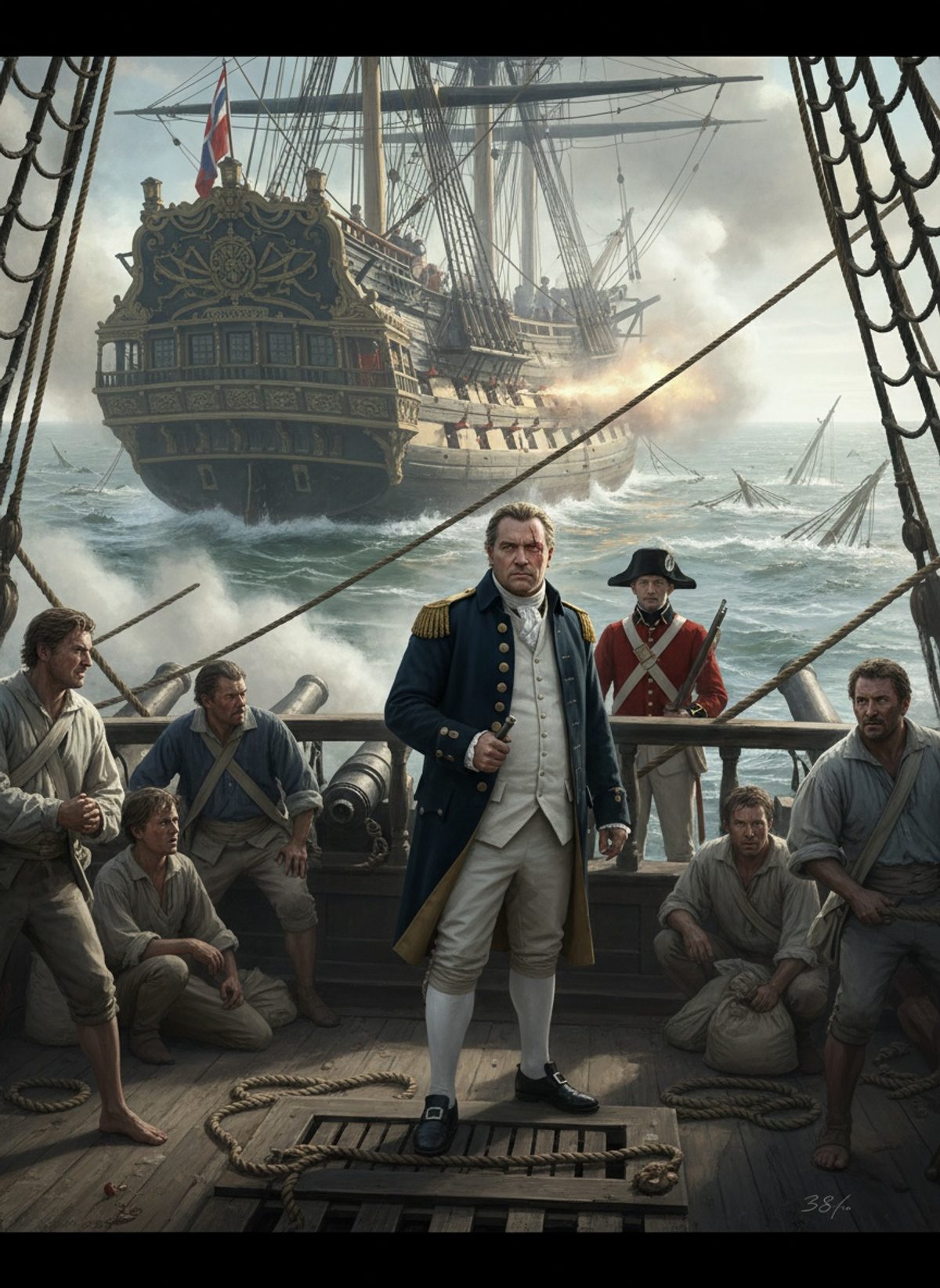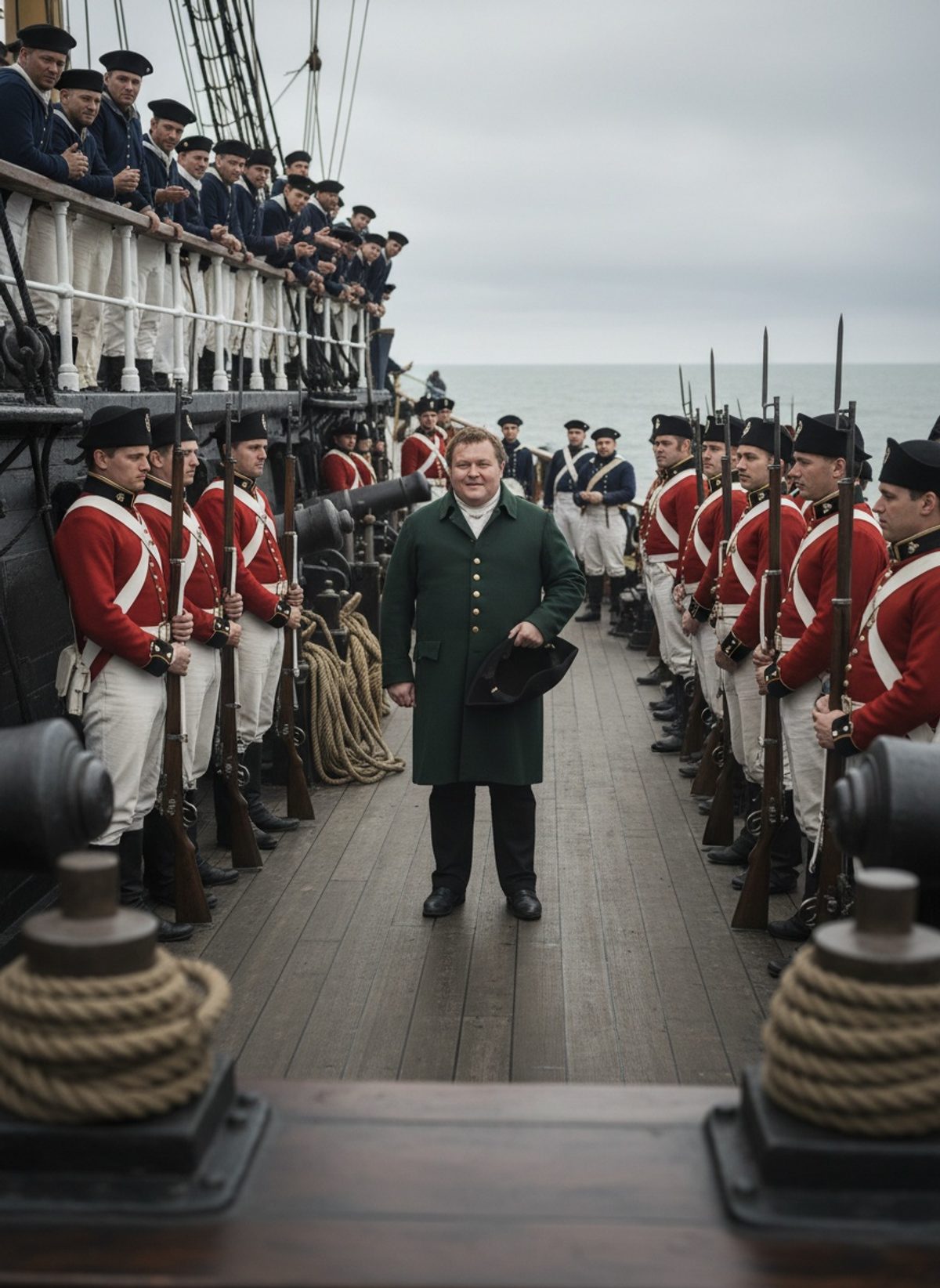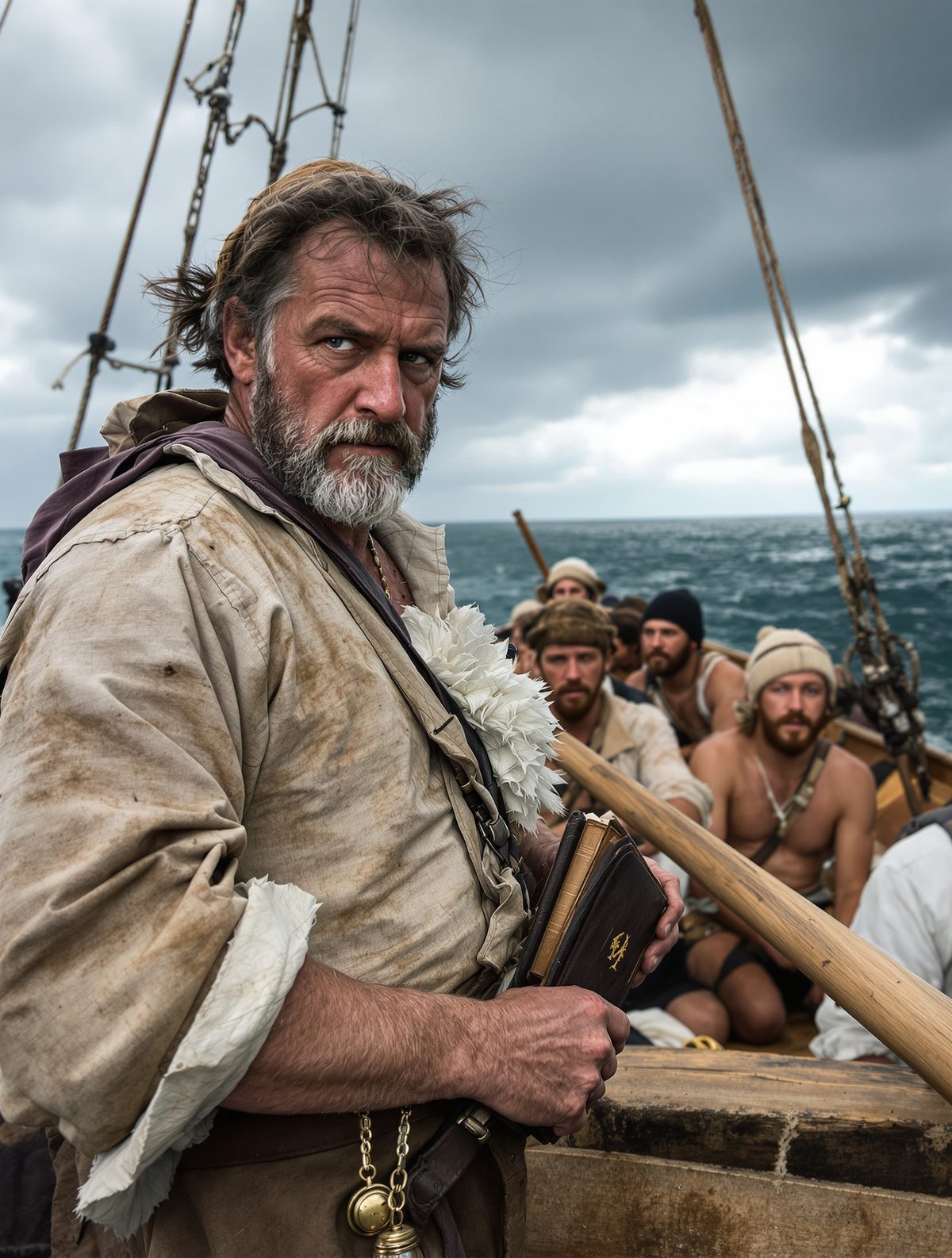
As dawn broke over the endless expanse of the Pacific Ocean on April 28, 1789, a group of sullen men crowded the deck of HMS Bounty. The scent of salt mingled with tension in the air, as the ship's captain, William Bligh, confronted his greatest nightmare. With the crack of gunfire, Bligh found himself forcefully evicted from his own ship by mutineers led by his second-in-command, Fletcher Christian. Cast adrift in a forlorn 23-foot launch with 18 loyalists, an iron will, and scarce provisions, Bligh embarked on one of the most extraordinary voyages in naval history.
The Mutiny: Betrayal on the High Seas
The Bounty had sailed from England in December 1787, tasked with transporting breadfruit plants from Tahiti to the West Indies. But the tropical paradise of Tahiti had enchanted the crew, who resented leaving its shores for the hardships of sea life. Fletcher Christian, once Bligh's favored officer, led the mutiny fueled by this longing for freedom and resentment towards Bligh's strict command. Despite his meticulous planning, Christian could not foresee that his rebellion would set the stage for one of the greatest feats of survival ever recorded.
At dawn, Bligh and his men were thrust into the frail launch with scant provisions: 150 pounds of bread, two quart casks of water, a musket, ammunition, and some tools. The mutineers offered a sextant but no charts. Perhaps most astonishingly, Bligh retained his pocket watch, an instrument that would become essential to their navigation.
An Iron Will: Navigating Without Charts
Determined to reach safety, Bligh aimed for the Dutch East Indies, over 3,600 miles away. With no charts to guide them, he relied on memory, a testament to his years of naval experience. He steered the small craft west toward Tofua, hoping to gather fresh supplies. The plan, however, was thwarted when islanders attacked the group, killing a crew member. Facing starvation and only enough rations for five days, Bligh's leadership was put to the ultimate test.
Read next: The Day a British Captain Stood Between Slaves and the Sea
Bligh's remarkable navigational skills set him apart. Using his pocket watch for celestial navigation, he plotted daily courses with precision. The crew sailed with meticulous discipline, covering an average of 77 miles a day—a journey punctuated by relentless storms and the relentless sun. Morale was maintained through Bligh's blend of authority and empathy; he distributed scant rations while allowing no discord among survivors.
The Perilous Passage to Salvation
Starvation loomed, yet their journey was punctuated by miraculous moments. On May 2, they reached the rugged cliffs of Fiji, forced offshore by hostile natives. While their presence had to remain a well-kept secret from the territorial islanders, this glimpse of land invigorated the men. The journey continued through turbulent waters; ravaging waves, strong winds, and the incessant hunger gnawing their strength.
Perhaps the most striking aspect of the voyage was Bligh's leadership in maintaining not only order, but perseverance against insurmountable odds. Beyond physical sustenance, he provided hope; a pillar of resolve rooted deeply in his conviction of survival. His men, galvanized by this belief, rowed steadily towards their distant salvation.
Journey’s End: Land in Sight
After 47 days adrift, the men sighted the distant mountains of Timor on June 14, 1789. Exhausted and barely clinging to life, they made their way to the Dutch port of Coupang. Their incredible journey, having lost only one man, had set a new benchmark for human endurance and seamanship.
Considered extraordinarily meticulous by contemporary standards, Bligh's navigation from memory alone remains a marvel. His resilient leadership, tenacity, and expertise as a seaman plotted their course from the brink of death to the shores of survival.
The Legacy of Seamanship and Survival
The voyage of Bligh and his loyalists is a testimony to the human spirit’s unyielding resolve in the face of adversity. A narrative often overshadowed by its infamous antecedent, the Bounty mutiny, Bligh’s journey carved a tale of triumph from betrayal. Today, this odyssey holds lessons in leadership, the resilience of human spirit, and the relentless claim to survival.
The Annals of Royal Navy seamanship celebrate many acts of gallantry, yet few match the extraordinary feat achieved by Bligh and his men. His story encourages a lasting reflection on leadership under duress. In the face of uncertainty, where survival depends not on might but on mind, Bligh's journey across the Pacific Ocean resonates as a powerful reminder of determination, the strength in unity, and the wonders that resourceful seamanship can achieve.
Even today, the names of Bligh and his extraordinary voyage echo through the ages, reminding us that history's forgotten heroes often precede its celebrated luminaries. Their journey, untaught in many textbooks, reveals the profound depths of human endeavor and its perpetual quest to overcome the insurmountable.