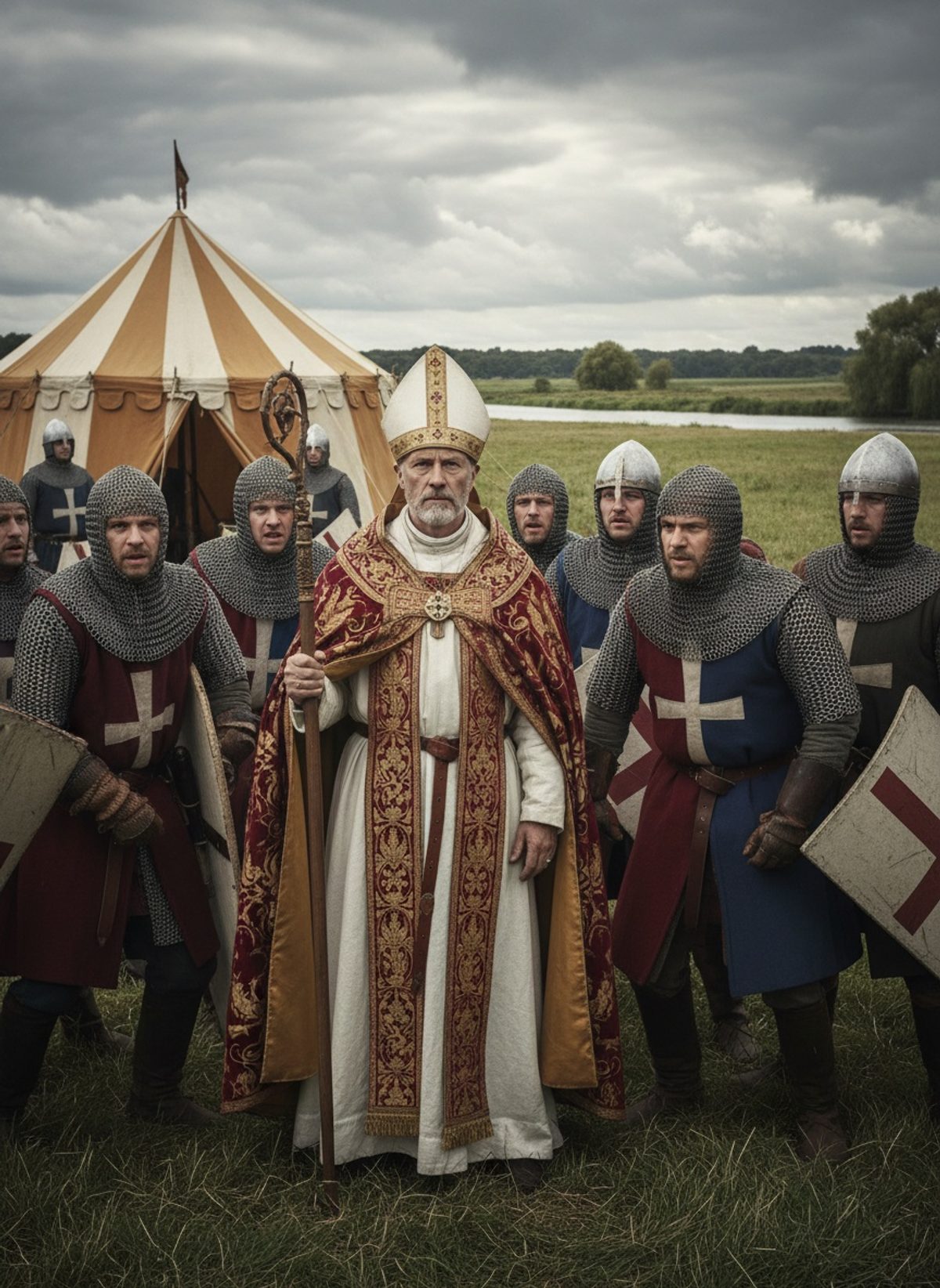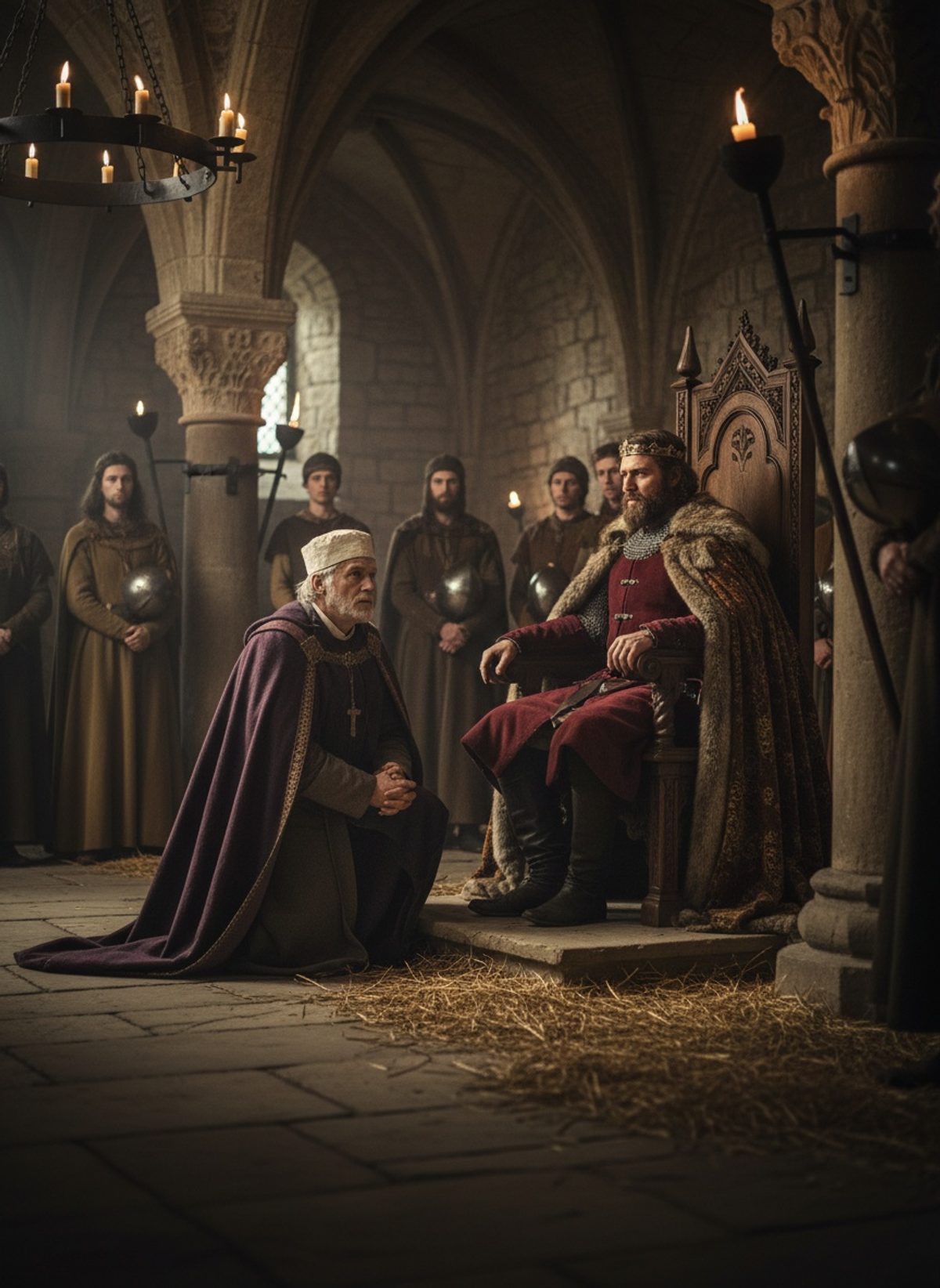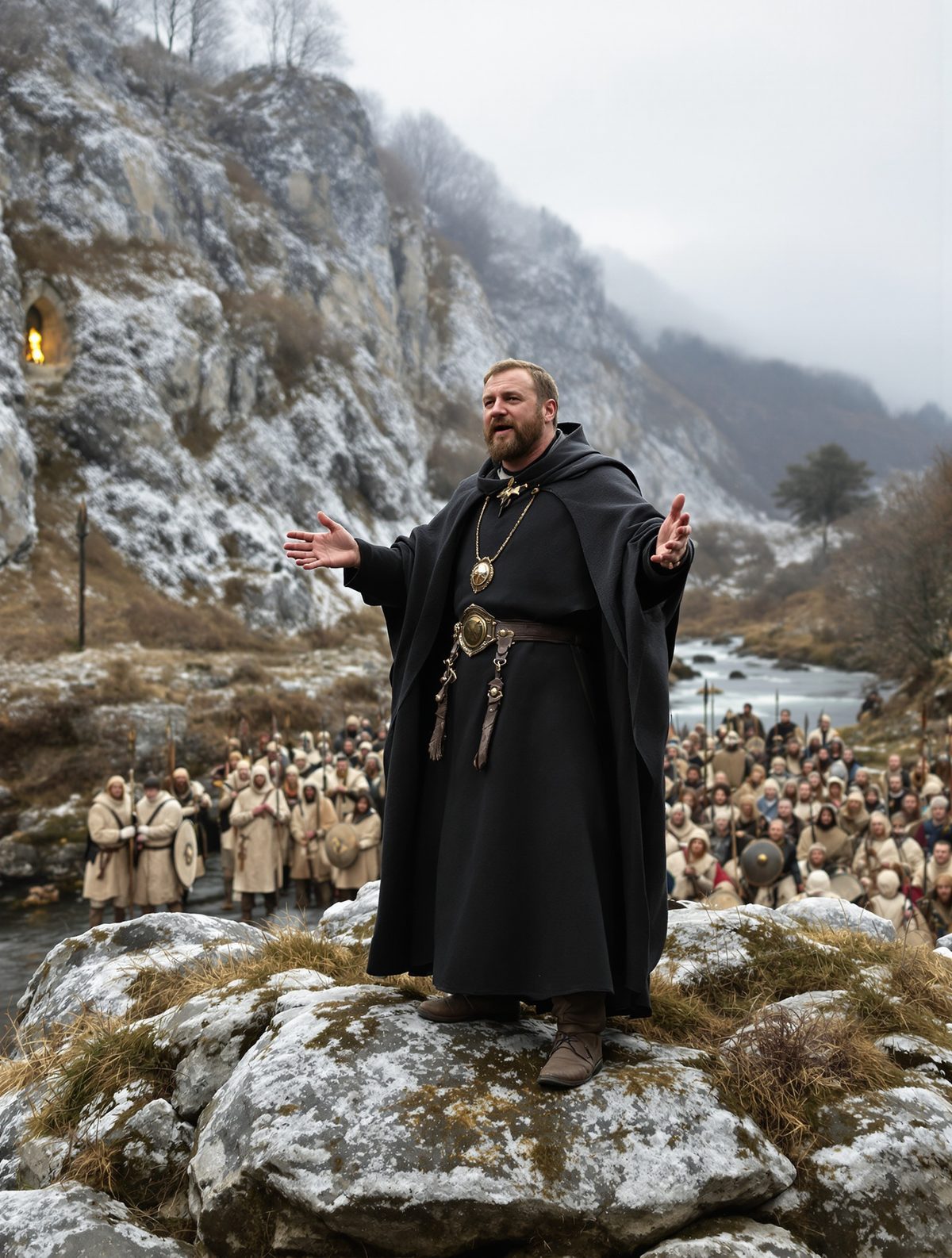
In the late medieval winter of 1188, the unforgiving winds were howling through the jagged peaks and deep valleys of Wales. The land, a tapestry of mesmerizing beauty and untamed savagery, held its breath for the man about to step into the lion's den. Gerald of Wales, a half-Norman, half-Welsh cleric, undertook a journey that would stun all of Europe. Armed with nothing but his sharp wit and a silver tongue, he ventured to recruit soldiers for the Third Crusade. What ensued was one of the most audacious and astonishing conversions in history, captivating both his contemporaries and future generations alike.
The Monk with Two Faces
Gerald of Wales, or Geraldus Cambrensis, was born around 1146 in Manorbier Castle, a stone sentinel on the Pembrokeshire coast. His heritage was as turbulent as the sea crashing against his birthplace—his mother was Welsh, his father a Norman knight. He grew up straddling both cultures, never fully embraced by either. Yet, this dual identity forged him into a unique figure, allowing him to negotiate the intricate political landscape of his time with savvy resilience.
Despite his monastic life, Gerald's ambitions reached far beyond the abbey cloisters. In 1188, he joined the Archbishop of Canterbury, Baldwin of Forde, on a preaching tour through the hostile terrain of Wales. Their mission? To inspire warriors to join the Third Crusade following the capture of Jerusalem by Saladin in 1187. Although the Europeans were burning with the fervor of religious zeal, the wild Welsh were known for their fierce independence and a history marked with deep-seated suspicion of the English crown. Gerald's task was more than monumental—it was borderline impossible.
Into the Heart of Wales
The journey commenced on a frosty February morning, under a pale, reluctant sun. The stark landscape sprawled before them, wild as the formidable brigands wielding broadswords, or so the legends went. Gerald quickly discovered the bitter realities of his quest: treacherous, swollen rivers defying crossing, rugged mountains challenging the most steadfast horses, and local chieftains whose trust was scarcer than a midsummer snowfall.
Read next: The Day a Queen Walked Into a Rebel Camp Alone
Yet, Gerald possessed a weapon powerful enough to sway destinies—his words. Fluent in Welsh, he leveraged tales of ancestral heroes and holy righteousness to ignite the flames of fervor. In each village, from the stony castles guarding strategic passes to thatched hamlets hidden in secluded valleys, Gerald's speeches grew legendary. He wove a narrative that entwined Welsh storied valor with the divine purpose of reclaiming the Holy Land. His eloquence was a bridge over centuries of enmity, winning the unthinkable trust of many.
Shifting Allegiances
Despite his Norman connections, Gerald was endowed with an inherent understanding of Welsh psyche. He entreated the people not as subjects but as equals, invoking cultural pride and promising spiritual salvation. Some chieftains listened, intrigued by the promise of absolution and remembrance in the annals of time as crusaders of Christendom.
One of the mesmerized was Rhys ap Gruffydd, the ruling prince in the kingdom of Deheubarth. Gerald's momentous oratory and delicate negotiation skills secured Rhys's allegiance—a pivotal maneuver which many thought impossible. With Rhys's endorsement, Gerald's influence surged, transforming lingering skepticism into a groundbreaking moment of unity as many warriors donned the crusader's cross.
The Gathering Storm
The summer of 1188 saw the choir of three thousand Welsh voices echoing across the lush landscapes, committed to the cause that transcended local strife. This was not just a victory of politics but of spirituality, a narrative now not solely English nor Welsh but one that bound together fates in a shared holy mission. Historians might wonder at these men, initially perceived as the periphery of medieval Christendom, now galvanized into the heart of a European struggle.
Gerald knew the risks of whichever allegiance he claimed. Critics sought to deride him, but his tenacity was unyielding, anchored by personal conviction and a scholar's mind enamored with the Church's mission. As these men journeyed south towards the docks, a sense of shared purpose took root, an instinctual understanding that they were part of a transformative expedition.
Legacy of the Lion's Den
Why does this matter today? Gerald of Wales's journey offers a window into the power of words to bridge divides. His success reminds us that empathy can disarm hostility, and skilled negotiation can convert adversaries into allies. In an age of increasing polarization, his story shines as a beacon of the potential to unite disparate peoples toward a greater cause.
Gerald of Wales, an ambitious monk with a foot in two worlds, achieved what seemed impossible: he reconciled fierce independents to the collective good with nothing more than conviction and eloquence. His journey through a rugged, recalcitrant homeland is not just about numbers or military maneuvers but about facing daunting uncertainties and prevailing. Stand and marvel, for Britain in 1188 was irrevocably transformed by the steadfast belief of one man who walked into the lion's den and emerged victorious. Europe's thrumming heart heard the echoes for generations thereafter, and in those quiet whispers of history, we find the lessons he left unwritten.