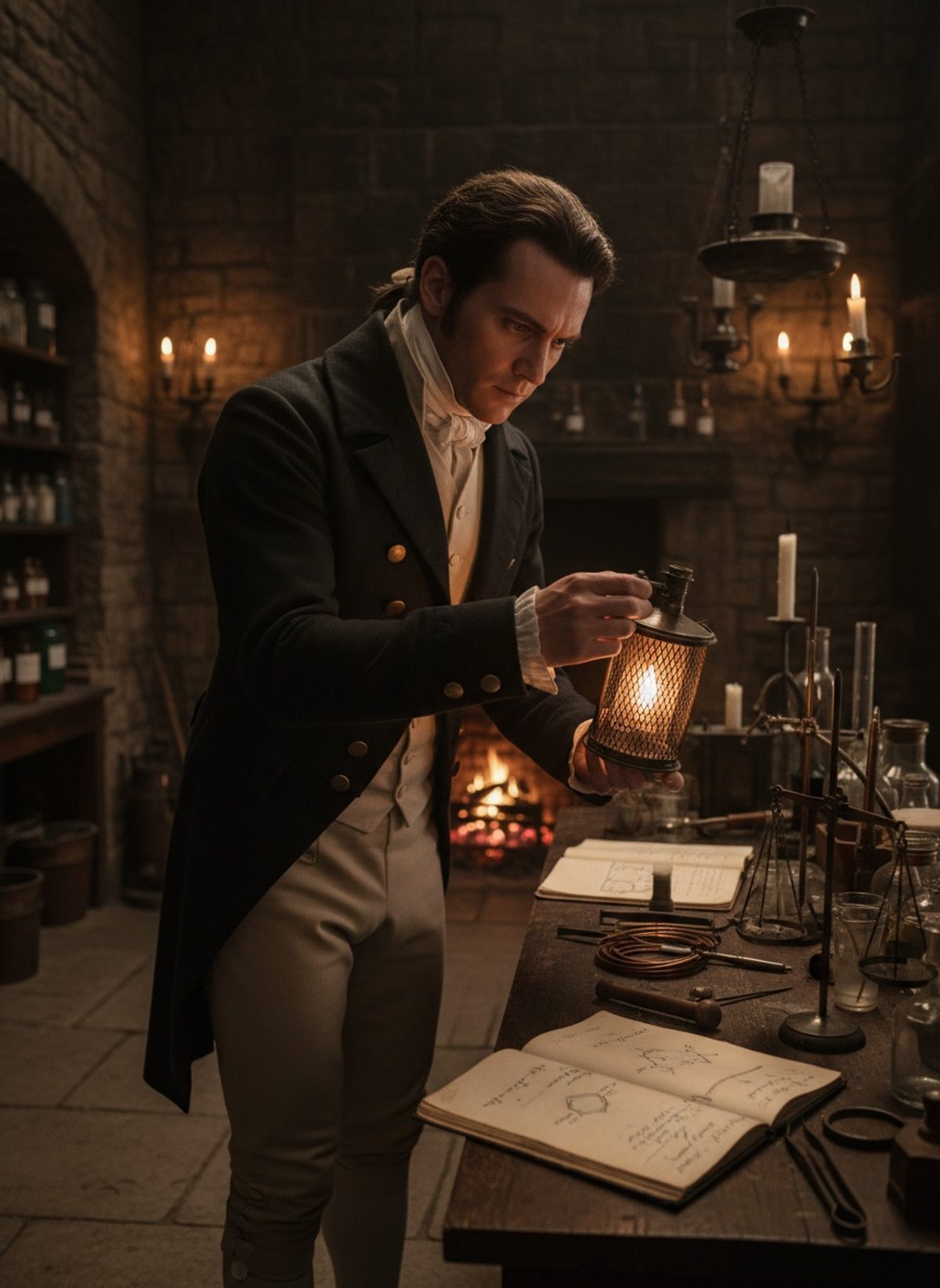
In the bustling streets of 18th-century York, where cobblestones echoed with the clatter of horse-drawn carriages and the air buzzed with the innovations of the Industrial Revolution, a profound silence resided within the world of one extraordinary young man. John Goodricke, a deaf teenager whose contributions to astronomy would ripple through the centuries, found his voice amidst the stars. Born into a world that often underestimated individuals with disabilities, Goodricke defied expectations and etched his name into the annals of scientific history.
The Silent Observer
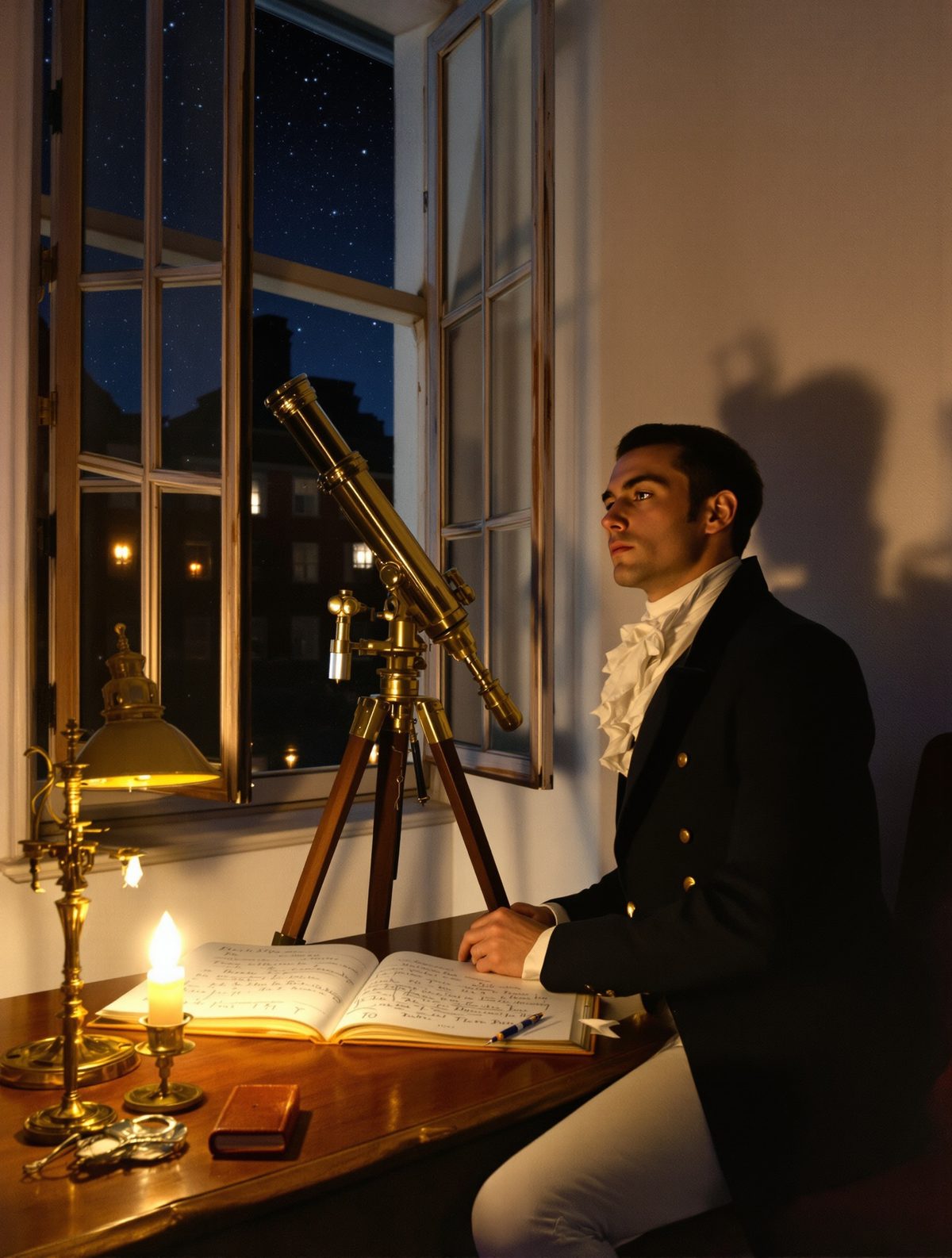
Picture a young John Goodricke at the window of his family’s home in York, peering into the night sky. The year is 1782. Armed with nothing more than a rudimentary telescope and a keen mind, this seventeen-year-old embarked on a journey that would challenge every assumption society held about the limitations of those who could not hear. Night after night, enveloped by the velvety darkness of the Yorkshire skies, Goodricke meticulously observed the star Algol in the Perseus constellation, known for its mysterious and periodic dimming and brightening. This strange star, often called the "Demon Star" by ancient astronomers, had puzzled observers for nearly two centuries.
A lesser-known detail that makes Goodricke’s story even more compelling is his schooling. Attending the Warrington Academy, an institution that embraced progressive educational approaches, Goodricke was encouraged to develop his natural talents despite his deafness. This nurturing environment equipped him with skills many thought beyond his reach, setting the stage for his groundbreaking contributions.
The Celestial Puzzle
Why did Algol change its brightness? This was a question that had baffled scientists since the 17th century. Early astronomers had noted its peculiar behavior, yet no definitive explanation emerged. Goodricke, undeterred by the skepticism surrounding him due to his deafness, developed a hypothesis that would upend the astronomical understanding of his era. He proposed that Algol was not a solitary star but part of a binary star system, with a dimmer companion passing in front of it and causing the observed decreases in brightness.
Read next: The Day a Mill Owner Kept Paying Wages He Could Not Afford
This revelation was not only bold but also revolutionary. At the age of just 17, Goodricke had ventured into uncharted territory, challenging established conventions. He documented his observations and hypothesis with painstaking detail in his notebooks, a testament to his discipline and intellect. Goodricke shared his findings with the wider scientific community through his correspondence with notable astronomers such as Edward Pigott, another bright star in the intellectual firmament of 18th-century England.
Recognition and Tragedy
The Royal Society, an institution at the heart of scientific discovery, awarded John Goodricke the prestigious Copley Medal in 1783 for his groundbreaking work on variable stars, a triumph for the young astronomer. Recognition of this magnitude was extraordinary, especially considering the societal norms of the time which often marginalized individuals with disabilities. Goodricke's work did not go unnoticed, nor unappreciated, within this bastion of scientific thought.
Yet, this moment of triumph was bittersweet. The young astronomer continued his celestial observations with great vigor, but his dedicated nightly vigils exposed him to the harsh Northern elements, and he succumbed to pneumonia at the tender age of 21. It is a poignant twist of fate that a man who unveiled the mysteries of the stars was consumed by the very night that fueled his passion and purpose.
The Untold Legacy
John Goodricke's contributions have often been overshadowed by more conventional historical narratives, yet his work laid essential groundwork for future astronomical discoveries. The concept of eclipsing binary stars that Goodricke introduced is now a fundamental part of our understanding of stellar phenomena. Modern astrophysics and the study of exoplanets owe much to the foundation he established through his keen observations and innovative thinking.
It’s surprising to note that Goodricke’s life, although brief, continues to inspire. In a world where the impact of disabilities is still debated in numerous fields, his story serves as an enduring testament to the idea that limitations are often a matter of perception rather than reality. His perseverance and ability to transcend societal constraints forever changed how the universe is perceived.
Reflections Beyond the Stars
Today, John Goodricke's story resonates more than ever. It challenges us to reconsider the untapped potential within every individual, regardless of their challenges or perceived limitations. His life implores society to look beyond conventional measures of capability and embrace the diverse contributions that come from unexpected quarters.
The Industrial Revolution was a time of transformative change, driven by innovation and a reevaluation of what was possible. John Goodricke personified this spirit, not through the clamor of industry but in the quiet scrutiny of the skies. His legacy, the legacy of a deaf mechanic turned celestial explorer, remains a powerful reminder that the path to understanding begins not with hearing, but with listening—to the whispers of the stars and the silence of determination.