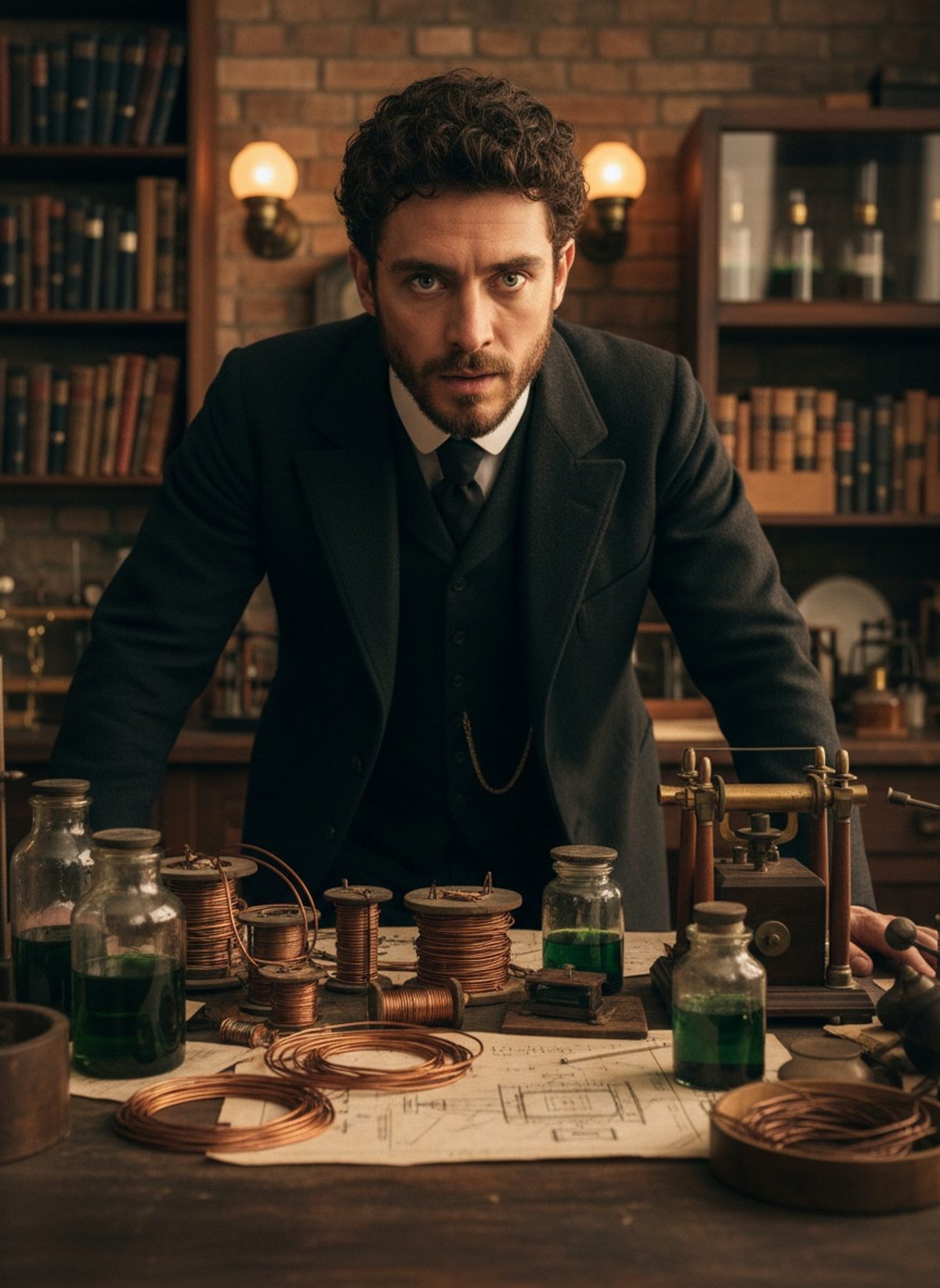
Joseph Lister was repeatedly told he didn't have the personality for a surgeon. He was quiet, intensely focused, and had a penchant for careful observation. Yet, it was this very nature that allowed him to see what others missed and ultimately saved countless lives.
The Invisible Enemy
In the mid-19th century, the operating theatres of Victorian Britain were a place of horror for even the bravest of patients. Surgery was as rudimentary as it was perilous, and not because of the surgeon's knife; rather, it was what happened after the operation that claimed countless lives. In 1865, half of all surgical patients succumbed to infection in the days following their procedure—a grim reality of which Glasgow’s hospitals were a microcosm.
The cause of this tragic post-operative mortality was unknown, though theories abounded. Within these walls, seeping with the scent of despair and untreated wounds, Joseph Lister dared to suspect that something unseen was at play, lurking in the air and settling into the open tissues of his patients, silently doing its lethal work. It was an invisible blight, one that conventional practice could neither identify nor treat. That was until Lister, born in Yorkshire, decided to challenge the nihilistic fatalism of his time with a bold experiment.
The Bold Experiment
Joseph Lister's inquiry led him to the promising yet controversial germ theory of disease, proposed by scientists like Louis Pasteur. Pasteur's work suggested that harmful microorganisms were responsible for infections, a notion that most medical practitioners of the time met with skepticism. Despite the prevailing doubt, Lister saw potential in this line of thought.
Read next: The Day a Miner's Son Gave the World Safe Light
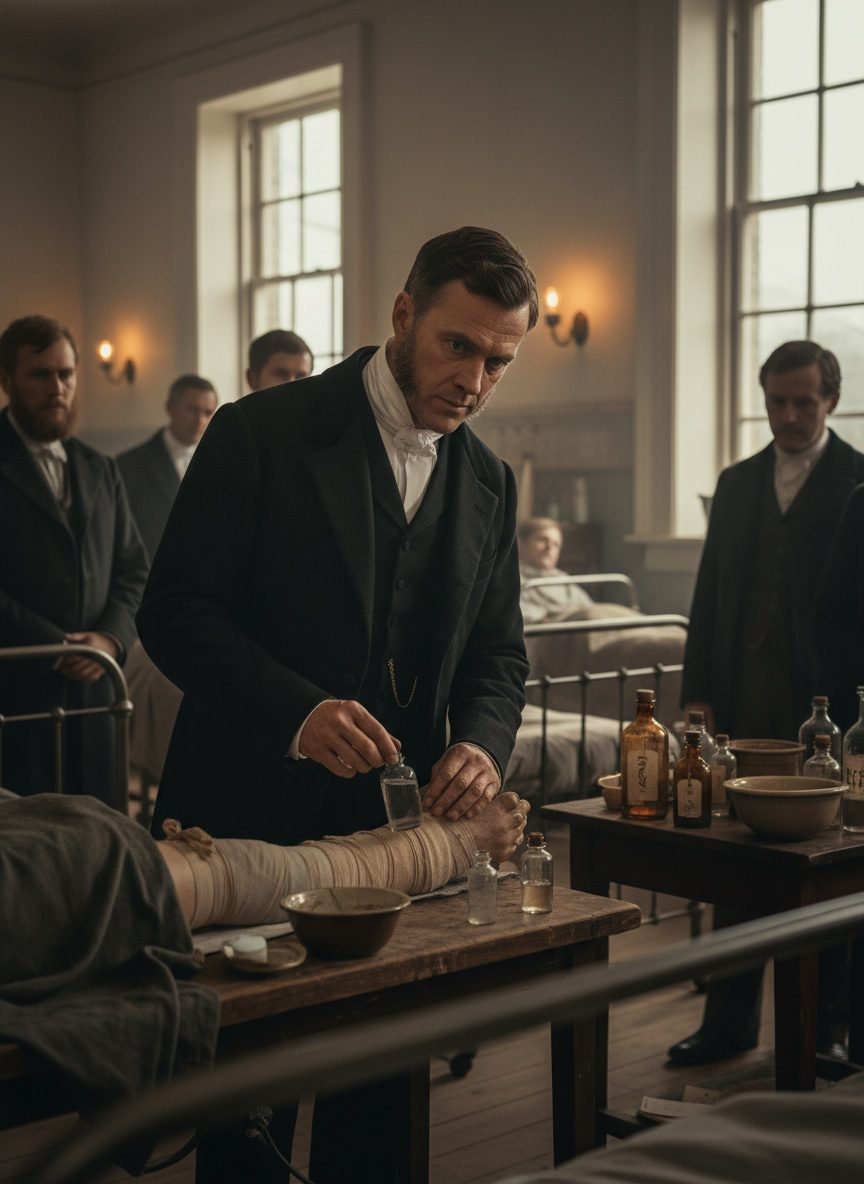
In his search for answers, Lister came across carbolic acid, a substance known for its ability to neutralize foul smells. The city of Carlisle had successfully used it to combat stench emanating from sewage farms. If it could counteract smells, might it not also fight the unseen germs causing surgical infections? With a scientific curiosity that outweighed his fear of public and professional derision, Lister decided to put carbolic acid to the test on an actionable front.
The Yorkshire surgeon began by meticulously soaking dressings in diluted carbolic acid and applied them to surgical wounds. He also sprayed it liberally around the operating room—an unprecedented approach at the time. Almost immediately, the results were astonishing. Where there had been a steady procession to the morgue, now patients began to survive, their wounds healing without the tell-tale putrid decay of infection. The wards thus transformed, no longer echoing with the cries of the dying.
A Sea Change in Surgery
The impact was revolutionary. Word of Lister's success spread rapidly. What had once been a corridor of dying men was now a space of healing, hope, and renewal. Nonetheless, old habits die hard. Lister faced significant resistance from the medical community. Many remained skeptical of the germ theory, and even those who acknowledged his success were often reluctant to change traditional practices.
However, the undeniable reduction in post-operative deaths spoke louder than words. Patients once deemed unsavable walked out of Glasgow’s hospitals. Gradually, and often grudgingly, the medical establishment began to embrace Lister’s antiseptic techniques, and hospitals across Britain started adopting his methods. In time, his practices made their way to international shores, heralding a new era in surgical science.
Why This Matters
Joseph Lister’s pioneering work did more than just improve surgical outcomes; it fundamentally redefined the relationship between the seen and the unseen in medicine. His belief in germs—the tiny, invisible organisms concurrently destroying and born from life—led to the development of antiseptic policies that transformed how surgeries were conducted the world over. Lister’s quiet triumph in a Scottish hospital became a loud testament to the power of observation, scientific method, and innovation born of necessity.
Today, Lister's legacy is etched not just in medical textbooks, but in every sterile procedure room. By acknowledging what many refused to see, this humble Yorkshire surgeon rewrote the narrative of post-surgical infections from tales of inevitable tragedy to stories of survival and healing. His work is a poignant reminder that sometimes, what we can't see can save us.