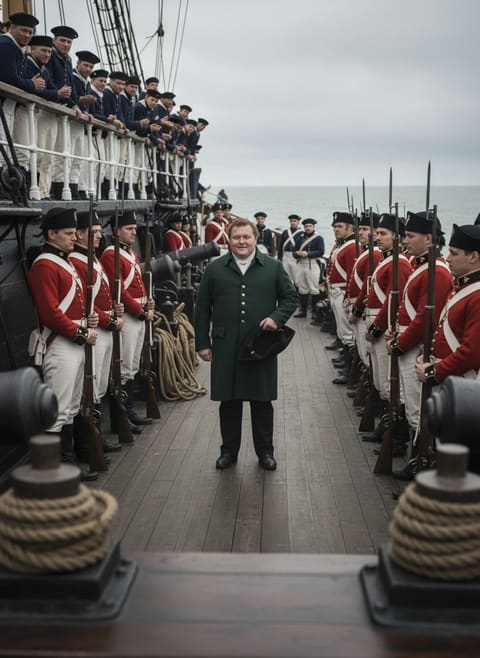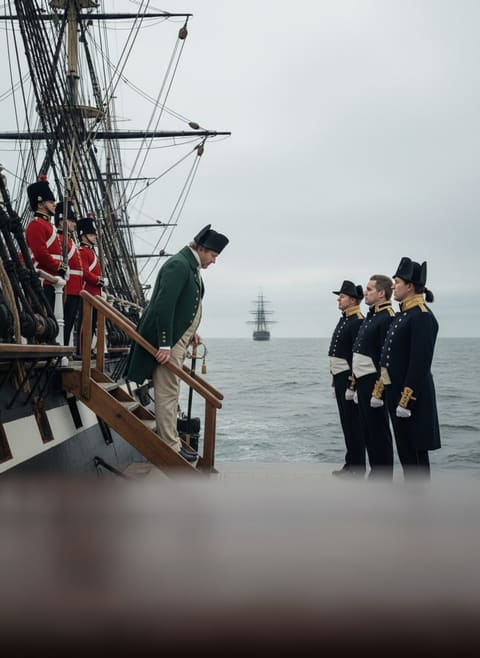
Picture this: a single British warship limps into Spithead on June 15th, 1744, flying Admiral's colours from a mast jury-rigged with bamboo. The HMS Centurion looks like she's sailed through hell itself—her hull patched with foreign wood, her rigging a patchwork of rope and prayer. On deck stand just 188 hollow-eyed survivors, their pockets heavy with Spanish silver. Four years earlier, 1,980 men had sailed from Portsmouth in six proud vessels, bound for glory in the Pacific. What happened in between reads like the most devastating success story in naval history.
This is the tale of Admiral George Anson's circumnavigation—a voyage so catastrophic it nearly broke the Royal Navy, yet so triumphant it launched Britain toward global maritime supremacy. It's the story they don't teach in school: how losing everything sometimes means winning it all.
The Impossible Dream Sets Sail
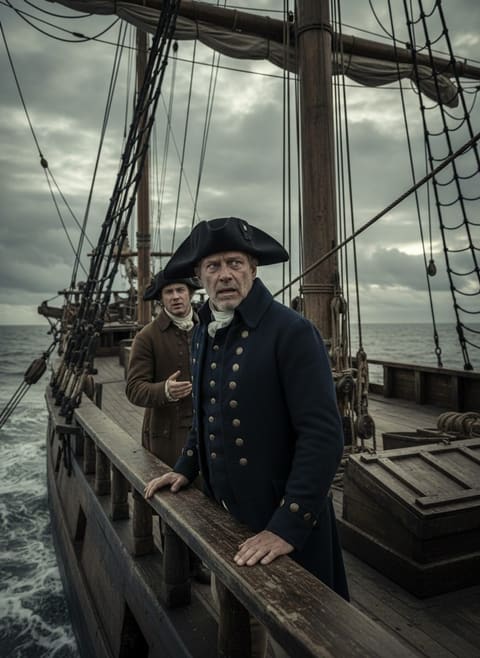
In September 1740, as autumn mists clung to Portsmouth harbour, George Anson stood on the quarterdeck of HMS Centurion and surveyed his squadron. At 43, the Admiral was already a veteran of Caribbean campaigns, but nothing had prepared him for what lay ahead. His mission, handed down by an Admiralty drunk on imperial ambition, was breathtakingly audacious: sail around Cape Horn, terrorise Spanish settlements along the Pacific coast of South America, then continue west around the globe.
The six ships under his command looked impressive enough—Centurion, Gloucester, Severn, Pearl, Wager, and Tryal—but appearances deceived. The vessels were riddled with dry rot, their hulls weeping seawater through sprung planks. Worse still were the men pressed into service. Instead of seasoned mariners, Anson found himself commanding what one officer described as "a cargo of human misery": invalid soldiers from Chelsea Hospital, many so decrepit they died before leaving the English Channel.
Read next: The Night the British Ate the President's Dinner
The 500 marines aboard were no better—raw recruits who'd never fired a musket in anger. Of the 1,980 souls who departed Portsmouth that grey September morning, fewer than half were fit for duty. The rest were what Georgian England considered expendable: the old, the sick, and the desperately poor.
Cape Horn: Where Dreams Go to Die
By the time Anson's squadron reached Cape Horn in March 1741, reality had already begun its brutal education. Scurvy had started its work, turning healthy men into shambling wrecks with blackened gums and loosened teeth. The disease struck with merciless efficiency—sailors who'd been hauling lines one day couldn't lift a biscuit to their mouths the next.
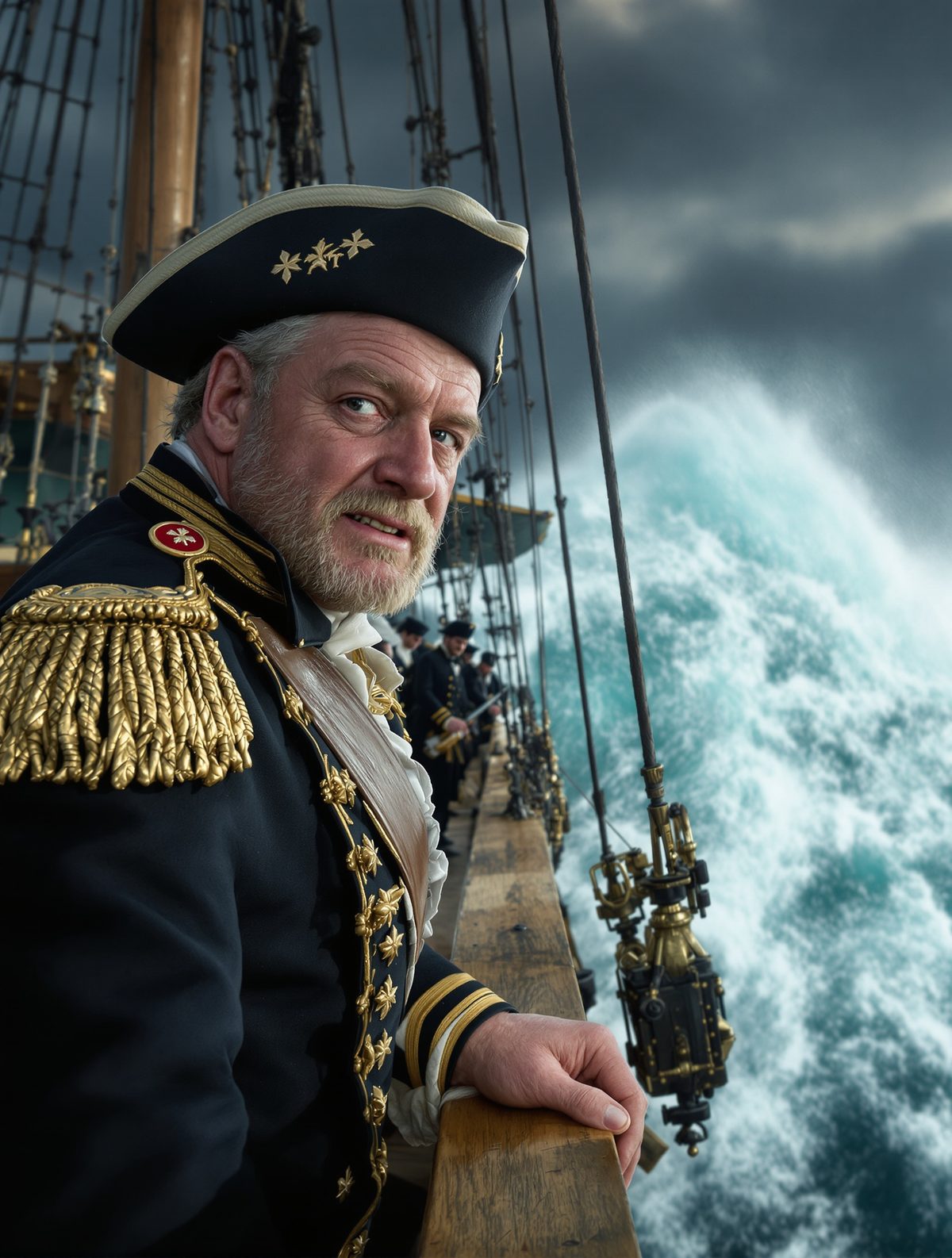
But Cape Horn cared nothing for human suffering. For 58 days, Anson's ships battled the most fearsome waters on Earth. Mountainous waves, some reaching 60 feet high, crashed over the decks with the force of sledgehammers. Winds of 100 miles per hour shredded sails and snapped masts like kindling. The temperature plummeted so low that rigging froze solid, and men's hands stuck to the iron they tried to grip.
Severn and Pearl simply vanished into the howling darkness, their crews never to be seen again. Wager was driven onto the rocks of a desolate island, where her survivors would spend months in a hell of cannibalism and mutiny that makes Lord of the Flies read like a children's tale.
Those who made it past the Horn were shadows of their former selves. On HMS Centurion alone, 43 men had died. But Anson pressed on into the Pacific, driven by a determination that bordered on madness.
Paradise Lost: Scurvy Takes Command
The Pacific Ocean, despite its peaceful name, became a floating graveyard for Anson's expedition. Scurvy, that invisible assassin of the Age of Sail, now commanded the fleet more surely than any Admiral. The disease, caused by lack of vitamin C, transformed strong men into helpless invalids with terrifying speed.
Surgeon's mate John Phillips recorded the horror with clinical precision: old wounds reopened spontaneously, teeth fell out in handfuls, and grown men wept like children as their bodies literally fell apart. Some sailors became so weak they couldn't lift their heads to drink water. Others suffered such severe depression—a symptom of advanced scurvy—that they simply gave up the will to live.
By the time the survivors reached the Juan Fernández Islands (Robinson Crusoe's inspiration), the situation had become apocalyptic. On Gloucester, so many men had died that the living couldn't muster enough strength to weigh anchor. The ship drifted helplessly while corpses rotted below deck, too heavy for the skeletal crew to heave overboard.
Captain Cheap of the Centurion wrote in his log: "We have so few hands that we cannot work the ship in any weather." At one point, there were more dead than living aboard the flagship. Yet somehow, these walking ghosts continued to sail west across the largest ocean on Earth.
The Prize That Changed Everything
What happened next reads like the fever dream of a dying man, yet it changed the course of history. After months of raiding Spanish settlements along the South American coast—attacks so feeble they barely qualified as piracy—Anson received intelligence that would transform his voyage from catastrophe to legend.
The Manila Galleon Nuestra Señora de Covadonga was sailing from Acapulco to the Philippines, loaded with silver from Mexico's mines. This was no ordinary merchant vessel but a floating treasure chest, carrying what would amount to £400,000 in Georgian currency—roughly £50 million today. For Anson's survivors, it represented either salvation or a glorious death in battle.
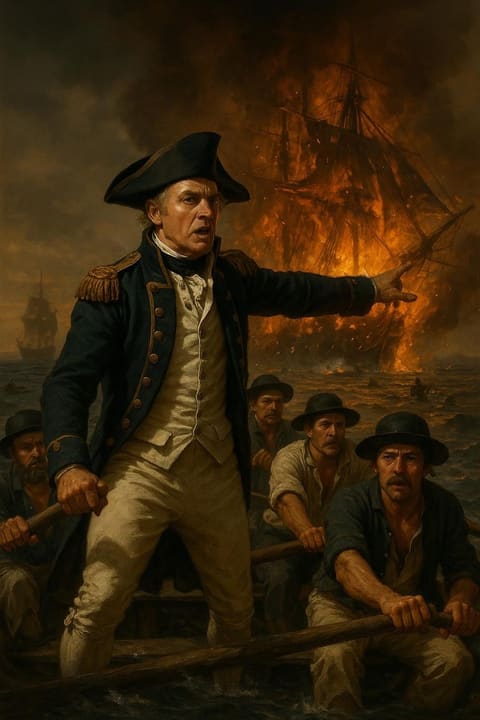
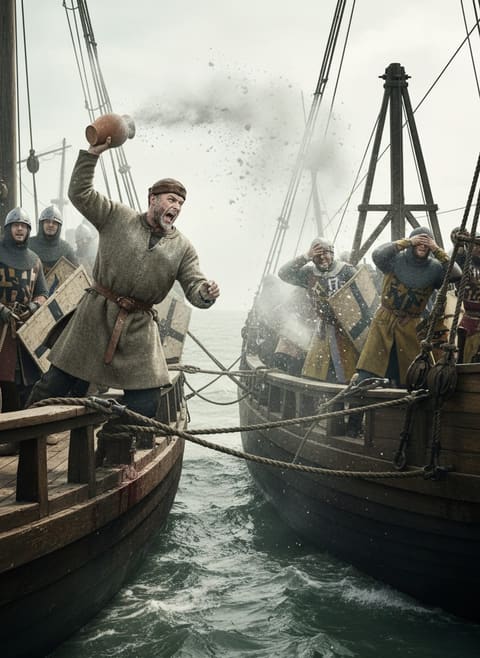
On June 20th, 1743, off the coast of the Philippines, the most improbable naval battle in history commenced. HMS Centurion, jury-rigged and barely seaworthy, engaged a Spanish galleon three times her size. Anson's crew numbered just 227 men, many still recovering from scurvy. The Spanish ship carried 550 crew and passengers, plus 36 guns to Centurion's 24.
Read next: The Day a One-Eyed Admiral Sailed Into the Line of Fire
The battle lasted 90 minutes. British gunnery, honed by decades of warfare, proved superior to Spanish seamanship. When the smoke cleared, Nuestra Señora de Covadonga had struck her colours. In her holds lay 1,313,843 pieces of eight, plus chests of worked silver that took three days to transfer.
The Hollow Victory
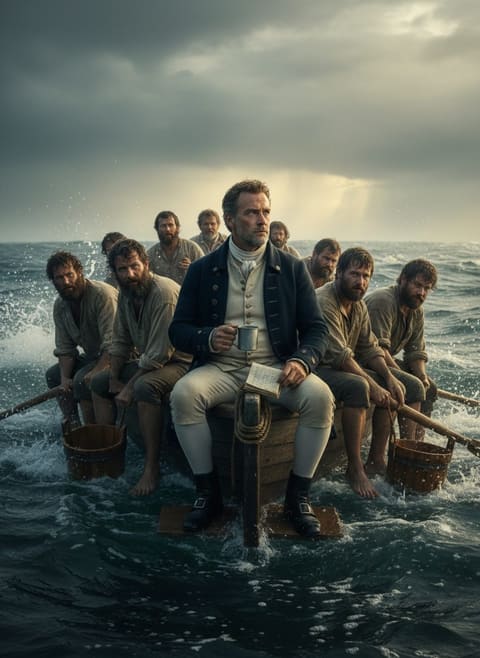
The return journey to Britain was a race against time and physics. Centurion, now alone and overloaded with treasure, leaked so badly that her pumps ran continuously. Her crew, rich beyond dreams but fewer than 200 strong, barely had the manpower to sail her home.
They navigated by dead reckoning across the Indian Ocean, around the Cape of Good Hope, and north through the Atlantic. Every mile was a gamble—would the ship hold together? Would the crew survive long enough to see England?
When Centurion finally anchored at Spithead that June morning in 1744, crowds gathered to witness what seemed impossible: the return of men given up for dead. The treasure they carried was so vast it took 32 wagons to transport it to the Tower of London. But the human cost defied comprehension—of 1,980 men who had sailed four years earlier, only 188 returned alive. It remains the highest casualty rate in Royal Navy history for a successful voyage.
The Paradox of Catastrophic Success
Here lies the cruel paradox of Anson's voyage: it succeeded precisely because it failed so spectacularly. The horrors his men endured became the foundation of British naval supremacy in the Pacific. The detailed logs kept by his officers—records of every death, every navigational error, every tactical mistake—became the textbook for future expeditions.
Within a decade, James Cook would use Anson's charts to navigate the Pacific with minimal losses. The anti-scurvy measures Anson's surgeon recommended—fresh vegetables, citrus fruits, and better hygiene—would save thousands of lives in future voyages. Most importantly, the treasure from Nuestra Señora de Covadonga funded the naval expansion that would make Britain mistress of the seas.
Today, as we debate the costs of exploration—whether to Mars or the ocean depths—Anson's voyage reminds us that progress often wears the mask of disaster. Sometimes the most catastrophic journeys yield the greatest discoveries, and the most hollow victories change the world. The 188 survivors who limped home in 1744 had circumnavigated more than the globe—they had sailed around the very concept of what humans could endure, and in doing so, they had expanded the boundaries of what was possible.