Various
1808. Britain sent two ships to patrol 3,000 miles of African coast. Yellow fever killed faster than any enemy. But the squadron kept sailing — and kept growing.
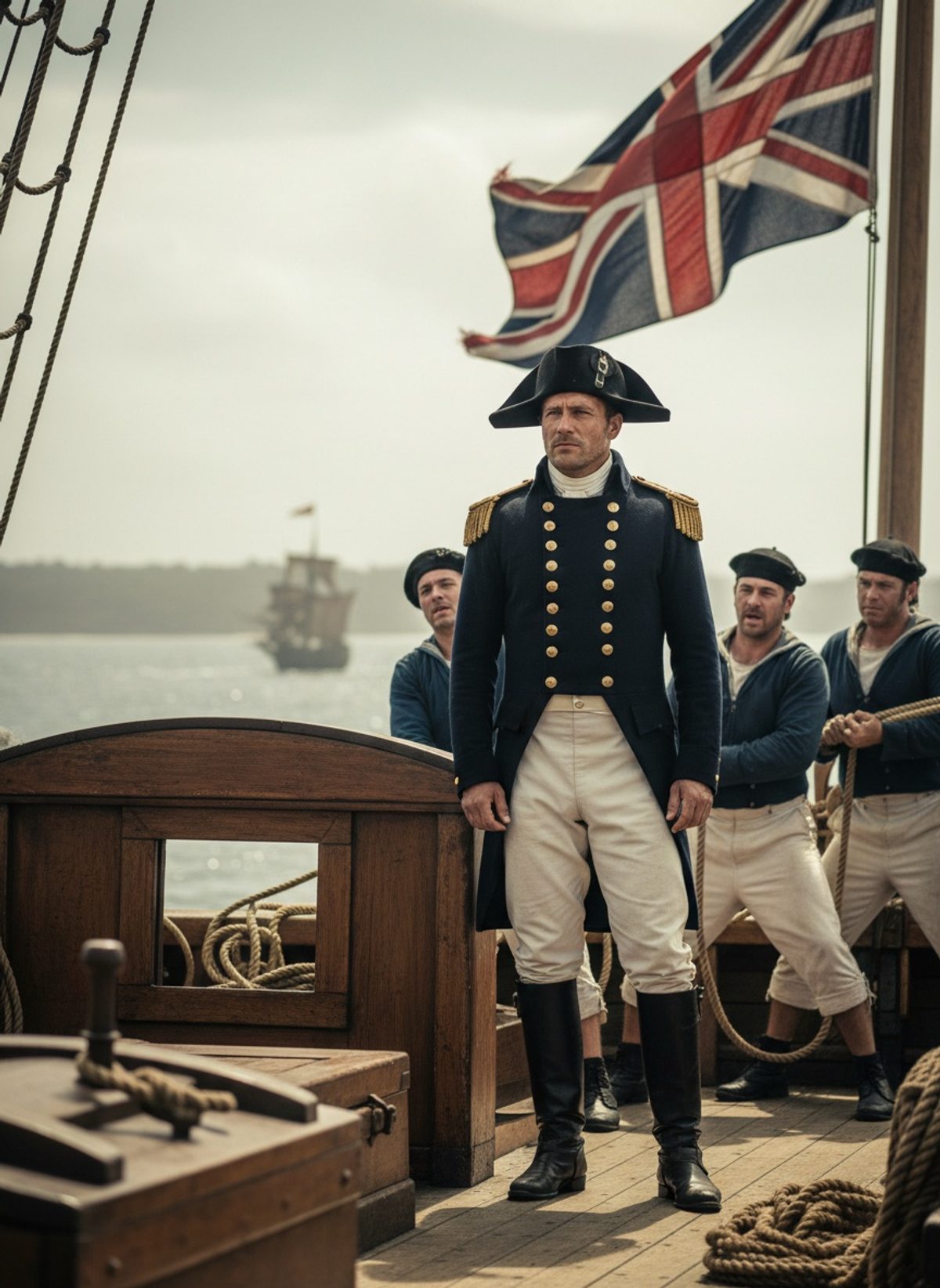
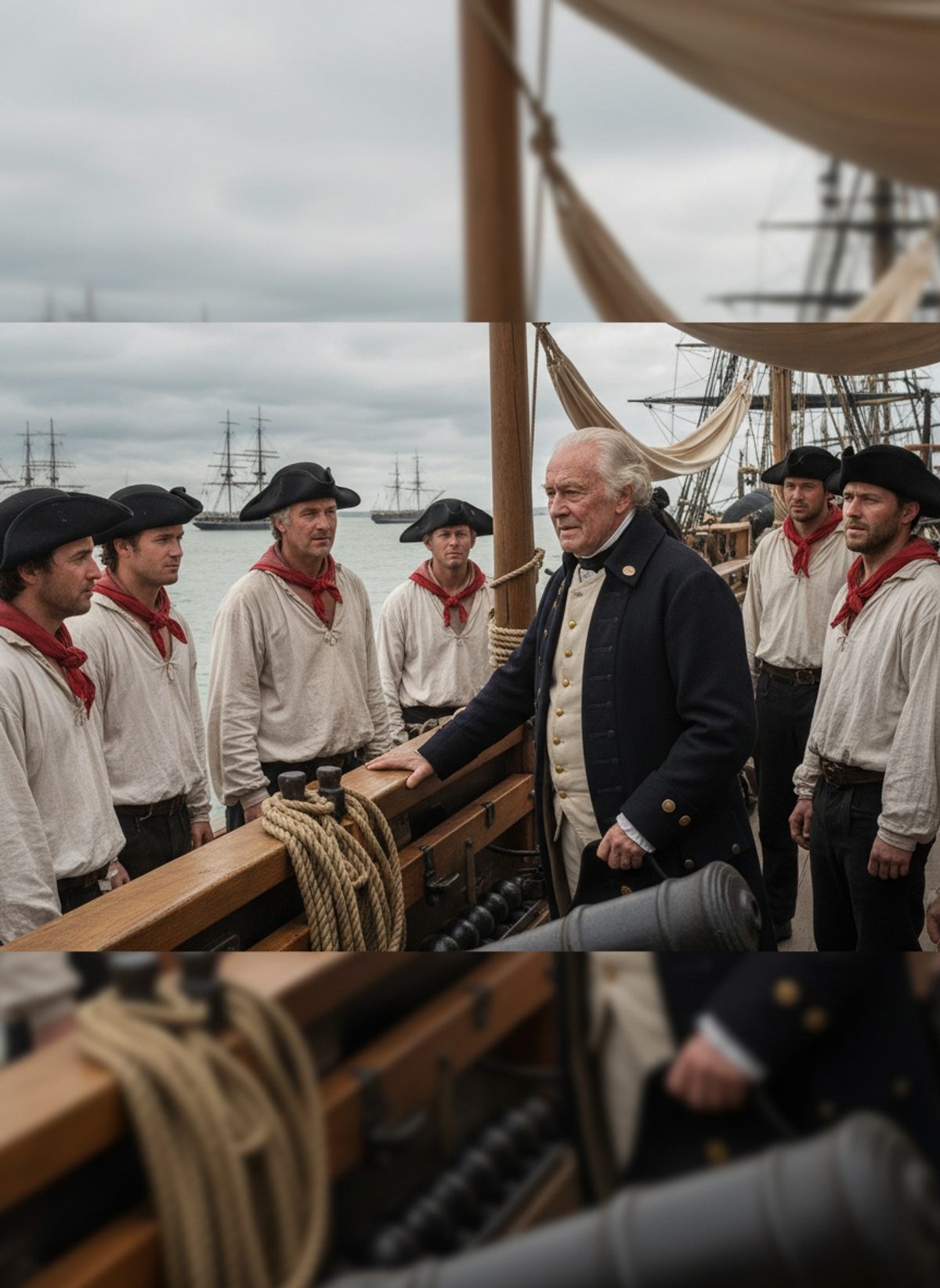
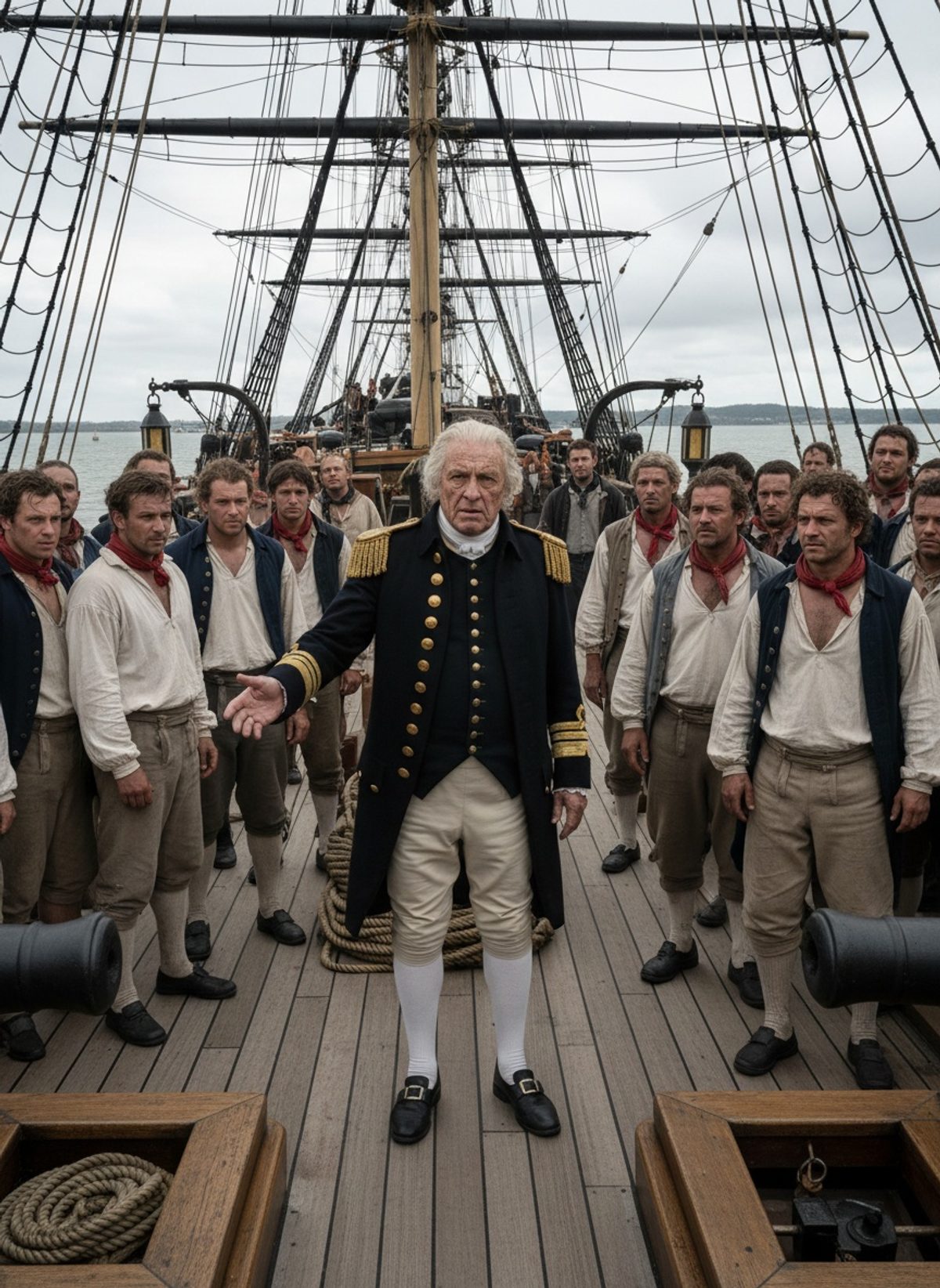
April 1797. The Royal Navy's home fleet had mutinied at Spithead. Every ship. Every gun. Admiral Howe was old and broken. But he went aboard. Alone. And he listened. Within days, the fleet was sailing again.
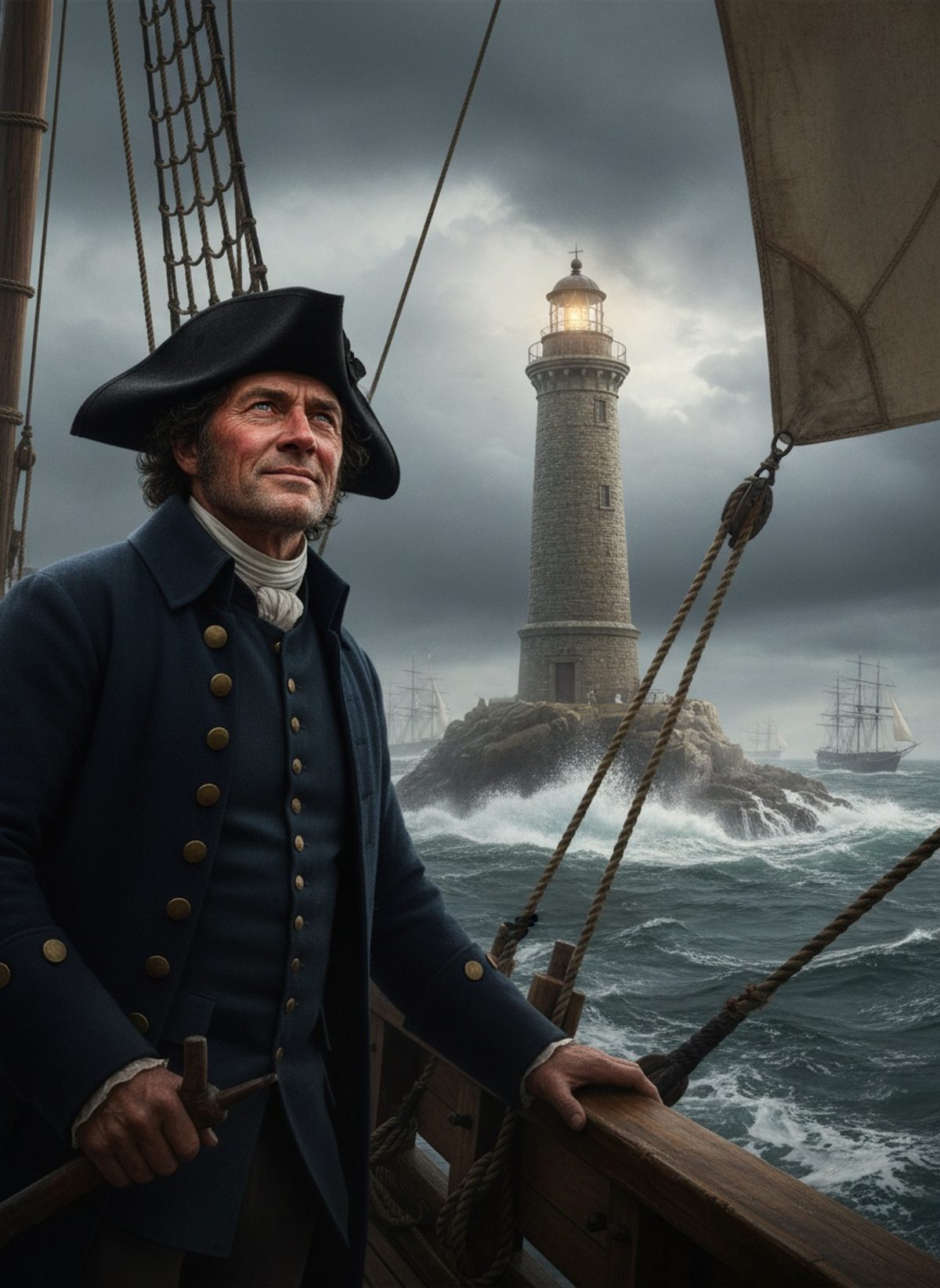
1759. The Cornish coast swallowed ships whole. The men of the shore made their living from the wreck. Then John Smeaton built his tower on the Eddystone Rock. The wrecks stopped. The locals raged. The light stayed lit.
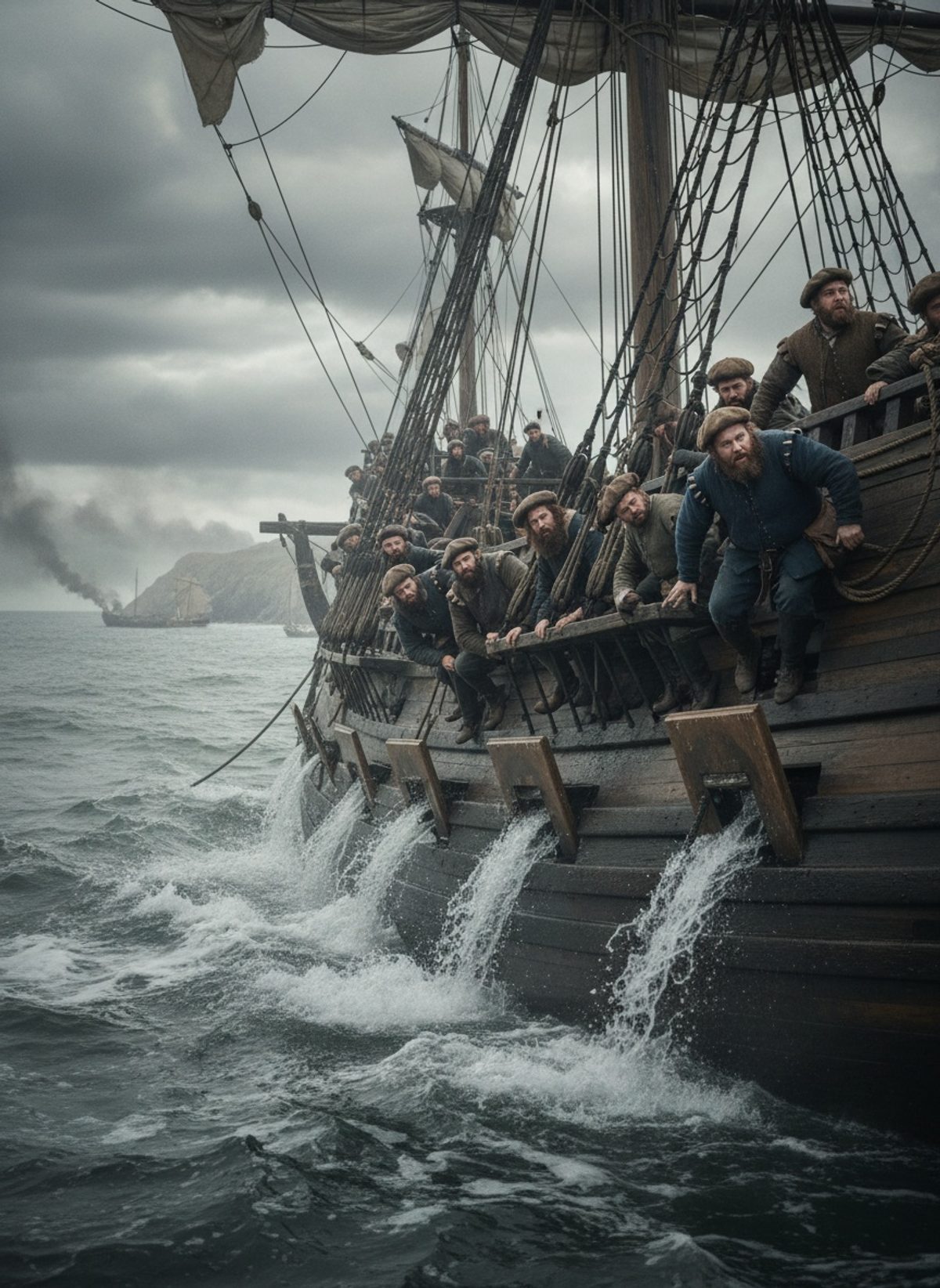
Henry VIII watched from shore as his flagship heeled and vanished. Around 500 men drowned within minutes. The Mary Rose had served him for 34 years.
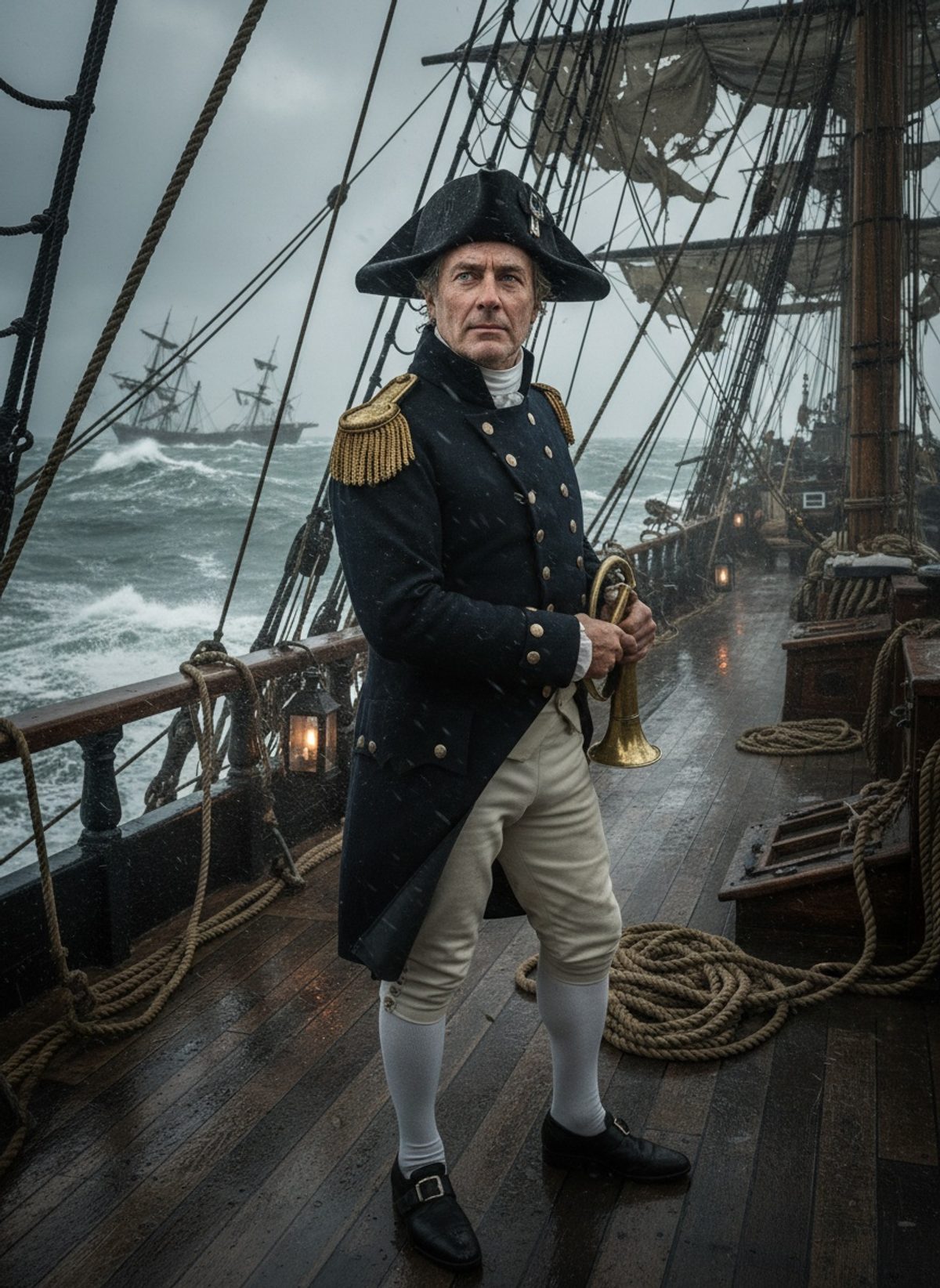
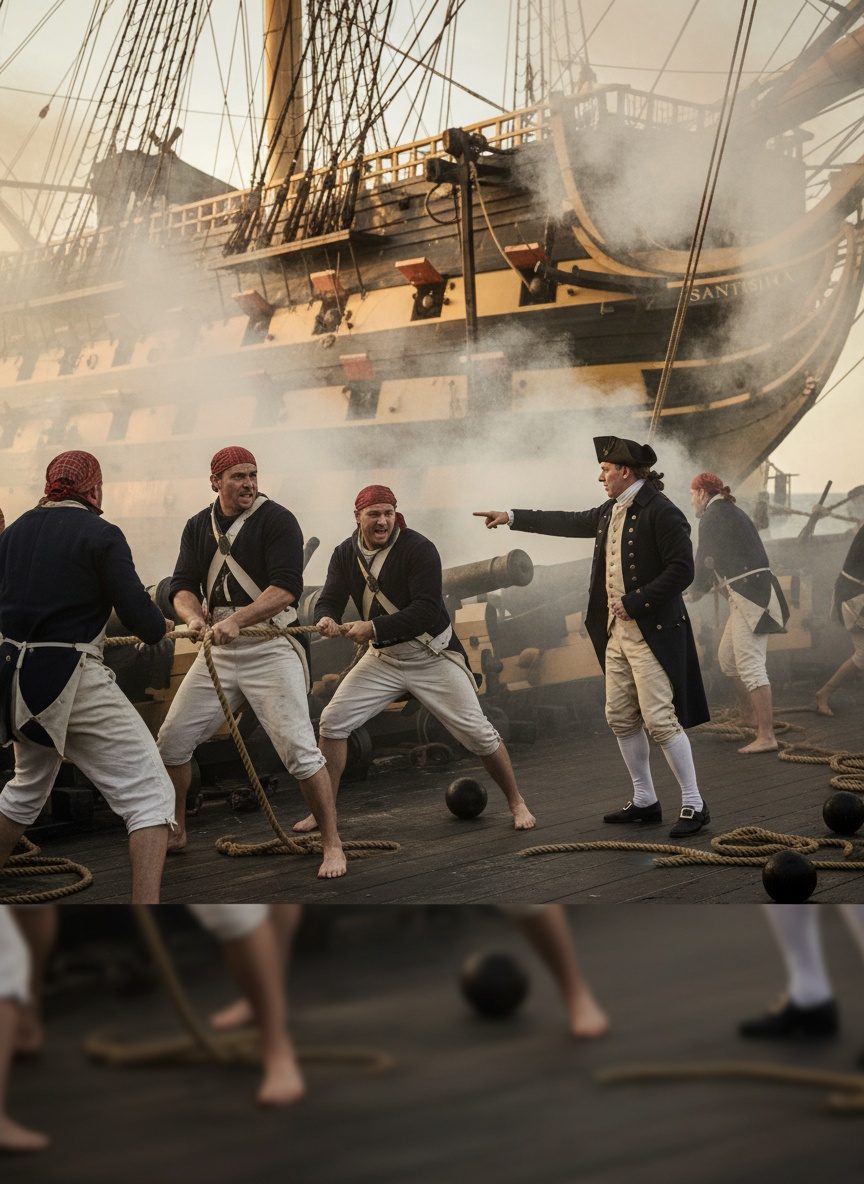
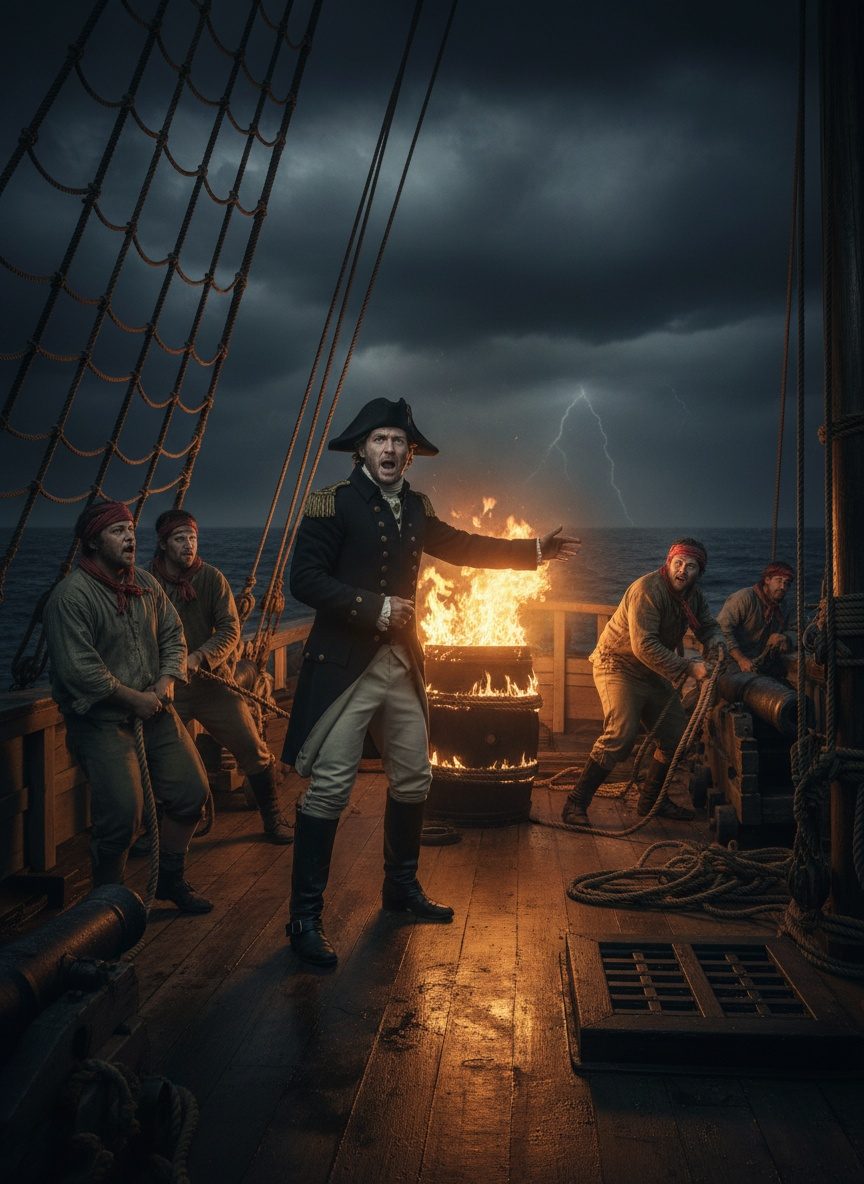
October 1805. Trafalgar was won. Nelson was dead. The storm hit before the cheering stopped. Collingwood ordered his battered ships to cut loose the prizes. He saved his men. He asked for nothing.
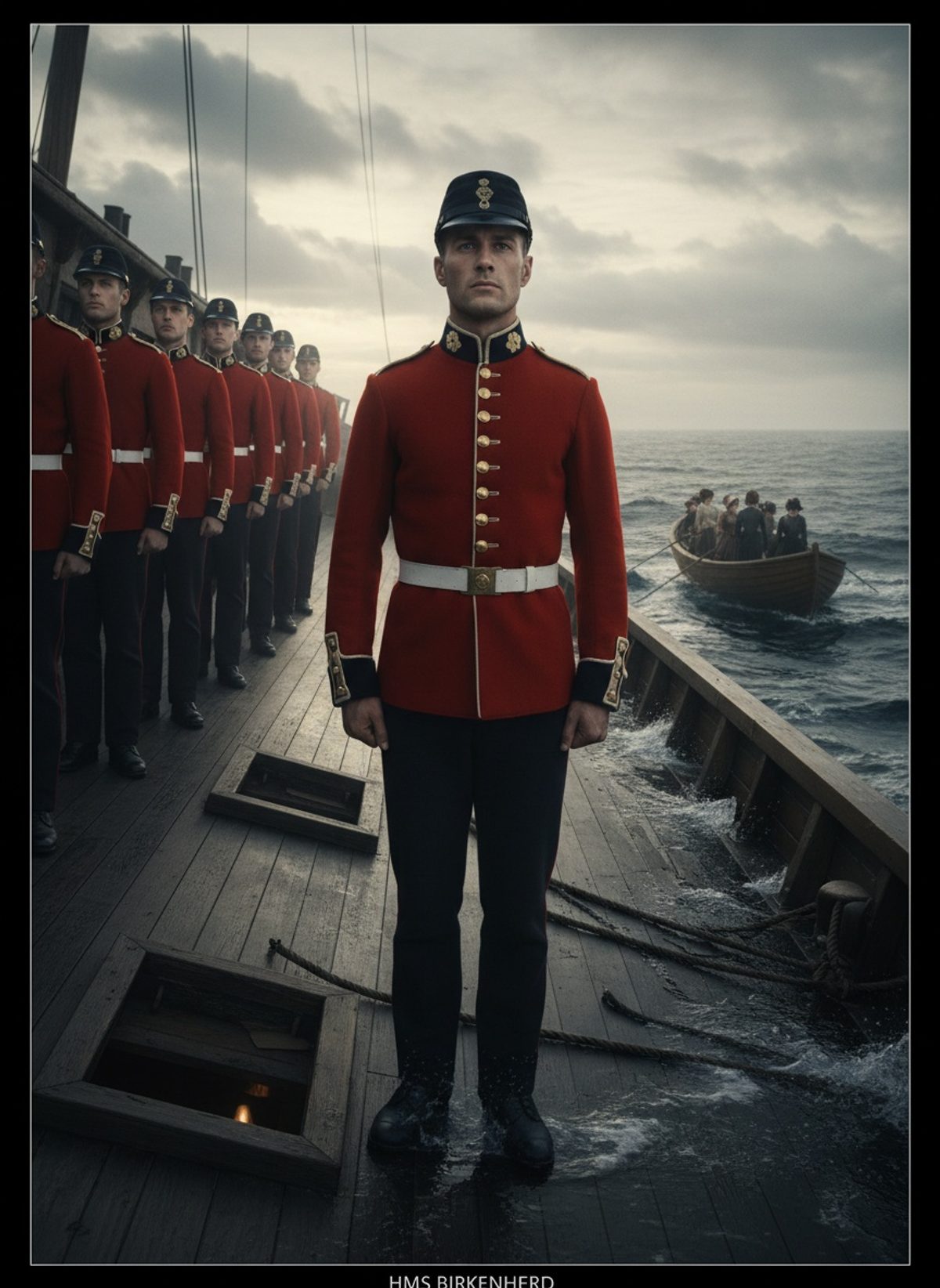
February 1852. HMS Birkenhead struck a rock off South Africa. She was sinking fast. The soldiers stood in rank on deck. Still. Silent. Every woman and child made it off alive. The men went down with the ship.
Spithead, 1797. The fleet was in full mutiny. The men had not been paid in decades. Admiral Howe listened. Every demand was met. Every pardoned man walked free.
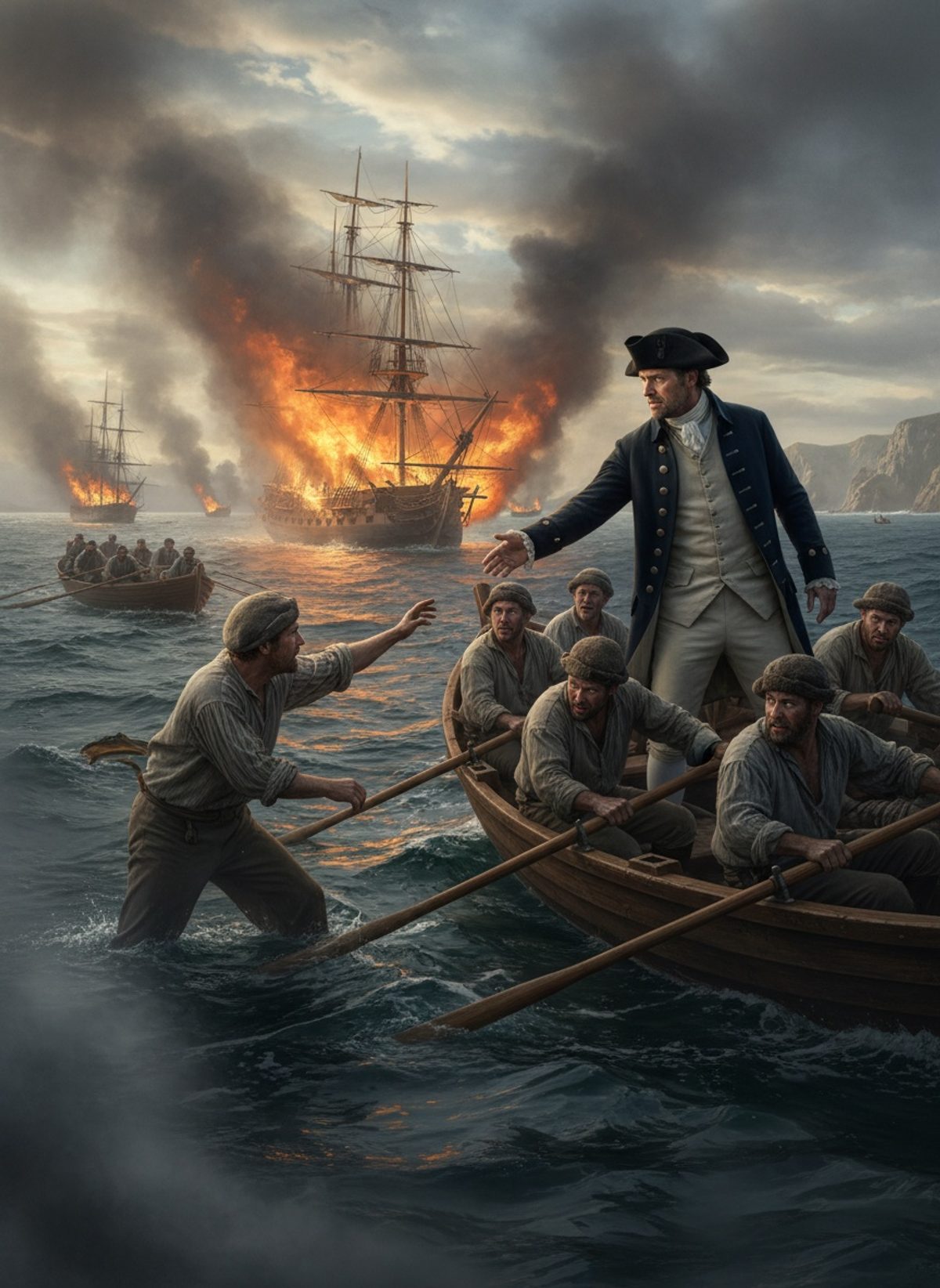
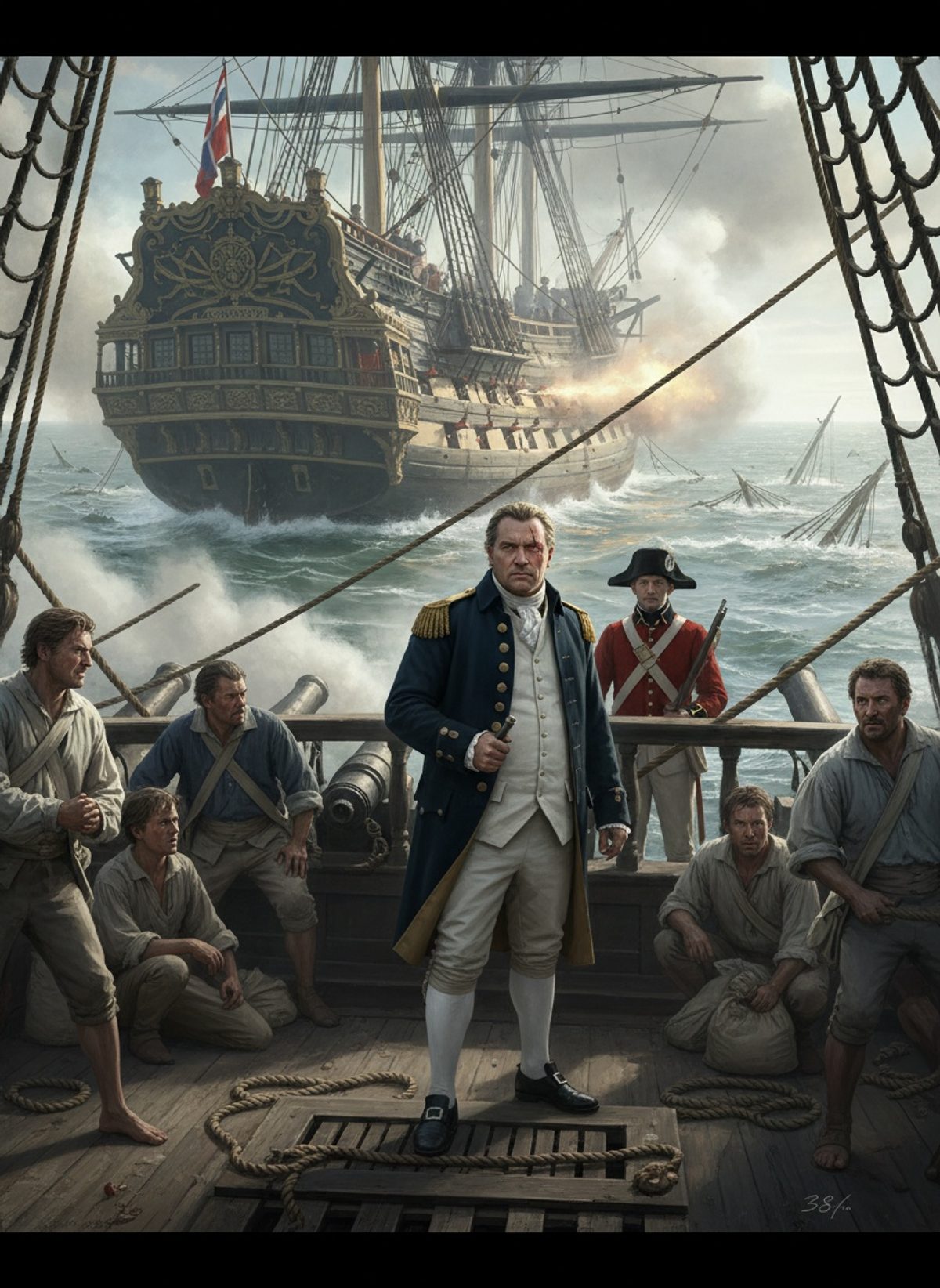
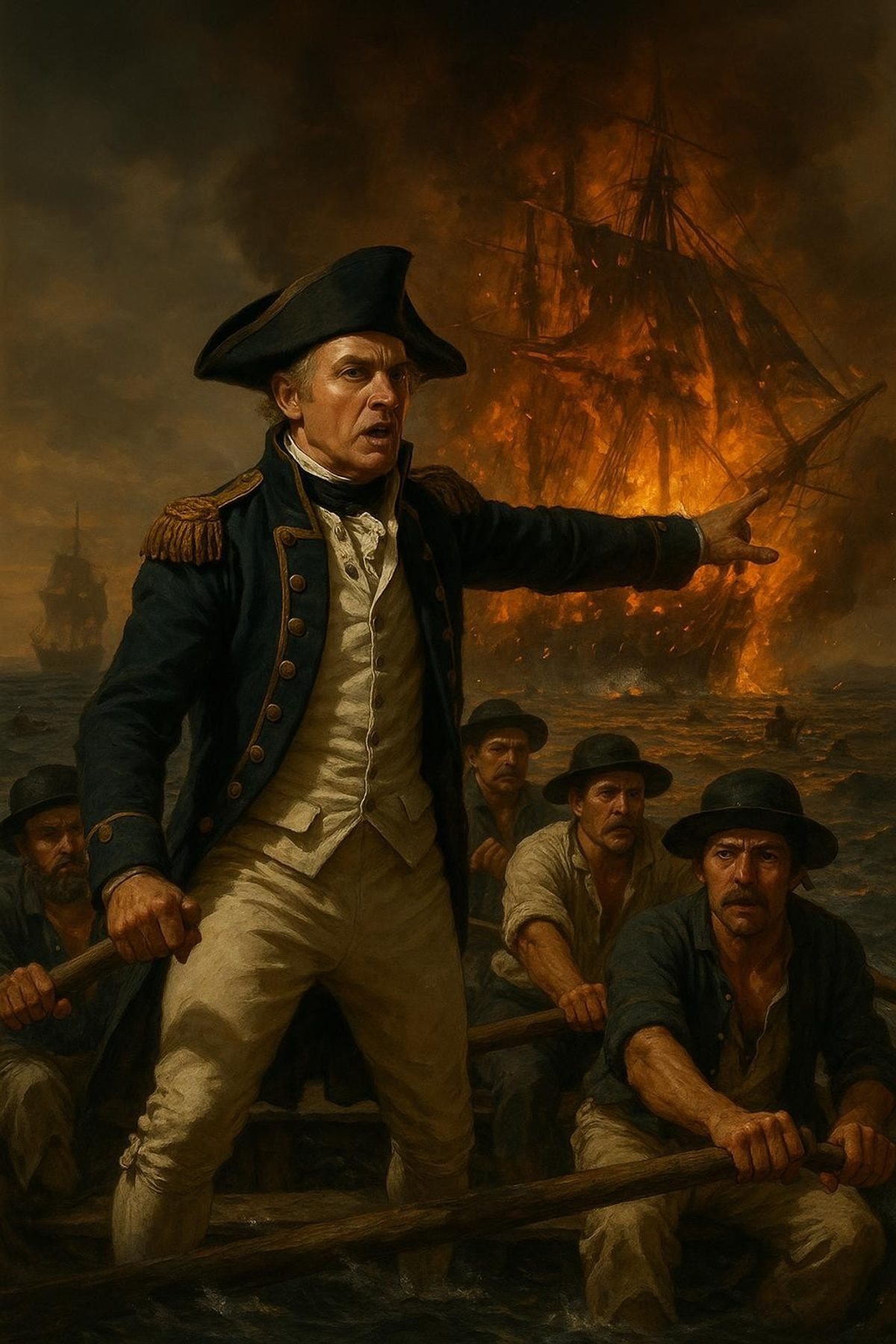
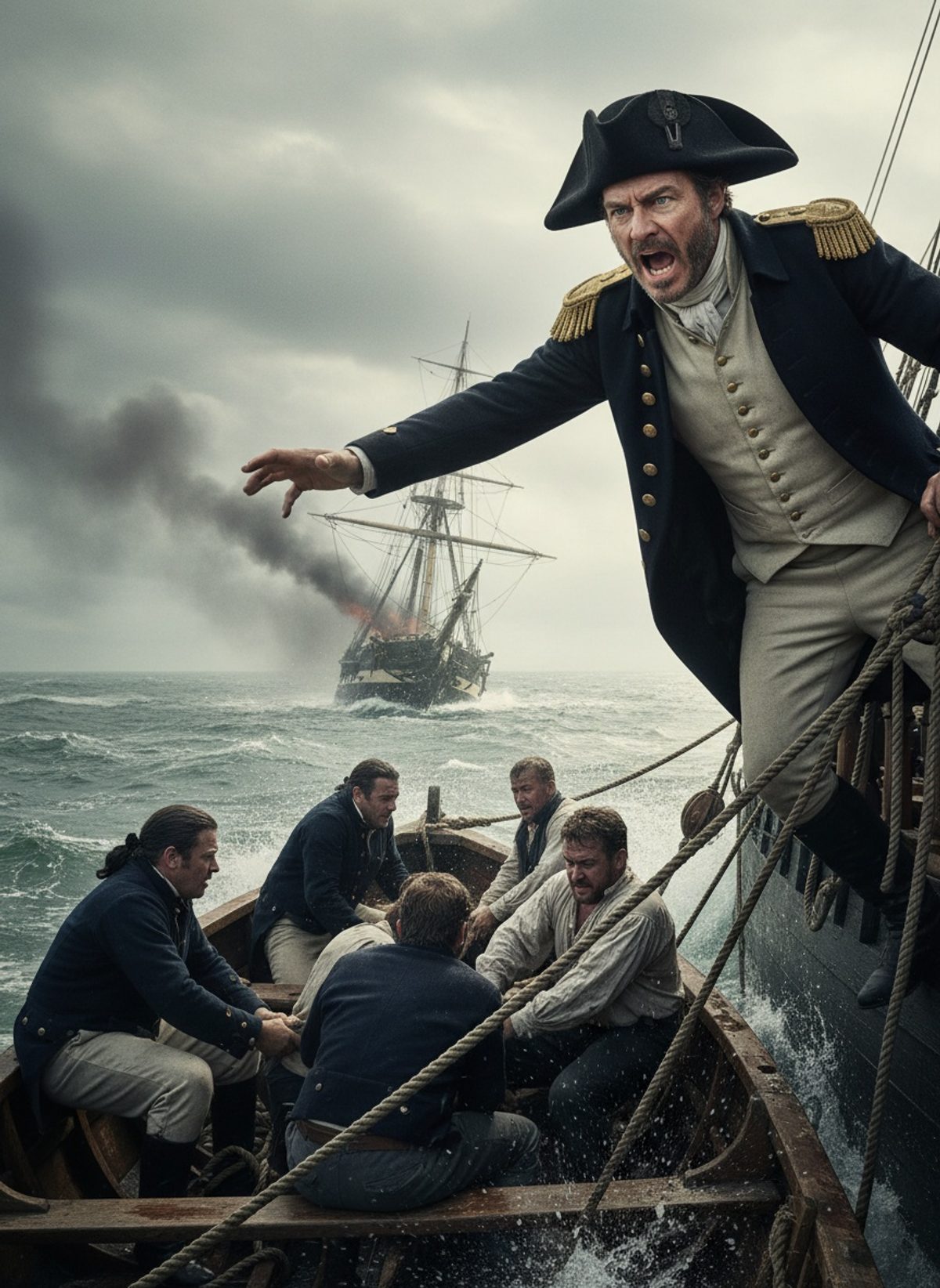
August 1759. The battle was over. French survivors clung to wreckage in a burning bay. Captain Richard Howe ordered his men into the longboats. They rowed toward the enemy. Every man they pulled from the sea was alive.
1781. The slave ship Zong was crossing the Atlantic. The captain ordered 133 enslaved people thrown into the sea. One man refused to stay silent. Granville Sharp brought the case before England. The country was never the same.
April 1797. The fleet at Spithead had mutinied. Thousands of Royal Navy sailors refused to sail. One captain walked below decks alone. He listened. He promised. His men stood down.
April 1789. HMS Bounty. Mutineers dragged Bligh from his cabin. They handed him a knife. He threw it back. He would not beg. He would not break.
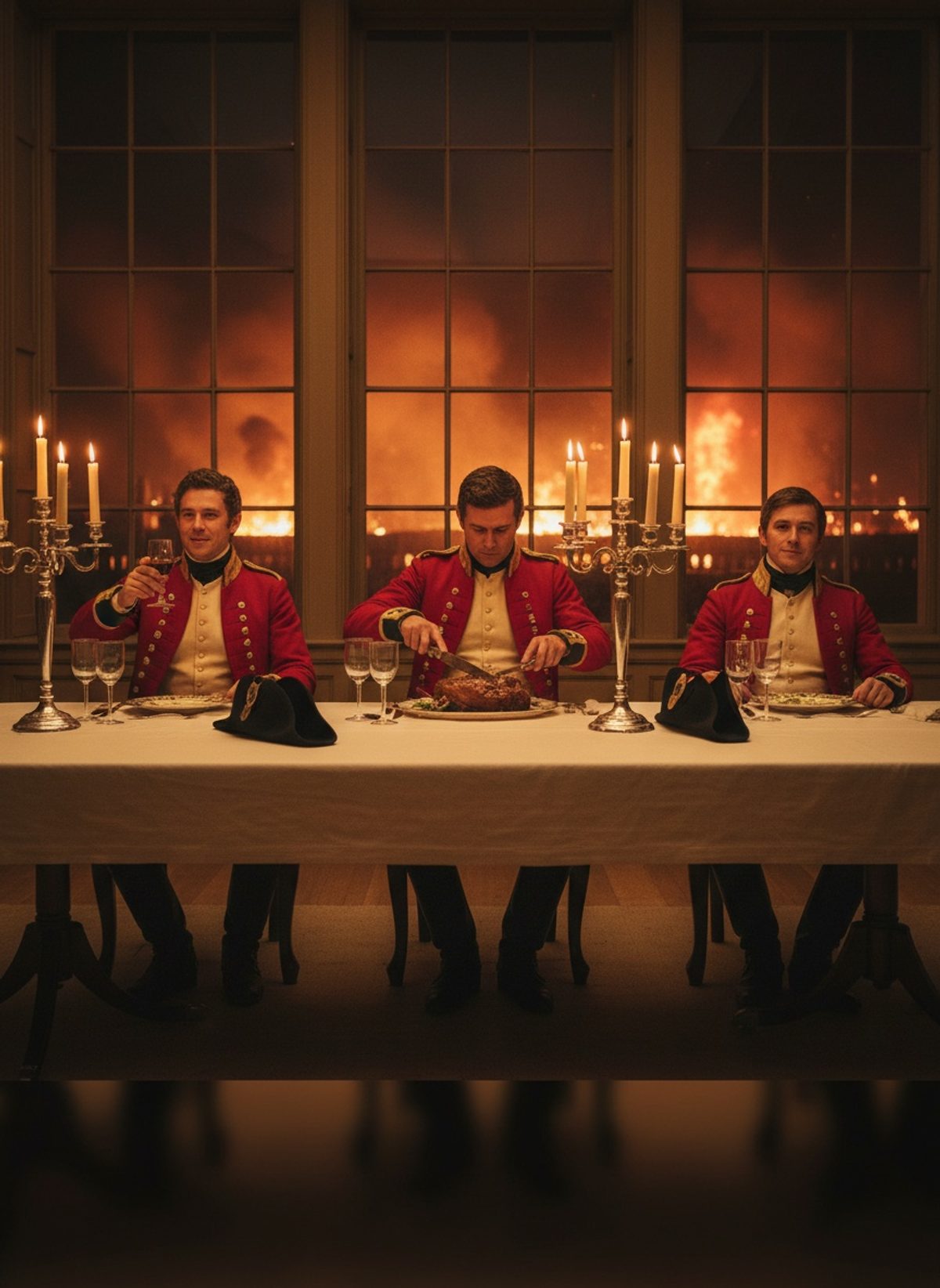
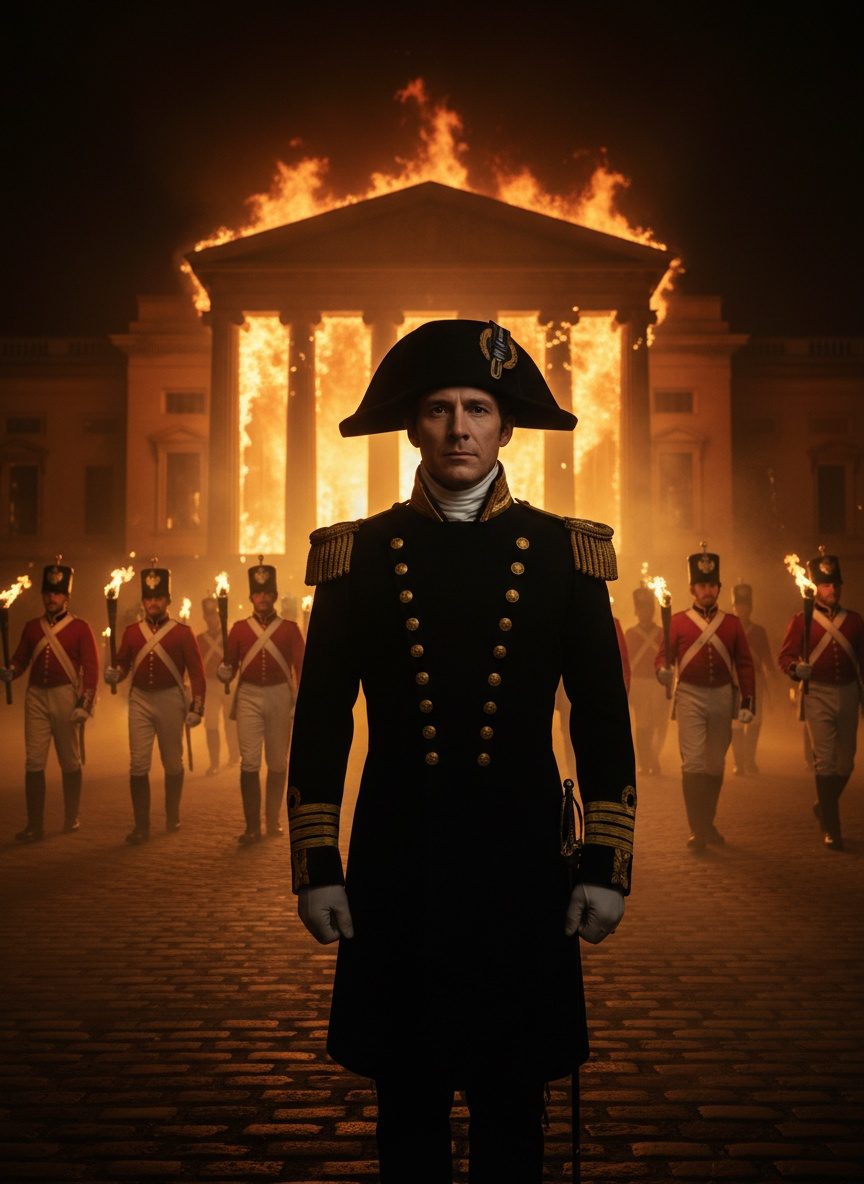
August 1814. British troops marched into Washington unopposed. They found dinner still warm on Madison's table — laid for 40. They sat down, ate it, drank his wine, then burned the house.
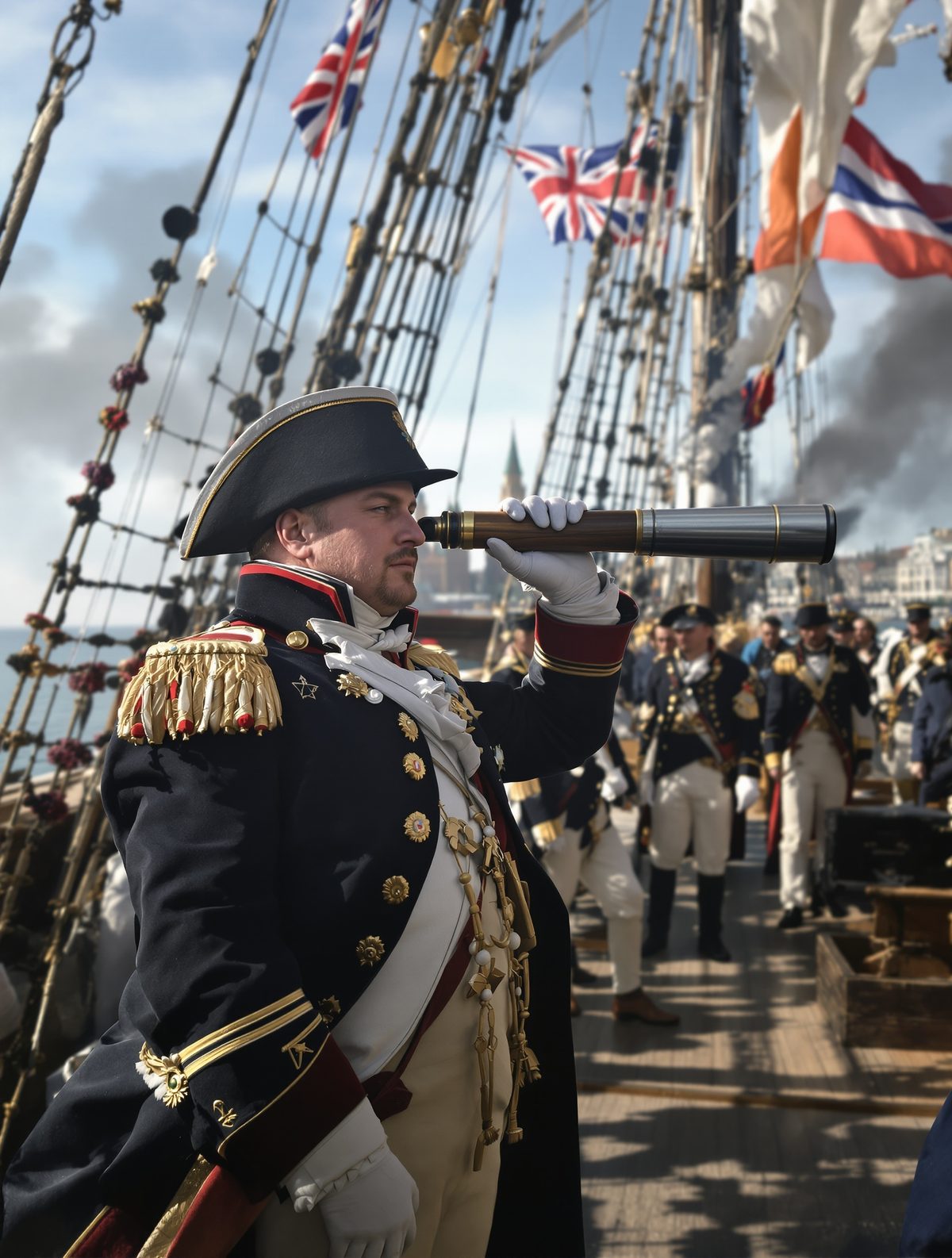
Ordered to break off the attack, Horatio Nelson raised the telescope to his blind eye. 'I really do not see the signal,' he said. Then he kept fighting. What happened next won Britain the Mediterranean.
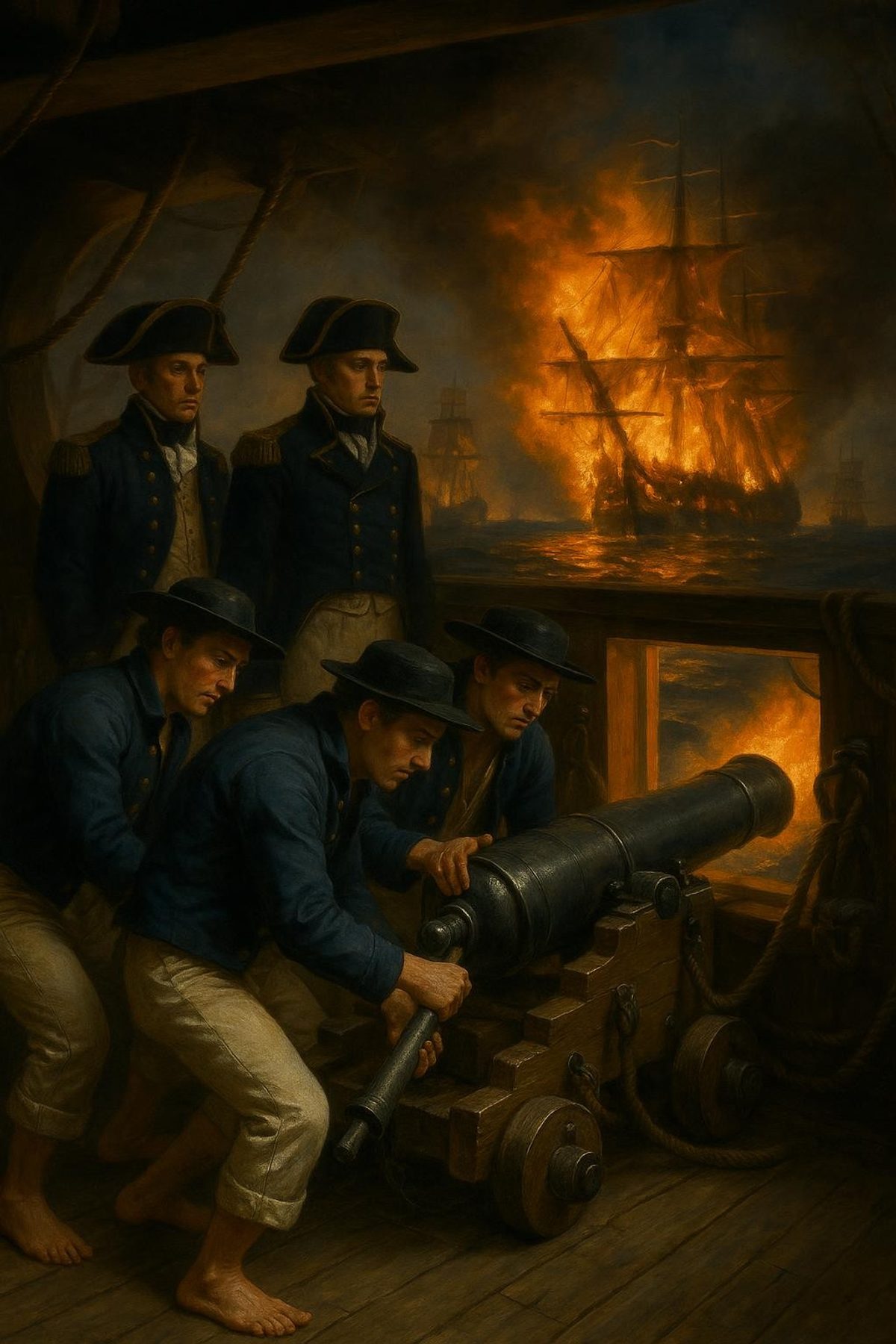
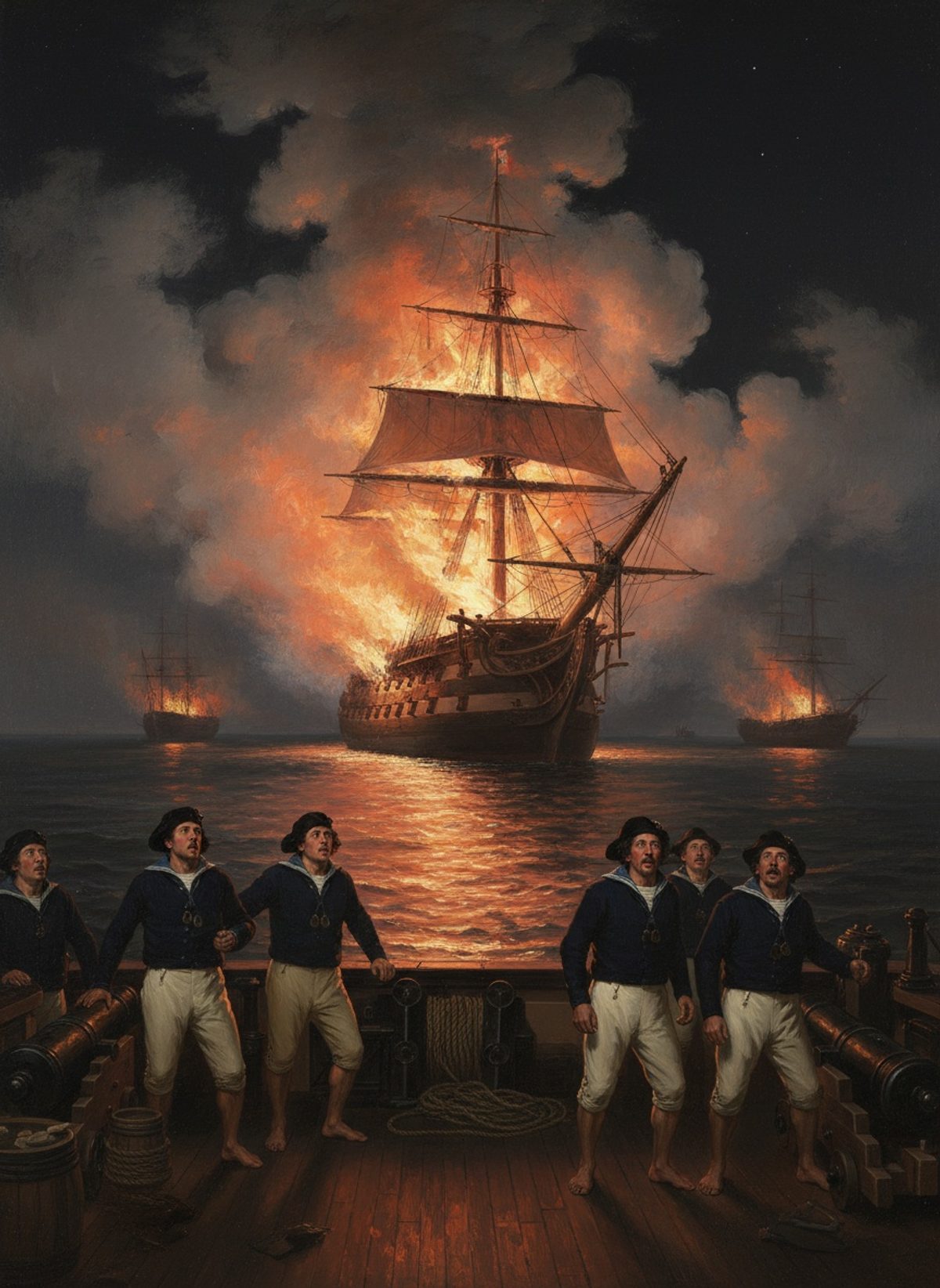
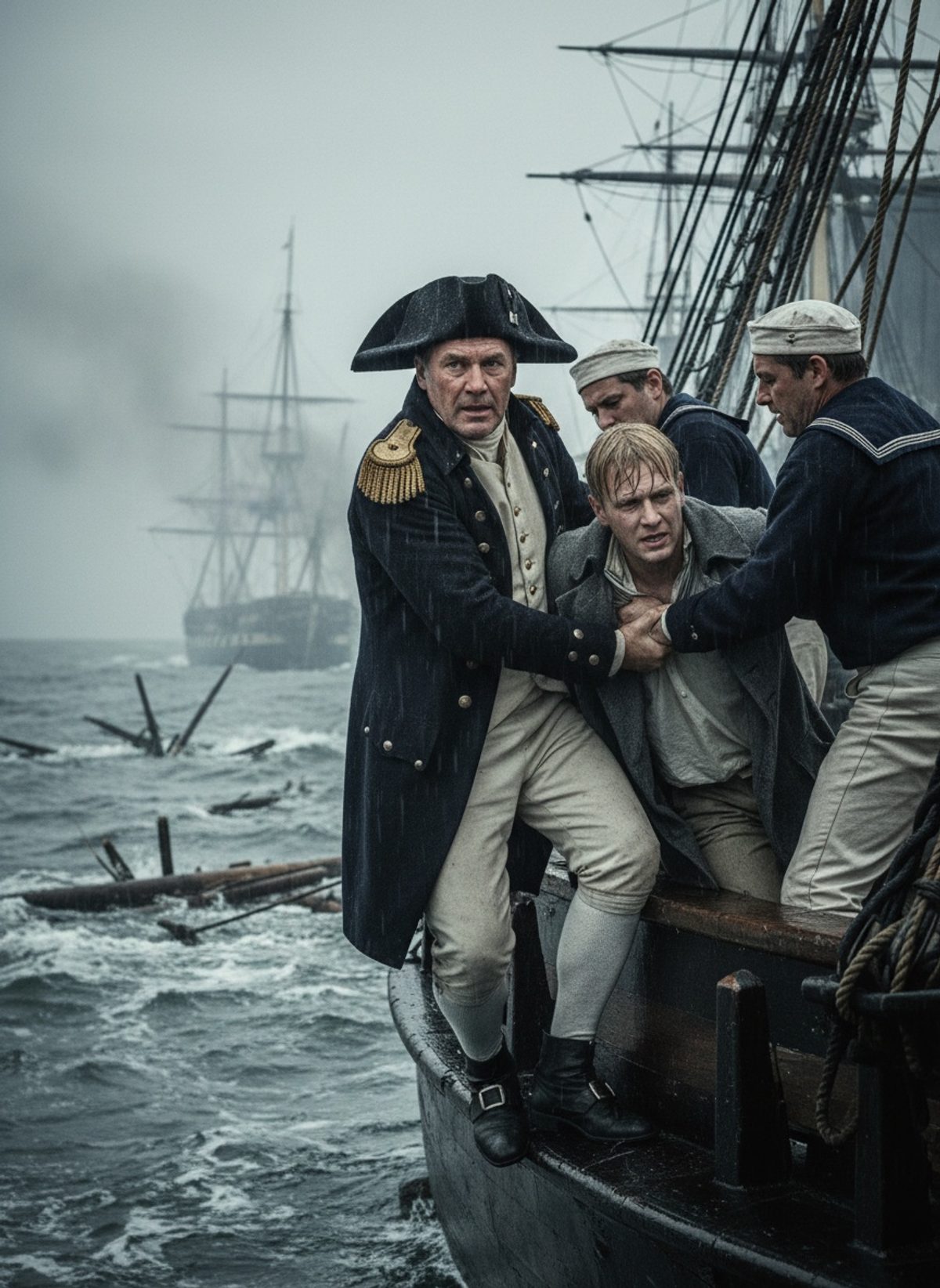
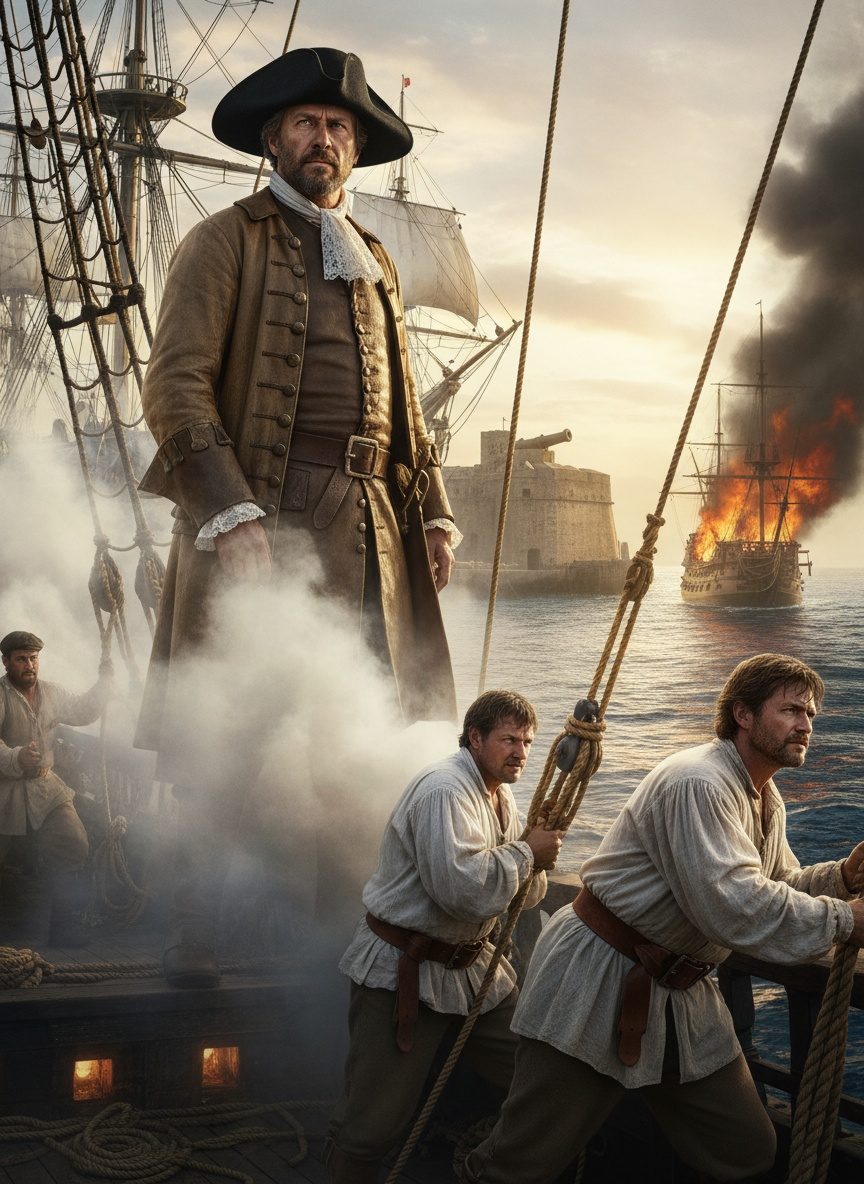
August 1801. The battle was over. A French frigate burned on the water. Her crew screamed. Captain Edward Pellew ordered his own boats down. His men rowed into the flames. They pulled 345 Frenchmen from the sea.
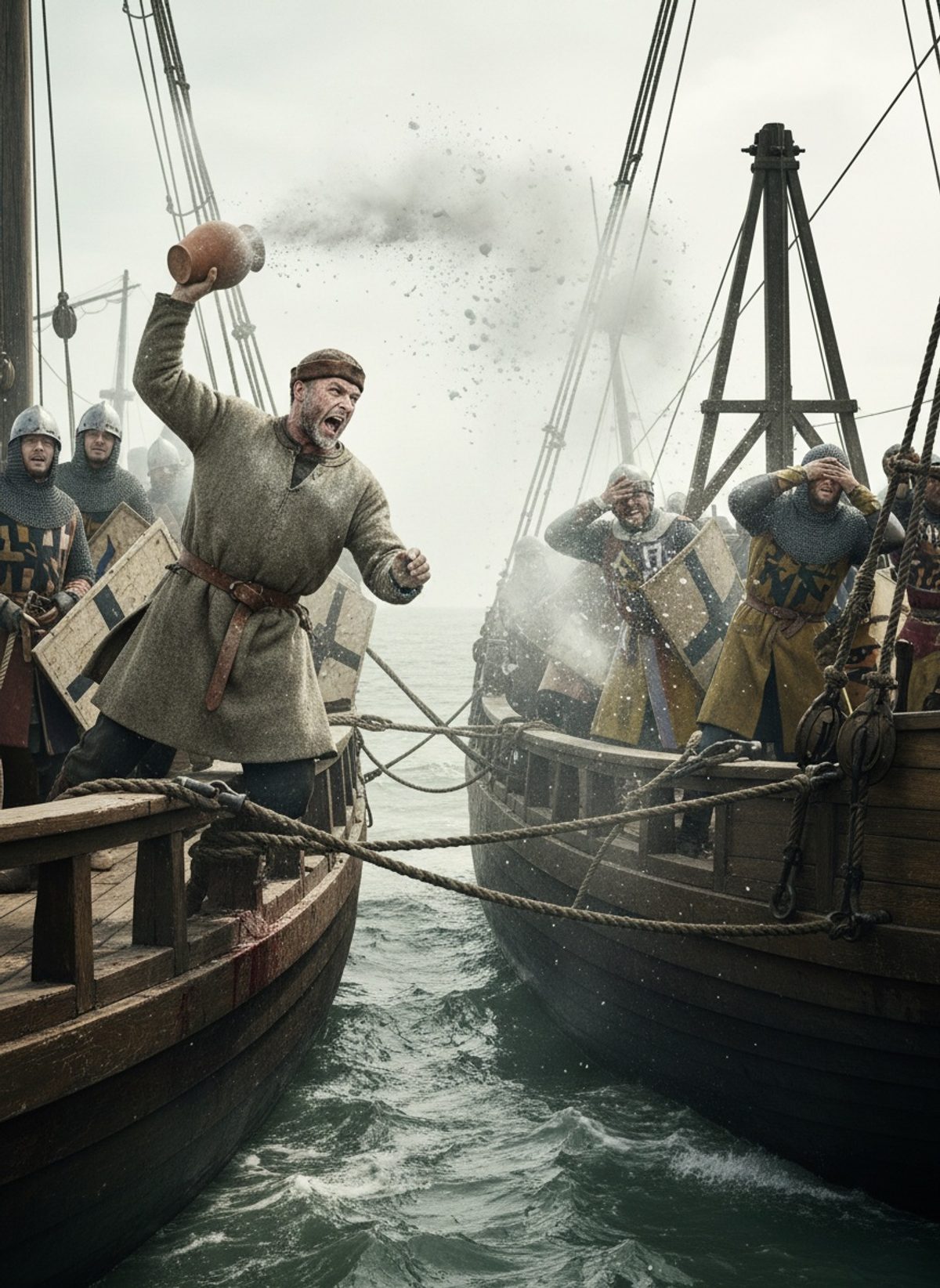
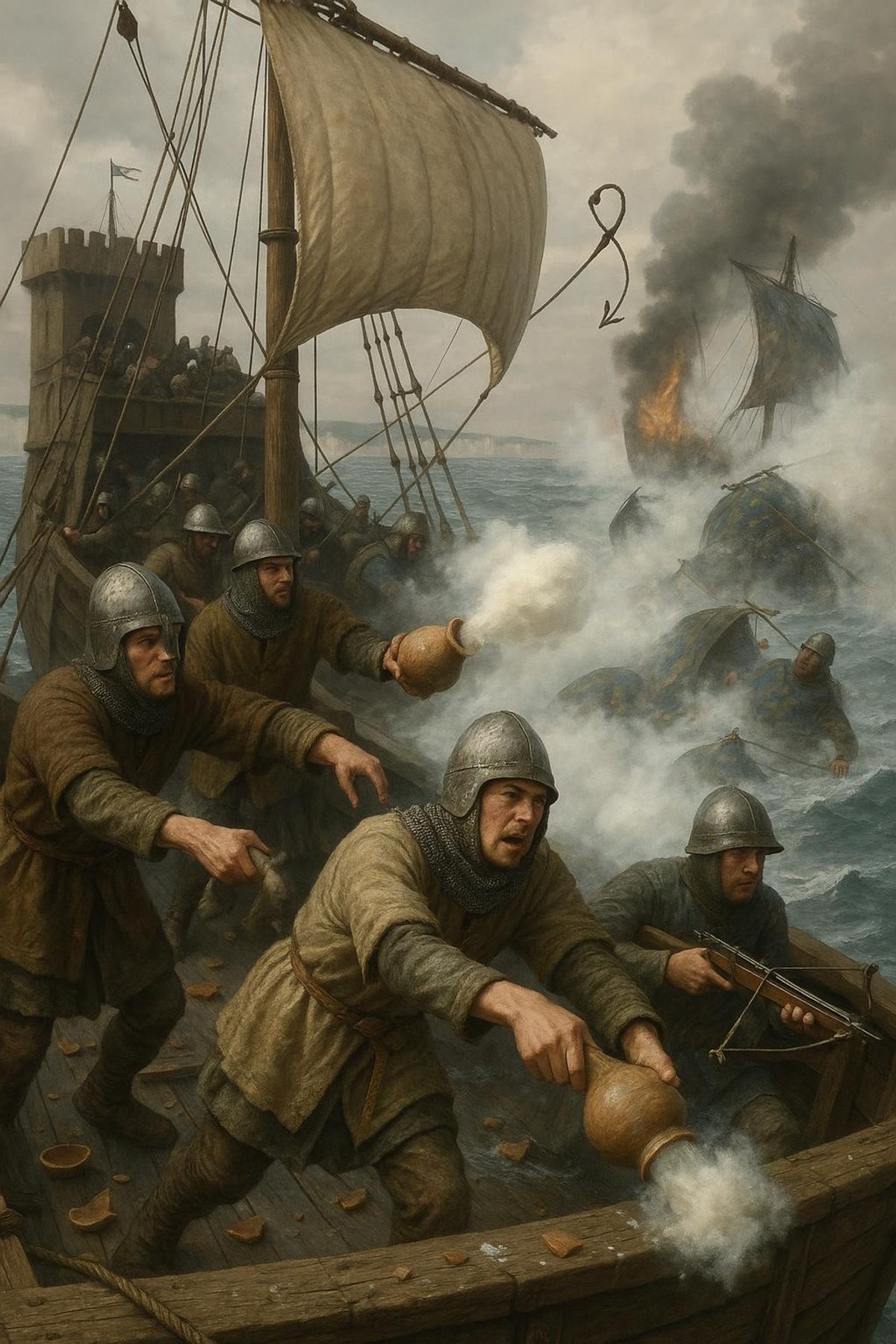
England, 1217. A French fleet was three hours from London. A pirate monk held the Channel. Forty Kentish ships, a cargo of quicklime, and one afternoon changed everything.
August 1801. The battle was over. The French frigate was sinking fast. Captain Edward Pellew ordered his boats into the water. Not for his own men. For the enemy's drowning crew. He saved over three hundred French lives that day.
1 August 1798. The French fleet was anchored. No British captain would dare sail between their line and the shore. Then HMS Goliath turned toward the shallows — and changed everything.
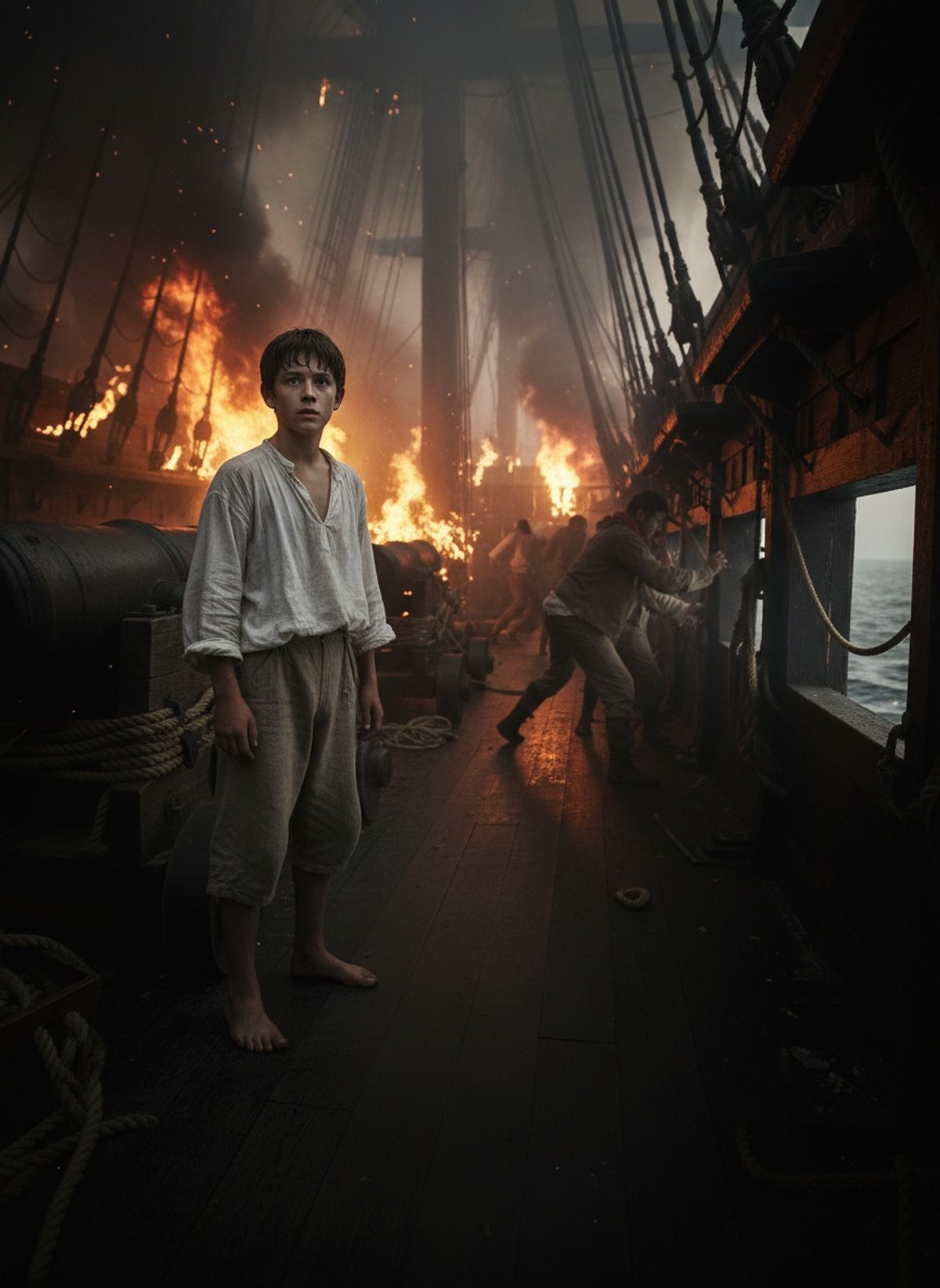
The French flagship was burning. Every man who could run, ran. One boy stayed. His name was Giacomo Casabianca. He was twelve years old. He would not leave without his father's order. His father was already dead.
August 1798. Nelson found the French fleet anchored in Egypt. He attacked with three hours of daylight left. When L'Orient exploded, both fleets stopped firing and stared at the sky.
August 1801. The battle was over. French survivors clung to wreckage in the water. Captain Edward Pellew gave the order. His men pulled them aboard. Every one.
England was nearly French. A 9-year-old king. A pirate monk commanding the invasion fleet. Then 40 Kentish ships sailed out — and threw fire into the faces of an empire.
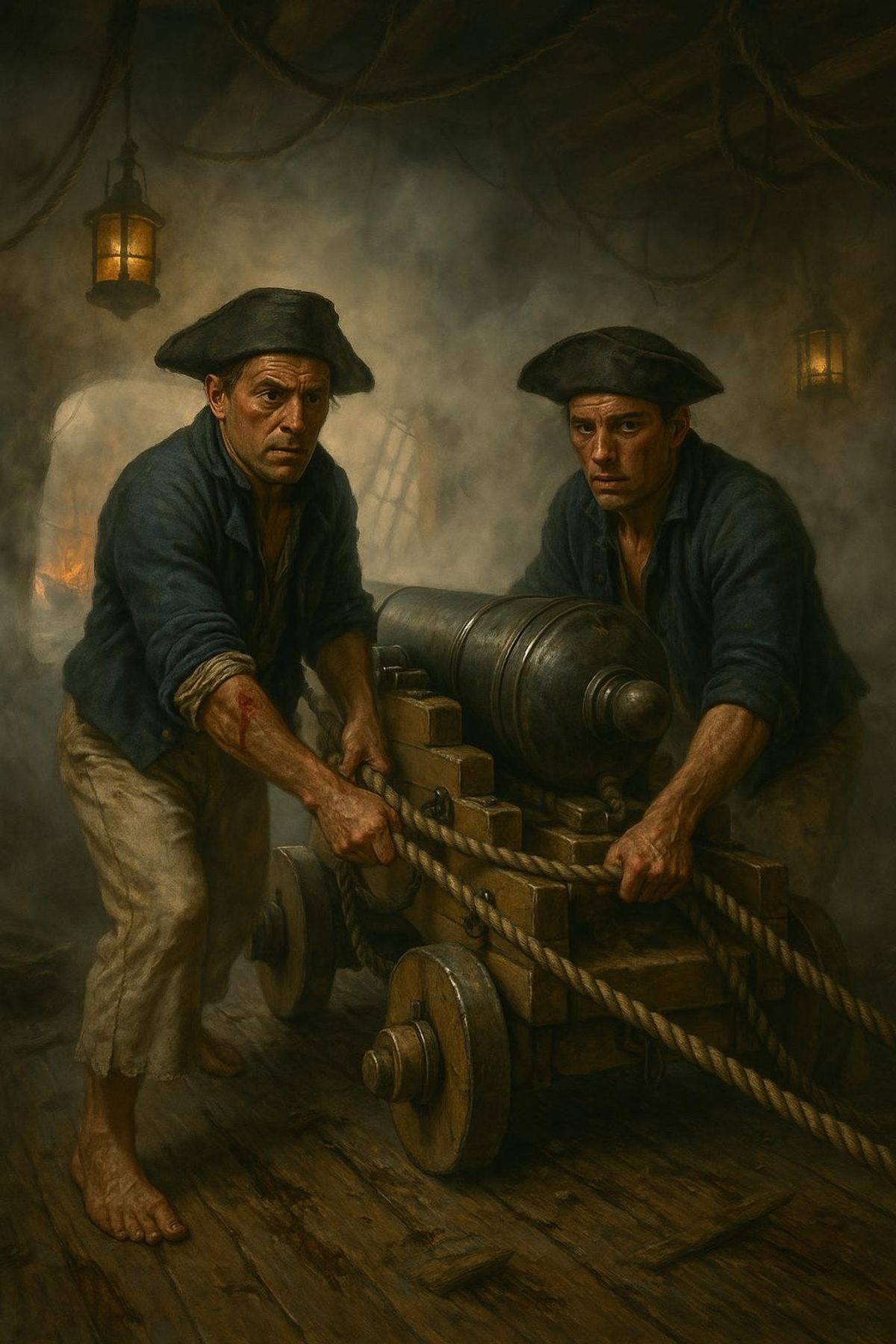
One ship. Outnumbered. On fire. The crew of HMS Belleisle fought on for three hours without a mast standing. They could not move. They would not surrender.
November 1805. Trafalgar was won. The French fleet was broken. Captain Benjamin Hallowell turned his ship back. He pulled French sailors from the freezing Atlantic. Enemies. Alive.
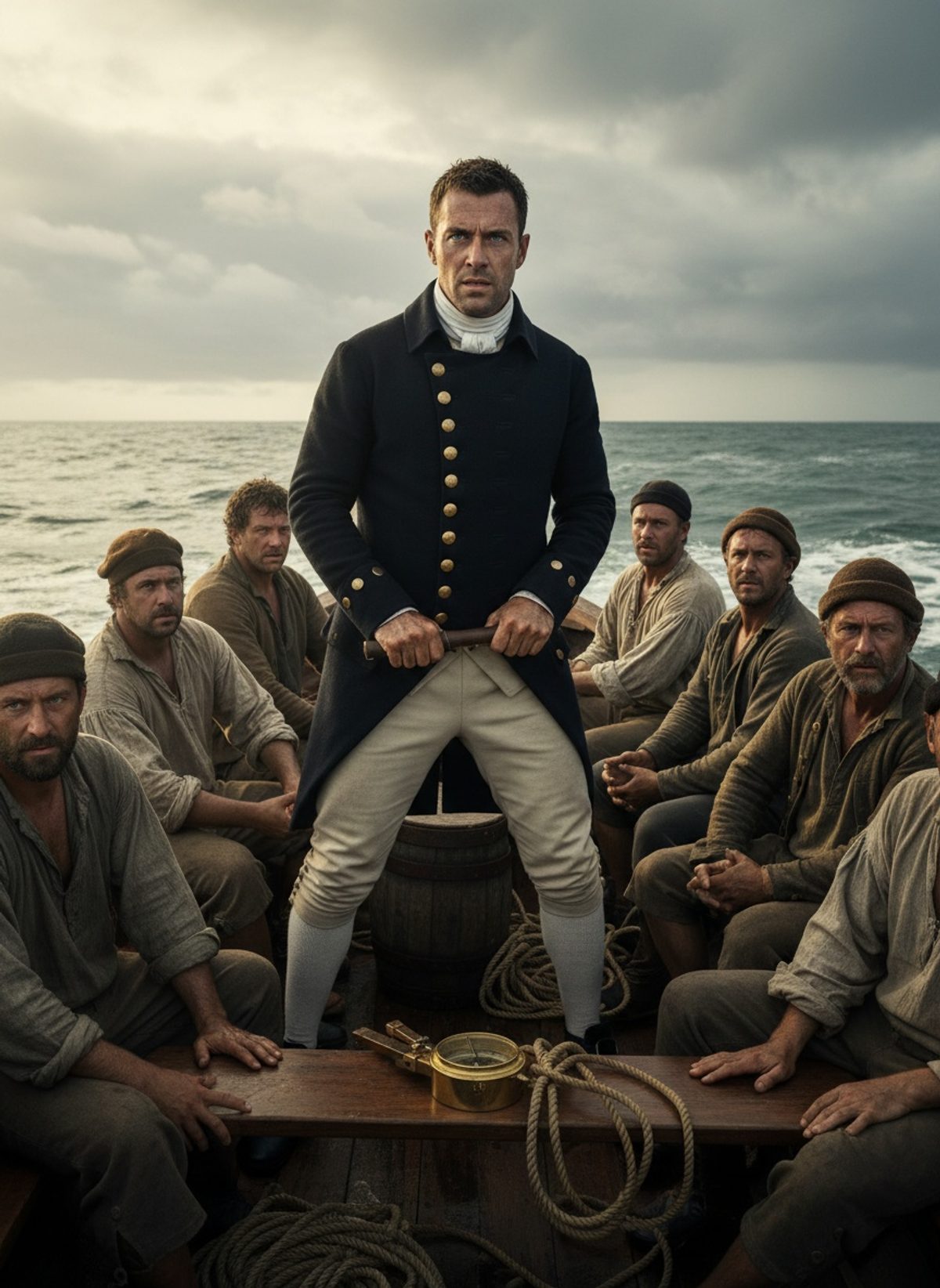
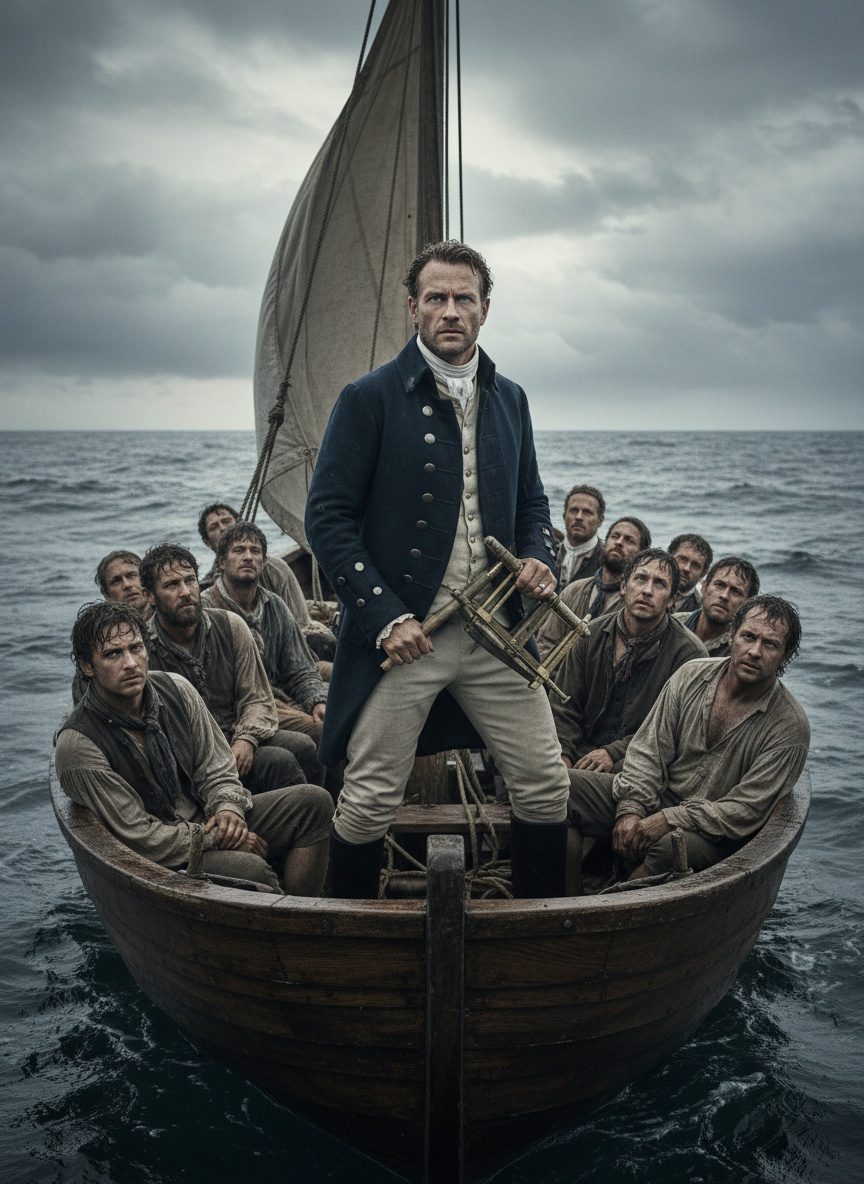
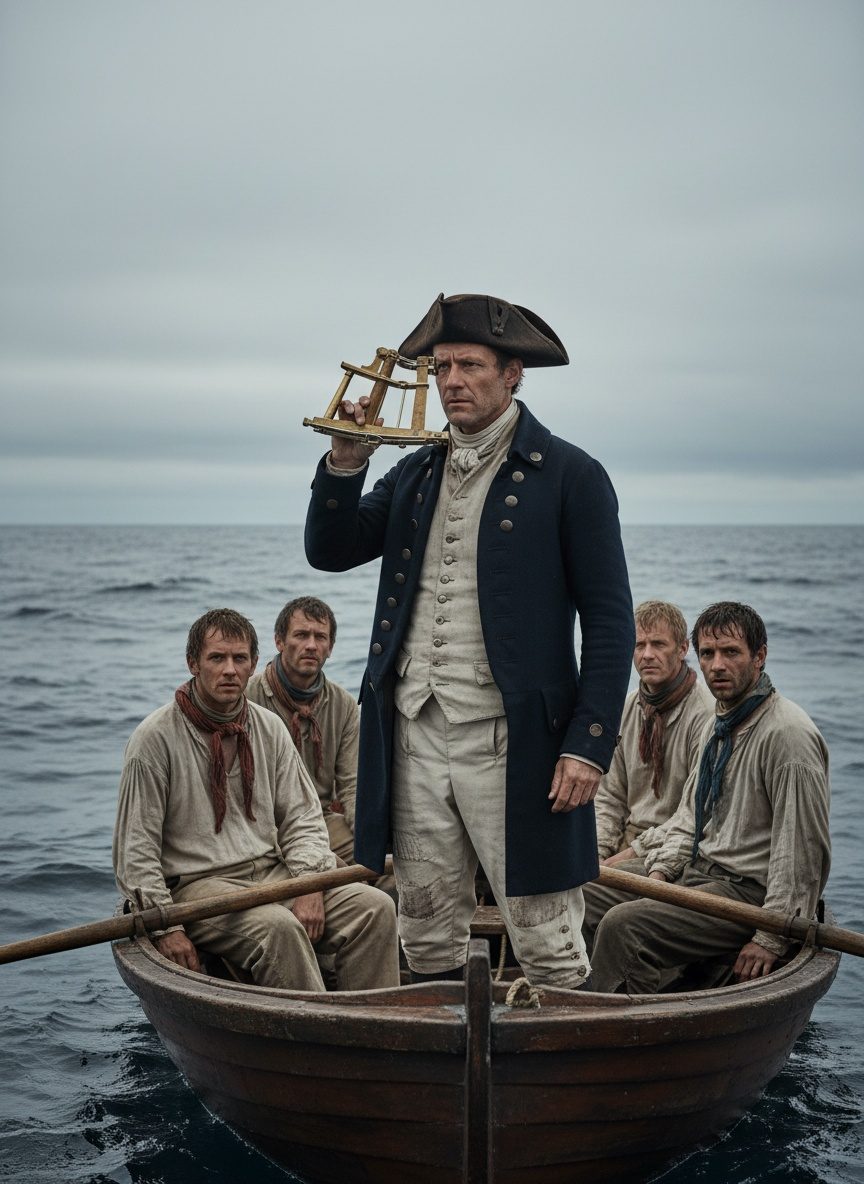
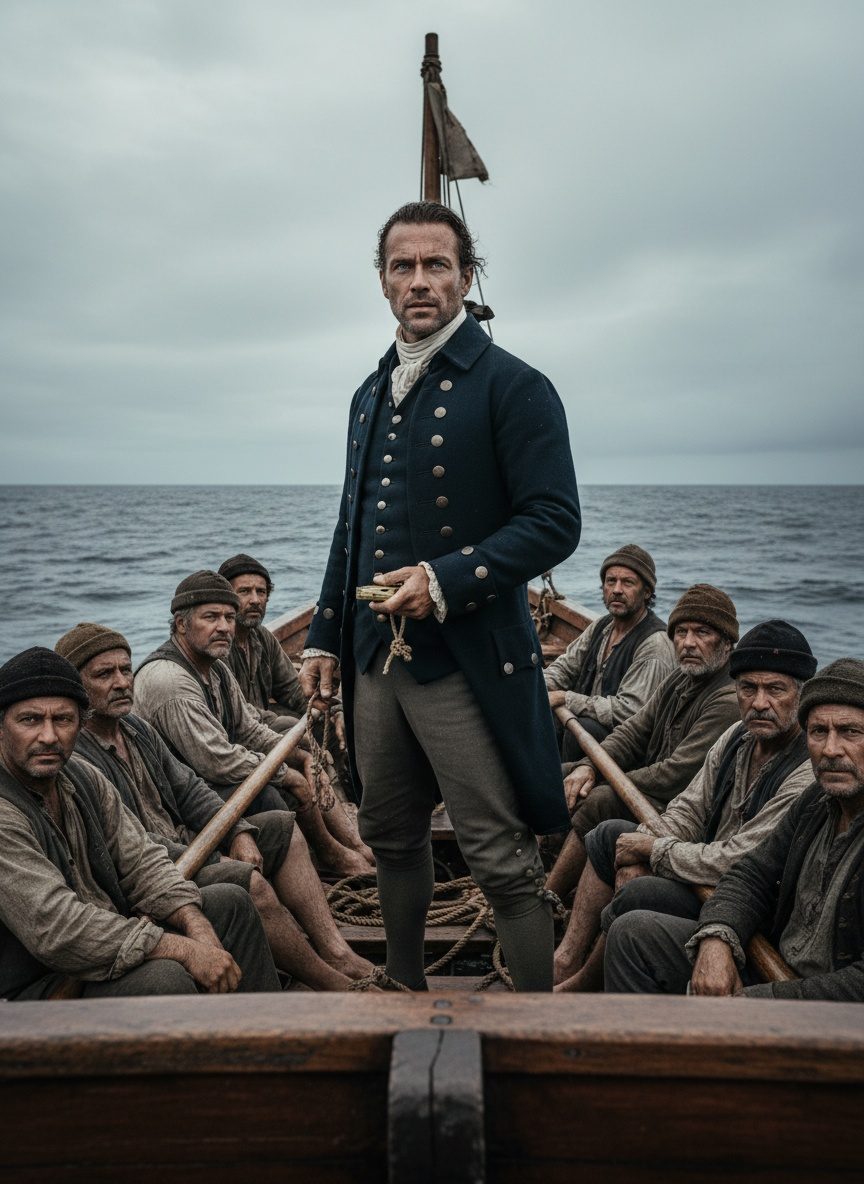
April 1789. Mutineers seized HMS Bounty. Captain Bligh had no charts. He had a pocket watch and a sextant. Forty-seven days later he sailed nineteen men to safety. Not one was lost.
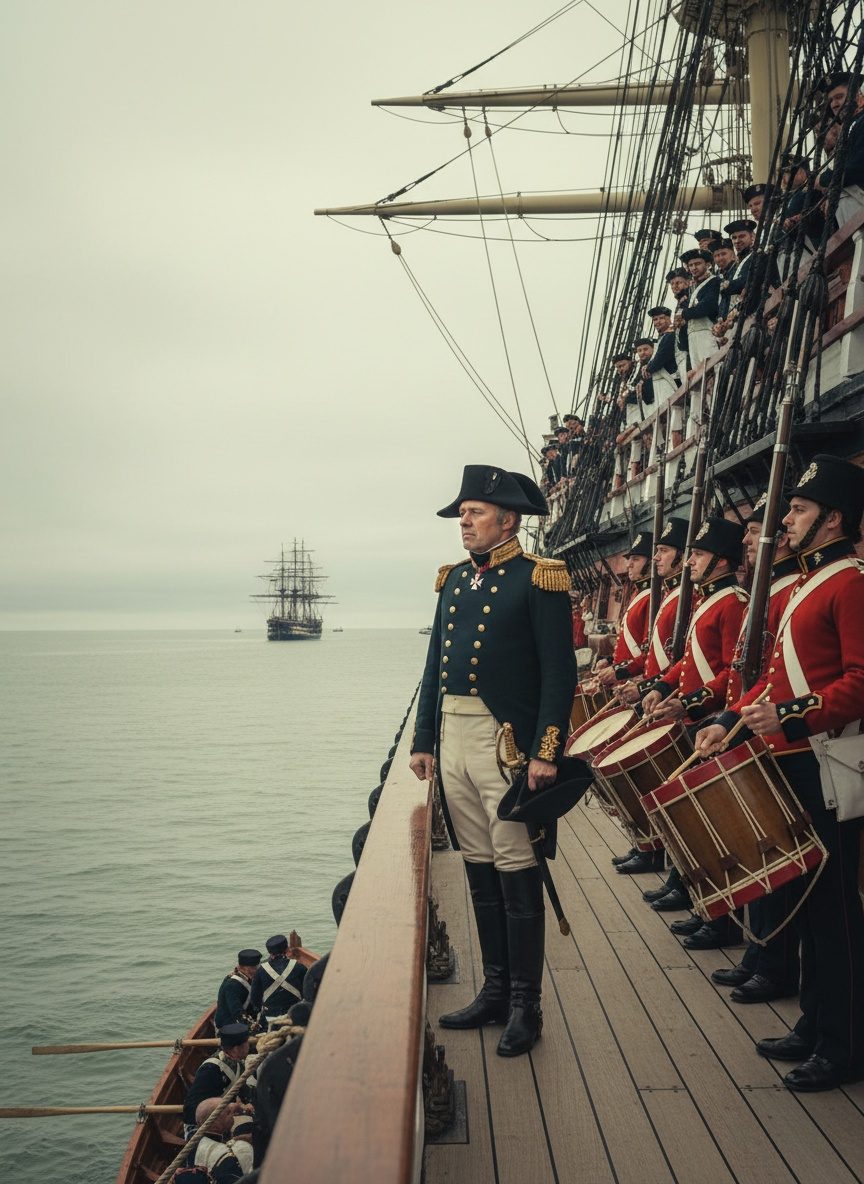
July 1815. Napoleon Bonaparte, Emperor of France, walked aboard a British warship and gave himself up. The ship he chose had been firing at his fleets for twenty years. He would never see Europe again.
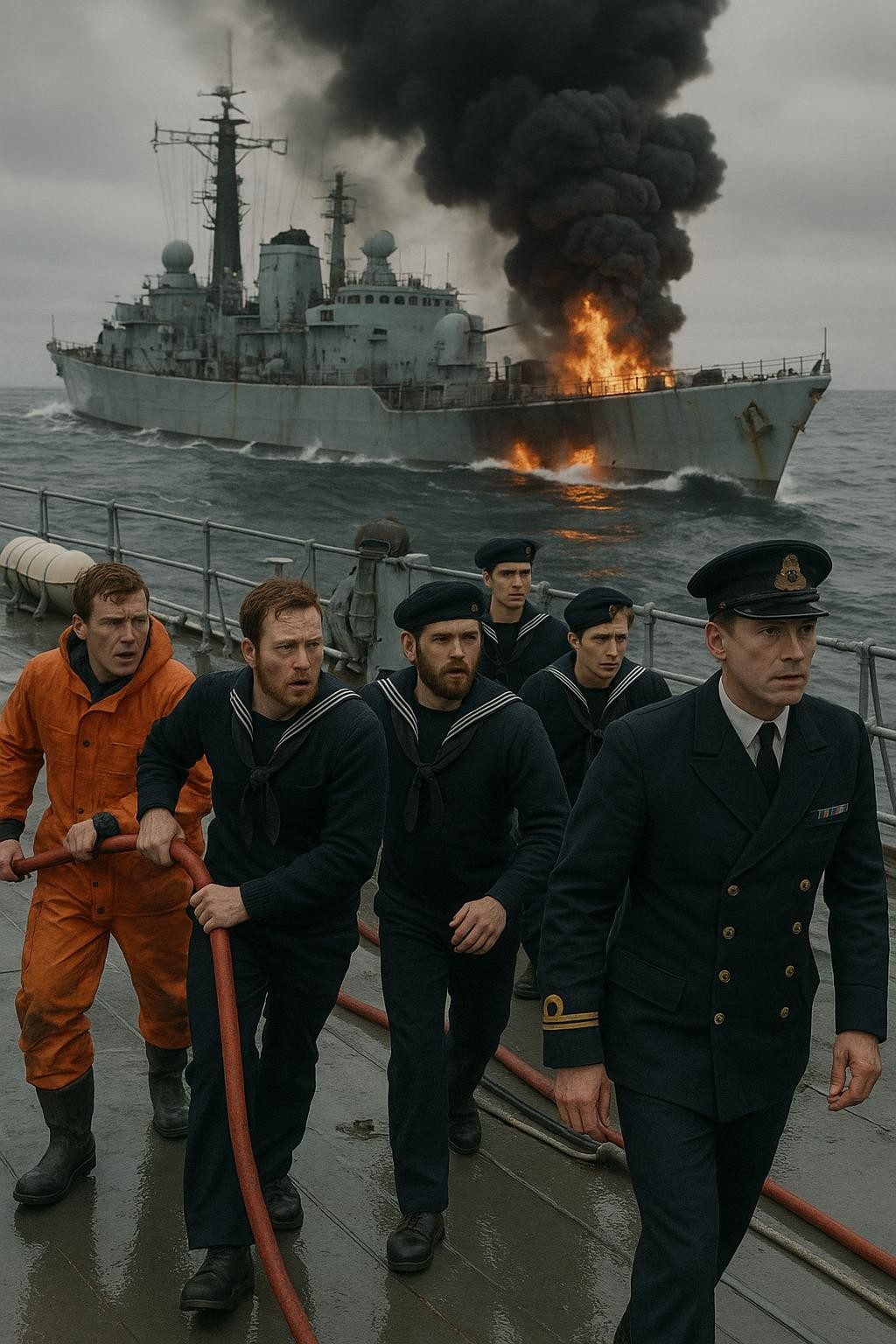
4 May 1982. A missile struck HMS Sheffield without warning. Twenty sailors died. The ship burned for days. Britain had not lost a warship like this since 1945. The war suddenly became very real.
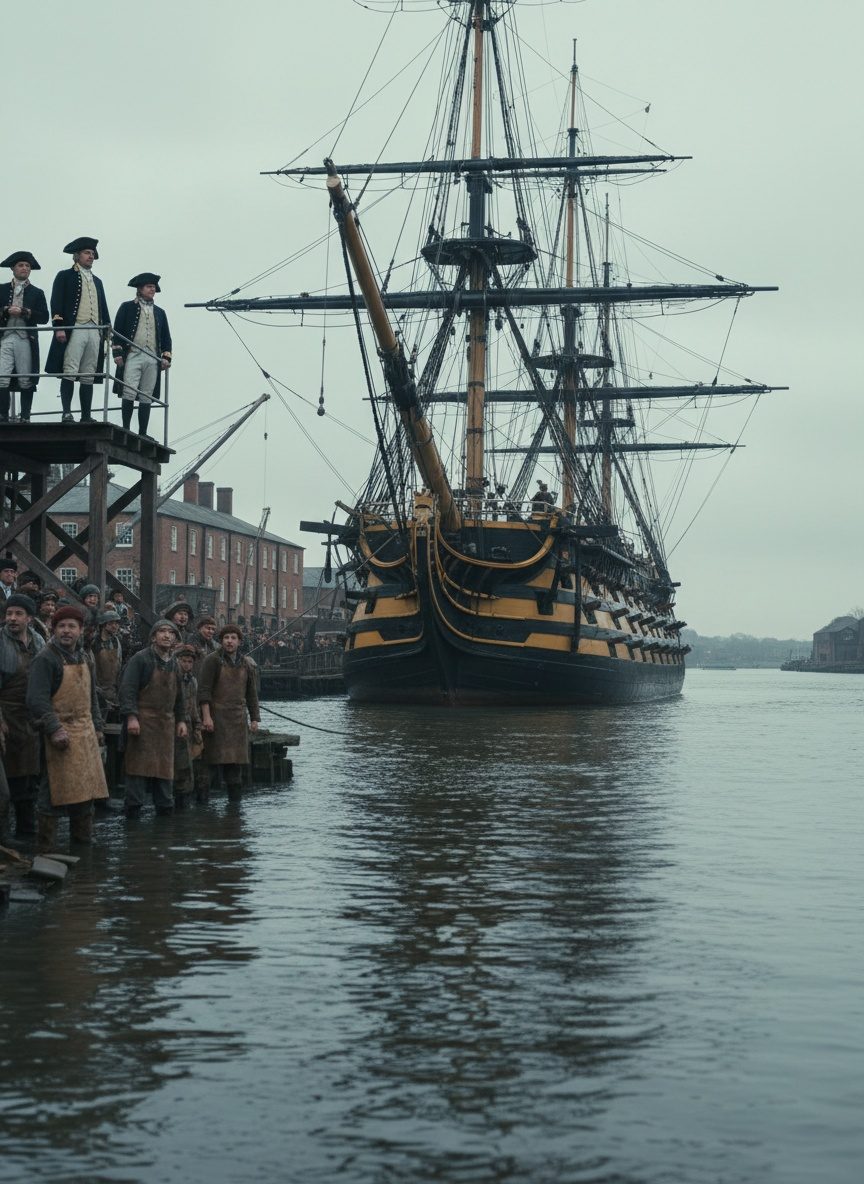
7th May 1765. A vast hull slides into the Medway at Chatham. She has no name yet that the world knows. But this ship will carry Nelson to his greatest hour — and his last.
April 1657. Twelve English frigates drove into the most fortified Spanish harbour in the Atlantic. Castle guns. Shore muskets. Three defensive lines. By three in the afternoon, sixteen Spanish ships were gone. Not one Englishman was lost.
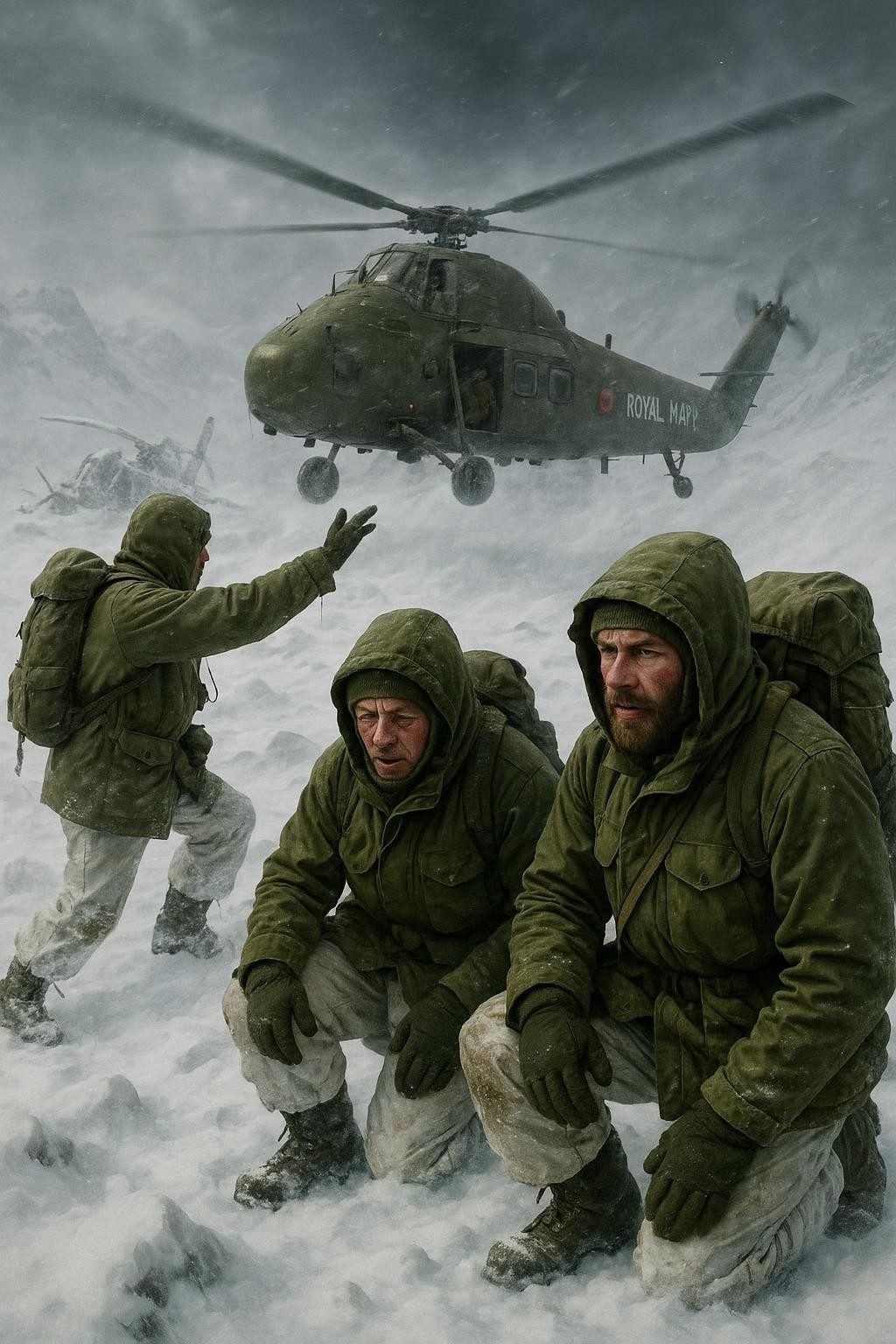
Twenty men stranded on a glacier. Two helicopters already down. One pilot flew back in. He packed them all in and got every man home. No one expected him to try a second time.
They made him a villain. Hollywood agreed. But William Bligh flogged less than Cook. Was court-martialled three times. Acquitted every one. The real story is nothing like the film.
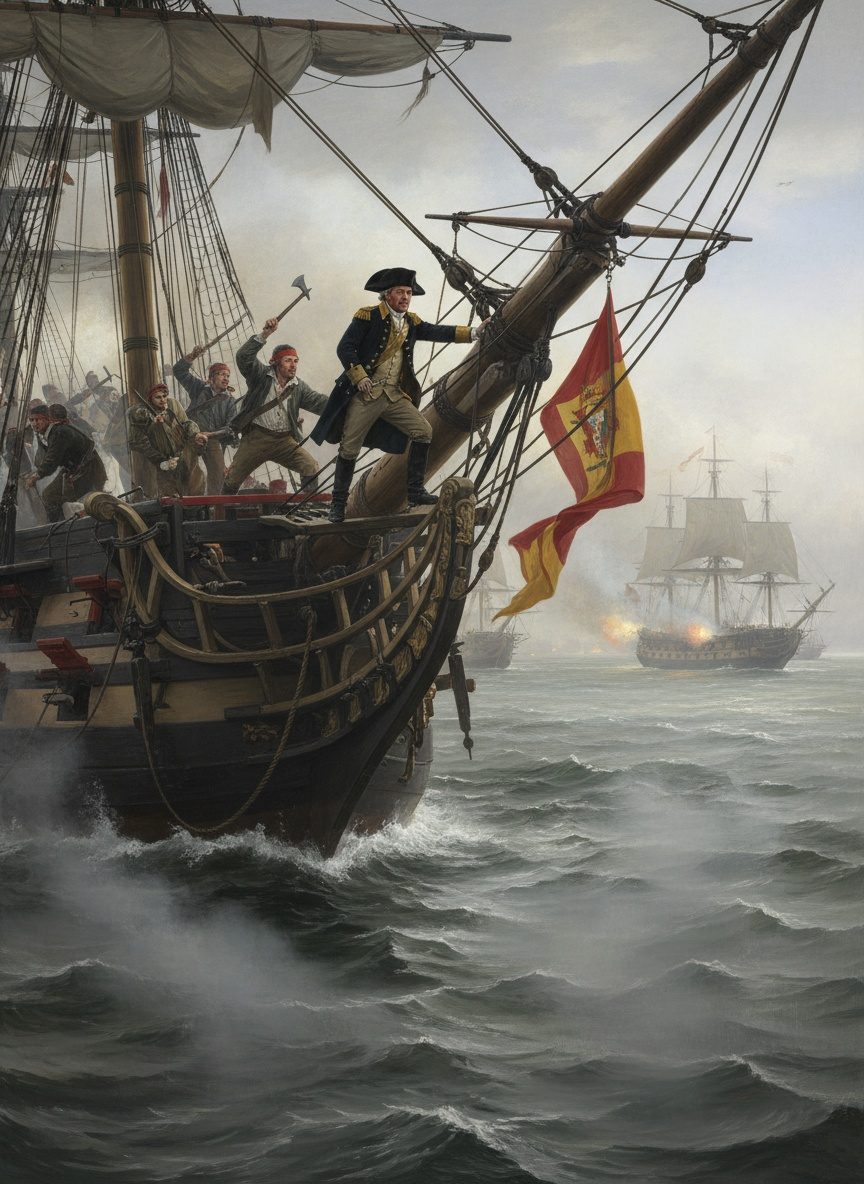
15 British ships. 27 Spanish. One commodore who didn't wait for orders. Nelson wore HMS Captain out of the line alone — and threw her at five enemy ships of the line. Britain held.
15 British ships. 27 Spanish. One commodore broke every rule in the book. He crashed his bowsprit into an enemy ship — then boarded a second through the first. Britain stayed in the war.
May 1789. Eighteen men. An open boat. 3,600 miles of open Pacific. William Bligh rationed every crumb. He kept them alive. Every single one.
Horatio Nelson stood on Victory's quarterdeck in a coat blazing with medals. Every officer begged him to go below. He refused. Within the hour, a French marksman's bullet found him.
April 1801. One British sloop. A French fleet of nearly two dozen vessels. Thomas Cochrane opened fire. He bluffed. He lied with flags. He didn't stop. By morning, the French were fleeing.
August 1814. British veterans marched 50 miles in 100-degree heat. They ate the President's dinner while it was still warm. Then they lit the White House on fire.
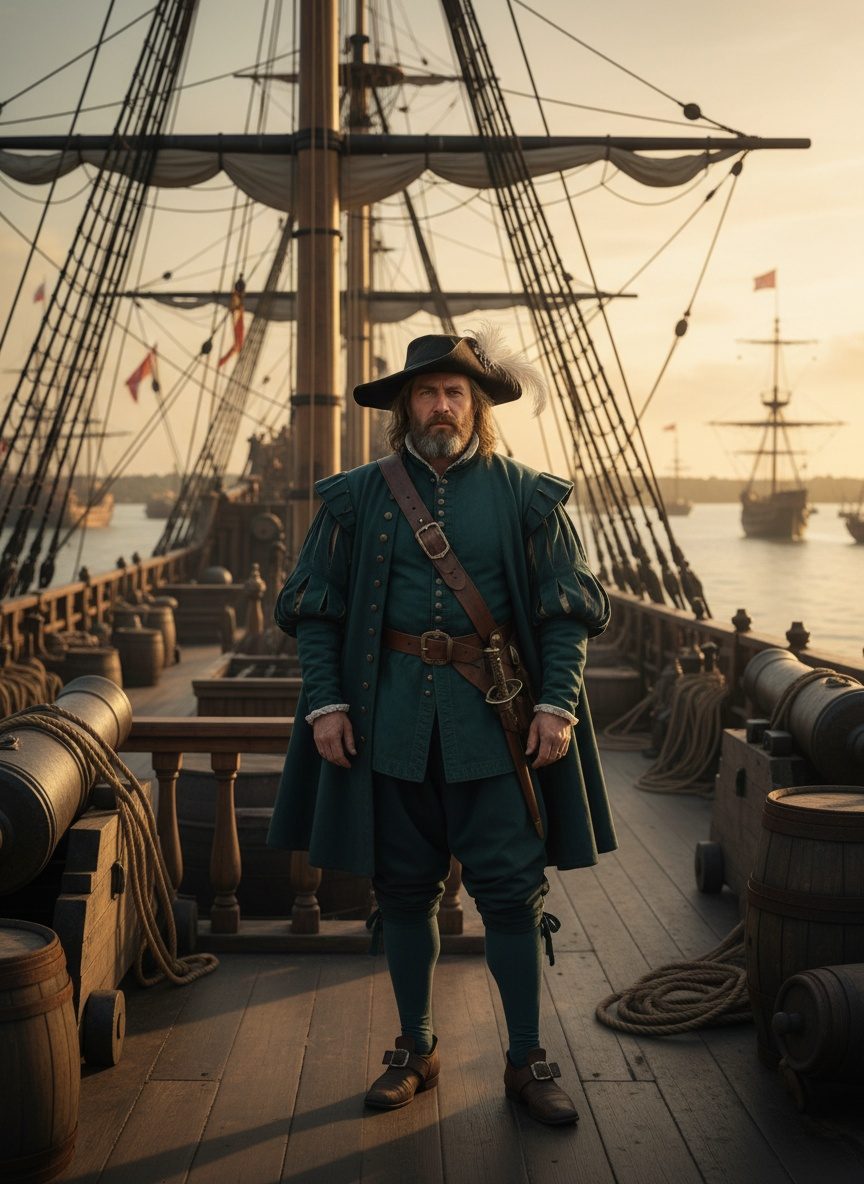
He grew up in a rotting ship. He sailed around the world and came home with enough Spanish silver to clear England's debts. The queen knighted him on his own deck. Spain put a bounty on his head.
May 1982. A British nuclear submarine stalked an Argentine cruiser for two days. The War Cabinet gave the order. Two torpedoes struck. The Argentine navy never put to sea again.
For forty years, a torpedo attack was called murder. The captain who went down with his ship disagreed. So did his admiral. So did his own government.
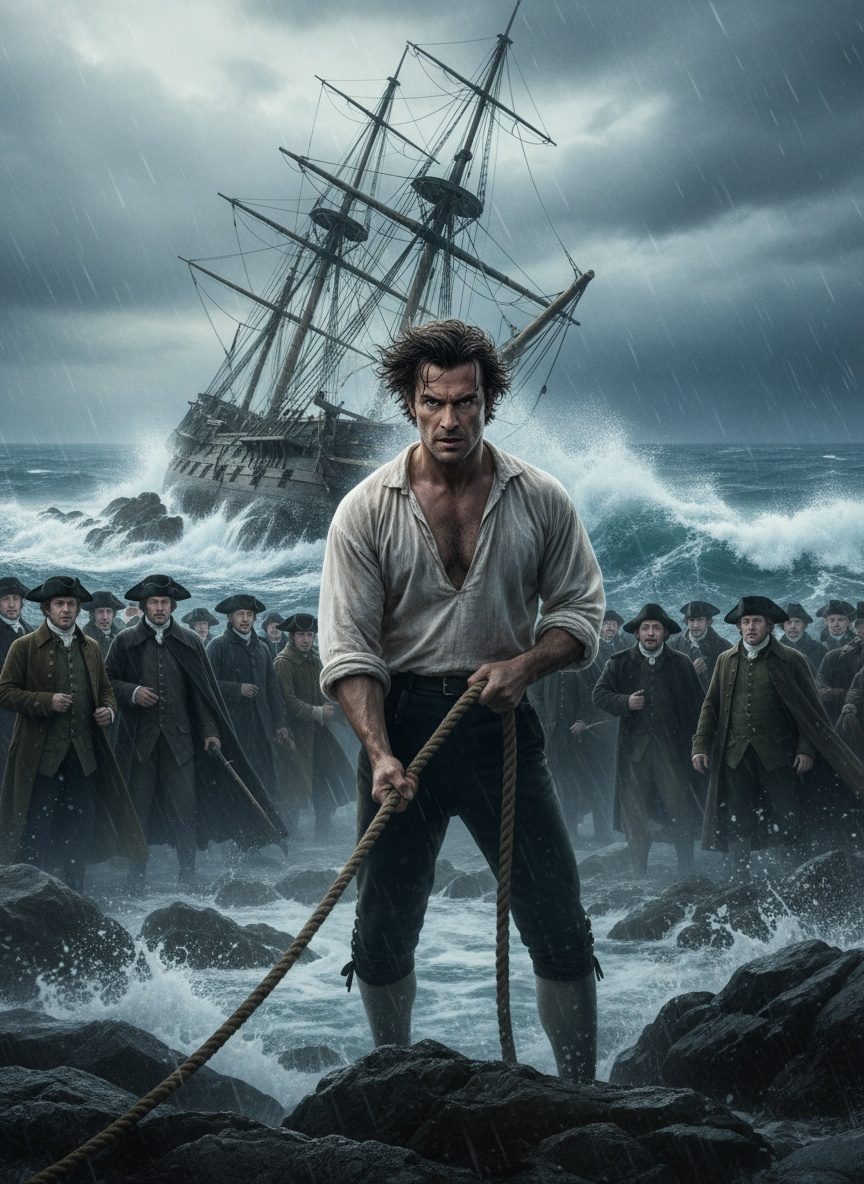
January 1796. The troopship Dutton was breaking apart on Plymouth rocks. Her cables had snapped. Hundreds of soldiers were trapped aboard. A naval captain stripped off his coat. Dived into the surf. Climbed aboard alone. And took command.
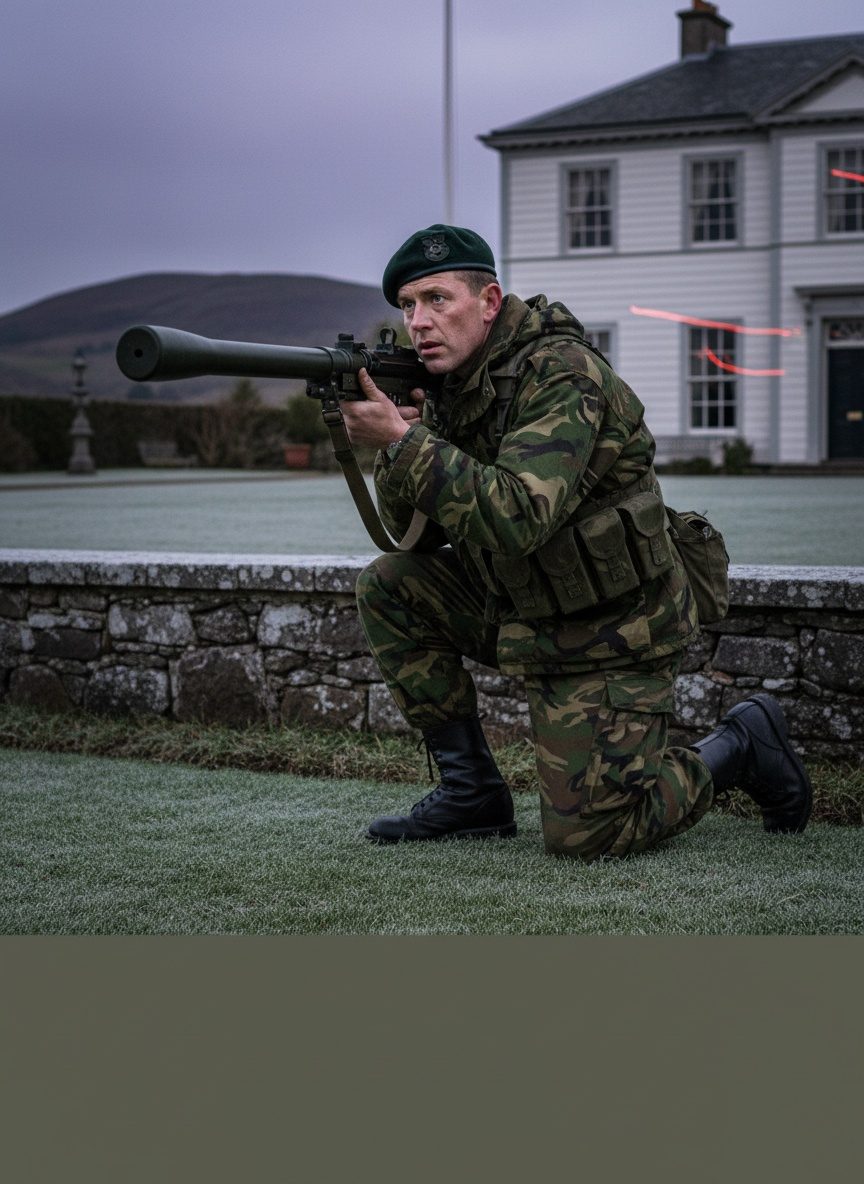
68 Royal Marines. 2,800 Argentine troops. Three hours at Government House. They fired 6,450 rounds. Then they sang as they were marched out. And promised to come back.
November 1940. Thirty-seven merchant ships. One armed liner. One German pocket battleship. Captain Fegen ordered full speed ahead. Straight at the Admiral Scheer. He bought the convoy time. He never came home.
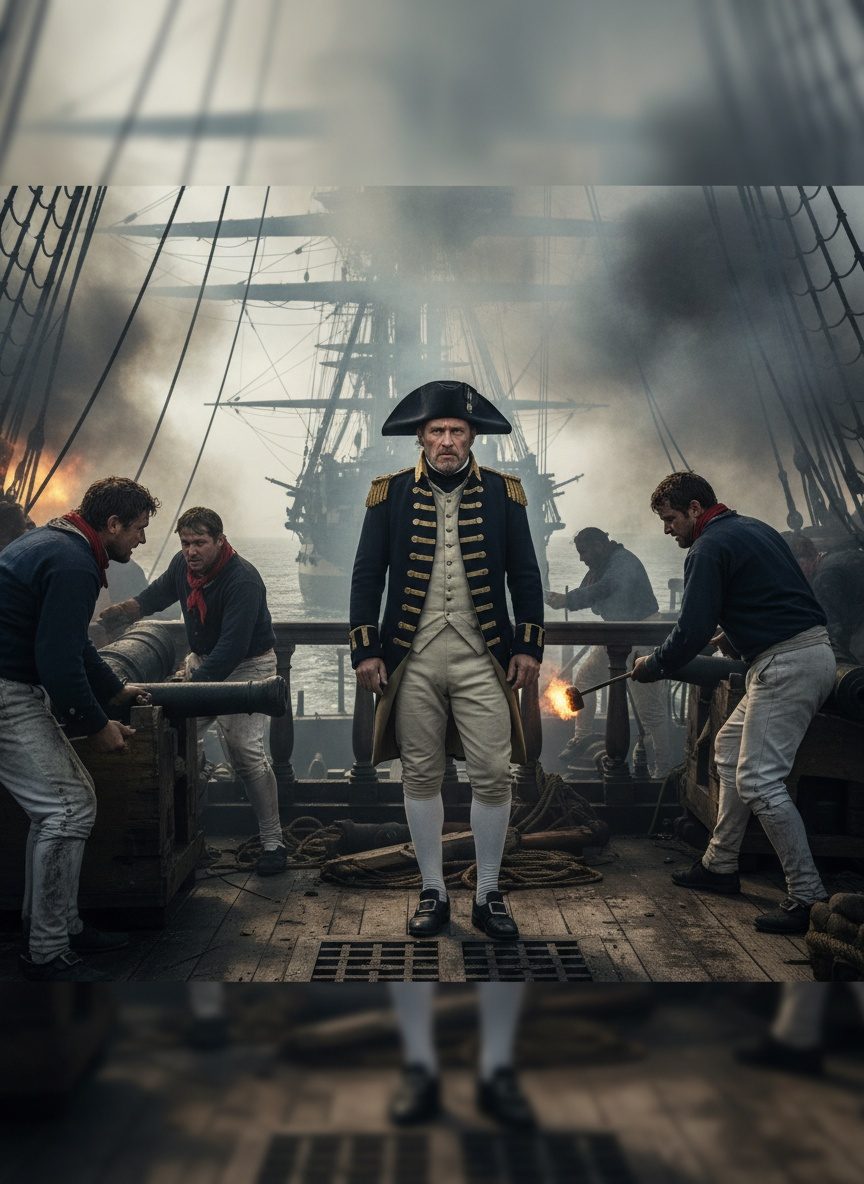
August 1702. The Caribbean. A British squadron was shattered by French guns. Every captain abandoned the fight. Benbow fought on alone. His leg shattered by chainshot. He refused to leave the deck.
November 1805. HMS Bellerophon had fought at Trafalgar. Her decks were splintered. Her crew was half gone. Her captain lay wounded below. She made it home.
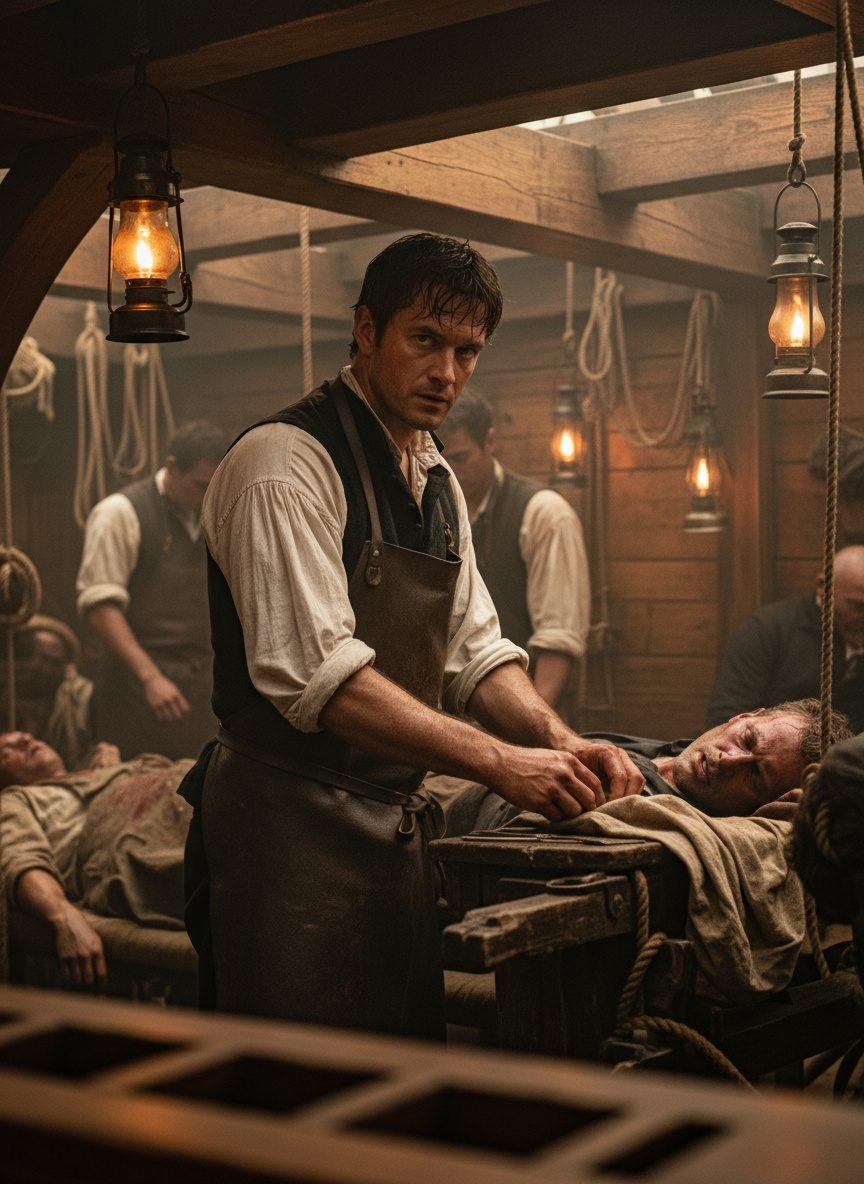
October 1805. HMS Victory. The guns were still firing. Surgeon William Beatty worked below decks in the dark. Wounded men came in waves. He saved lives while the ship shook. Then Nelson himself was carried down.
1801. HMS Speedy carried fourteen tiny guns. A Spanish frigate carried thirty-two. Cochrane had no ammunition left. He lit a barrel of tar and vanished into the night. The Spanish thought he had exploded.
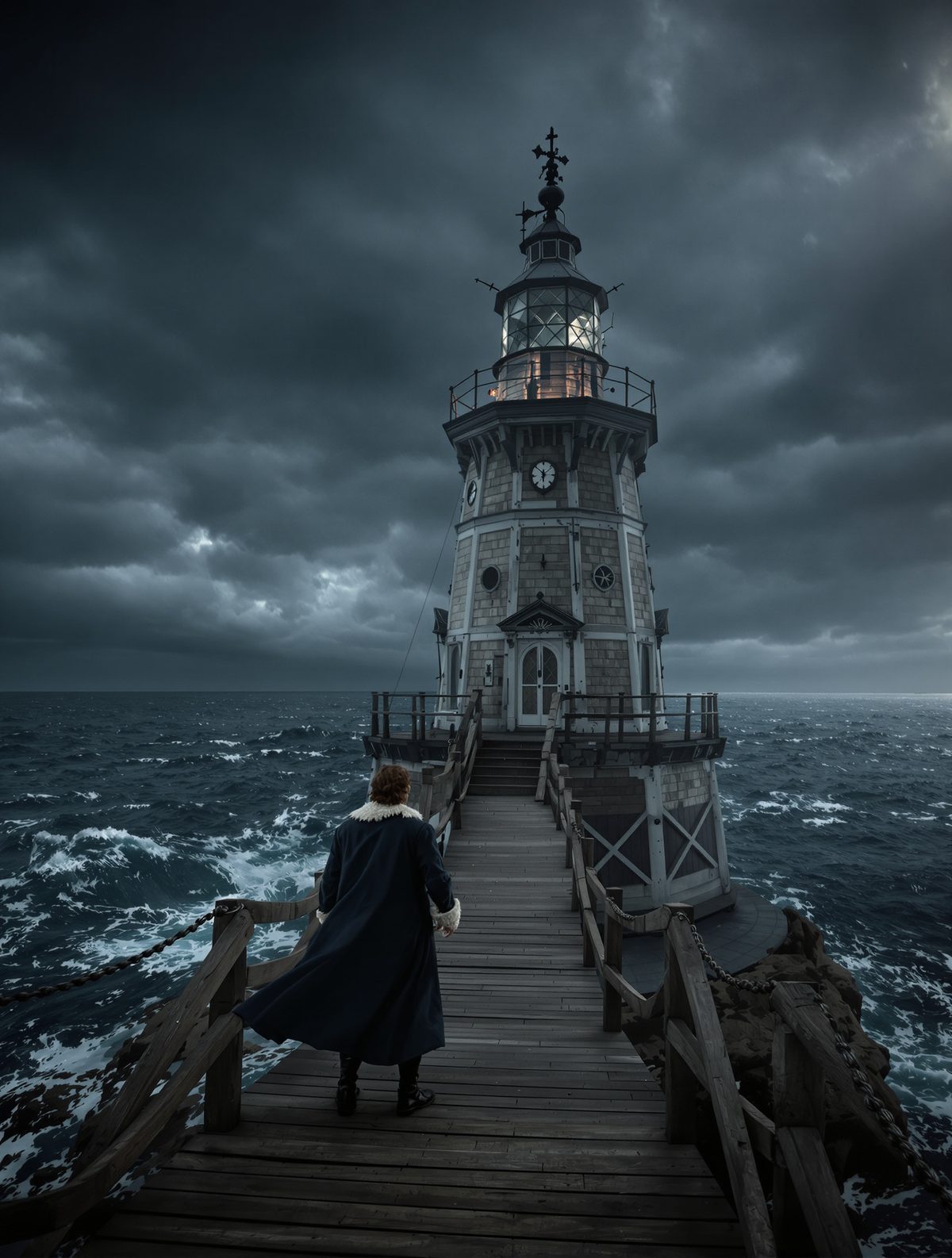
The Eddystone Rock had claimed over 50 ships. Henry Winstanley built the first lighthouse there in 1698. Critics said it would never survive a real storm. In 1703, the Great Storm hit. Winstanley was inside his lighthouse when it struck.
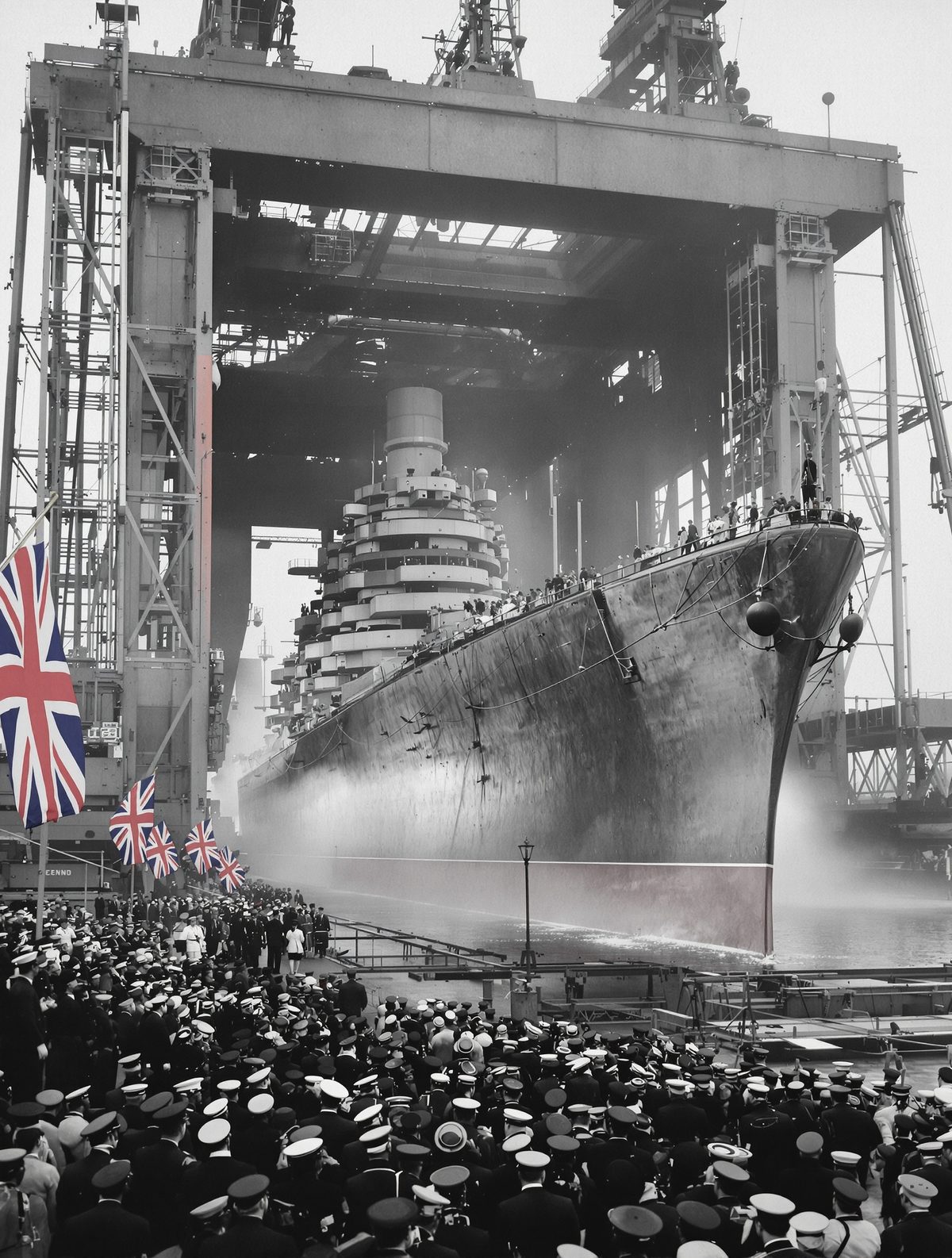
1906. HMS Dreadnought launched at Portsmouth. Admiral Jackie Fisher's radical design made every battleship in the world obsolete overnight. Britain ruled the waves again.
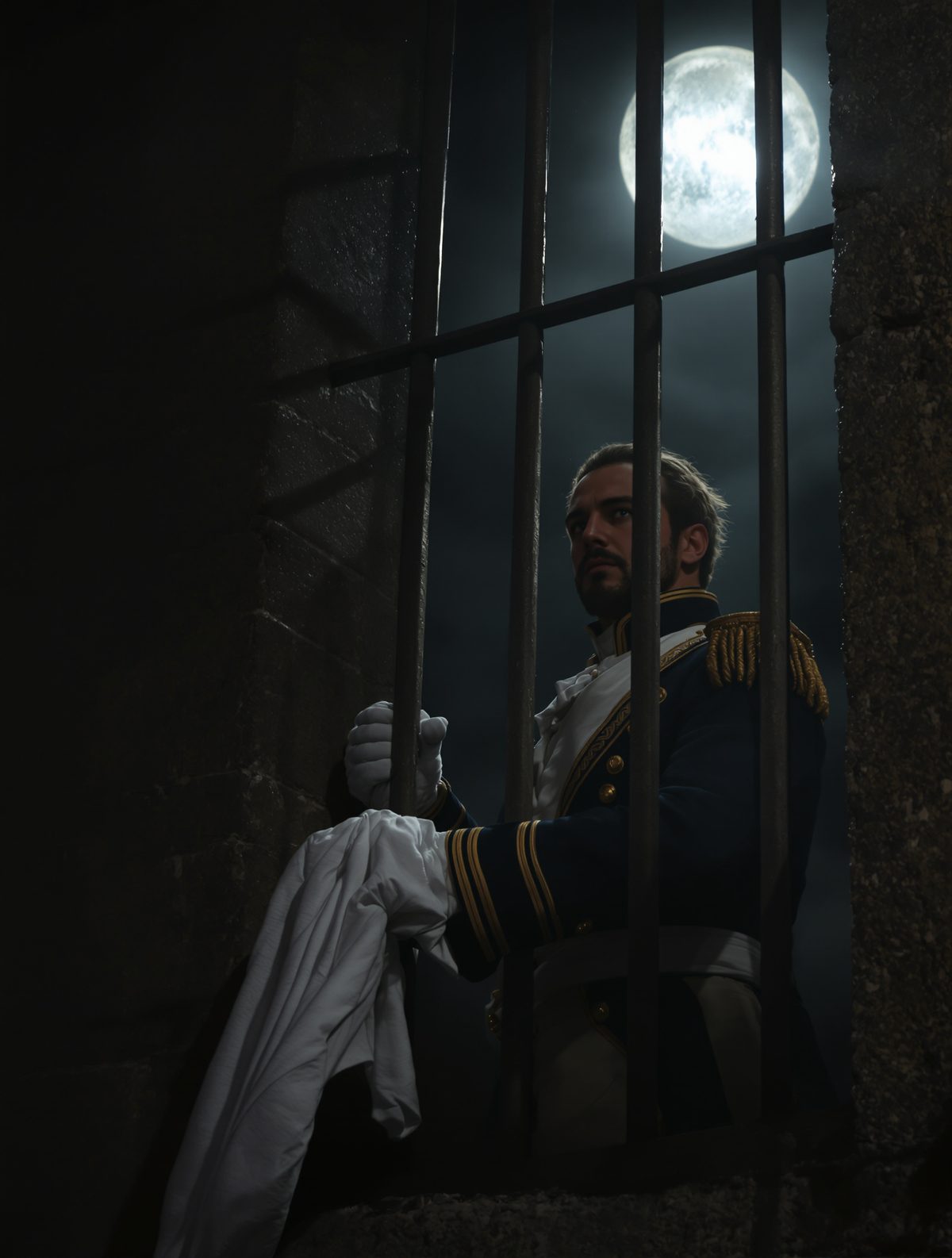
Lord Cochrane sat in his prison cell, falsely accused of fraud. The Sea Wolf of the Royal Navy had defeated Napoleon's fleets. Now he faced disgrace. At midnight, he knotted bedsheets together. Climbed down from his window. Escaped to fight another day.
Lieutenant Commander Gerard Roope knew his destroyer was doomed. Outgunned by the massive German cruiser Hipper. But he had one last move. Full speed ahead. Ram the enemy. His sacrifice saved the British fleet at Narvik.
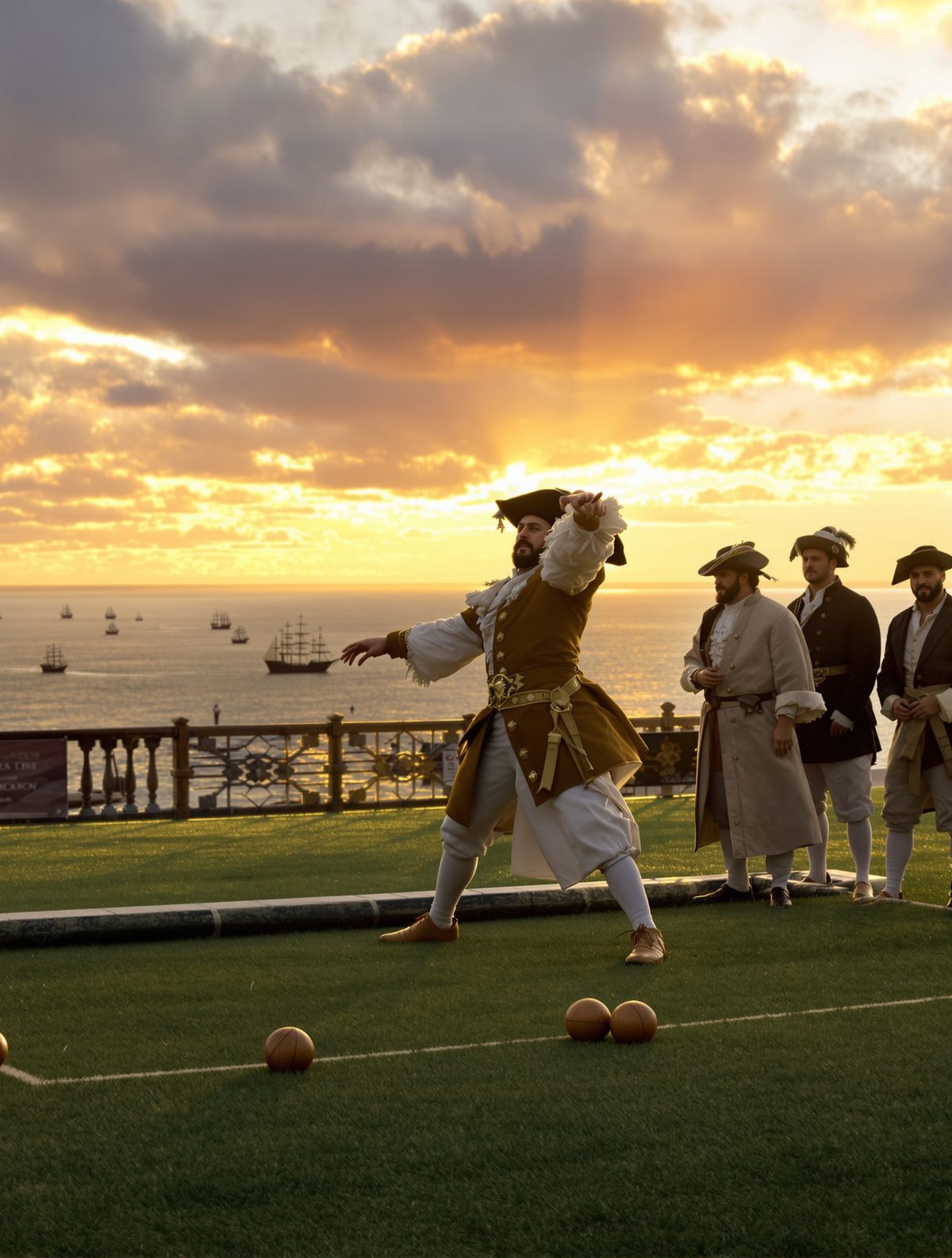
Plymouth Hoe, July 1588. Spanish Armada spotted on horizon. Drake calmly continues his game of bowls. 'Time to finish this first,' he says. Then defeats both game and Spain.
Admiral Nelson placed his telescope to his blind eye. 'I see no signal to retreat,' he declared. The Danish fleet was breaking. His captain stared in amazement. Nelson had deliberately ignored his superior's order to withdraw.
Admiral George Anson left Portsmouth in 1740 with 1,980 men and six ships. Four years later he returned with just 188 survivors and one vessel. But he'd captured a Spanish treasure galleon worth £400,000. The voyage that nearly killed everyone made Britain a global naval power.
October 1707. Admiral Shovell sailed home from victory at Toulon. His navigators thought they were safe in the English Channel. They were 100 miles off course. Four warships struck the Scilly Rocks in darkness. 2,000 men drowned in minutes.
The harbour of Boulogne was fortified. Defended by French guns. Considered impregnable. Lord Cochrane sailed in anyway. With one brig. And bluffed his way to victory before anyone could stop him.
1820. Chile's war of independence was faltering. Lord Cochrane commanded one battered warship. He sailed toward the mightiest Spanish fortress in South America. Then he lit every lantern on his ship. Rowed boats in circles. Made one vessel look like fifty. The garrison surrendered at dawn.
North Sea, 1808. A lone British frigate faced a French squadron twice her size. Captain Cochrane had no reinforcements. He raised false signals. The French turned back. One man. No shots fired.
August 1801. HMS Speedy was gone. Cochrane had a sloop and a plan. He sailed straight at a French squadron. Lit false flares. Flew a plague flag. Three warships turned and ran from one bluffing Scotsman.
August 1801. HMS Speedy was gone. Cochrane had one plan left. He lured a Spanish flotilla toward a powder keg. Then he lit the fuse. They ran. He watched. Britain cheered.
Hand-picked from Britain Untold's archive. The stories you weren't taught at school. 3-minute read.
No spam. Unsubscribe in one click. We hate spam too. Privacy Policy.