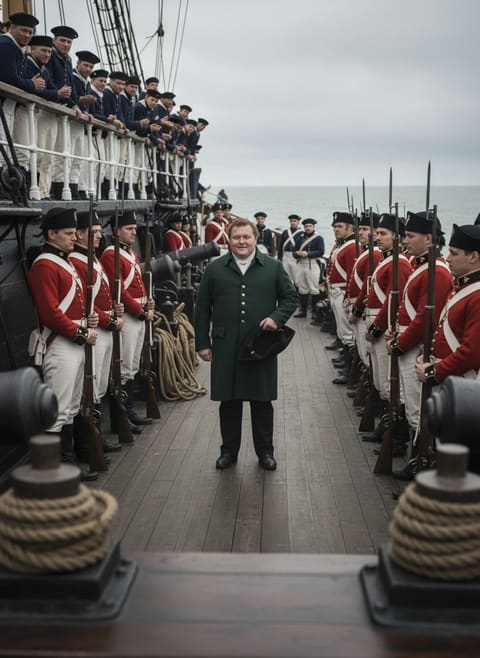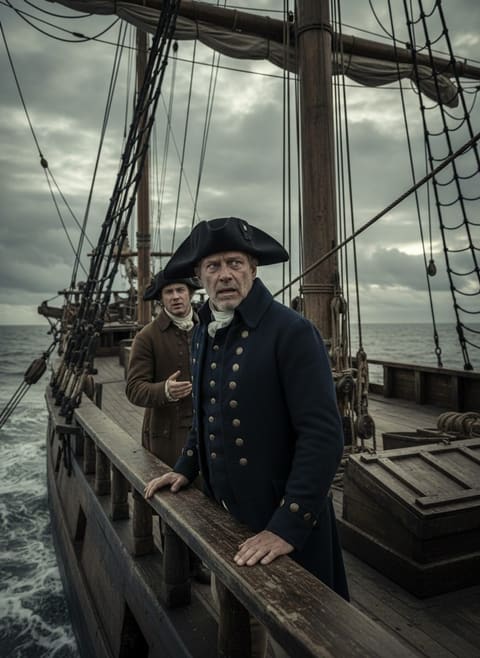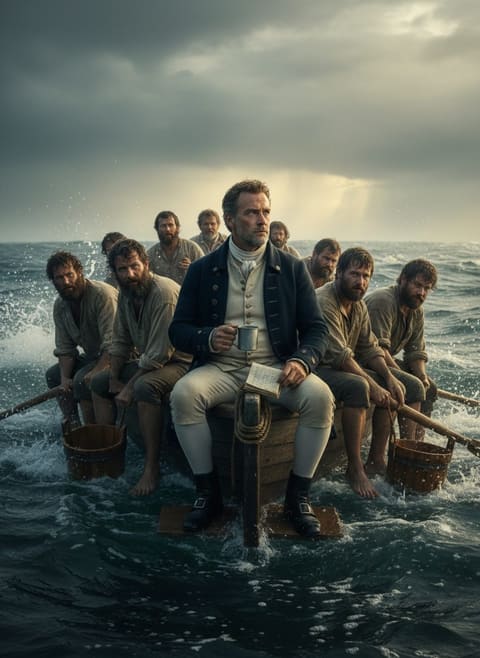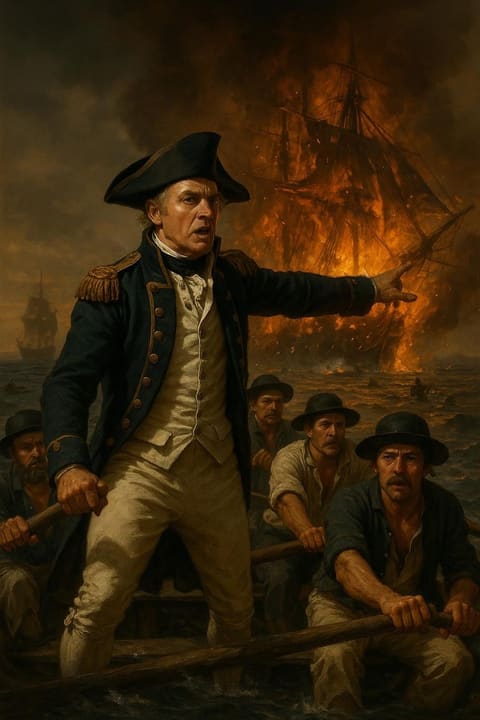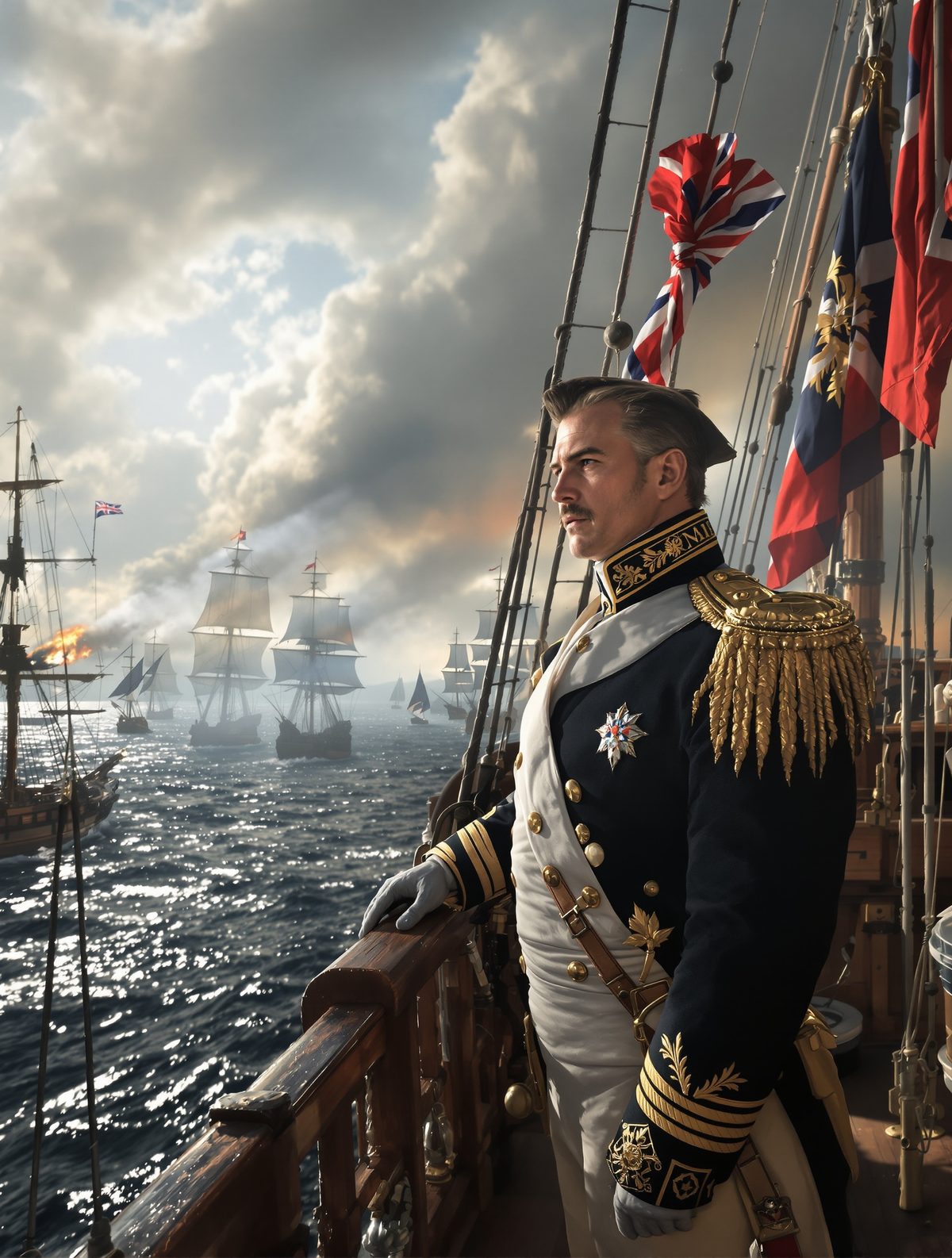
The morning mist hung like cannon smoke over the horseshoe-shaped bay, but Admiral Sir Edward Codrington knew this tranquil scene would soon explode into thunder and flame. It was October 20th, 1827, and anchored before him lay the most formidable Ottoman fleet assembled in decades—over ninety warships bristling with cannons, their crescent banners snapping in the Mediterranean breeze. What happened next would mark the end of an era: the last great naval battle fought entirely under sail, where wooden walls would clash in a symphony of destruction that would reshape the map of Europe.
The Unlikely Alliance
In the swirling political currents of 1827, something remarkable had occurred—three traditional enemies had become temporary allies. Britain, France, and Russia, powers who had spent centuries trying to destroy each other, now found themselves united by a common cause: Greek independence from Ottoman rule. The Greeks had been fighting their war of liberation since 1821, and their struggle had captured the imagination of European romantics. Lord Byron had died for their cause, and now their plight had forced the great powers into an uneasy alliance.
The Treaty of London, signed in July 1827, committed the three nations to secure Greek autonomy through diplomatic pressure. But diplomacy has a way of failing when backed by insufficient force, and Sultan Mahmud II had no intention of releasing his grip on Greece. He had called upon his powerful vassal, Muhammad Ali of Egypt, whose modern fleet and disciplined army had already proven devastatingly effective against Greek rebels.
Admiral Codrington, commanding the British squadron, found himself in an impossible position. His orders were deliberately vague—maintain the peace, protect Greek civilians, but avoid war at all costs. Yet how do you stop a massacre without firing a shot? The Turkish-Egyptian fleet, commanded by the experienced Admiral Tahir Pasha, had assembled at Navarino Bay on the western coast of the Peloponnese, preparing to complete what they saw as the final suppression of the Greek revolt.
Read next: The Night the British Ate the President's Dinner
Into the Hornets' Nest
Navarino Bay was a natural fortress, its narrow entrance dominated by the guns of Sphacteria Island and the mainland batteries. Inside this protected anchorage, Tahir Pasha had arranged his ships in a formidable crescent formation—the largest vessels forming the outer line, with smaller frigates and fireships positioned behind. It was a defensive masterstroke that turned the bay into a deadly trap for any attacking force.
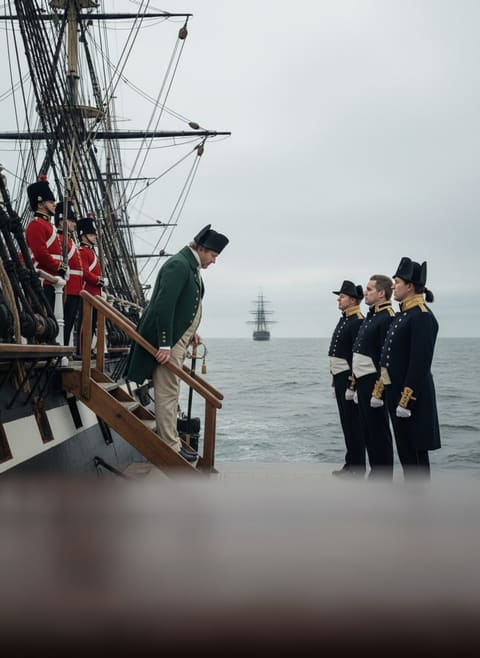
But Codrington wasn't planning an attack—officially. His strategy was audaciously simple: sail directly into the enemy anchorage and drop anchor alongside the Turkish fleet. It was naval brinkmanship of the highest order, a game of chicken played with ships of the line carrying enough gunpowder to level a city. The message was clear: we're not leaving, so neither are you.
The combined allied fleet was impressive but smaller than their opponents: 27 ships facing nearly 90. Codrington's flagship, HMS Asia, led eleven British ships including the mighty three-deckers Genoa and Albion. The French contribution, under Rear-Admiral Henri de Rigny, included seven ships led by the 60-gun Sirène. Count Lodewijk van Heiden commanded eight Russian vessels, including the powerful Azov, destined to become the hero of the day.
When Diplomacy Dies in Gunsmoke
At precisely 2 PM on October 20th, the allied fleet began entering Navarino Bay. Codrington's plan required nerves of steel from every captain—they would sail directly toward the enemy guns, showing no hostile intent until they reached their predetermined positions. For two tense hours, the fleets faced each other in an armed standoff that could have been resolved with a single word from either commander.
But history had other plans. The spark came from an unexpected source: a British boat carrying a flag of truce approached a Turkish fireship to demand it move away from HMS Dartmouth. What happened next remains disputed—the British claimed the Turks fired first, killing several sailors and Lieutenant G.W.H. Fitzroy. The Turks insisted it was an accident. In the powder-keg atmosphere of Navarino Bay, the distinction was meaningless.
The first British broadside erupted from HMS Dartmouth at 2:30 PM, and within minutes the entire bay exploded into what one witness described as "the most tremendous cannonade ever heard." The sound was so intense that people reported hearing it over 100 miles away in Athens. What followed was four hours of the most concentrated naval gunfire in history, with over 3,000 cannons thundering across the confined waters of the bay.
Hell Upon the Waters
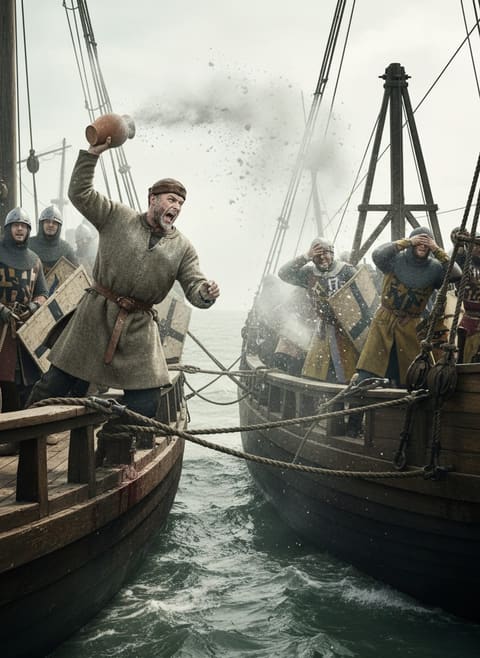
The Battle of Navarino was unlike any naval engagement before or since. Fought at almost point-blank range in the confined waters of the bay, ships found themselves so close that their yards became entangled, turning the battle into a series of deadly duels. The usual naval tactics of line-of-battle meant nothing here—this was a melee, a floating siege where wooden ships pounded each other to splinters.
Captain Thomas Fellowes of HMS Dartmouth found his ship surrounded by enemy vessels, taking fire from multiple directions. The Russian Azov became the day's legend, engaging five Turkish ships simultaneously and somehow surviving with 153 shot holes in her hull. Her captain, Mikhail Lazarev, would later train three future admirals who would become heroes of the Crimean War, including Pavel Nakhimov.
The Turkish-Egyptian crews fought with desperate courage, but they faced a crucial disadvantage: while their ships were numerous, many were older vessels with inexperienced crews. The allied ships, though fewer, carried seasoned gunners whose rate of fire was devastatingly superior. British crews, drilled to perfection, could fire three broadsides to every two from their opponents.
As the afternoon wore on, the bay filled with smoke so thick that ships fired at muzzle flashes in the gloom. Burning vessels drifted like floating pyres, their magazines exploding with earth-shaking roars that sent debris raining down on friend and foe alike. The largest Turkish ship, the 84-gun flagship, caught fire and exploded with such violence that the shock wave shattered windows miles away.
Victory from the Ashes
By 6:30 PM, the guns fell silent not by command, but from exhaustion. The Turkish-Egyptian fleet had simply ceased to exist as a fighting force. Of their 89 ships, only 29 remained afloat, and most of these were badly damaged. Over 4,000 Ottoman sailors and soldiers lay dead, with thousands more wounded. The allies had lost 181 killed and 480 wounded—a remarkably light casualty count considering the intensity of the action.
Read next: The Day a One-Eyed Admiral Sailed Into the Line of Fire
Admiral Codrington surveyed a scene of utter devastation. The pristine bay had become a graveyard of shattered masts and floating debris. His own flagship Asia had taken 158 hits but remained operational. The victory was complete, but Codrington knew he had ignited a diplomatic crisis that would reverberate across Europe. He had been sent to keep the peace and had instead fought the most destructive naval battle of the century.
The immediate aftermath was as dramatic as the battle itself. The Ottoman Empire's naval power in the Eastern Mediterranean was broken forever. Greek independence became inevitable—the fleet that might have crushed the rebellion lay at the bottom of Navarino Bay. But Codrington faced a court of inquiry back in London, where politicians who had given him impossible orders now sought to distance themselves from the consequences.
The Last Hurrah of Wooden Walls
Navarino Bay marked more than just a military victory—it was the final flourish of naval warfare as it had been practiced for centuries. This was the last time great fleets of wooden ships would meet in mortal combat, their cannons deciding the fate of nations. Within decades, steam and iron would transform naval warfare beyond recognition, making the courage and seamanship displayed at Navarino seem almost medieval.
The battle's political consequences rippled far beyond Greece. Russia used the victory as justification for declaring war on the Ottoman Empire, leading to further Russian expansion in the Balkans. The Eastern Question—what to do about the declining Ottoman Empire—became the central diplomatic challenge of the 19th century, eventually contributing to the causes of World War I.
Yet perhaps the most remarkable aspect of Navarino was how it demonstrated both the power and limitations of naval force in diplomacy. Codrington had been given an impossible mission: project power without using it, deter aggression without committing aggression, keep peace by preparing for war. His solution—to anchor his fleet guns-to-guns with his opponents—was either brilliant or insane, possibly both. In our modern era of gunboat diplomacy and nuclear deterrence, Admiral Codrington's dilemma feels surprisingly contemporary: how do you prevent a humanitarian catastrophe when the only tool at your disposal is overwhelming force?
The thunder of those 3,000 cannons at Navarino Bay didn't just echo across the Mediterranean—it echoed across time, marking the end of one age of warfare and the beginning of another. In those four terrible hours, the age of sail reached both its climax and its conclusion, leaving behind a legacy written in smoke and flame upon the wine-dark waters of ancient Greece.