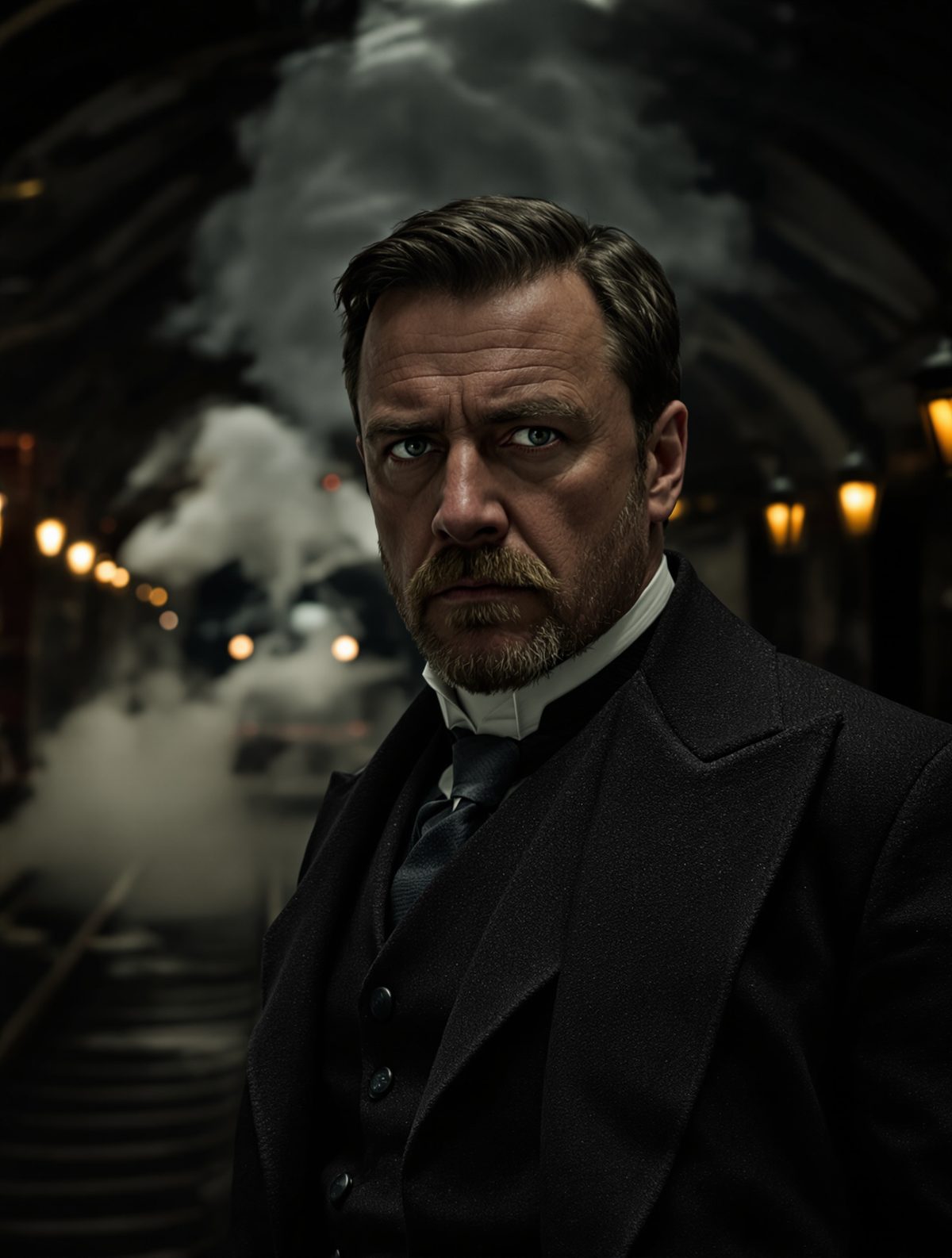
The gaslight flickered across the nervous faces gathered in Philadelphia's Continental Hotel on the night of February 21, 1861. In room 84, a stocky Scotsman with piercing eyes was explaining to the President-elect of the United States why he must abandon his triumphant inaugural journey and sneak into Washington like a common criminal. Allan Pinkerton, the son of a Glasgow police sergeant turned America's first private detective, had just uncovered a plot that would change the course of history—and he had less than twelve hours to save Abraham Lincoln's life.
From Glasgow Gutters to American Glory
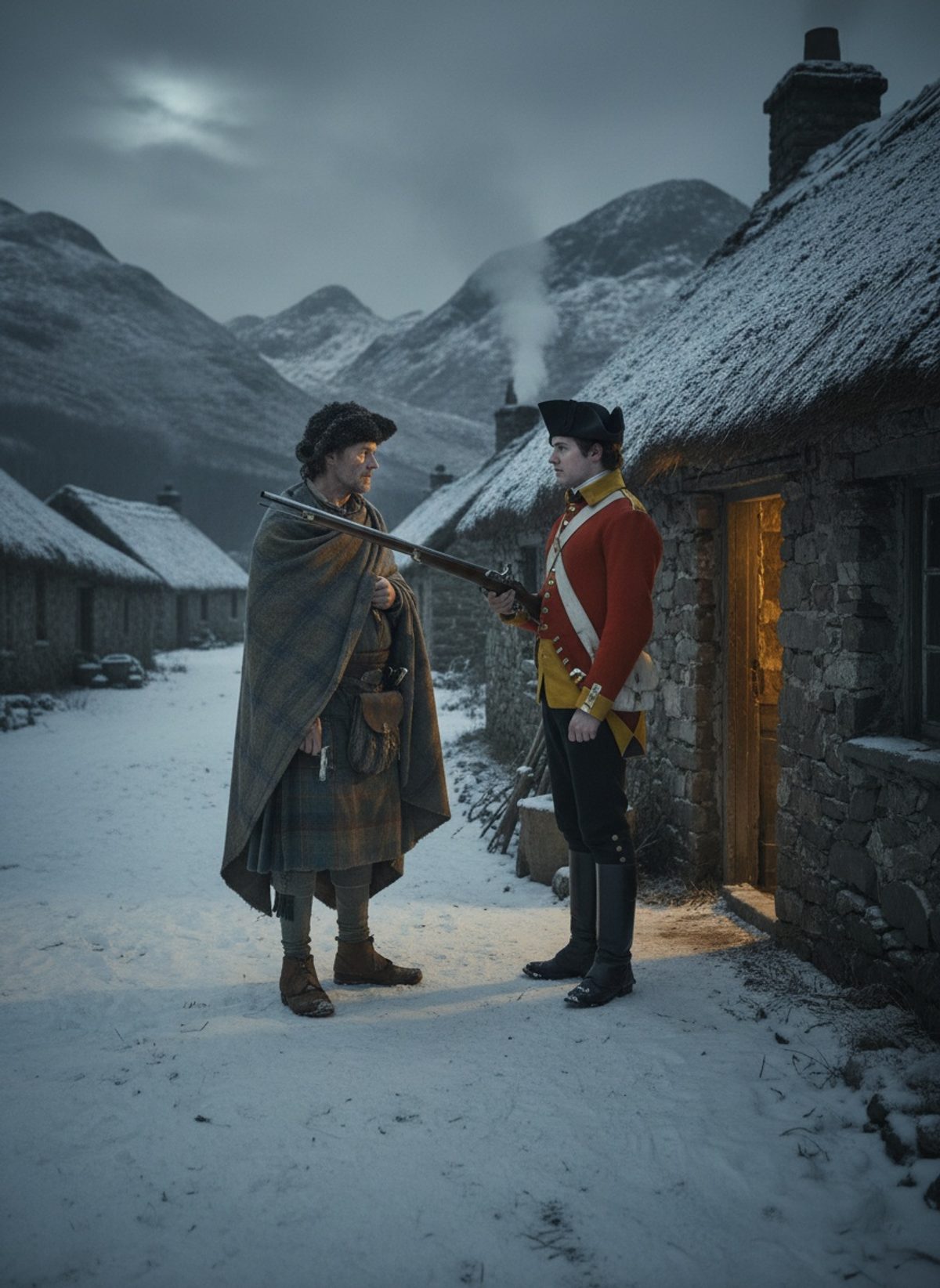
Allan Pinkerton's journey to that fateful hotel room began in the soot-stained tenements of Glasgow's Gorbals, where he was born in 1819 to a family that knew poverty as intimately as breathing. His father, William, was a police sergeant who died when Allan was just ten, leaving the family to scrape by on parish relief. Young Allan learned the cooper's trade—making barrels with his hands while his sharp mind absorbed the radical politics swirling through Scotland's industrial cities.
By his early twenties, Pinkerton was a Chartist activist, demanding voting rights for working men and railing against the crushing inequalities of Victorian Britain. But his political fervor nearly cost him everything. In 1842, after a warrant was issued for his arrest following a particularly heated demonstration, Pinkerton made a decision that would echo through American history: he fled Scotland forever, taking his new bride Joan with him on a harrowing Atlantic crossing that nearly ended in shipwreck.
The couple landed in America with nothing but Scottish grit and Allan's barrel-making skills. They settled in Dundee, Illinois—a frontier town where Pinkerton soon discovered he possessed an unexpected talent that would make him legendary. While cutting wood on a small island in the Fox River, he stumbled upon evidence of a counterfeiting operation. His methodical investigation and successful exposure of the criminals caught the attention of local authorities, who realized this Scottish immigrant had the mind of a natural detective.
Read next: The Day a Scots Village Chose Its Own Name and Kept It
The Birth of America's First Detective Agency
In 1850, Pinkerton took a leap that seemed audacious even by American standards: he founded the Pinkerton National Detective Agency in Chicago, complete with the famous logo of an unblinking eye and the motto "We Never Sleep"—the origin of the term "private eye." What made Pinkerton revolutionary wasn't just that he was America's first private detective, but how he approached the work with scientific precision that borrowed from his Scottish Presbyterian upbringing and his intimate knowledge of criminal minds.
Pinkerton's agency employed techniques unheard of in 1850s America: systematic surveillance, undercover operations, and detailed criminal databases. His operatives—including the remarkable Kate Warne, America's first female detective—could disappear into any social setting, from railroad camps to high society drawing rooms. The agency's success was meteoric; within a decade, Pinkerton was protecting railroads, hunting train robbers, and building a network of informants that stretched across the rapidly expanding nation.
But it was his work for the Illinois Central Railroad that brought Pinkerton into the orbit of a tall, melancholy lawyer who served as the railroad's legal counsel: Abraham Lincoln. The two men developed a mutual respect built on their shared rise from humble beginnings and their unflinching commitment to justice—a relationship that would prove crucial as the nation careened toward civil war.
Shadows and Whispers in Baltimore
By February 1861, Lincoln had won the presidency on a platform that threatened to tear the United States apart. As he made his way east from Springfield, Illinois, on a carefully planned inaugural journey through cheering crowds and celebratory dinners, a different kind of preparation was underway in the shadows of Baltimore.
Baltimore in 1861 was a powder keg of Confederate sympathy nestled uncomfortably in a border state. The city seethed with Southern partisans who viewed Lincoln's election as a declaration of war against their way of life. It was here that Pinkerton, working under contract to protect the Philadelphia, Wilmington and Baltimore Railroad, began picking up threads of something far more sinister than mere political opposition.
Using his network of operatives, Pinkerton had infiltrated Baltimore's most virulent anti-Lincoln circles. His agents, particularly the brilliant Timothy Webster, had gained the trust of conspirators who spoke openly of their deadly intentions. The plot they uncovered was as bold as it was simple: Lincoln's published schedule required him to change trains in Baltimore on February 23, 1861. During the carriage ride between stations, when Lincoln would be most vulnerable, assassins planned to strike. The crowd would be so dense and hostile that escape would be guaranteed in the chaos.
The intelligence Pinkerton gathered was chilling in its specificity. He learned of the conspirators' names—including the barber Cypriano Ferrandini and the liquor dealer Otis K. Hillard—their meeting places, and their unshakeable determination to prevent Lincoln from ever taking the oath of office. What made the plot particularly credible was its simplicity; it required no elaborate conspiracy, just a few dedicated men with knives or pistols and the courage to act.
The Scottish Gambit
Armed with this intelligence, Pinkerton raced to Philadelphia, where he confronted Lincoln with evidence of the assassination plot. The meeting in the Continental Hotel was tense and fraught. Lincoln's political advisors were skeptical—was this Scottish immigrant with his detective tales trying to manipulate the President-elect for his own purposes? The planned Baltimore reception was politically important, and canceling would send a message of fear and weakness.
But Pinkerton's Scottish persistence and his methodical presentation of evidence gradually won over the room. More crucially, similar intelligence from other sources, including the work of detective Harry Davies working for General Winfield Scott, corroborated Pinkerton's findings. The threat was real, immediate, and deadly serious.
The plan Pinkerton proposed was audacious and relied entirely on misdirection—a skill he'd honed during his radical days in Glasgow. Lincoln would publicly retire early, claiming illness, then secretly leave Philadelphia on the 11 PM train to Baltimore. To avoid recognition, the President-elect would travel in disguise as an invalid, complete with a shawl, soft hat, and the stooped posture of a sickly man. Kate Warne would pose as his caretaker, providing perfect cover for the deception.
The most crucial element was timing and communication. Pinkerton had arranged for telegraph lines out of Baltimore to be cut after Lincoln passed through, preventing word of his successful transit from reaching potential pursuers. Every detail was planned with the precision of a military operation, from the reserved sleeping berth to the trusted railroad personnel who would facilitate the journey.
Through the Lion's Den
On the night of February 22, 1861—George Washington's birthday—Abraham Lincoln became perhaps the only President-elect in American history to sneak into his own capital city. The journey through Baltimore was fraught with tension that Pinkerton later described as "the longest hours of my life." As their train sat in Baltimore's President Street Station, Pinkerton could hear the voices of late-night revelers, some of whom were undoubtedly the very conspirators who had planned Lincoln's murder.
The disguise worked perfectly. Lincoln, folded awkwardly into his berth and covered by blankets, was invisible to the curious eyes that might have recognized America's most famous face. Kate Warne played her role flawlessly, fussing over her "invalid" charge with the practiced care of an experienced nurse. When a drunk passenger stumbled through their car singing "Dixie," Pinkerton's hand instinctively moved to his weapon, but the moment passed without incident.
At 6 AM on February 23, 1861, Lincoln's train pulled into Washington's Baltimore and Ohio station. The President-elect had arrived alive, unrecognized, and ready to take the oath of office that would define the next four years of American history. Pinkerton's network, his Scottish cunning, and his meticulous planning had succeeded where the nation's military and political establishment had yet to be tested.
The Echo of Scottish Steel
The Baltimore Plot, as it came to be known, was never definitively proven, and Lincoln himself later expressed mixed feelings about the dramatic midnight journey. Critics mocked the President-elect for skulking into Washington "like a thief in the night," and political cartoonists had a field day depicting Lincoln in various undignified disguises. But Allan Pinkerton never wavered in his conviction that he had saved the nation by saving its President.
Whether the Baltimore conspirators would have acted, whether their plot would have succeeded, whether American history would have taken a dramatically different course—these remain tantalizing questions. What is certain is that a Scottish barrel-maker's son, driven from his homeland by poverty and political persecution, used his immigrant's hunger and his detective's instincts to ensure that Abraham Lincoln lived to become the President who would preserve the Union and end slavery.
In our age of global migration and political polarization, Pinkerton's story resonates with particular power. He embodied the American dream at its most fundamental level: the belief that talent, determination, and moral courage can triumph over circumstances of birth. From the slums of Glasgow to the corridors of presidential power, Allan Pinkerton proved that sometimes the most crucial moments in history turn on the quick thinking of those who came from somewhere else, bringing their own hard-won wisdom to bear on challenges that native-born Americans couldn't see clearly enough to solve.