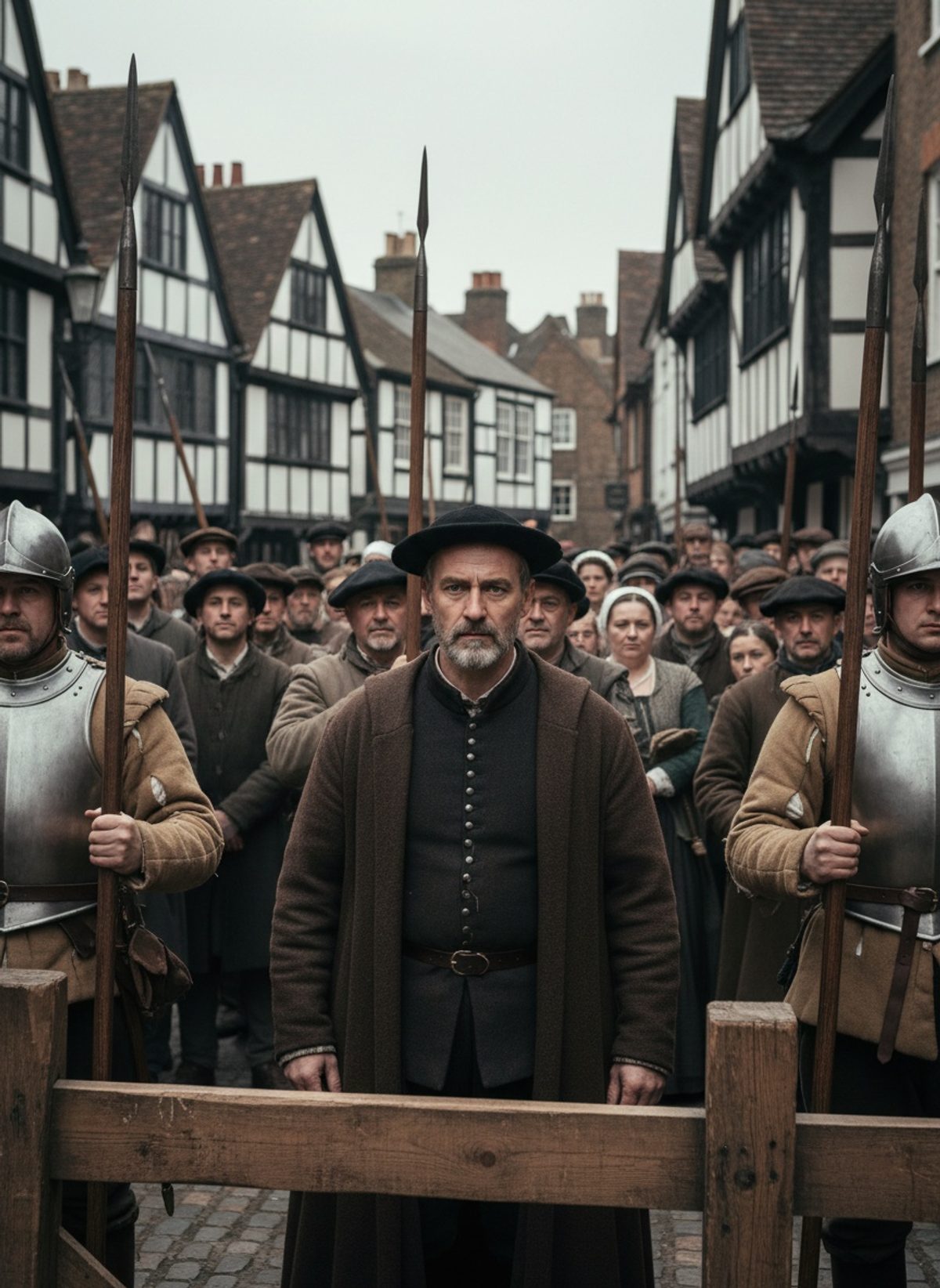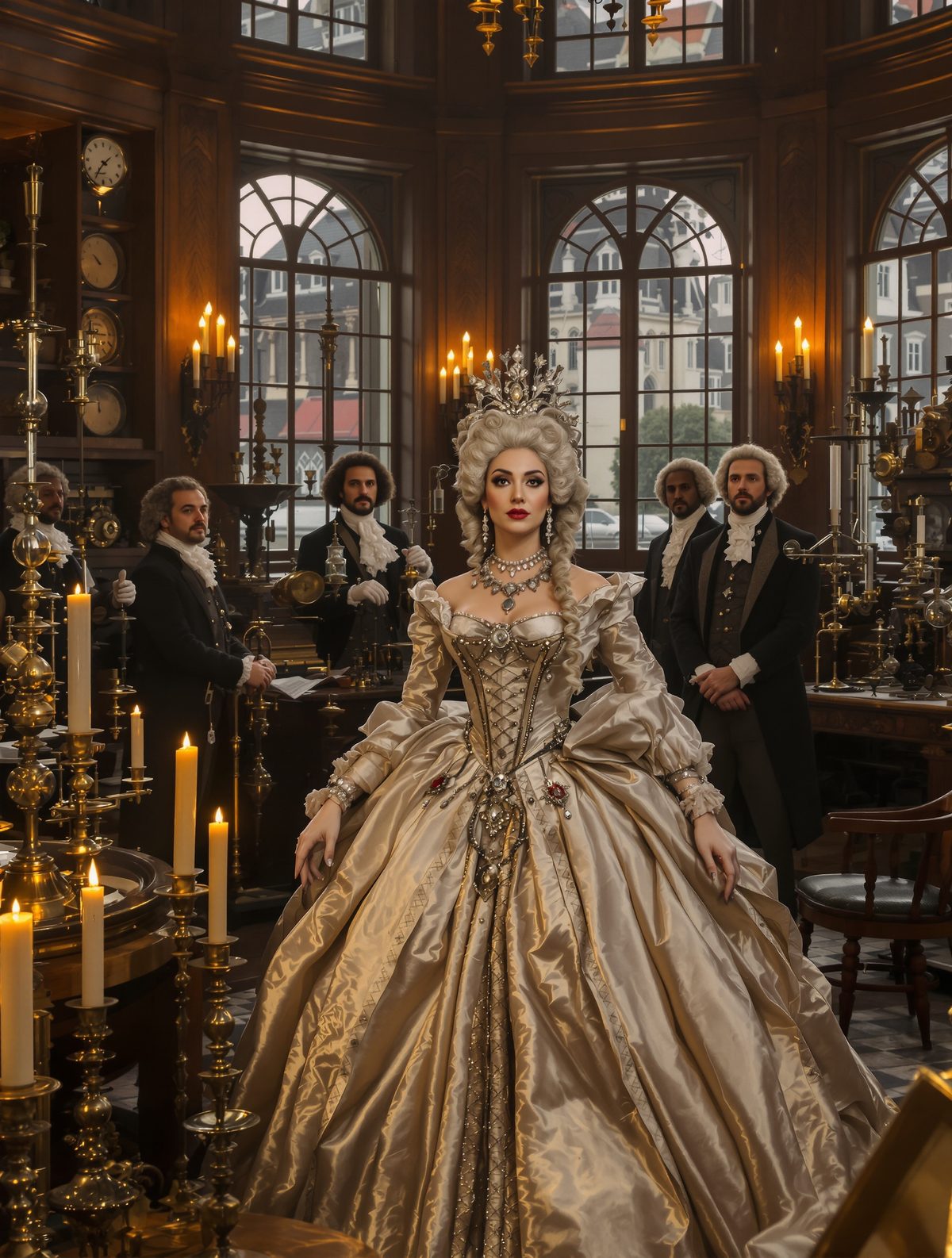
The wheels of the ornate carriage clattered against the cobblestones of Gresham College as curious onlookers pressed closer to witness the spectacle. It was May 30th, 1667, and something unprecedented was about to unfold. From within the gilded confines emerged a figure that would make the learned gentlemen of England's most prestigious scientific institution collectively hold their breath: Margaret Cavendish, Duchess of Newcastle, draped in silk, adorned with diamonds, and armed with an insatiable curiosity that would shatter centuries of tradition in a single afternoon.
The Royal Society—that hallowed temple of natural philosophy where England's greatest minds gathered to unlock the secrets of the universe—had maintained one inviolable rule since its founding seven years earlier: no women allowed. Not as members, not as guests, and certainly not as participants in their sacred experiments. Yet here stood the Duchess, her elaborate gown rustling with defiance, about to become the first woman in history to cross their threshold.
The Maverick Duchess Who Refused to Be Silenced
Margaret Lucas Cavendish was no ordinary aristocrat seeking momentary fame. Born in 1623 into a relatively modest gentry family in Essex, she had already lived a life that reads like an adventure novel. During the English Civil War, she fled to Paris as a maid-of-honour to Queen Henrietta Maria, where she met and married William Cavendish, the Duke of Newcastle—a man thirty years her senior but equally passionate about intellectual pursuits.
What made Margaret truly extraordinary wasn't her title or her wealth, but her pen. By 1667, she had already published numerous works on natural philosophy, poetry, and even science fiction—making her one of the first women to write what we might recognize as sci-fi today. Her book "The Description of a New World, Called the Blazing World" depicted a utopian society where a woman ruled as empress and advanced scientific knowledge.
Read next: The Day a Stuart King Walked Calmly to His Own Execution
But Margaret wasn't content to theorize from her drawing room. She craved access to the cutting-edge experiments and discoveries that were reshaping human understanding of the natural world. The Royal Society, with its motto "Nullius in Verba" (take nobody's word for it), represented everything she believed in: empirical observation, rigorous testing, and the pursuit of truth through experiment rather than ancient authority.
A Gentleman's Club Under Siege
The Royal Society of 1667 was the epicenter of the Scientific Revolution. Founded in 1660 and granted its royal charter by Charles II, it boasted members like Robert Hooke, the brilliant experimenter and author of "Micrographia"; Christopher Wren, the architect who would rebuild London after the Great Fire; and even the young Isaac Newton, whose revolutionary ideas about motion and gravity were just beginning to take shape.
These men gathered weekly at Gresham College in Bishopsgate, conducting experiments that ranged from the sublime to the seemingly absurd. They peered through microscopes at the compound eyes of flies, performed gruesome dissections on living animals, and debated whether the moon influenced the tides. Their meetings were shrouded in an almost mystical secrecy—part scientific inquiry, part gentleman's club, and wholly masculine.
The idea of a woman attending these gatherings was so unthinkable that the Society's records show genuine confusion about how to handle Margaret's request. When she expressed her desire to witness their experiments, the Fellows found themselves in uncharted territory. Some were intrigued by her published works and reputation for learning. Others were scandalized by the very suggestion.
The debate raged for weeks. Finally, perhaps swayed by her husband's influence (the Duke was a respected patron of learning) and her own considerable reputation, they agreed to make an exception—just this once.
The Grand Performance That Shook Science
As Margaret swept into the meeting room that May afternoon, she created what contemporary Samuel Pepys described as "the whole town talk." Her entrance was deliberately theatrical—she understood that if she was going to break barriers, she needed to do it memorably. Dressed in a gown that reportedly cost more than most people earned in a lifetime, with her hair arranged in an elaborate style topped with jeweled ornaments, she looked every inch the duchess while simultaneously challenging every assumption about who belonged in the world of natural philosophy.
Robert Hooke, the Society's brilliant Curator of Experiments, had prepared a special demonstration for this historic occasion. Using his improved microscopes and air pumps, he revealed the hidden worlds that existed beyond human perception. Margaret watched with rapt attention as Hooke showed her the intricate structure of cork cells, the compound eyes of insects magnified hundreds of times, and the effects of air pressure on various materials.
But this wasn't merely a polite showing-off session. Margaret asked probing questions that demonstrated her sophisticated understanding of experimental method and natural philosophy. She challenged some of Hooke's interpretations and offered her own theories about what they were observing. The Fellows, who had perhaps expected to patronize a curious amateur, found themselves engaged in serious scientific discourse with someone who could match their intellectual rigor.
Contemporary accounts suggest the session lasted nearly three hours—far longer than the brief courtesy visit many had anticipated. Margaret's genuine engagement and insightful questions transformed what could have been a token gesture into a meaningful scientific exchange.
The Ripple Effects of Revolutionary Defiance
News of Margaret's visit spread through London like wildfire. Samuel Pepys, ever the keen observer of social dynamics, noted in his diary that her appearance at the Royal Society was the subject of intense gossip and debate. Some praised her courage and learning; others condemned what they saw as an inappropriate breach of natural order.
The immediate aftermath was telling. While the Royal Society praised Margaret's visit publicly, they quietly ensured it remained a singular event. No other women would be invited for nearly three centuries. The Fellows seemed to realize that they had opened a door they weren't quite ready to keep open.
Yet Margaret's infiltration had planted a seed. Her presence forced the scientific establishment to confront the arbitrary nature of their exclusions. If one woman could engage meaningfully with their work, what did that say about their assumptions regarding women's intellectual capabilities?
Margaret herself continued her scientific work with renewed vigor. Her subsequent publications showed the influence of what she had witnessed at Gresham College, incorporating new experimental evidence and methodologies into her natural philosophy. She had proven that curiosity and intelligence weren't bound by gender—they simply needed opportunity and access.
Legacy of a Single Afternoon
Margaret Cavendish died in 1673, just six years after her historic visit to the Royal Society. She was buried in Westminster Abbey—another first for a woman of her intellectual achievements. Yet her influence extended far beyond her lifetime.
The questions she raised about women's exclusion from scientific discourse couldn't be easily dismissed. Later pioneering women scientists like Caroline Herschel and Mary Somerville would follow paths that Margaret had first dared to imagine. Each breakthrough, each barrier broken, traced back to that spring day when one determined duchess refused to accept that scientific inquiry was a masculine prerogative.
It would take until 1945 for the Royal Society to admit its first female fellows—nearly three centuries after Margaret's visit. When they finally did, they were acknowledging a truth that she had demonstrated in silk and diamonds on that revolutionary May afternoon: scientific genius recognizes no gender boundaries.
Margaret's story reminds us that progress often comes not from gradual change, but from individuals bold enough to walk through doors that everyone else assumes are permanently closed. In our own era of ongoing struggles for equality in STEM fields, her legacy shines as brightly as the jewels she wore to challenge history itself. Sometimes revolution arrives not with manifestos and protests, but with intelligence, determination, and the courage to demand a seat at the table where the future is being written.