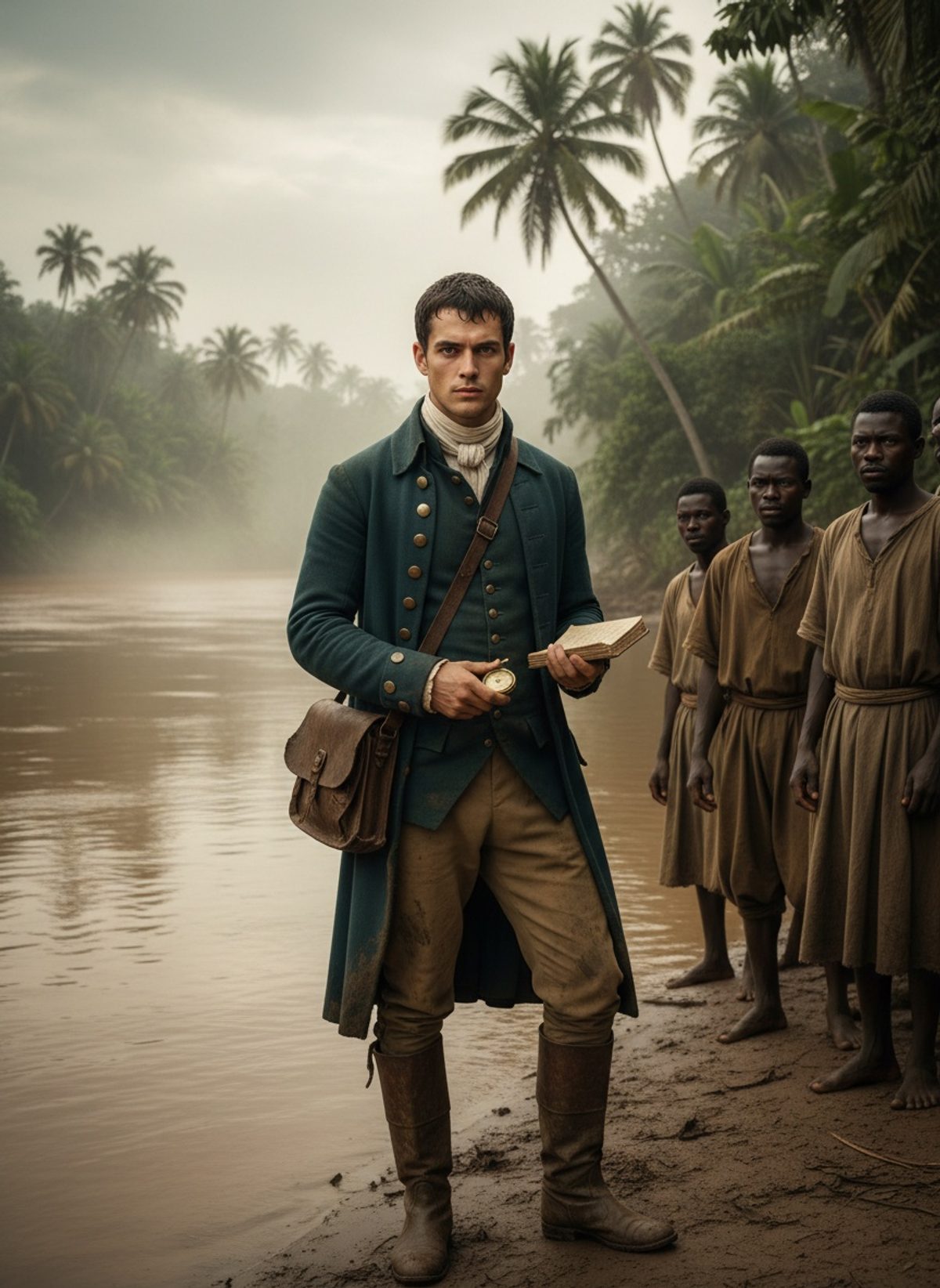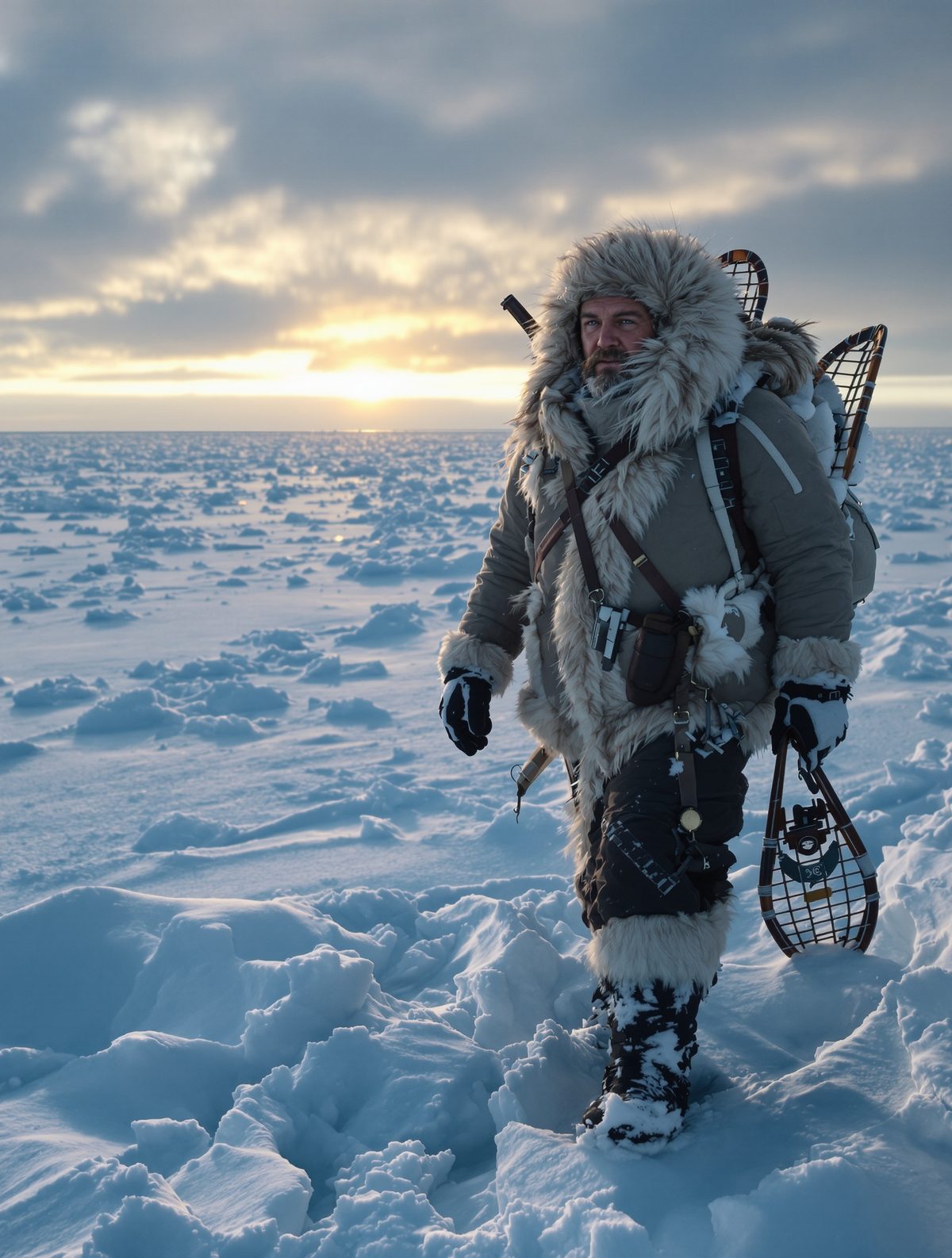
The Inuit woman's eyes held secrets when she approached Dr. John Rae in the spring of 1854. In her weathered hands, she carried something that would shake the British Empire to its core—a silver fork, elegantly engraved with the initials of a Royal Navy officer who had vanished into the Arctic darkness nine years earlier.
For nearly a decade, the disappearance of Sir John Franklin's expedition had consumed the British public's imagination. Two mighty ships—HMS Erebus and HMS Terror—had sailed into the Northwest Passage in 1845 with 129 souls aboard, only to vanish completely. The Royal Navy had launched rescue mission after rescue mission, spending fortunes and losing more men in the process. Yet it would be this solitary Scottish doctor, walking where grand expeditions feared to tread, who would finally solve the mystery that haunted a nation.
The Gentleman Explorer Who Wasn't Quite a Gentleman
John Rae was everything the Victorian establishment wasn't looking for in an Arctic hero. Born in the Orkney Islands in 1813, he lacked the polished pedigree of Royal Navy officers. Instead of Eton and the officer's mess, Rae had learned his craft hunting and fishing in Scotland's harsh northern islands, then honing his skills as a Hudson's Bay Company doctor in the Canadian wilderness.
What Rae possessed was something far more valuable than social standing—he understood how to survive in the Arctic. While Royal Navy expeditions hauled massive supplies and insisted on maintaining British customs in the frozen wasteland, Rae traveled light. He learned from Indigenous peoples, adopted their techniques, and most scandalously of all, he actually listened to their stories.
Read next: The Day a Scots Surgeon Walked Into Timbuktu Alone
By 1854, Rae was already a seasoned Arctic explorer, having mapped over 1,800 miles of previously unknown coastline. The Hudson's Bay Company had dispatched him on what seemed like a routine surveying mission to complete the mapping of the Arctic coast. Neither he nor his employers expected him to stumble upon the solution to Britain's greatest maritime mystery.
Whispers from the Frozen North
It was at Pelly Bay, in what is now Nunavut, that Rae encountered the Inuit hunters whose testimonies would change everything. The meeting itself was unremarkable—Rae had spent years building relationships with Indigenous communities, recognizing that their knowledge was essential to Arctic survival. But what they told him on that spring day in 1854 was explosive.
Speaking through interpreters, the Inuit described a group of kabloonas (white men) who had been seen four years earlier, dragging boats and sleds across the ice near King William Island. The men were gaunt, desperate, and clearly dying. Some had fallen by the wayside. Others had resorted to the unthinkable—cannibalism—to survive.
As evidence, the Inuit produced a collection of artifacts that made Rae's blood run cold. Silver spoons and forks bearing the crests and initials of Franklin expedition officers. A small silver plate inscribed with "Sir John Franklin K.C.H." Medals, buttons, and fragments of naval uniforms. Most hauntingly, they described finding bodies scattered across the landscape, some showing clear evidence of having been butchered for meat.
Where dozens of Royal Navy search expeditions had failed, costing the British government over £700,000 (roughly £80 million today), a handful of Indigenous hunters had provided the answer. They had witnessed the final, terrible chapter of Franklin's doomed voyage.
The Report That Scandalized an Empire
When Rae returned to London in October 1854, he carried with him more than artifacts and testimonies—he bore news that would shatter Victorian sensibilities. His official report to the Admiralty was clinical in its detail, describing how Franklin's men had apparently abandoned their ice-trapped ships and attempted to march south toward safety, only to succumb to starvation, scurvy, and desperation.
But it was Rae's unflinching account of cannibalism that truly horrified the British public. In his report, he wrote: "From the mutilated state of many of the corpses and the contents of the kettles, it is evident that our wretched countrymen had been driven to the last resource—cannibalism—as a means of prolonging existence."
The reaction was swift and furious. How dare this provincial doctor, this man who consorted with "savages," suggest that British naval officers—gentlemen of the Royal Navy—had descended to such barbarism? The press attacked Rae mercilessly. Household Words, edited by Charles Dickens himself, published a scathing piece suggesting that Inuit testimonies were unreliable and that the evidence of cannibalism was fabricated.
Lady Jane Franklin, Sir John's widow, led the charge against Rae's findings. She had spent years maintaining her husband's heroic reputation and wasn't about to let a Scottish doctor destroy it with tales of cannibalism. She organized petition campaigns and used her considerable social influence to discredit Rae's account.
The Price of Truth-Telling
Despite the controversy, the Admiralty knew Rae had solved the mystery. They awarded him the £10,000 reward (approximately £1.2 million today) that had been offered for determining Franklin's fate. But Rae paid a heavy price for his honesty. His career prospects within the British establishment were effectively destroyed. While other Arctic explorers received knighthoods and prestigious positions, Rae found himself marginalized and excluded from the inner circles of British exploration.
The irony was particularly bitter given Rae's extraordinary achievements. He had walked over 6,000 miles across the Arctic, often alone or with just a handful of companions. He had never lost a man under his command—a remarkable record in an era when Arctic expeditions regularly ended in disaster. His maps were accurate, his observations scientific, and his methods proved far more effective than the Royal Navy's expensive, cumbersome expeditions.
Yet because Rae had dared to tell an uncomfortable truth, and because he had learned that truth from Indigenous people rather than through "proper" British channels, he was treated as a pariah. The establishment preferred comfortable myths to uncomfortable realities.
Vindication from the Deep
For more than 150 years, Rae's account remained controversial. Generations of historians debated whether his Inuit sources were reliable, whether cannibalism had really occurred, and whether Franklin's men had truly abandoned their ships. The mystery seemed destined to remain forever unsolved.
Then, in 2014 and 2016, Canadian underwater archaeologists made discoveries that vindicated Rae completely. They found both HMS Erebus and HMS Terror, exactly where Inuit oral history had suggested they would be. The ships had indeed been trapped in ice and abandoned. Archaeological evidence from the surrounding area confirmed the desperate final march of Franklin's men, their deaths from starvation and cold, and yes, evidence of cannibalism.
Cut marks on bones found at the sites matched exactly what Rae had described 160 years earlier. The Inuit testimonies, dismissed by Victorian society as unreliable "savage" accounts, proved to be remarkably accurate historical documents. Every major element of Rae's report was confirmed by modern science.
The Explorer History Forgot
Today, John Rae remains largely unknown outside of specialist circles, while Sir John Franklin—whose expedition ended in complete disaster—has statues, streets, and schools named after him across the British Empire. This historical amnesia reveals something profound about how we construct our heroes and our histories.
Rae's story challenges comfortable narratives about exploration, expertise, and cultural superiority. He succeeded where the Royal Navy failed precisely because he rejected British imperial attitudes and embraced Indigenous knowledge. He solved the mystery not through superior technology or British ingenuity, but by listening to people whom his society considered inferior.
In our current era of climate change and Arctic exploration, Rae's methods seem remarkably prescient. As nations once again race to exploit Arctic resources, his example reminds us that sustainable engagement with polar regions requires respect for Indigenous knowledge and adaptation to local conditions rather than the imposition of outside assumptions.
The Inuit woman who handed Rae that silver fork in 1854 was offering more than evidence—she was extending an invitation to see the Arctic through different eyes. Rae accepted that invitation and discovered not just the fate of Franklin's expedition, but a different way of understanding the relationship between knowledge, survival, and truth. History may have forgotten his name, but his legacy endures in every researcher who chooses uncomfortable facts over comfortable myths.