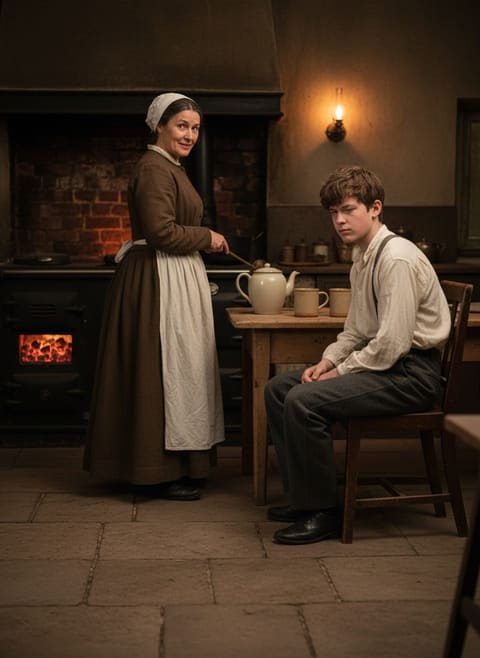
The candlelight flickered across worn leather spines as Mary Henderson slipped a slim volume beneath her shawl. It was a cold Edinburgh evening in 1725, and she was about to commit what the Presbyterian Kirk considered a dangerous act of rebellion. Not theft—she'd paid her penny fair and square—but something far more subversive in the eyes of Scotland's moral guardians. Mary Henderson, a seamstress from the Grassmarket, was borrowing a book.
Inside Allan Ramsay's dimly lit shop on the High Street, Scotland's first circulating library had just opened for business. And with it, a quiet revolution that would transform a nation of storytellers into a nation of readers—whether the authorities liked it or not.
The Wigmaker's Dangerous Dream
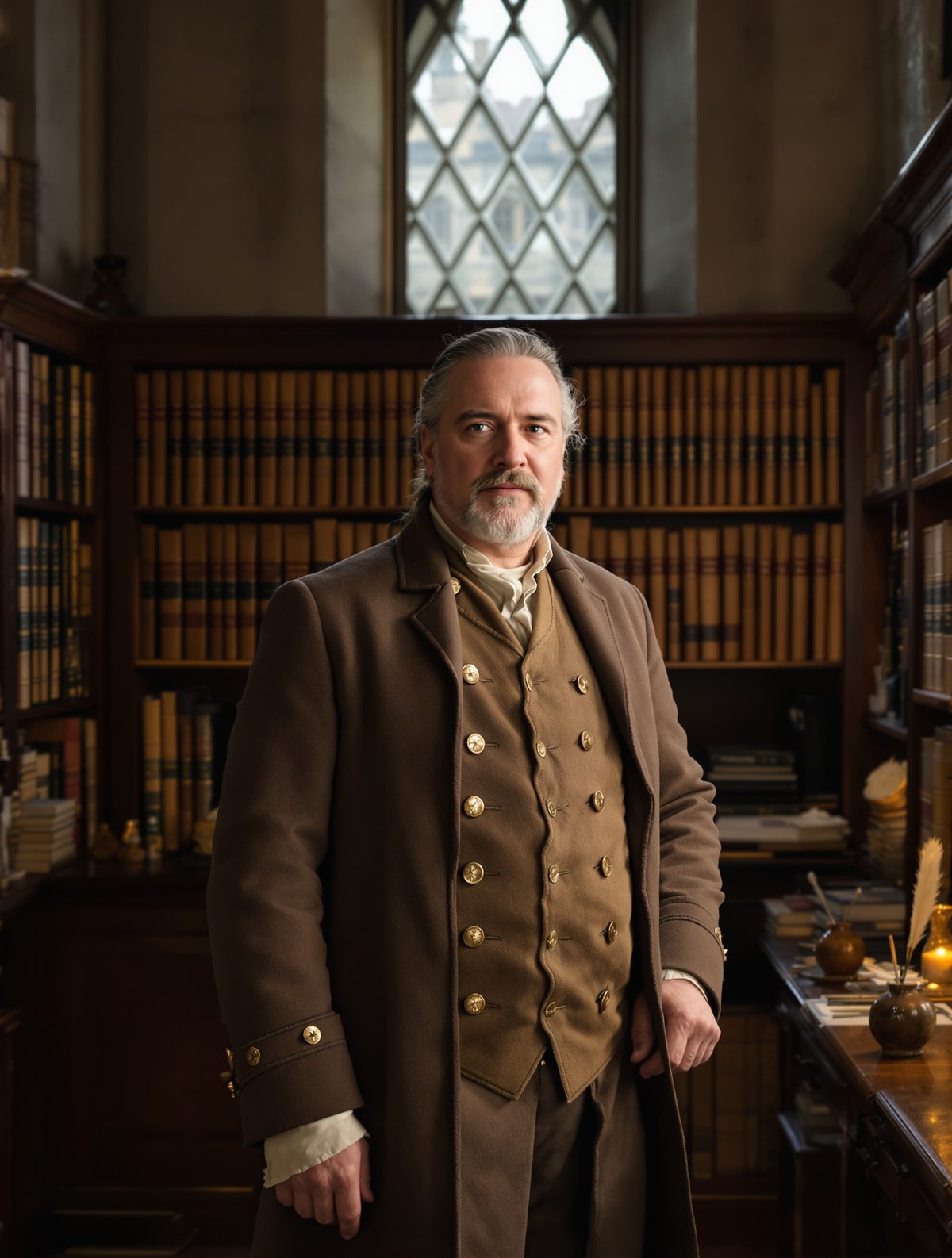
Allan Ramsay hadn't set out to become Scotland's literary rebel. Born in Leadhills, a remote lead-mining village in the Southern Uplands, he'd arrived in Edinburgh as a young man to learn the respectable trade of wigmaking. By 1718, he'd established himself as a competent craftsman, curling and powdering the elaborate headpieces that marked Edinburgh's genteel society.
But Ramsay harbored a secret passion that would have raised eyebrows among his customers. He was obsessed with books—not just the religious texts that dominated Scottish households, but poetry, plays, and what the Kirk dismissively called "light literature." Even more scandalously, he was writing his own verses, celebrating the bawdy folk traditions that Presbyterian Scotland was trying desperately to suppress.
Read next: The Day a Scots Weaver's Son Freed the Kirk From a King
The transformation began in 1720 when Ramsay abandoned his wigmaking tools and opened a bookshop. It was a audacious move in a city where books were luxury items, owned almost exclusively by wealthy merchants, university scholars, and ministers. A single volume could cost more than a laborer's weekly wage, making literacy a privilege of birth rather than ambition.
But Ramsay had noticed something the establishment had missed. Despite Scotland's reputation for Presbyterian austerity, there was a hunger for stories that went beyond sermons and scripture. In taverns and markets, he heard people reciting ancient ballads and sharing tales passed down through generations. What if, he wondered, these same people could access the written word?
A Penny for Your Thoughts
On a crisp morning in 1725, Ramsay unveiled his revolutionary scheme. For the price of a penny—less than the cost of a pint of ale—anyone could borrow a book for several days. It was an idea so radical it had never been attempted in Scotland, and barely anywhere else in Britain.
The mechanics were simple but ingenious. Subscribers paid an annual fee of twelve shillings, then could borrow any volume for just a penny. For those who couldn't afford the subscription, individual loans were available at slightly higher rates. Suddenly, a maid earning ten pounds a year could access the same literary treasures as a merchant earning ten times that amount.
Word spread through Edinburgh's closes and wynds like wildfire. Apprentices pooled their pennies to share borrowed volumes. Housewives hurried through their chores to steal precious moments with novels. Even some of the city's more progressive ministers began quietly browsing Ramsay's shelves, though they'd never admit it publicly.
The selection was deliberately provocative. Alongside respectable works by English authors like Dryden and Pope, Ramsay stocked his library with romantic novels, theatrical comedies, and—most controversial of all—collections of Scottish poetry that celebrated the nation's pre-Reformation heritage. He was essentially smuggling Scotland's suppressed cultural identity back into public consciousness, one penny loan at a time.
The Kirk Strikes Back
It didn't take long for Edinburgh's religious authorities to recognize the threat Ramsay posed to their moral monopoly. The Presbyterian Kirk had spent over a century trying to purge Scotland of what it saw as dangerous influences—folk traditions, secular literature, and anything that might distract the faithful from their devotion to God and scripture.
The attacks began from the pulpit. Ministers across Edinburgh denounced circulating libraries as "schools of vice" that would corrupt young minds with "profane and idle stories." They particularly targeted Ramsay's collection of novels, which they claimed would give young women unrealistic expectations about romance and turn them away from proper domestic duties.
But the Kirk's real fear went deeper than moral corruption. For over a century, they had controlled what most Scots read through their monopoly on education and book distribution. Suddenly, ordinary people were accessing ideas and stories that hadn't been filtered through religious authorities. Even worse, they were enjoying them.
The pressure escalated when prominent church leaders petitioned Edinburgh's magistrates to shut down the library entirely. They argued that Ramsay's enterprise violated public decency and threatened social order. Several ministers organized boycotts, urging their congregations to avoid Ramsay's shop and threatening spiritual consequences for those who persisted in borrowing "corrupting literature."
For a few tense months in 1726, it seemed the experiment might end before it truly began. Ramsay found his shop windows broken and his reputation under constant attack. Some subscribers, fearful of social ostracism, quietly canceled their memberships.
The People's Library Perseveres
But Ramsay had underestimated his own success. The hunger for books among ordinary Edinburgh residents proved stronger than religious pressure. Customers who had discovered the joy of reading weren't willing to give it up easily, and many rallied to defend their literary lifeline.
Support came from unexpected quarters. Prominent lawyers, including some who would later play key roles in the Scottish Enlightenment, quietly backed Ramsay's venture. They understood that a literate population was essential for Scotland's intellectual and economic development. Even some younger ministers, educated in the more liberal atmosphere of Edinburgh University, privately supported the library while remaining publicly neutral.
More importantly, the library had created its own constituency. By 1727, Ramsay boasted over 1,500 subscribers—an extraordinary number in a city of barely 30,000 people. These weren't just wealthy book collectors, but shopkeepers, skilled craftsmen, domestic servants, and others who had never before had regular access to literature.
The success forced Ramsay to constantly expand his collection. He established connections with London publishers, ensuring that popular new works reached Edinburgh within weeks of publication. He also began commissioning Scottish authors, creating what may have been the first commercial market for homegrown literature since the Union of 1707.
Perhaps most remarkably, the library became a social institution. Ramsay's shop evolved into an informal literary salon where subscribers gathered to discuss books, share recommendations, and debate ideas. These conversations, happening across class lines that had previously seemed impermeable, helped create the intellectual ferment that would soon make Edinburgh the "Athens of the North."
Read next: The Day a Highland Clan Turned a Massacre Into a Legend
Reading Revolution
By 1730, Ramsay's success had inspired imitators across Scotland. Glasgow, Aberdeen, and even smaller towns began establishing their own circulating libraries. The model spread to England and Ireland, fundamentally changing how British society thought about books and literacy.
The numbers tell the story of transformation. Before 1725, book ownership in Edinburgh was concentrated among perhaps 5% of the population. Within a decade of Ramsay's library opening, nearly a third of the city's residents had regular access to books. Literacy rates, already higher in Scotland than most of Europe thanks to the Kirk's emphasis on Bible reading, began climbing even faster.
The cultural impact was profound. Scottish authors like Henry Mackenzie and later Robert Burns found audiences that simply hadn't existed before Ramsay's innovation. The circulating library created a commercial market for literature that encouraged creativity and preserved Scottish cultural traditions that might otherwise have been lost.
More subtly, the library helped democratize knowledge itself. Ideas about science, philosophy, politics, and literature that had once circulated only among the educated elite now reached ordinary working people. This intellectual democratization would prove crucial to Edinburgh's emergence as a center of Enlightenment thought in the latter half of the 18th century.
The Lasting Legacy of Literary Rebellion
Today, as we stream movies on demand and download books instantly to digital devices, it's easy to forget how revolutionary Ramsay's simple innovation truly was. In an age when knowledge was scarce and expensive, he found a way to make it abundant and affordable. His penny loans were the 18th-century equivalent of making the world's greatest libraries freely accessible to anyone with an internet connection.
The parallels to our digital age are striking. Just as contemporary authorities worry about misinformation and unregulated content online, the Kirk feared that unlimited access to books would corrupt and mislead ordinary people. Both concerns reflect a deeper anxiety about who gets to control information and ideas.
Ramsay's story reminds us that expanding access to knowledge—whether through circulating libraries or search engines—is rarely welcomed by existing power structures. But it also shows how hunger for learning and literature can overcome institutional resistance when innovative minds find new ways to connect readers with books.
That penny Allan Ramsay charged for borrowing a book wasn't just a fee—it was the price of admission to a broader intellectual world. And once ordinary Scots got a taste of that world, no amount of religious opposition could convince them to give it up.