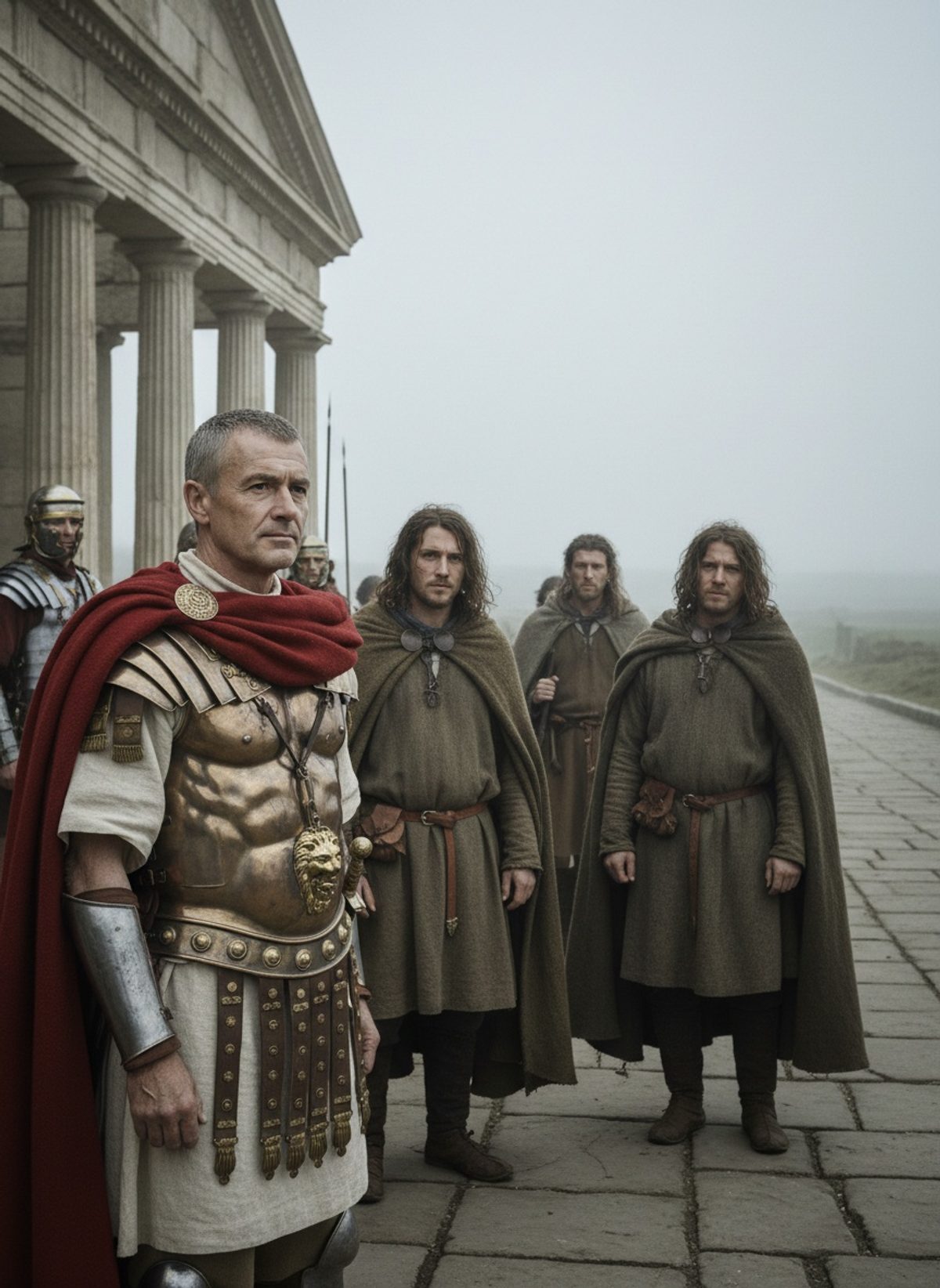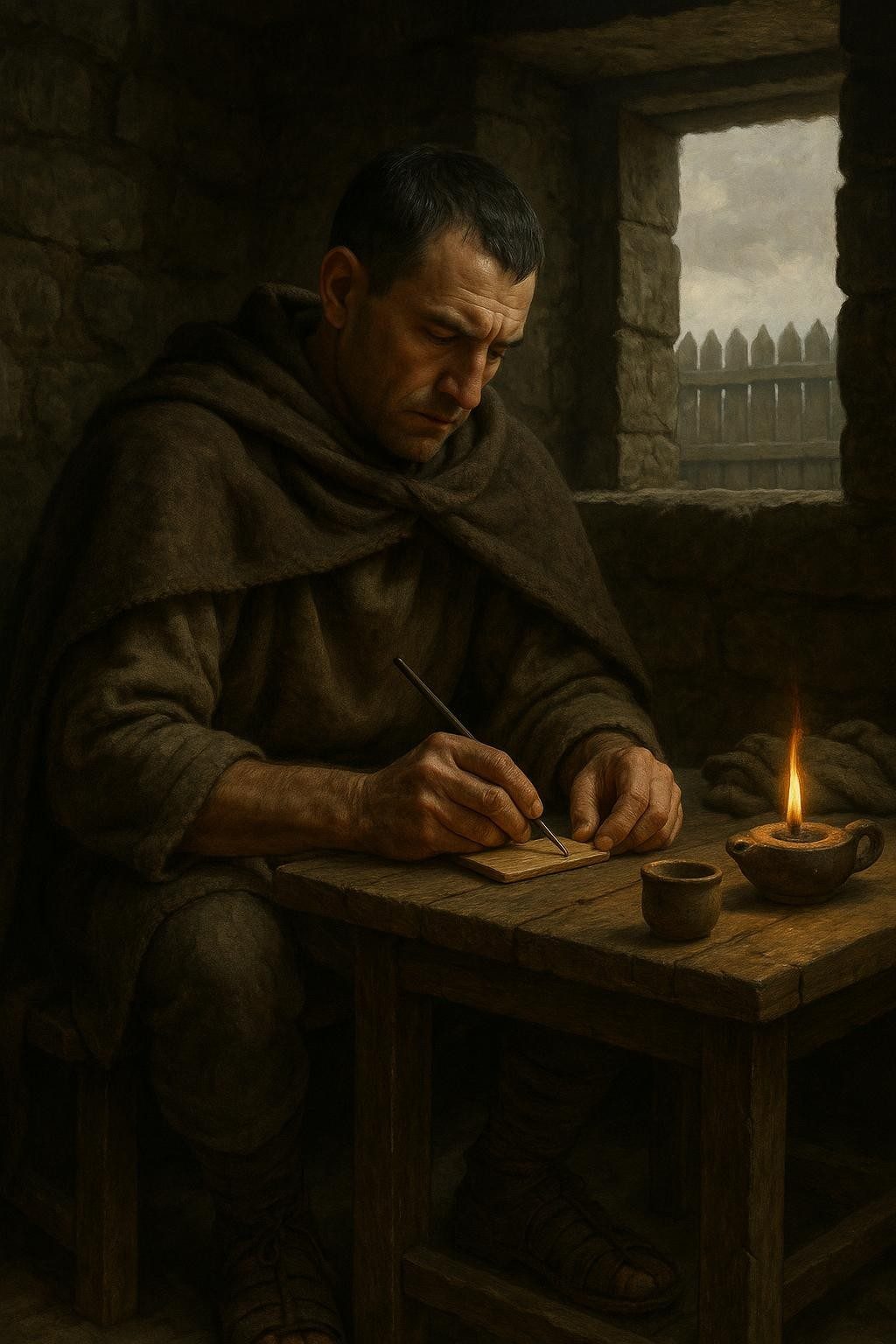
The messenger's hands trembled as he delivered the imperial decree to the harbor fortress at Gesoriacum. Marcus Aurelius Mausaeus Carausius, commander of Rome's Channel fleet, was ordered to return to Rome immediately. Not for promotion or honor—but for execution. Emperor Maximian had discovered what Carausius thought was his perfectly concealed secret: he'd been skimming treasure from captured Saxon pirates instead of sending it all to the imperial treasury.
Standing on the windswept ramparts of his fortress, watching his warships bob in the harbor below, Carausius faced an impossible choice. Obey the summons and die in disgrace, or commit an act of treason so audacious it would echo through the centuries. On that fateful day in 286 AD, this battle-hardened naval commander made a decision that would change British history forever: he declared himself Emperor of Britain.
It was the most brazen act of rebellion in Rome's 1,000-year history—and somehow, against all odds, it worked.
The Sea Wolf's Rise to Power
Carausius wasn't some pampered Roman aristocrat playing at rebellion. Born in the wild marshlands of Batavia (modern-day Netherlands), he was a Menapian—a member of a Germanic tribe renowned for their seamanship and ferocity in battle. His people had fought Rome for generations before finally being absorbed into the empire, and Carausius carried that warrior spirit in his blood.
Read next: The Day a Roman Soldier Defied an Emperor to Free a Province
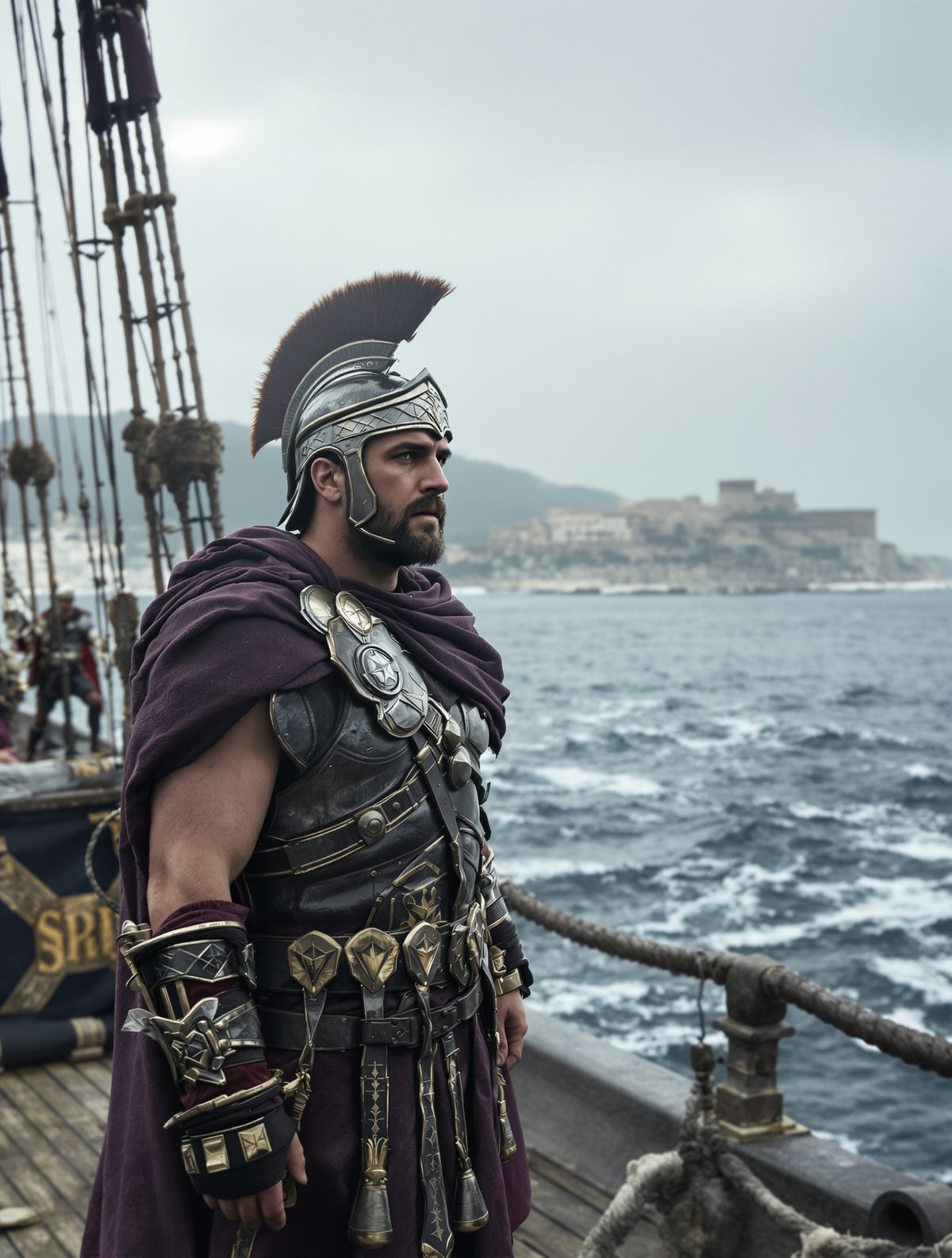
By the 280s AD, he had clawed his way up through the Roman military hierarchy to become commander of the Classis Britannica—the British fleet. This wasn't just any naval command. Carausius controlled the most powerful naval force in northern Europe, tasked with protecting the wealthy province of Britain from the increasingly bold Saxon pirates who terrorized the Channel.
The irony was delicious: Rome had given a former barbarian the keys to their most strategic naval fortress. From his headquarters at Gesoriacum (modern Boulogne), Carausius commanded over 600 warships and thousands of battle-hardened marines. His fleet patrolled from the Rhine delta to the Thames, and his word was law across the treacherous waters that separated Britain from the continent.
But Carausius had been running a profitable side business. Rather than intercepting Saxon raiders before they struck, he would let them plunder Roman settlements, then swoop in to "rescue" the stolen goods—keeping a generous portion for himself and his men. It was a brilliant scheme that made him fabulously wealthy and earned him fierce loyalty from his troops. Unfortunately for Carausius, imperial spies eventually uncovered his operation.
The Die is Cast
When that execution order arrived in 286 AD, Carausius knew he had perhaps days before imperial agents came to arrest him. But he also knew something Rome had forgotten in their arrogance: he commanded the only force capable of crossing the Channel in significant numbers. Without his ships, Rome couldn't touch Britain.
The proclamation he issued was breathtaking in its audacity. Not content with simply declaring independence, Carausius styled himself "Marcus Aurelius Mausaeus Carausius Augustus"—claiming the same imperial titles as the rulers in Rome. He wasn't just rebelling; he was declaring himself their equal.
His timing was perfect. The Roman Empire was fracturing under the weight of constant barbarian invasions, economic collapse, and civil wars. Emperor Diocletian had only recently established the Tetrarchy—a system of four co-emperors—to manage the crisis. In this chaos, one more "emperor" might slip through the cracks, especially one protected by 20 miles of treacherous water.
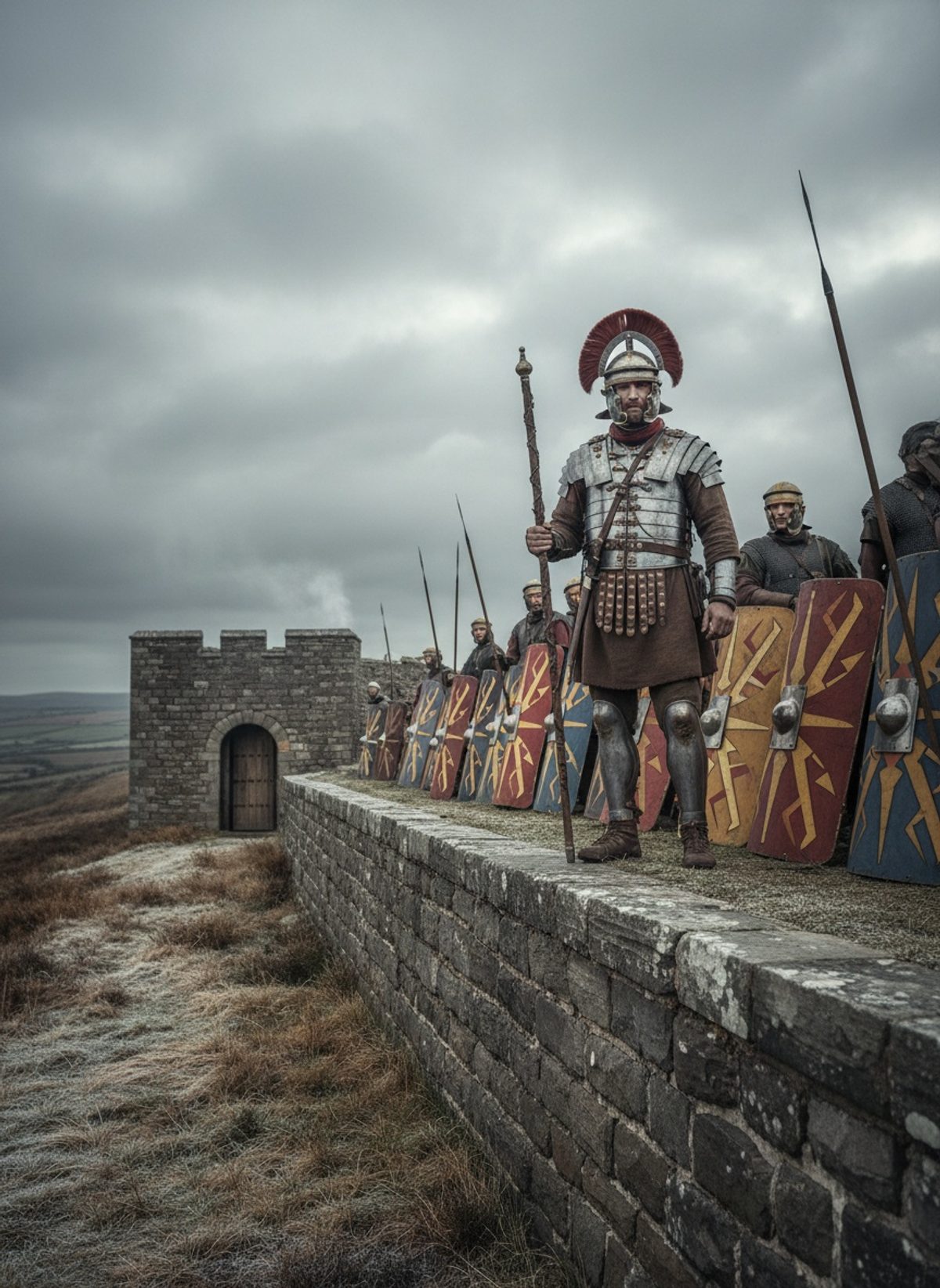
Carausius moved swiftly to consolidate power. He seized the imperial treasury in London, gaining access to the vast wealth that flowed from Britain's mines, farms, and trade. He secured the loyalty of the British legions with generous bonuses and promises of glory. Most crucially, he fortified both sides of the Channel, creating an impregnable maritime empire that stretched from Hadrian's Wall to the Seine.
Emperor of the Narrow Seas
What followed was perhaps the most successful rebellion in Roman history. For seven extraordinary years, Carausius ruled Britain as an independent emperor, and Rome could do nothing to stop him. His realm wasn't just Britain—he controlled northern Gaul as well, creating a maritime empire that modern historians call the "Imperium Britanniarum."
Carausius proved to be far more than a mere military strongman. He established a sophisticated administration, minted his own coins (some of the most beautiful ever produced in Britain), and even conducted diplomatic relations with barbarian tribes along the Rhine frontier. His coins bore the provocative inscription "Carausius et Fratres Sui"—"Carausius and his Brothers"—a cheeky reference to the legitimate emperors who couldn't touch him.
The rebel emperor understood the power of propaganda better than many legitimate rulers. His coins depicted him alongside representations of the Roman gods, emphasizing his divine mandate to rule. He restored Roman forts, sponsored public works, and presented himself as the true defender of Roman civilization in the north. To many Britons, he wasn't a rebel—he was the emperor who actually cared about their province.
Rome's attempts to dislodge him were humiliatingly unsuccessful. When Maximian finally assembled an invasion fleet in 289 AD, Carausius's ships crushed it before it could reach British shores. The rebel emperor's naval supremacy was so complete that Rome couldn't even get spies across the Channel, let alone armies.
The Britannic Empire's Golden Age
Under Carausius, Britain experienced a remarkable renaissance. Free from Rome's crushing taxation and bureaucratic interference, the province flourished. Archaeological evidence shows increased building activity, expanded trade networks, and growing prosperity during his reign. The rebel emperor invested heavily in coastal fortifications—the famous "Saxon Shore" forts that would defend Britain for centuries to come.
Carausius also revolutionized Roman naval warfare. His ships incorporated design elements borrowed from Saxon and Frankish vessels, making them faster and more maneuverable than traditional Roman galleys. His marines were equipped with new weapons and tactics developed through constant skirmishing with barbarian raiders. In essence, he created the world's first truly modern navy.
The emperor's court at London became a center of learning and culture. Scholars, merchants, and diplomats from across northern Europe sought audience with the man who had defied Rome and won. Carausius patronized poets who celebrated his victories and architects who designed monuments to his glory. For a brief, shining moment, Britain was the center of its own world.
But perhaps most remarkably, Carausius maintained the fiction that he was a legitimate Roman emperor. His coins and inscriptions never explicitly rejected Roman authority—instead, they portrayed him as the rightful ruler of the northern provinces. This masterful propaganda campaign made it difficult for Rome to rally support against him, since he claimed to represent traditional Roman values better than the "usurpers" in Rome and Constantinople.
The Tide Turns
Carausius's empire might have endured indefinitely, but in 293 AD, everything changed. Diocletian appointed Constantius Chlorus (father of the future Constantine the Great) as Caesar of Gaul with one specific mission: crush the British rebellion. Unlike previous Roman commanders, Constantius possessed the patience and resources for a long campaign.
The end came not through naval battle or siege, but through betrayal. In 293 AD, Carausius lost his foothold in northern Gaul when Constantius recaptured Gesoriacum through a brilliant engineering feat—he literally drained the harbor, stranding Carausius's fleet. Cut off from his continental territories, the British emperor's position became precarious.
Sensing weakness, Carausius's own treasurer and closest advisor, Allectus, arranged his assassination in late 293 AD. The man who had defied Rome for seven years died not in glorious battle, but through the treachery of someone he trusted. Allectus claimed the purple himself, but lacked Carausius's military genius and political skills. Three years later, Constantius finally crossed the Channel and crushed the last remnants of British independence.
The Emperor Who Almost Changed History
Today, Marcus Carausius is barely a footnote in most history books, dismissed as a mere "usurper" in Rome's long decline. But this perspective misses the profound significance of what he achieved. For seven crucial years, Britain stood as an independent power, proving that Rome's dominance wasn't inevitable or eternal.
Carausius demonstrated that a determined leader with naval supremacy could carve out an autonomous realm even within the Roman system. His maritime empire prefigured the island kingdoms that would dominate northern Europe after Rome's fall. In many ways, he was the first truly British emperor—a ruler who understood that Britain's strength lay not in continental conquest, but in naval power and commercial prosperity.
His legacy lived on in the Saxon Shore forts he built, the naval traditions he established, and the precedent he set for British independence. When later British leaders faced continental threats—from the Spanish Armada to Napoleon's Grand Army—they were following a strategic template first established by a Batavian sea captain who dared to call himself emperor.
Perhaps most intriguingly, Carausius showed how quickly imperial authority could crumble when challenged by someone who understood the empire's vulnerabilities. In our own age of global powers and regional challengers, his story remains remarkably relevant. Sometimes the most dangerous rebels aren't the ones who reject the system entirely—they're the ones who claim to embody its values better than its official representatives.