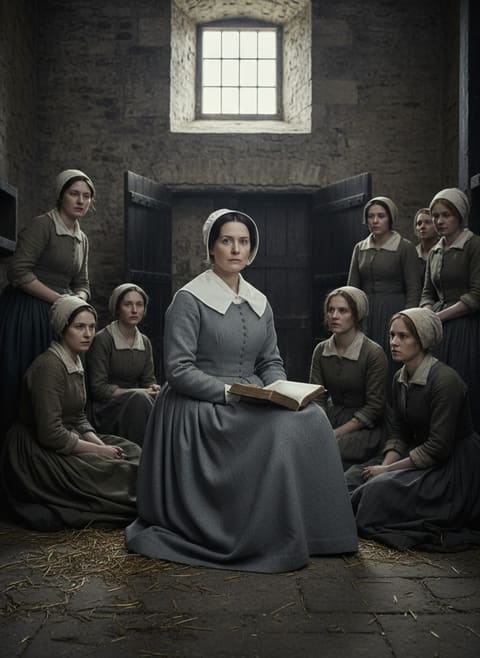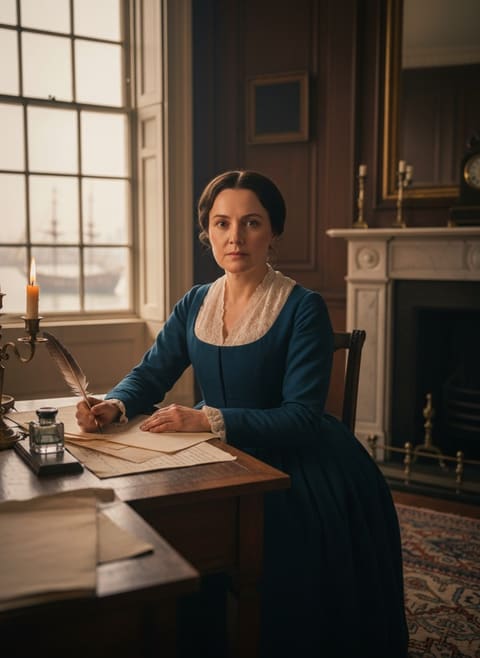
On a moonless night in April 1778, two women crept through the shadows of Kilkenny Castle, their hearts hammering against their ribs. Lady Eleanor Butler, 39, and her beloved companion Sarah Ponsonby, just 23, clutched a single bag of belongings as they fled toward a waiting carriage. Behind them lay lives of privilege, duty, and suffocating expectations. Ahead waited scandal, poverty, and something far more precious—freedom to love as they chose.
What happened next would shock Georgian society to its core and create one of history's most extraordinary love stories. For the next five decades, these two remarkable women would transform a humble Welsh cottage into the most famous household in Britain, hosting everyone from Lord Byron to the Duke of Wellington while living openly as devoted partners.
The Great Escape That Scandalized Ireland
The Ireland of 1778 offered aristocratic women precisely two respectable options: marriage or the convent. Lady Eleanor Butler had already rejected both. Born into the powerful Butler dynasty at Kilkenny Castle, she possessed a razor-sharp intellect and an iron will that made her family deeply uncomfortable. At 39, she was considered hopelessly on the shelf—a spinster whose refusal to marry had become a source of family shame.
Sarah Ponsonby faced a different but equally grim fate. At 23, this intelligent, passionate young woman was being pressured into marriage with a man she despised. The Ponsonby family, though well-connected, needed the match for financial security. Sarah's feelings were utterly irrelevant.
Read next: The Day a Black Sailor Walked Into Court and Freed Himself
The two had met through Ireland's tight aristocratic circles, but their connection transcended mere friendship. In an age when the word "lesbian" didn't exist and women's romantic attachments to each other were barely acknowledged, Eleanor and Sarah discovered something society had no name for—a love that consumed their very souls.
Their escape plan was audacious in its simplicity. Disguising themselves in men's clothing (a detail that particularly horrified contemporary observers), they slipped away in the dead of night, leaving behind vast fortunes, family titles, and social standing. When their families discovered the empty beds at dawn, the scandal exploded across Irish society like gunpowder.
The Dublin newspapers had a field day. Freeman's Journal described it as "an extraordinary affair" while society gossips whispered of everything from insanity to witchcraft. How else could two women abandon everything for... what exactly? Nobody quite knew what to call it.
Finding Paradise in a Welsh Valley
After a brief, miserable attempt to settle in England, Eleanor and Sarah discovered their promised land in the most unlikely place—a remote Welsh valley called Llangollen. Here, surrounded by rolling hills and ancient oak trees, they found a modest cottage called Plas Newydd (New Hall) and decided to make it their sanctuary.
The cottage was hardly palatial—a simple stone building with small windows and low ceilings. But Eleanor and Sarah saw its potential. Using Eleanor's modest inheritance and Sarah's small allowance, they began transforming it into something magical. They carved elaborate Gothic Revival decorations into every available surface, turning the humble dwelling into a fairy-tale castle.
The transformation was obsessive and extraordinary. They carved wooden tracery around windows, added ornate chimneys, and filled every room with dark oak furniture decorated with their intertwined initials. Visitors described walking into a medieval fantasy, where every beam, door, and window frame bore intricate carvings that seemed to whisper of romance and devotion.
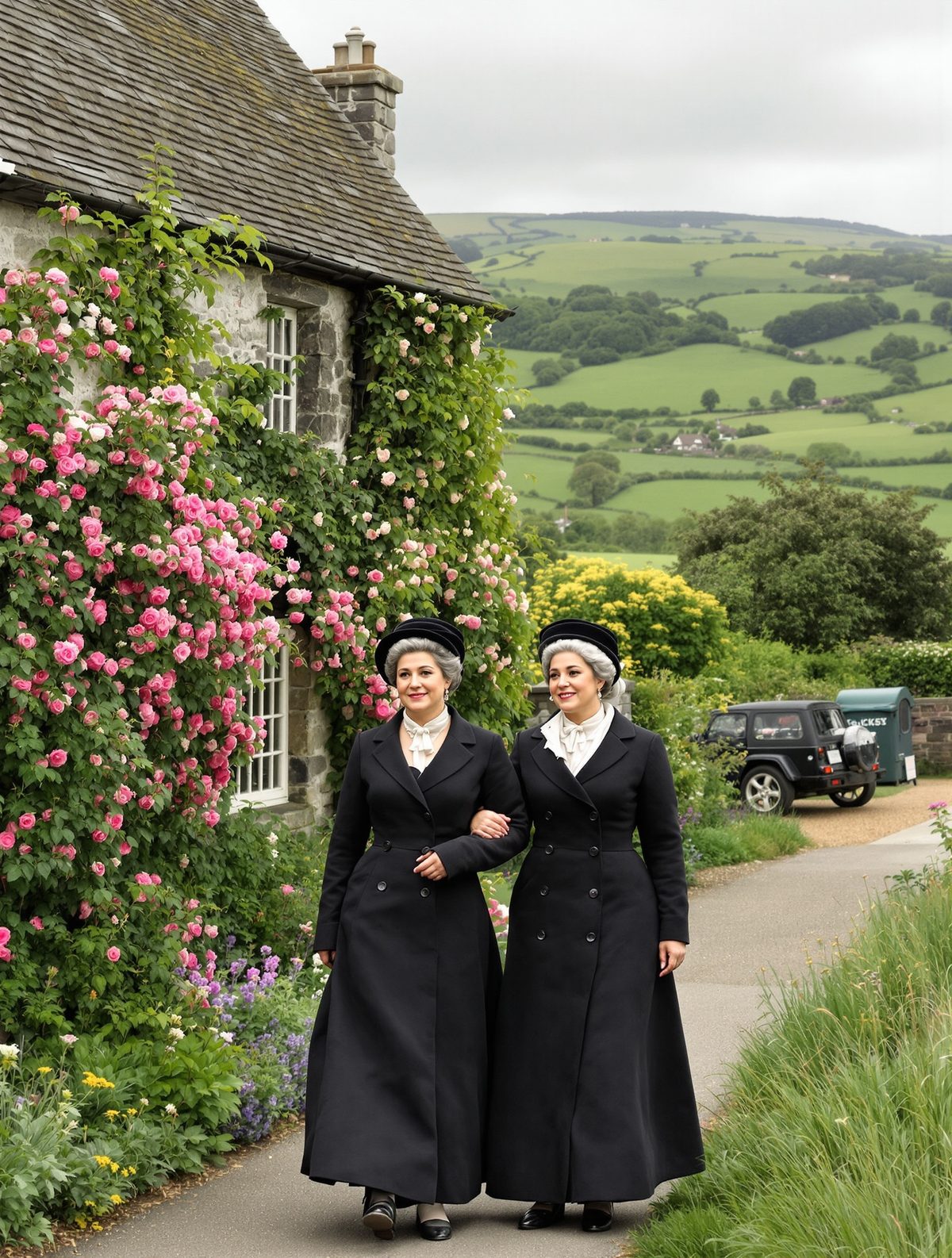
But perhaps most shocking of all, they adopted a uniform that scandalized polite society—matching masculine riding habits in black silk, worn with white shirts, black beaver hats, and short-cropped hair. They looked, contemporary observers noted with horror, like a pair of eccentric gentlemen. In an age when a woman's femininity was her most precious asset, Eleanor and Sarah had deliberately abandoned it.
The Most Famous Friendship in Britain
What happened next defied all expectations. Rather than fading into obscurity, the "Ladies of Llangollen" became the most celebrated couple in Britain. Word of their extraordinary devotion, their beautiful home, and their fascinating conversation spread through society like wildfire.
By the 1780s, a pilgrimage to Llangollen had become essential for any cultured person touring Wales. Their visitors' book read like a who's who of Georgian Britain: William Wordsworth composed sonnets about them, calling their bond "a work of art." Lord Byron rode out of his way to meet them. The Duke of Wellington stopped by during his military campaigns. Edmund Burke, the great political philosopher, became a regular correspondent.
What drew these luminaries to a remote Welsh cottage? Contemporary accounts describe Eleanor and Sarah as magnetic conversationalists who had created something unprecedented—a household run entirely according to their own desires. They rose at eight, spent their mornings reading and writing, walked in their gardens after lunch, and devoted their evenings to deep conversation with whatever distinguished guests had made the journey to see them.
Sarah kept meticulous diaries of their daily life, recording everything from the weather to their visitors' conversations. These diaries, discovered centuries later, reveal a couple utterly devoted to each other and genuinely content with their unconventional choice. "My Beloved and I walked to the river," Sarah wrote on a typical day in 1785. "Perfect happiness."
Royal Recognition and Literary Fame
The ultimate seal of approval came from an unexpected source—the royal family. King George III granted them a joint pension of £280 per year, an extraordinary acknowledgment of their unique status. Queen Charlotte sent gifts. Even the strait-laced Prince Regent (later George IV) expressed admiration for their devotion.
This royal endorsement was crucial because it gave them protection from the more vicious gossip that swirled around their relationship. While society papers occasionally hinted at the "peculiar nature" of their attachment, the ladies' reputation for virtue and their royal patronage made direct attacks impossible.
Literary celebrities competed to capture their story. Anna Seward, the "Swan of Lichfield," wrote extensive poetry about their love. Charles Mathews, the famous actor, performed comic sketches about his visits to them. Magazines published detailed descriptions of their daily routine, their furniture, even their pet dogs.
Read next: The Day a London Clerk Walked Into Court for a Dying Slave
Perhaps most tellingly, they inspired countless other women. Letters survive from female admirers across Britain, many of them expressing envy at Eleanor and Sarah's courage in choosing love over convention. "You have achieved what we all secretly desire," wrote one anonymous correspondent, "a life lived entirely for yourselves."
Love That Transcended Death
For fifty-three years, Eleanor and Sarah never spent a single night apart. They shared everything—books, thoughts, daily walks, even illnesses. When Sarah caught a fever, Eleanor nursed her back to health. When Eleanor's arthritis made walking difficult, Sarah became her constant support.
Their devotion became legendary precisely because it seemed so pure. In an age of arranged marriages, financial matches, and social climbing, here were two people who had chosen each other above everything else and never wavered in that choice.
The end came in 1829 when Sarah, aged 74, died after a brief illness. Eleanor was devastated beyond consolation. Friends described her as "a shadow of herself," unable to eat or sleep in the cottage that suddenly seemed haunted by memories. She followed Sarah to the grave just two years later, aged 90.
They were buried together in Llangollen churchyard under a simple stone that bears both their names and the inscription "United in life, not divided in death." Even in death, they refused to be separated.
Why Their Love Story Still Matters
In our age of marriage equality and LGBTQ+ rights, it's tempting to view Eleanor Butler and Sarah Ponsonby as early pioneers of same-sex love. But the truth is more complex and perhaps more interesting. They lived in an era before modern categories of sexuality existed, when intense female friendships were common but romantic partnerships between women were literally unthinkable.
What made them extraordinary wasn't just their devotion to each other, but their absolute refusal to compromise that devotion for social acceptance. They chose love over security, authenticity over respectability, and personal happiness over family duty. In doing so, they created a new template for how relationships might work—based on genuine affection, shared interests, and mutual respect rather than economic necessity or social pressure.
Their cottage still stands in Llangollen, now a museum filled with their belongings and visited by thousands each year. Their story reminds us that love has always found a way to flourish, even in the most restrictive societies, and that sometimes the greatest act of rebellion is simply choosing to be genuinely, completely yourself.