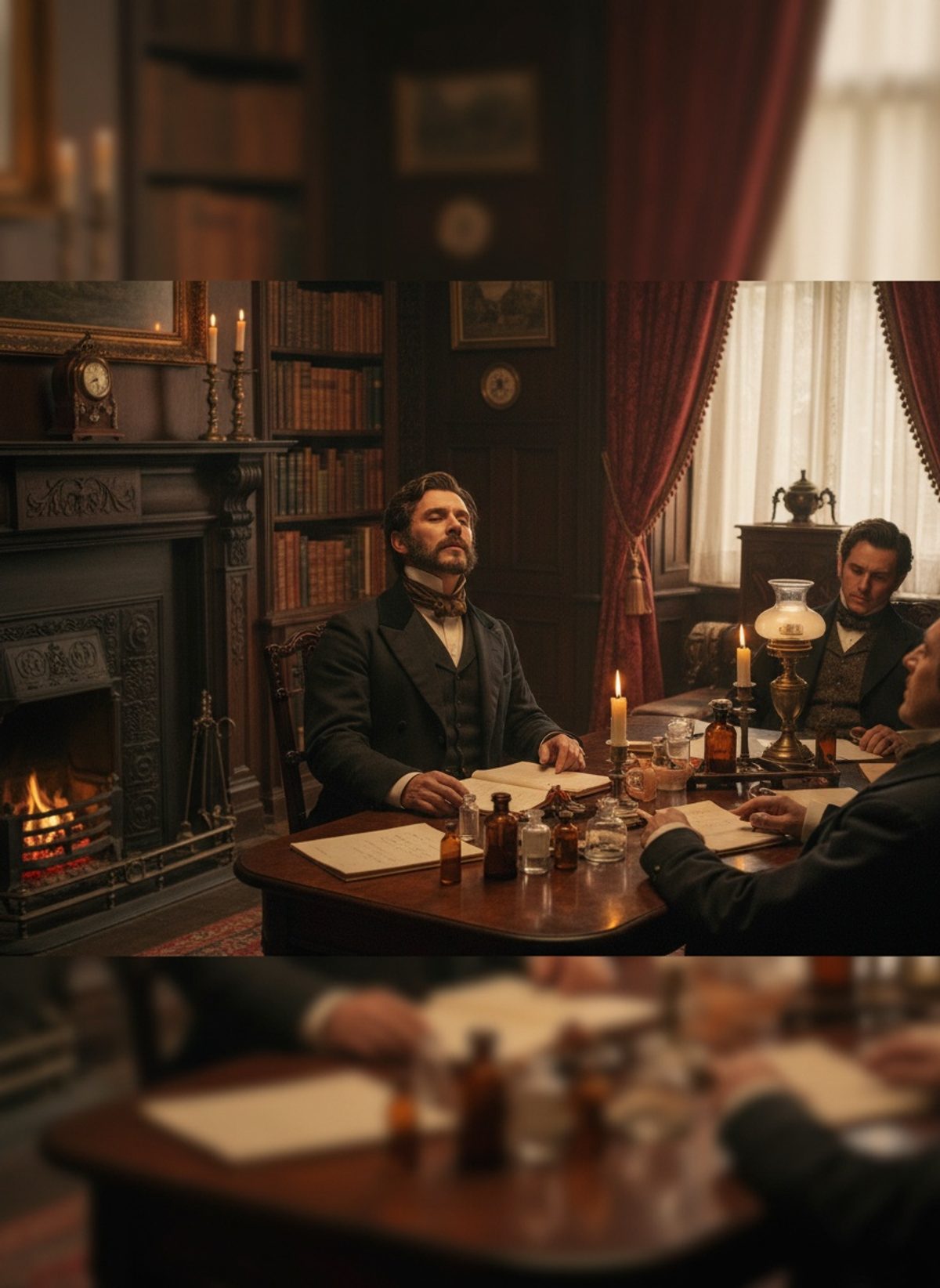
Eunice Newton Foote was an unlikely trailblazer. Her groundbreaking experiment would languish in obscurity for years.
The Unforeseen American Pioneer
Imagine a Victorian laboratory, bustling not with scientists, but with curious thinkers driven by the wonders of discovery. In 1856, amidst the predictable hum of American ingenuity, Eunice Newton Foote quietly conducted an experiment that would lay the foundations for our understanding of climate science. Using slender glass cylinders and a basic air pump, she did what no scientist had done before. She demonstrated that the sun's warmth could be trapped by certain gases within Earth's atmosphere. Her efforts, though seemingly simple, were profound: a woman in a world dominated by male scientists, with an insight that could have placed her at the vanguard of climate science. But her findings were greeted largely with silence, overlooked in the annals of scientific acclaim. Yet, Foote's work was nothing short of revolutionary, hinting at the invisible forces within our atmosphere that shape our planet’s climate.
A Lonely Acknowledgment
Across the Atlantic, the scientific community was bustling with innovations and breakthroughs, but Foote's work was mentioned only in a brief note at a society meeting, hardly the reception it deserved. Still, it caught the notice of one keen Irishman. In 1859, John Tyndall, a physicist born in Belfast, delved into the work Eunice had conducted three years earlier. The quiet corridors and cluttered tables of his laboratory became the stage for an experiment that would echo through history. Tyndall methodically filled glass tubes with various gases, taking notes with the precision and skepticism of a seasoned scientist. His own conclusions resonated with Foote’s, yet went much further, identifying specific gases—like water vapor, carbon dioxide, and methane—that could absorb heat more effectively than others. Unlike Foote, his work was celebrated, securing his legacy as one of the pivotal figures in atmospheric studies.
The Ignored Correspondence
Foote’s experiment was not entirely shrouded in silence. Her paper, “Circumstances affecting the heat of the sun’s rays,” was presented at the American Association for the Advancement of Science in 1856, yet the presentation wasn’t given by her, but by a man, Joseph Henry. It’s conceivable to think how her gender, and perhaps the transatlantic distance, impaired the recognition of her work. In an era when women were usually omitted from scientific dialogues, her submission was an anomaly. Although her findings were substantial, the absence of wide acknowledgment left her name fading into the footnotes of scientific history. Had the scientific community celebrated her discovery as they did for Tyndall, the course of climate science could have altered much earlier.
The Irishman's Contribution
John Tyndall, building on the overlooked foundations laid by Foote, ventured even further with his research on gaseous absorption of heat. Tyndall’s meticulous investigations led him to publish his findings in 1861, at a time when Europe's scientific communities buzzed with the anticipation of the implications his work would unleash. Tyndall's confirmation that gases like carbon dioxide and water vapor played vital roles in retaining heat within the atmosphere was acknowledged with acclaim. His work created ripples that affected advances in atmospheric studies, giving birth to concepts that would later become the backbone of climate change sciences. While Tyndall’s contributions were significant, they cast an unfair shadow over Foote’s pioneering work, which could have earned similar accolades.
The Layers of Recognition
The scientific realm is a tapestry woven with threads of discovery and oversight, often tangled by societal norms and biases. Eunice Newton Foote’s narrative is a poignant reminder that brilliance often requires a chorus of voices to resonate. Her work, though largely invisible during her lifetime, was an audacious stride for its time. She offered a glimpse into our atmosphere's intimate dance with the sun—a dance still examined, understood, and marveled at today. Tyndall's acknowledgment of her foundational ideas was indeed a part of his own breakthrough, but it was a breakthrough built on a truth that Foote first dared to uncover. Now, as we stand on the precipice of climate challenges, her contribution beckons us to remember the unsung echo of her work—a story buried by time, yet still illuminating the annals of climate science.