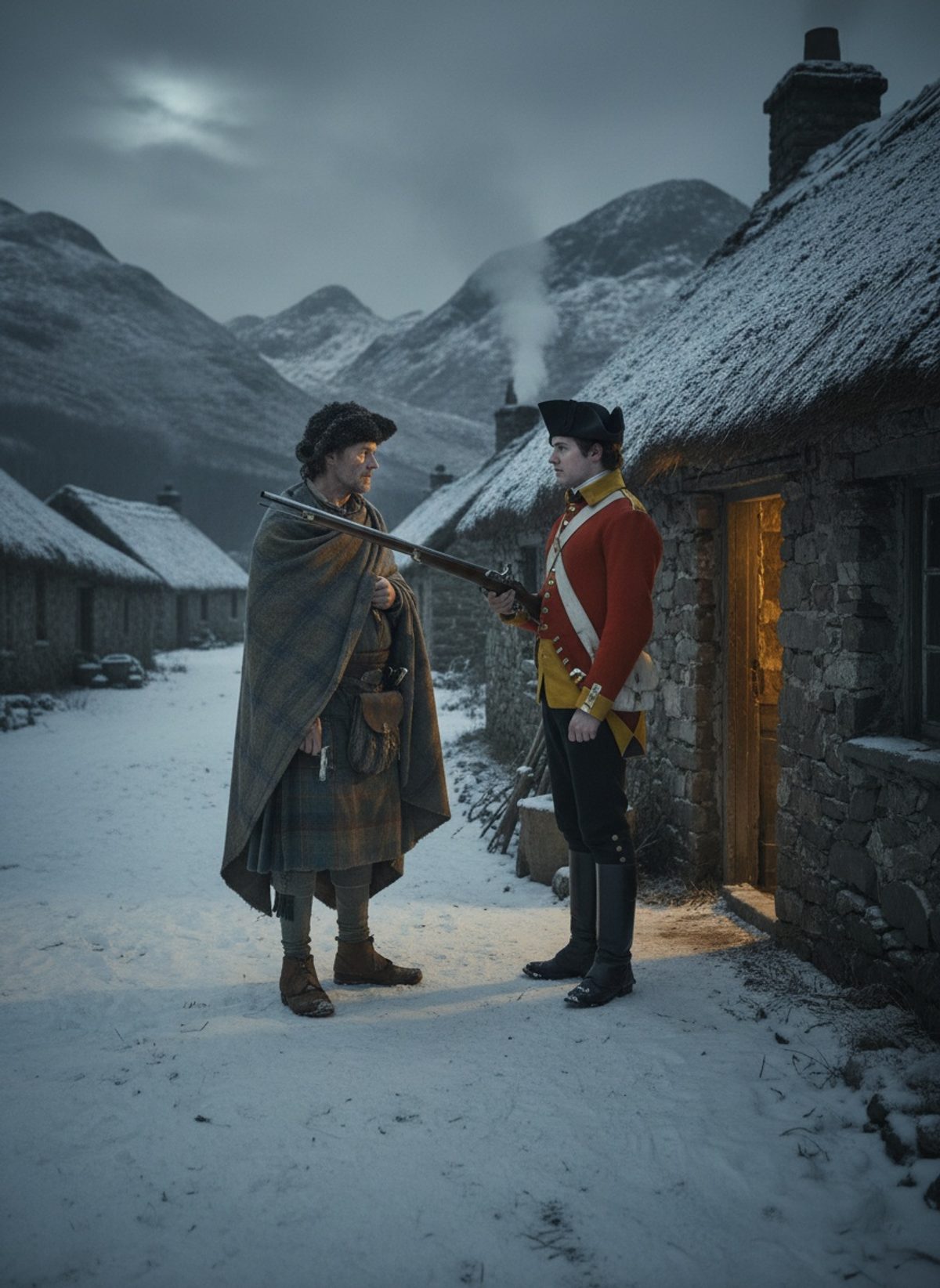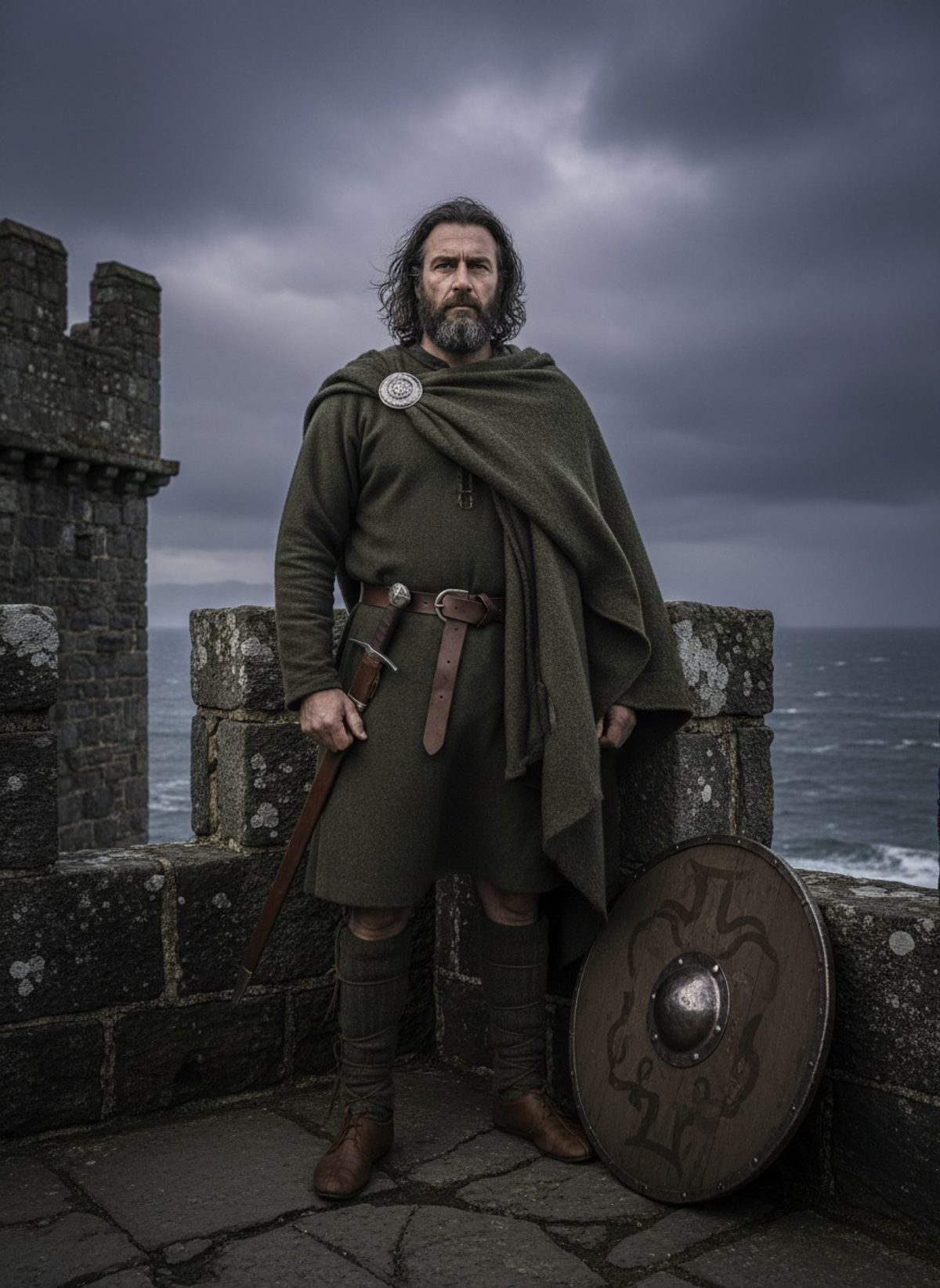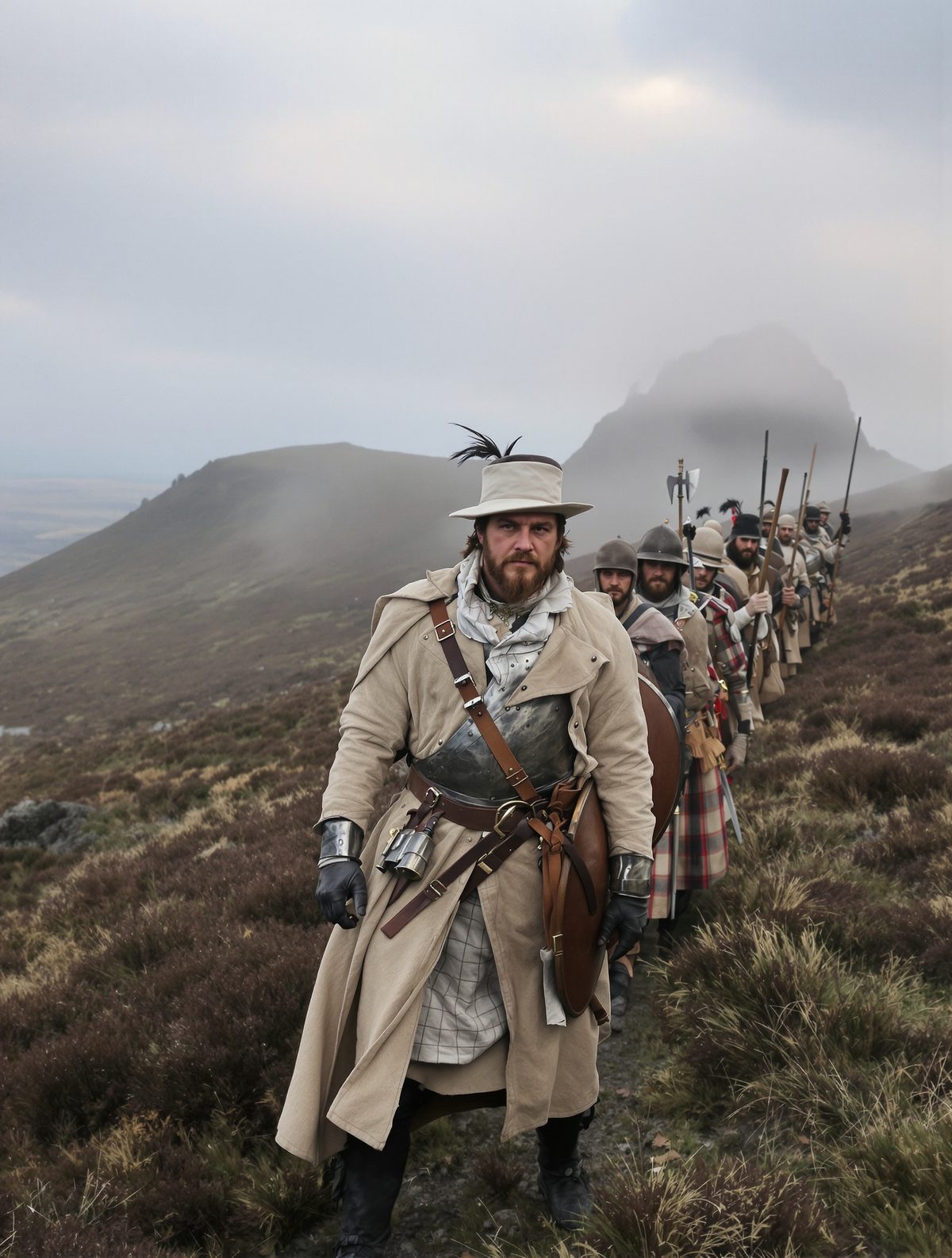
The Highland fog clung to the mountains like a shroud as the ragged column of warriors moved quietly through the morning mists. Their leader, a figure of stark defiance clad in mismatched armour, rode at the front—bearing not just the weight of war but the Crown of a troubled King upon his heart. This man was James Graham, the Marquess of Montrose, who, against all odds, waged one of the most daring campaigns of the 17th century.
The Unlikely General
In the grim winter of 1644, as the saplings stood bare against Scotland's harsh landscape, the Royalist cause appeared as starkly stripped. King Charles I needed a savior amidst crumbling fortunes in a civil war that raged across Britain. Enter James Graham—once a Covenant supporter but now turned fervent ally of the embattled monarch. Montrose's charisma, strategic genius, and iron will were as potent—if not more so—than any regimented army.
At 31, Montrose was not only a skilled commander but a man driven by calculated audacity. September 1644 marked the launch of what could easily have remained a footnote in history—a desperate uprising that felt more like a death throe than a prodigious military campaign. Montrose, however, had his Highland army; a seemingly chaotic aggregation of 3,000 battle-hardened clansmen long ignored by the Royalist high command.
The King’s Gambit
This impromptu force might have faltered under lesser leadership, yet their resolve was chiseled into steely purposes by a leader who turned geography itself into an ally. With no artillery or cavalry, Montrose relied on the sheer ferocity and mobility of his men. He vowed to shock his enemies, appearing like "ghosts from the fog," disappearing just as swiftly, leaving bewildered foes and questions lingering in their wake.
Read next: The Day a Scots Village Chose Its Own Name and Kept It
Montrose's audacity came to the fore at the Battle of Tippermuir on September 1, 1644. Against a better-equipped Covenant army of 7,000, Montrose’s only sure ally was the element of surprise. Contrary to common assumptions, he emphasized momentum and psychological warfare rather than brute force. His 2,000 men quickly shattered the Covenant lines. The long shadow cast by his unexpected victory set the tone for the remarkable months ahead.
The Trail of Triumphs
Between 1644 and 1645, Montrose orchestrated a string of victories against insurmountable odds, his leadership turning the tide in a beleaguered nation. From Aberdeen to Inverlochy, each battle added another section to his growing legend—a tale of a smaller force expertly outmaneuvering larger armies through a combination of tactical brilliance and local folklore knowledge.
The battle at Inverlochy on February 2, 1645, would later be immortalized as his masterpiece. Montrose displayed resourcefulness beyond measure, marching his men through 36 miles of mountainous terrain in a single night to launch a dawn attack on an unsuspecting enemy. With sunlight filtering through the clouds like swords from heaven, Montrose's Highlanders descended upon the encamped army, crushing it to the bewilderment of foes and the joy of beleaguered allies.
A Crown Carried and A Legacy Forged
As these battles unfolded, Montrose bore not a physical crown but the hope and desperation of a King. Legend claims that he carried a locket containing a miniature of King Charles I close to his body—a physical representation of the burden and honor he bore. His strategy went beyond military maneuvers; it was about the nobility of loyalty to a beleaguered monarch.
But perhaps most surprisingly, Montrose’s forces remained remarkably cohesive despite their diverse origins. His leadership was not merely tactical; it was deeply personal. He understood the vulnerabilities and strengths of each clan, leveraging these to create temporary unity among traditionally fractious Scottish clans in a singular drive against the Covenanters.
The Endgame and Epilogue
By the end of the summer of 1645, Montrose had won six major battles in nine months—an achievement not repeated until the modern era. However, his remarkable streak ended at Philiphaugh on September 13, where his forces were overwhelmed by superior numbers, and his Highland army fell to ruin.
Though his campaign failed to save King Charles in the end, Montrose's legacy endures as a symbol of brilliance and defiance. In today's turbulent times, Montrose’s unfaltering resolve reminds us that extraordinary leadership and undying loyalty can inspire generations, regardless of inevitable setbacks.
James Graham, the Marquess of Montrose, remains an exemplar of what it means to carry a crown, not always upon the head, but through action, conviction, and unyielding spirit—values that resonate well beyond the echo of the battles he once commanded. In the mist of Scottish history, his legend still emerges, a glowing ember against dark shadows.