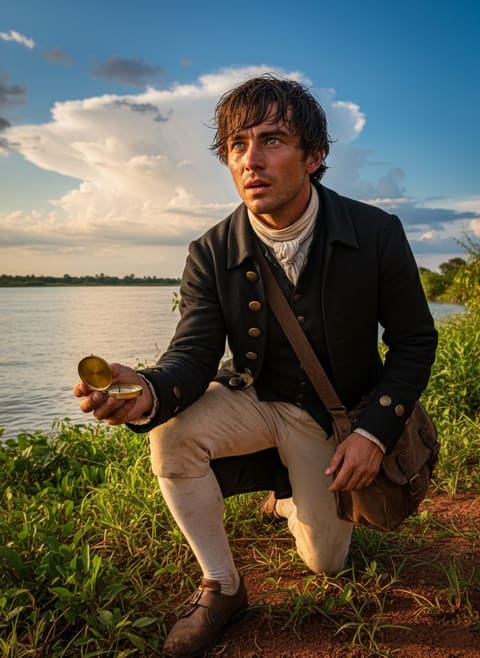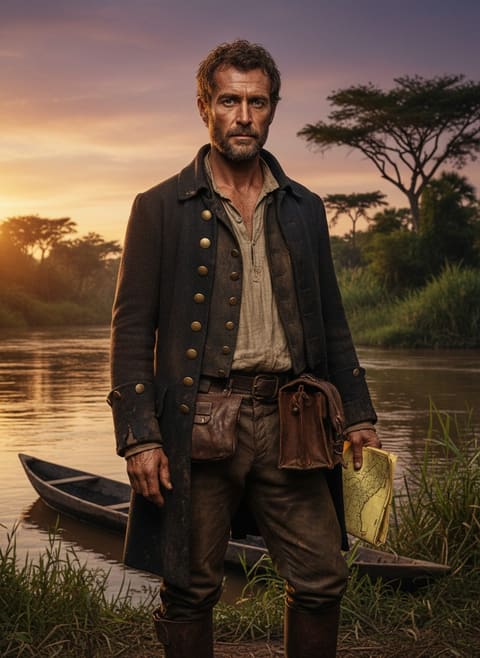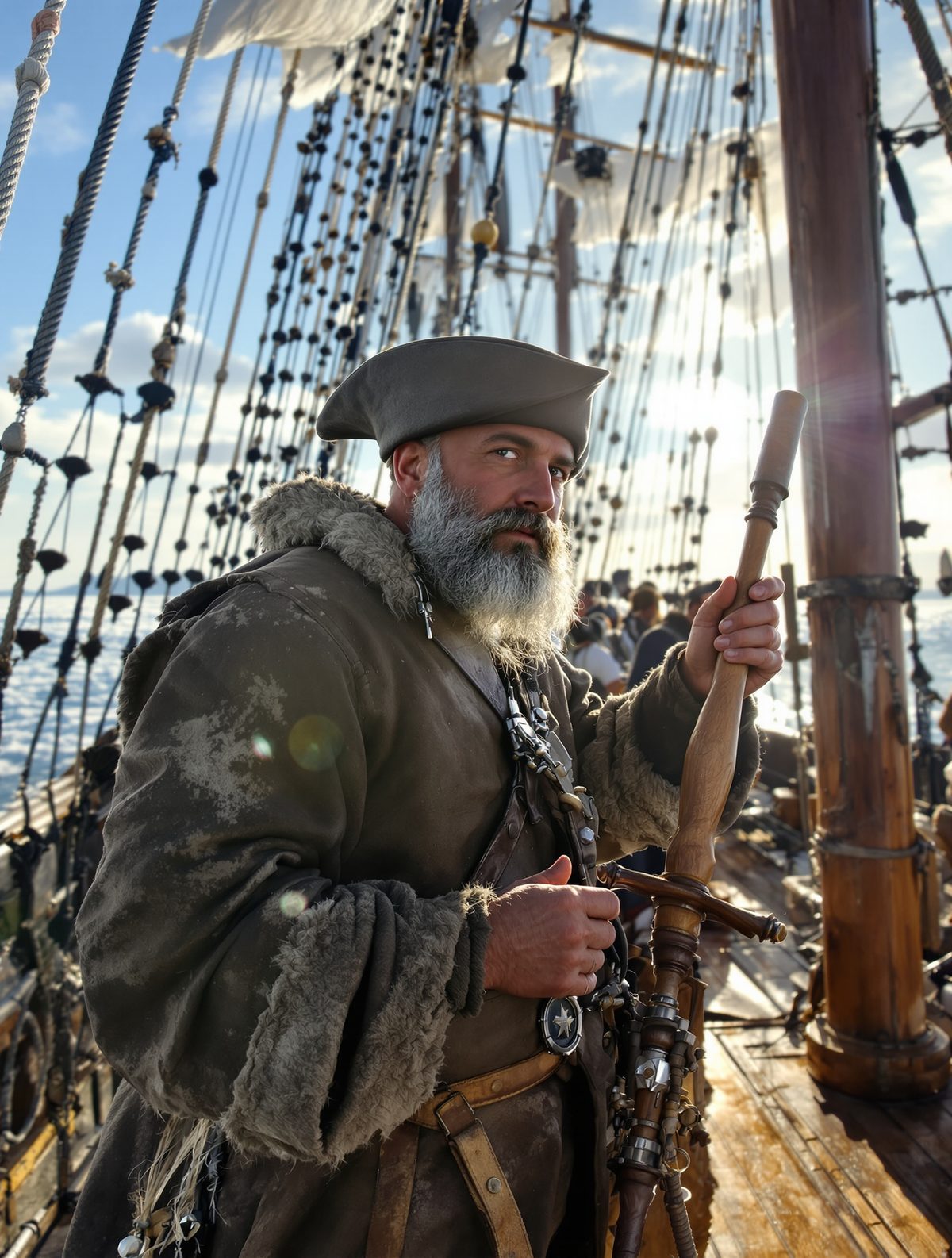
The Arctic sun blazed mercilessly across the ice-choked waters of the Davis Strait in 1594, its glare so intense it could steal a man's sight forever. Captain John Davis squinted through his cross-staff, trying to measure the sun's altitude while its brutal light seared his retinas. Around him, his crew members nursed damaged eyes—some already half-blind from years of staring into that celestial furnace just to know where they were. There had to be a better way, Davis thought, lowering his instrument in frustration. What if, instead of looking at the sun, they could turn their backs to it entirely?
That moment of inspiration would birth one of navigation's most ingenious inventions—the backstaff—and save countless sailors from blindness over the next three centuries.
The Blinding Price of Navigation
In the late 16th century, finding your position at sea was quite literally a sight-threatening endeavor. The cross-staff, or "Jacob's staff," was the navigator's primary tool for celestial navigation. This deceptively simple instrument consisted of a graduated staff with a sliding crosspiece that sailors used to measure the angle between the horizon and celestial bodies—primarily the sun.
The process was torturous. A navigator would hold the staff to his eye, align one end of the crosspiece with the horizon, and slide it along the graduated staff until the other end lined up with the sun. The measurement told him the sun's altitude, which he could then use with astronomical tables to determine his latitude. But there was a devastating catch: success required staring directly at the sun for extended periods.
Read next: The Day a Devon Captain Charted the Pacific and Changed the World
The results were predictable and tragic. Ships' logs from the era are filled with references to navigators suffering from severely damaged eyesight. Many experienced sailors developed what they called "sun-blindness"—permanent damage to their vision that left them squinting through milky cataracts or struggling with partial blindness. The most skilled navigators, ironically, were often the most afflicted, their expertise bought with their sight.
For John Davis, this wasn't just an occupational hazard—it was an existential threat. The Devon-born navigator had already made two attempts to find the Northwest Passage, that legendary Arctic route that promised to revolutionize trade with the Far East. The extreme conditions of polar exploration made accurate navigation absolutely critical, yet the intense glare of sunlight reflecting off ice and snow made using traditional instruments even more dangerous than usual.
The Genius of Turning Away
Davis's breakthrough came from a simple but revolutionary insight: what if you could measure the sun's position without looking at it directly? The solution he devised was elegantly counterintuitive—literally turning the age-old practice of navigation on its head.
The backstaff, which Davis initially called the "English quadrant," consisted of two separate arcs mounted on a central staff. The key innovation was a system of shadows and reflections that allowed the navigator to keep his back to the sun throughout the measurement process. The upper arc cast a shadow onto the lower arc, while the navigator simultaneously observed the horizon through a sight vane.
Here's how this ingenious device worked: The navigator would hold the backstaff at eye level and turn so the sun was directly behind him. He would then adjust a sliding piece on the upper arc until its shadow fell perfectly on a designated point on the lower arc, while keeping the horizon lined up through the sight. The combined readings from both arcs gave him the sun's altitude—without ever looking at the sun itself.
The first successful test of Davis's invention likely took place during his third Arctic voyage in 1587, though he continued refining the design over subsequent years. The instrument proved so effective that within decades, it had become the preferred navigation tool for English sailors venturing into the world's most challenging waters.
Arctic Seas and Global Impact
The timing of Davis's invention couldn't have been more crucial. The late 16th and early 17th centuries marked the beginning of what historians call the "Age of Exploration's" most ambitious phase. European powers were racing to establish trade routes to Asia, explore the Americas, and map the world's most treacherous waters.
The backstaff gave English navigators a significant advantage in this global competition. While Spanish and Portuguese sailors continued to damage their eyesight with cross-staffs, English captains could navigate with unprecedented accuracy and safety. This edge proved particularly valuable in the harsh conditions of northern waters, where Davis had first identified the problem.
The instrument's impact extended far beyond individual comfort or safety. Ships could now maintain more accurate courses over longer distances, reducing the risks of running aground, missing landfalls, or becoming hopelessly lost. Insurance costs for maritime ventures began to reflect this improved safety record, making long-distance trade more economically viable.
Perhaps most remarkably, the backstaff democratized navigation skills. Previously, becoming a competent navigator required not just technical knowledge but also a willingness to sacrifice one's eyesight gradually. Now, younger sailors could learn celestial navigation without facing that terrible trade-off, leading to a broader pool of skilled navigators and safer seas for everyone.
The Instrument That Wouldn't Die
What makes Davis's invention truly extraordinary is its longevity. While most 16th-century technologies were quickly superseded, the backstaff remained the standard navigation instrument for nearly 300 years. Even after John Hadley invented the more accurate octant in 1731, many sailors continued to prefer the backstaff for routine navigation.
The backstaff's persistence stemmed from several practical advantages beyond its eye-saving design. It was relatively inexpensive to manufacture, requiring less precision metalwork than later instruments. It was also remarkably robust—essential for equipment that had to withstand storms, salt spray, and the rough handling inevitable on working ships.
Maritime museums worldwide still house hundreds of backstaffs, many showing the wear patterns of decades of use. Some bear the names of their owners carved into the wood, creating poignant connections to long-dead navigators who trusted these instruments with their lives and the lives of their crews.
The instrument evolved throughout its long service life. Later versions incorporated improvements like bubble levels and more precise graduations, but the fundamental principle remained unchanged: turn your back to the sun and let shadows do the work your eyes once had to perform.
Read next: The Day a Devon Sailor Mapped the Roof of the World Alone
Beyond the Horizon
John Davis never found his Northwest Passage—that prize would elude explorers for centuries. But his backstaff guided countless expeditions that gradually filled in the world's blank spaces. Captain James Cook carried backstaffs on his Pacific voyages, using them to chart everything from Australia's coastline to the islands of Polynesia. Merchant captains relied on them to navigate the profitable but perilous trade routes to India and China.
The instrument played a crucial role in some of history's most famous maritime adventures and disasters. When Captain William Bligh was cast adrift after the Bounty mutiny in 1789, he used a backstaff to navigate his small boat across 3,600 miles of Pacific Ocean—one of the most remarkable feats of seamanship ever recorded.
Even as late as the 19th century, when chronometers and more sophisticated instruments were available, many old-school navigators swore by their backstaffs. They appreciated not just the instrument's reliability, but also its forgiving nature—unlike the hair-trigger precision required by sextants, the backstaff allowed for small errors without catastrophic consequences.
The Shadow's Legacy
Today, as GPS satellites guide everything from cargo ships to weekend sailors with pinpoint accuracy, Davis's backstaff might seem like a quaint relic. But the principle behind his invention—finding ingenious workarounds for seemingly intractable problems—remains startlingly relevant.
Modern engineers face their own versions of Davis's dilemma: how to gather essential information from dangerous or inaccessible sources. The same creative thinking that led Davis to use shadows instead of direct observation now guides the design of everything from space telescopes that study the sun without looking at it directly, to medical imaging devices that reveal the body's secrets without invasive procedures.
Perhaps more importantly, the backstaff reminds us that revolutionary innovations often come from practitioners facing real-world problems, not from theoretical research. Davis wasn't a university scholar or court philosopher—he was a working navigator who needed to find his way home without going blind in the process. His solution, born from necessity and refined through experience, outlasted the theoretical instruments of his era by centuries.
The next time you check your phone's GPS or watch a weather satellite image, spare a thought for John Davis squinting in those Arctic waters over 400 years ago. Sometimes the most profound breakthroughs come not from looking harder at a problem, but from having the wisdom to turn around and approach it from an entirely different direction.