He was a doctor, not an explorer. Yet it was his footsteps that followed the icy trail to truth.
The Call of the Wild
Dr. John Rae was not your typical Victorian-era adventurer. Born in Scotland, the son of a merchant, he seemed destined for a life far removed from the arctic chill. Trained as a surgeon, Rae joined the Hudson's Bay Company, which led him to the rugged wilderness of northern Canada. It was there, amid the blinding snow and desolate landscapes, that he learned from the indigenous Inuit, acquiring survival skills crucial for the harsh conditions. His proficiency in navigating the wilderness, combined with an insatiable curiosity, set him apart from other explorers saturated with colonial bravado.
By the time Rae prepared for what would become a pivotal journey in April 1854, British society was desperate for answers. Nine years had passed since Sir John Franklin and his crew vanished while seeking the fabled Northwest Passage. Despite numerous search expeditions sponsored by both government and private parties, they found little but icy silence. Rae’s solo mission, built on the knowledge and techniques he had gleaned from the Inuit, would unravel a mystery the powerful Royal Navy had failed to solve.
Into the Heart of Desolation
The Arctic is a place where the rules are different. What appears serene is cloaked in blinding snowstorms and biting cold. Rae's journey across these frozen expanses was nothing short of treacherous. With only his Inuit guides and dogsleds, he crossed frigid seas and weathered numbing temperatures. Yet, it was not these physical trials that defined his success, but his open-mindedness and respect for the cultures and peoples of the icy north. Unlike many of his contemporaries, Rae understood the importance of learning from the Inuit, whose specialized knowledge of fishing, hunting, and survival in extreme conditions was unrivaled.
Read next: The Day a Scots Surgeon Walked Into Timbuktu Alone
On a fateful day in the spring of 1854, Rae entered a remote Inuit camp, seeking both rest and insight. What he received was a tale that would send shockwaves through Victorian Britain. The Inuit recounted their encounters with a group of white men who had struggled southward from King William Island—gaunt, starving wanderers in tattered uniforms. These were Franklin’s men, reduced to a pitiful shadow of the proud Royal Navy. Their bodies were strewn across the hostile ice, leaving a trail of desperation marked by the terrible signs of cannibalism.
The Silent Testimony of Relics
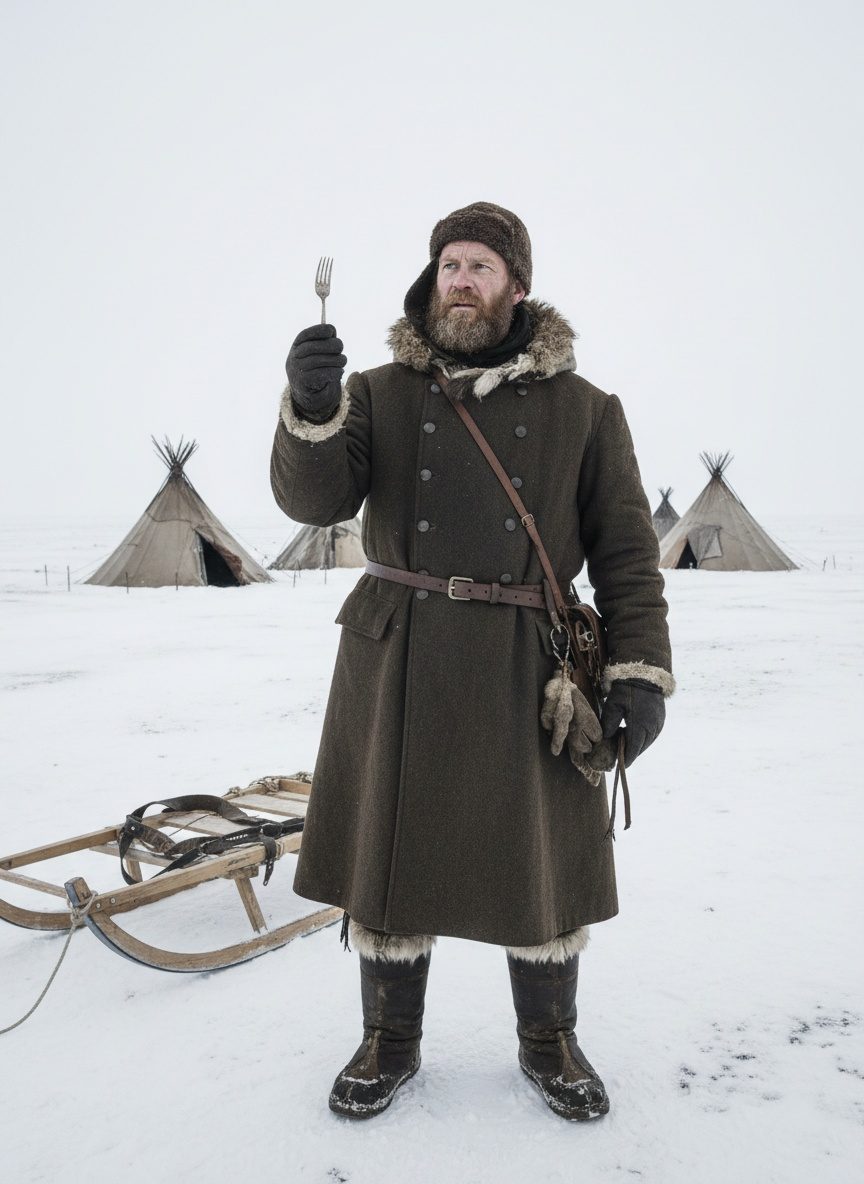
Armed with this information, Rae didn’t merely present the Inuit accounts; he brought back tangible evidence. In his possession were relics of the Franklin Expedition: silver forks, watches, and other personal belongings plucked from the grip of the dead. These objects told their own silent story, corroborating the grim fate that the search had, until then, only speculated about. Yet, Rae's revelations were met not with the gratitude expected but with skepticism and disdain.
The Victorian public struggled to reconcile the notion that their stalwart navy men could be brought low by the cruel circumstances of the Arctic. Furthermore, the idea of resorting to cannibalism was considered a taboo beyond comprehension. Rae’s report was ignored, his discoveries overshadowed by romanticized myths propagated by figures like Charles Dickens, who preferred tales of noble endurance to the difficult truths presented by Rae.
Vindication in the Long Shadows
John Rae’s contribution to Arctic exploration was only fully appreciated well after the whisper of newspapers had faded. Modern discoveries have vindicated Rae's accounts; scientific expeditions found human remains on King William Island bearing the cut marks consistent with the desperate acts of men at the brink of survival. Forensic analyses of the exhumed bones revealed signs consistent with starvation and cannibalism, confirming the horrifying precedence first introduced by Rae nearly a century and a half earlier.
Still, Rae's story was largely silenced in his lifetime, overshadowed by the Victorian proclivity for honor over horror. The British naval heroes were preferred to die noble deaths in the icy wastes, rather than succumb to the base instincts of survival. Rae's accusers held sway for many years, but his persistence and dedication eventually reshaped our understanding of the Franklin Expedition.
Reckoning with the Historical Record
The story of John Rae is an enduring reminder that the crafting of history often overshadows truths that challenge our ideals. In the Victorian era, where national pride was fiercely defended, Rae’s findings were inconvenient and unwelcome. Yet, they serve as a pertinent lesson in humility and the fallibility of even the most prepared and esteemed of expeditions.
Today, the recognition of John Rae’s achievements offers a broader reflection on the importance of cultural collaboration and the acknowledgment of indigenous knowledge. His legacy is one of respect for both human tenacity and the revealing power of truth, resonating through modern exploration narratives. As the Arctic continues to unlock its secrets, Rae’s journey remains a poignant illustration of the importance of understanding beyond appearance, a narrative left too long in the shadows.