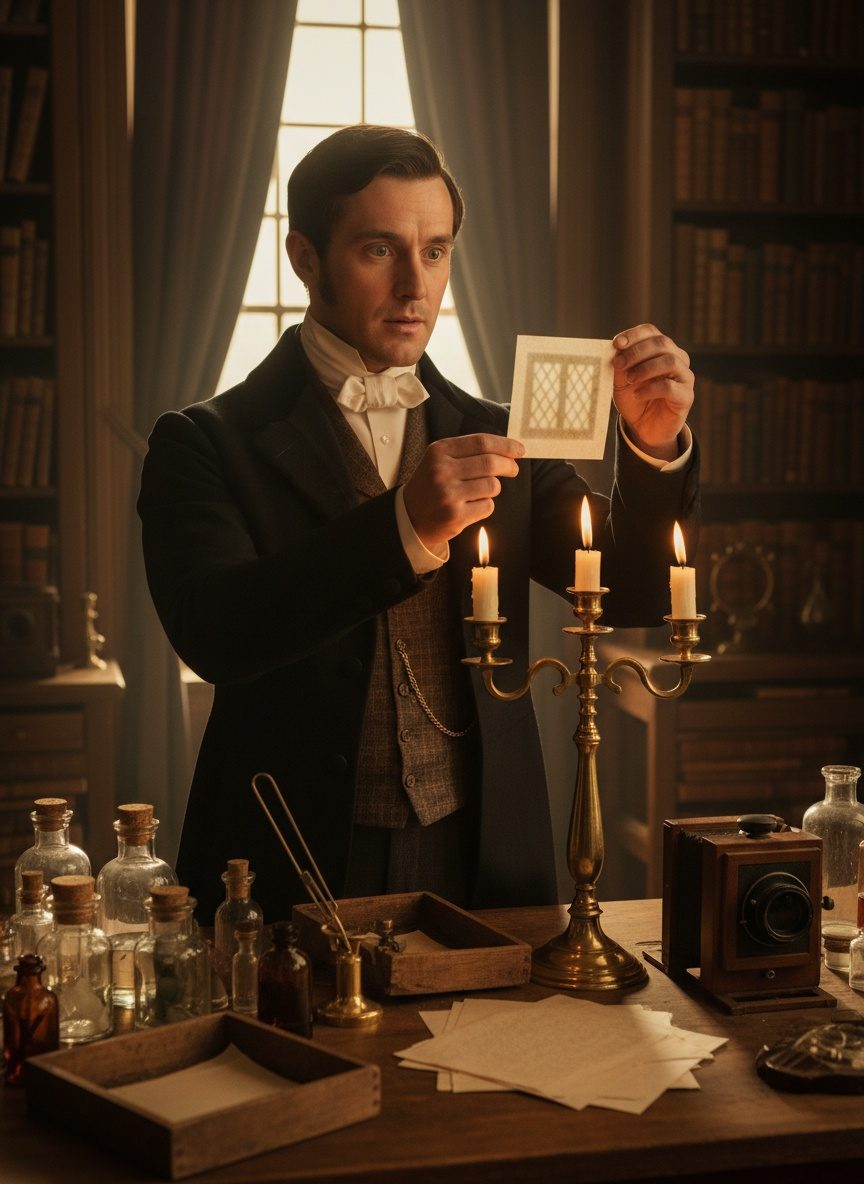
The screams echoing from the Glasgow Royal Infirmary on that grey March morning in 1867 were nothing unusual. What was extraordinary was Professor Joseph Lister standing over his patient with what appeared to be a garden spraying device, methodically dousing the surgical site with a pungent chemical that made everyone in the operating theatre wrinkle their noses in disgust. His colleagues exchanged knowing glances—the eccentric Quaker was at it again with another of his peculiar theories.
They had no idea they were witnessing the moment that would transform surgery from a desperate last resort into the cornerstone of modern medicine. In a cramped, gas-lit operating room that reeked of carbolic acid, Lister was about to prove that invisible enemies could be defeated—and save millions of lives in the process.
The Butcher Shops They Called Operating Theatres
To understand the magnitude of Lister's breakthrough, you must first picture Victorian surgery in all its horrifying reality. Operating theatres were quite literally theatres—amphitheatre-style rooms where medical students crowded around to watch professors perform their grisly work. The floors were covered in sawdust to absorb the blood, changed only when it became too sodden to be effective.
Surgeons operated in their street clothes, often donning the same blood-stained frock coat day after day as a badge of their experience. The more gore-encrusted the coat, the more prestigious the surgeon. They would sharpen their scalpels on the soles of their boots and think nothing of pausing mid-operation to spit tobacco juice into the sawdust.
Read next: The Day a Deaf Man Gave the World Its First Electric Motor
Speed was everything. Before anaesthesia became widespread, surgeons prided themselves on amputating a leg in under three minutes. Even after ether and chloroform made surgery bearable, the race against time continued—because everyone knew that the longer a wound stayed open, the more likely "hospitalism" would set in.
Hospitalism was the Victorian medical profession's euphemism for what we now know as surgical site infections. In Glasgow's Royal Infirmary, where Lister worked, nearly half of all surgical patients died from this mysterious condition. Wounds would turn red, then black, filling with pus and emitting a stench so foul that visitors could smell the surgical wards from the street. Gangrene would creep up limbs like some malevolent vine, leaving surgeons with no choice but to amputate higher and higher until either the infection stopped or the patient died.
The Quaker Who Talked to Germs
Joseph Lister was an unlikely revolutionary. Born in 1827 to a prosperous Quaker wine merchant in Essex, he was barred from Oxford and Cambridge universities because of his faith. Instead, he studied medicine at University College London, one of the few institutions that accepted religious dissenters. His Quaker upbringing instilled in him a methodical, questioning nature that would prove crucial to his discoveries.
When Lister arrived in Glasgow in 1861 to take up the chair of surgery, he was appalled by the conditions he found. But while his colleagues accepted the death toll as inevitable—"Where there's pus, there's healing," went the medical wisdom of the day—Lister began to suspect that some invisible agent was causing the carnage.
The breakthrough came from an unlikely source: French wine. Lister had heard about Louis Pasteur's work proving that fermentation was caused by microscopic organisms, not spontaneous generation. If tiny creatures could sour wine, Lister reasoned, perhaps similar organisms were poisoning surgical wounds. It was a radical leap of logic that most of his contemporaries considered absurd.
Pasteur had discovered that heat could kill these microorganisms in wine and milk, but Lister couldn't very well roast his patients. He needed a chemical solution—literally.
The Miracle Spray That Smelled Like Hell
Carbolic acid was hardly new. This coal tar derivative had been used since the 1830s to treat sewage and reduce the stench of waste. The city of Carlisle had famously sprayed it over their sewage fields, dramatically reducing the smell and, coincidentally, the incidence of disease in the area. If it could purify sewage, Lister wondered, what might it do to the invisible enemies infecting his patients?
On August 12, 1865, Lister got his chance to find out. Eleven-year-old James Greenlees was rushed to the infirmary with a compound fracture of his leg—his bone had broken through the skin, creating an open wound. In those days, such injuries almost always meant amputation or death. The boy's parents begged Lister to try anything rather than take the saw to their son's leg.
Lister cleaned the wound with carbolic acid, applied carbolic-soaked dressings, and waited. Days passed. Then weeks. To everyone's amazement, the wound remained clean. No putrefaction set in. No gangrene crept up the boy's leg. Six weeks later, James Greenlees walked out of the hospital on both his own legs—something that would have been considered miraculous just months earlier.
But Lister wasn't satisfied with just treating wounds. By 1867, he had developed his famous carbolic spray—a device that looked like a perfume atomizer crossed with a small cannon. During operations, an assistant would pump the spray continuously, filling the air around the surgical site with a fine mist of carbolic acid solution.
The Battle Against Mockery and Superstition
The medical establishment's reaction was swift and brutal. Edinburgh's leading surgeons openly mocked Lister's "spray mania." At medical conferences, colleagues would sneer at the theatrical clouds of carbolic acid that accompanied his demonstrations. One prominent surgeon dismissed the spray as "Lister's donkey engine," while others joked that he was trying to carbolicize the entire universe.
The resistance wasn't just professional jealousy—it was philosophical warfare. For centuries, medicine had operated on the principle that pus formation was a natural and necessary part of healing. "Laudable pus" was considered a sign that the body was recovering. Lister's germ theory challenged fundamental beliefs about the nature of disease itself.
Many surgeons complained that carbolic acid was toxic, causing skin irritation and sometimes burning the tissues it was meant to protect. They weren't wrong—Lister's early concentrations were often too strong, and several patients did suffer chemical burns. But Lister methodically adjusted his formulations, finding the sweet spot where the acid killed germs without seriously harming human tissue.
The statistics, however, were becoming impossible to ignore. In Lister's male accident ward at Glasgow Royal Infirmary, the death rate from infection plummeted from 45% to 15% after he introduced antiseptic techniques. His female surgical ward saw even more dramatic improvements, with post-operative infection rates dropping to nearly zero in some months.
The Numbers That Changed Everything
Word of Lister's results began to spread, though acceptance came slowly and unevenly. German surgeons, already influenced by scientific methods, were among the first to adopt antiseptic techniques. In Berlin, surgical mortality rates dropped by more than half within two years of introducing Lister's methods.
The Franco-Prussian War of 1870-71 provided a gruesome but convincing field test. German army surgeons, trained in antiseptic techniques, reported infection rates of 5% among their wounded soldiers. French military surgeons, still operating under the old methods, saw infection rates exceeding 30%. The difference wasn't just statistical—it was visible on the battlefield, where German field hospitals smelled of carbolic acid rather than putrefaction.
Perhaps most tellingly, hospitals that adopted Lister's methods could suddenly perform operations that had been previously unthinkable. Abdominal surgery, considered a death sentence before antisepsis, became routine. Brain surgery, once relegated to desperate emergencies, began to develop into a specialty. The human body, previously accessible only to anatomists dissecting corpses, became a repairable machine.
By the time Lister moved to King's College London in 1877, his methods were becoming the standard of care across Europe. Even his harshest critics found it difficult to argue with wards that no longer reeked of gangrene and patients who actually survived their operations.
Legacy of the Spray
Today, as surgeons scrub their hands with antimicrobial soap and work in sterile operating rooms under filtered air systems, it's easy to forget that these practices are barely 150 years old. Every time you receive an injection with a sterile needle, undergo surgery without fear of infection, or take antibiotics to fight bacterial illness, you're benefiting from Lister's revolutionary insight that invisible enemies could be defeated by simple chemical warfare.
The carbolic spray itself was eventually abandoned—later researchers found that airborne bacteria were less dangerous than those transmitted by direct contact. But Lister's fundamental principle—that preventing infection was possible through systematic antiseptic practices—became the foundation of modern surgical technique.
In our current age of antibiotic-resistant bacteria and global pandemics, Lister's story carries particular resonance. He succeeded not through dramatic technological breakthroughs, but through careful observation, methodical testing, and an unwavering belief that scientific evidence should trump traditional practice. His willingness to endure ridicule while accumulating data that spoke louder than his critics' laughter offers a timeless lesson about the price—and power—of innovation.
The next time you walk into a hospital and notice the smell of disinfectant rather than decay, remember the eccentric Quaker who once stood in a Glasgow operating theatre, spraying carbolic acid into the air while his colleagues mocked him for believing in invisible killers. Joseph Lister's greatest discovery wasn't just that germs existed—it was that they could be beaten.