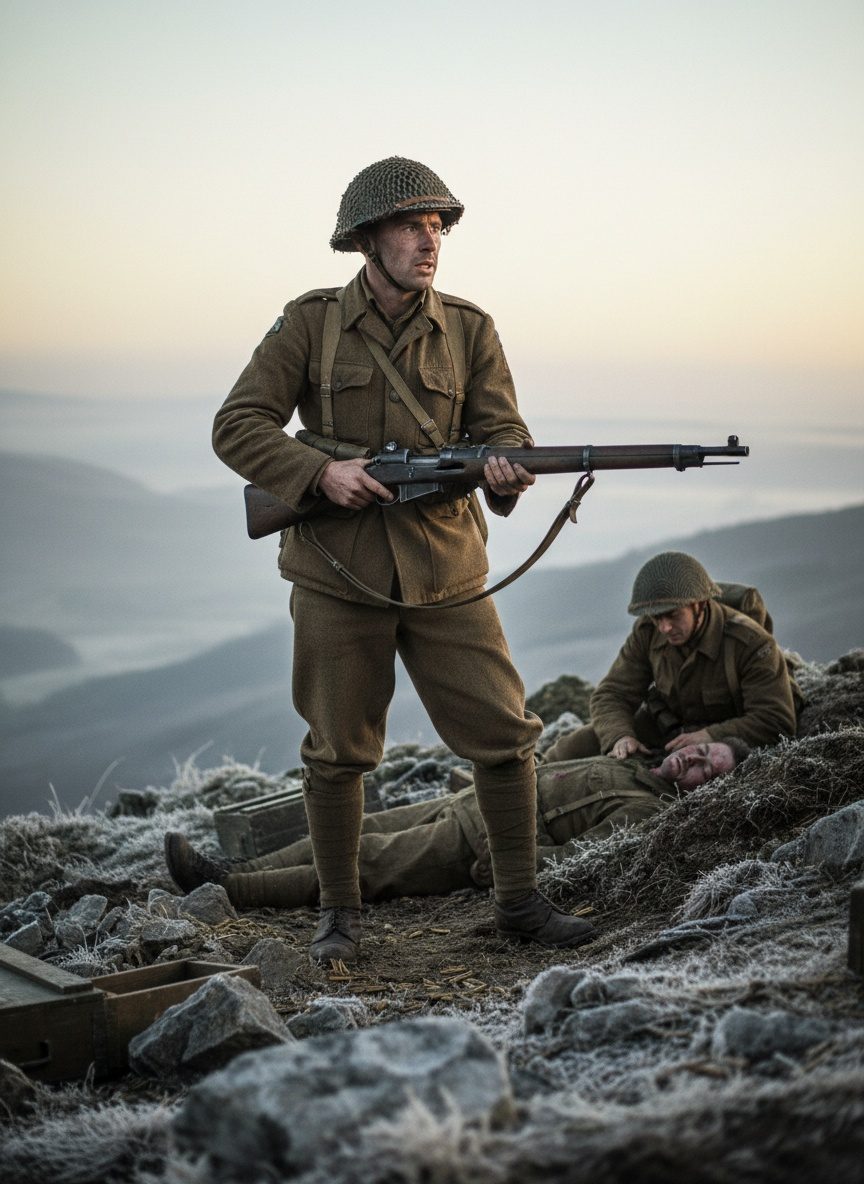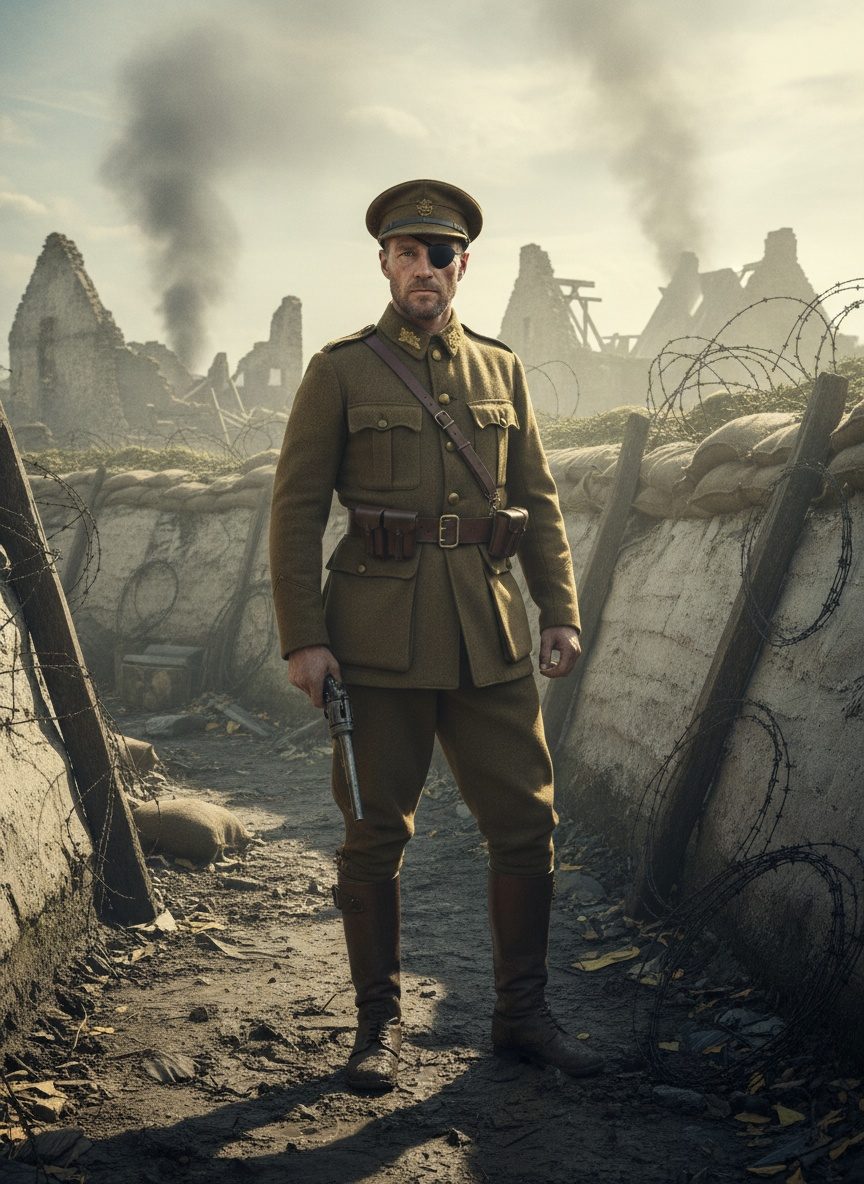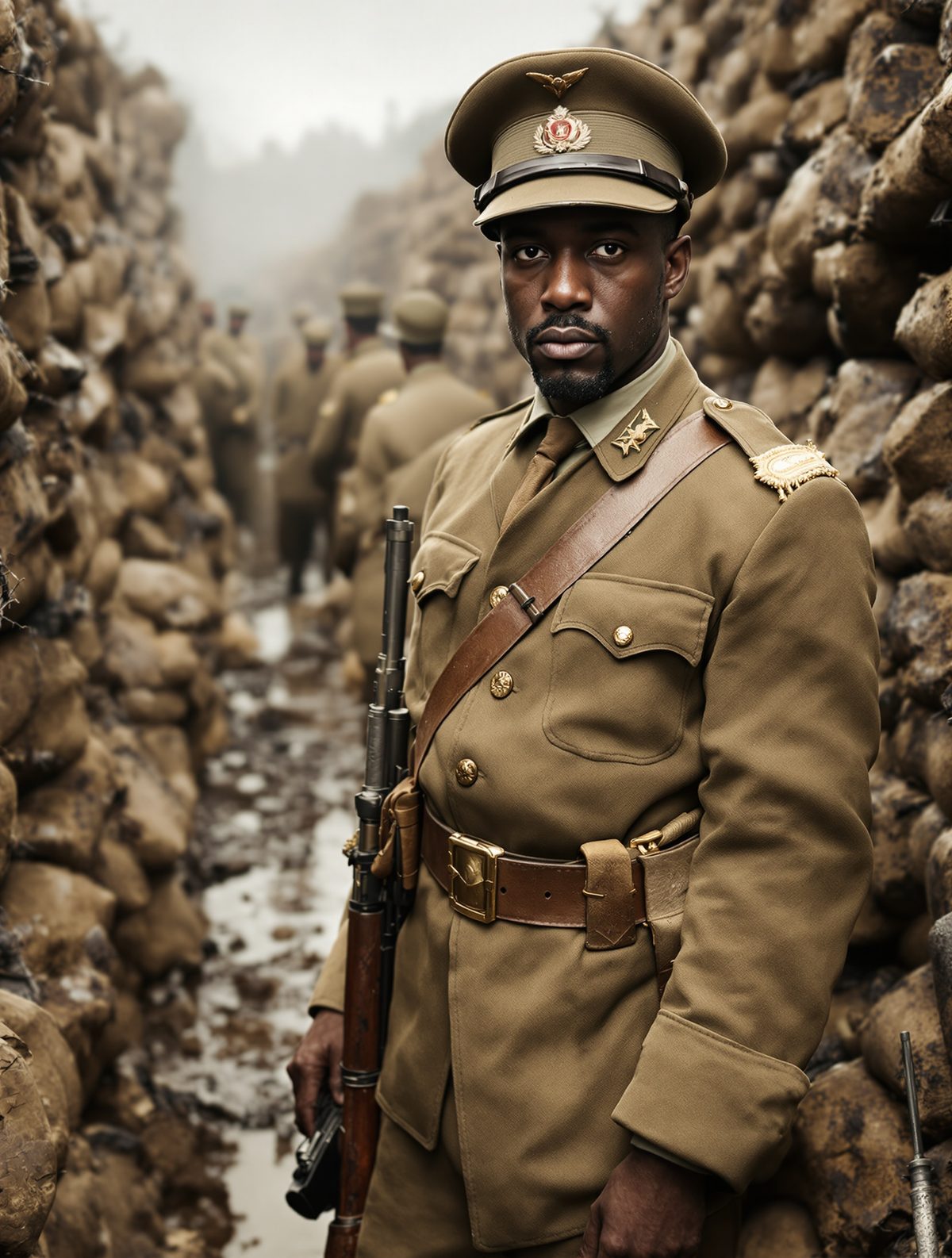
The morning mist hung thick over the churned mud of Passchendaele as Second Lieutenant Walter Tull checked his watch. October 1917. In a few minutes, he would blow his whistle and lead his men of the 23rd Battalion, Middlesex Regiment, over the top into the hell of no man's land. What made this moment extraordinary wasn't just the courage it required—thousands of young officers had done the same. What made it remarkable was that Walter Tull wasn't supposed to exist.
According to British Army regulations, black men were prohibited from holding commissions as officers. They could die for king and country, certainly, but they could never lead white soldiers into battle. Yet here stood Tull, a former professional footballer from Northampton, about to shatter one of the military's most entrenched racial barriers with nothing more than a silver whistle and unshakeable determination.
From Orphanage to Football Pitch
Walter Daniel John Tull's story began in the most unlikely of places for a future war hero. Born in 1888 in Folkestone to a Barbadian father and English mother, his early life was marked by profound loss. By the age of nine, both parents had died, leaving Walter and his siblings to the care of the National Children's Home orphanage in Bethnal Green, East London.
The orphanage, with its stark dormitories and rigid discipline, might have crushed a lesser spirit. Instead, it forged Tull's character like steel in a furnace. More importantly, it was here that his extraordinary footballing talent first emerged. The boy who had lost everything discovered he could make a leather ball dance to his will with an almost supernatural grace.
Read next: The Night a Teenage Gunner Held the Bridge at Arnhem
By 1908, Tull had escaped the confines of institutional care to join Clapton FC, where his performances as an inside forward caught the attention of bigger clubs. When Tottenham Hotspur came calling in 1909, offering him a chance to play in the First Division—the pinnacle of English football—it seemed like a fairy tale ending to a tragic beginning.
But professional football in Edwardian England was no sanctuary from prejudice. During away matches, particularly in Liverpool and Bristol, Tull faced torrents of racial abuse from the terraces. The Football Star newspaper described the treatment he received as "lower than Billingsgate," referring to London's notoriously foul-mouthed fish market. Yet Tull played on, his dignity intact, scoring goals and winning grudging respect even from hostile crowds.
Trading Boots for Bullets
When Britain declared war on Germany in August 1914, the country erupted in patriotic fervor. Young men queued outside recruiting offices, eager to serve in what everyone believed would be a glorious, short-lived adventure. Among them stood Walter Tull, who had transferred to Northampton Town FC the previous year and established himself as one of their most popular players.
On December 21, 1914, Tull enlisted as a private in the 17th Battalion, Middlesex Regiment—the "Footballers' Battalion." This remarkable unit, officially known as the 1st Football Battalion, was composed entirely of professional and amateur footballers who had answered the call to arms together. Among Tull's fellow recruits were players from Chelsea, Clapton Orient, and Bradford Park Avenue.
The irony was palpable. While Tull had faced racial barriers on football pitches across England, the army welcomed him as a private soldier without hesitation. The Manual of Military Law was clear: "any negro or person of colour" was ineligible for commission as an officer, but they could certainly stop German bullets as effectively as any white man.
Training began at White City in London, where former footballers learned to march in formation rather than dribble past defenders. The camaraderie was immediate and genuine—these men had competed against each other on pitches across the country, and now they would fight side by side in the trenches of France.
Hell on the Somme
In November 1915, the Footballers' Battalion shipped out to France, where the romantic notions of glorious warfare died quickly in the mud and blood of the Western Front. Tull's first taste of combat came during the catastrophic Battle of the Somme in July 1916, where the British Army suffered 60,000 casualties on the first day alone—the bloodiest single day in British military history.
The 17th Middlesex attacked at Delville Wood on July 15, advancing through a moonscape of shell craters and wire. Of the 600 men who went into action that morning, fewer than 100 emerged unscathed. The Footballers' Battalion was effectively destroyed as a fighting unit, its ranks decimated by German machine guns that swept the battlefield like deadly scythes.
Private Tull not only survived the carnage but distinguished himself through acts of extraordinary bravery. While others broke under the psychological strain—shell shock, they called it then—Tull remained steady under fire, helping wounded comrades to safety and maintaining communication between isolated units. His company commander noted his "coolness and resource under fire" in dispatches that would prove crucial to his future.
But the Somme took its toll. Tull suffered severe trench fever and was invalided back to England, his body wracked with illness. As he recovered in a military hospital, something remarkable was happening behind the scenes. His officers were recommending him for a commission.
Breaking the Ultimate Barrier
By 1917, the British Army was bleeding officers at an alarming rate. The romantic notion of leading from the front meant that junior officers had a life expectancy measured in weeks rather than months. The army needed leaders, and Walter Tull had proven himself under the most extreme conditions imaginable.
His commission came through on May 30, 1917—a single sheet of paper that shattered centuries of military tradition. Second Lieutenant Walter Daniel John Tull became the first black infantry officer in British Army history, a man legally prohibited from holding the rank he now wore on his shoulders.
How did this happen? The official answer is lost to history, but the most likely explanation involves a combination of desperate necessity and willful blindness. Field commanders, faced with catastrophic officer casualties, may have simply ignored regulations that seemed increasingly absurd when measured against battlefield performance. Tull's exemplary service record and the personal recommendations of his superiors likely carried more weight than outdated colonial prejudices.
The army transferred Tull to the 23rd Battalion, Middlesex Regiment, where he commanded a platoon of white soldiers. If his men harbored any reservations about serving under a black officer, they kept them to themselves. Tull's leadership style was firm but fair, and his courage under fire quickly earned their respect.
Leading from the Front
Tull's moment of ultimate test came during the Third Battle of Ypres, better known as Passchendaele—a name that still evokes horror a century later. The offensive, launched in July 1917, aimed to break through German lines in Belgium. Instead, it became a months-long nightmare of mud, blood, and futile attacks that gained mere yards at the cost of hundreds of thousands of lives.
The 23rd Middlesex went into action in October 1917, attacking German positions that had been fortified for three years. Tull led his platoon over the top with characteristic courage, advancing through a hellscape of shell holes filled with poisonous water and the decomposing bodies of previous attacks.
Under his leadership, the platoon captured their objectives and held them against fierce German counterattacks. For six days, they endured constant shelling, sniper fire, and gas attacks while holding a section of the line that had been bought with British blood. Tull moved constantly among his men, maintaining morale through his own example of calm determination under fire.
His performance at Passchendaele earned him a mention in dispatches and recommendations for further promotion. By early 1918, the army was considering promoting him to full Lieutenant—a rank that would have given him command of an entire company.
A Legacy Written in Blood and Courage
Walter Tull never lived to see that promotion. On March 25, 1918, during the German Spring Offensive, he volunteered to lead a patrol into no man's land near Favreuil, France. His mission was to gather intelligence on German positions that threatened to break through British lines. It was exactly the kind of dangerous assignment that marked him as a leader who would never ask his men to do anything he wouldn't do himself.
German machine gunners cut him down as he attempted to return with vital information about enemy positions. His men tried desperately to recover his body under heavy fire, but they were beaten back. Second Lieutenant Walter Tull died as he had lived—leading from the front, defying those who said a black man wasn't worthy of command.
Today, more than a century later, Tull's story resonates with uncomfortable relevance. At a time when Britain is grappling with its imperial past and the ongoing struggle for racial equality, his example reminds us that courage and leadership transcend the arbitrary barriers that societies construct. He proved that heroism has no color, that valor knows no race.
The young footballer who faced racial abuse on the terraces of English football stadiums became the officer who led white soldiers through the hell of the Western Front. In doing so, Walter Tull didn't just break military regulations—he shattered the lies that underpinned them, one act of courage at a time.