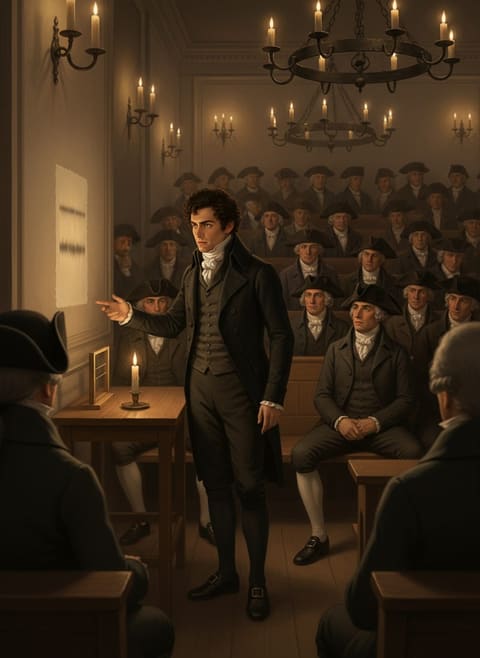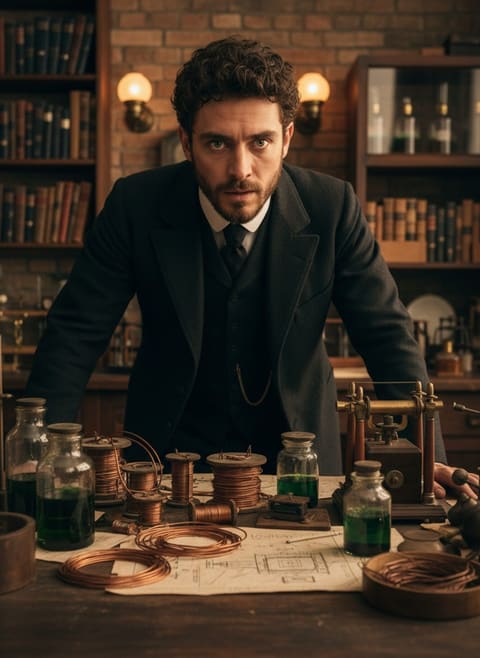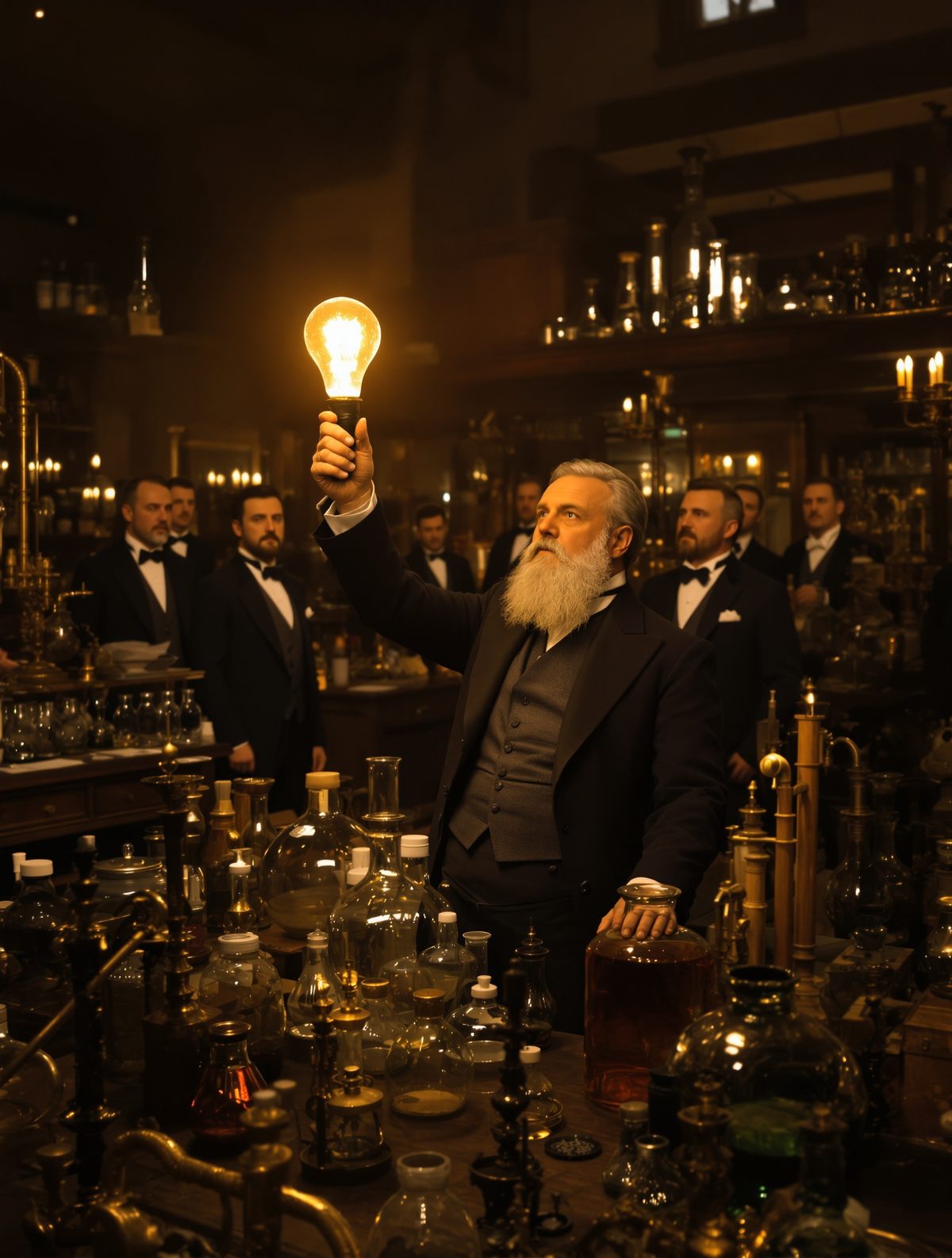
The gas lamps flickered nervously in the February wind as Newcastle's most distinguished gentlemen filed into the Literary and Philosophical Society's grand hall. Top hats glistened with melted snow, and the murmur of polite conversation filled the room. It was the 3rd of February, 1879, and these Victorian luminaries had gathered to witness what their host promised would be "a demonstration of considerable scientific interest." None suspected they were about to see the future itself blazing to life.
At the front of the room stood Joseph Wilson Swan, a quiet chemist with penetrating eyes and a neatly trimmed beard. His hands, steady from decades of delicate laboratory work, rested on a curious apparatus—a glass bulb connected to wires, sitting innocuously on the demonstration table. When Swan threw the switch, the bulb erupted in brilliant, steady light. The assembled worthies gasped. In that instant, Swan had done what countless inventors had failed to achieve: he had tamed electricity and made it shine.
Eight months later, across the Atlantic, Thomas Edison would perfect his own version and claim immortality in the history books. But on this cold Newcastle evening, it was a Geordie chemist who first conquered darkness itself.
The Obsession That Began in a Chemical Shop
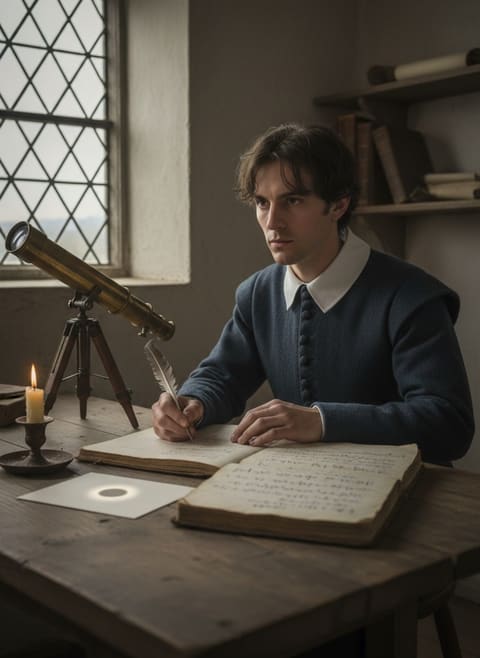
Joseph Swan's journey to that triumphant evening began not in a grand laboratory, but behind the counter of a humble chemist's shop in Sunderland. Born in 1828, Swan had been apprenticed at age 14 to John Mawson, a pharmaceutical chemist who dabbled in the emerging art of photography. It was here, mixing silver solutions and coating glass plates, that Swan first encountered the mysteries of chemistry and physics that would consume his life.
Read next: The Day a Weaver's Son Mapped the Invisible World
But Swan's true obsession began in 1860, nearly two decades before his Newcastle triumph. He had become fascinated by the work of Warren de la Rue, who had experimented with passing electricity through platinum wire sealed in glass bulbs. The concept was tantalisingly simple: heat a material with electricity until it glowed white-hot. The reality, however, was fiendishly complex.
Working from his home laboratory in Low Fell, Gateshead, Swan attacked the problem with methodical precision. The challenge wasn't just making something glow—anyone could do that by heating metal wire. The trick was making it glow without burning up, melting, or consuming all the oxygen in the bulb. Swan knew the answer lay in finding the right material for the filament and creating a proper vacuum inside the bulb.
For years, Swan experimented with different substances. He tried platinum—too expensive and it melted. He tested various metals—they oxidised too quickly. Then, inspired by the carbon deposits he'd observed in gas lamps, Swan turned to an unlikely material: ordinary paper.
The Alchemy of Turning Paper Into Light
What Swan discovered next would have seemed like magic to earlier generations. By taking strips of paper, treating them with sulphuric acid, and then heating them in the absence of air, he could transform the humble material into pure carbon while preserving its original shape. This process, called carbonisation, created filaments that were both conductive and incredibly durable when heated.
But creating the filament was only half the battle. The other challenge was achieving a proper vacuum inside the glass bulb. In the 1860s, vacuum technology was primitive at best. The air pumps available to Swan could only remove about 90% of the air from his bulbs—not nearly enough to prevent the remaining oxygen from burning up his precious carbon filaments within minutes.
Swan's first public demonstration came in 1878, at a meeting of the Newcastle Chemical Society. His bulb glowed brilliantly for a few moments before dying, the filament consumed by the residual oxygen. The audience was impressed but recognised the fundamental limitation. A light that lasted only minutes was a curiosity, not a revolution.
Undeterred, Swan threw himself back into his work. The breakthrough came through the innovations of Hermann Sprengel, a German chemist working in London who had perfected a new type of vacuum pump. Sprengel's mercury-based pump could achieve vacuums of unprecedented quality, removing 99.9% of the air from a sealed vessel.
The Night That Changed Everything
Armed with Sprengel's superior vacuum technology, Swan returned to his laboratory with renewed determination. He refined his carbonisation process, experimented with different paper types, and perfected the delicate art of sealing electrical connections through glass. By early 1879, he had created bulbs that could burn steadily for hours.
The demonstration at Newcastle's Literary and Philosophical Society wasn't just a scientific presentation—it was theatre. Swan had arranged for the gas lighting in the hall to be dimmed, throwing the distinguished audience into shadow. When he activated his bulb, the contrast was startling. Here was light without flame, without smoke, without the constant hiss of gas or the acrid smell of burning oil.
The Newcastle Daily Chronicle reported the next day: "The light was beautiful, soft and steady, and free from the flickering motion characteristic of gas." More importantly for Swan's commercial prospects, the newspaper noted that "the inventor stated that the cost would be considerably less than gas."
But Swan wasn't content with a single demonstration. Within months, he was installing his electric lights in practical applications. Cragside House, the Northumberland mansion of arms manufacturer Lord Armstrong, became one of the world's first electrically lit homes in late 1880. The house's hydroelectric generator powered Swan's bulbs throughout its grand rooms, creating what visitors described as an almost supernatural brilliance.
The American Who Got the Glory
Meanwhile, 3,000 miles away in Menlo Park, New Jersey, Thomas Edison was racing toward his own version of the incandescent bulb. Edison's approach differed from Swan's in crucial ways—he used bamboo filaments instead of carbonised paper and focused intensively on creating not just the bulb, but an entire electrical distribution system.
Read next: The Day a Clockmaker's Son Rewired How We See the Stars
Edison's first successful test came in October 1879, eight months after Swan's Newcastle demonstration. However, Edison possessed something Swan lacked: a genius for publicity and business development. While Swan was quietly refining his invention in the workshops of Newcastle, Edison was orchestrating a media blitz that would cement his place in popular history.
The irony runs deeper than mere timing. Swan had actually been working on incandescent lighting longer than Edison—his first patent application predated Edison's by several years. But Swan's early attempts had been limited by the primitive vacuum technology available to him. When better equipment became available, Swan succeeded first. Yet today, if you ask anyone who invented the light bulb, they'll invariably answer: Thomas Edison.
The two inventors eventually met and, rather than engage in bitter rivalry, formed a joint company: the Edison & Swan Electric Light Company, fondly known as "Ediswan." Swan's superior bulb technology combined with Edison's distribution systems and business acumen proved unstoppable. By the 1880s, Ediswan bulbs were illuminating homes and streets across Britain.
The Geordie Who Lit the World
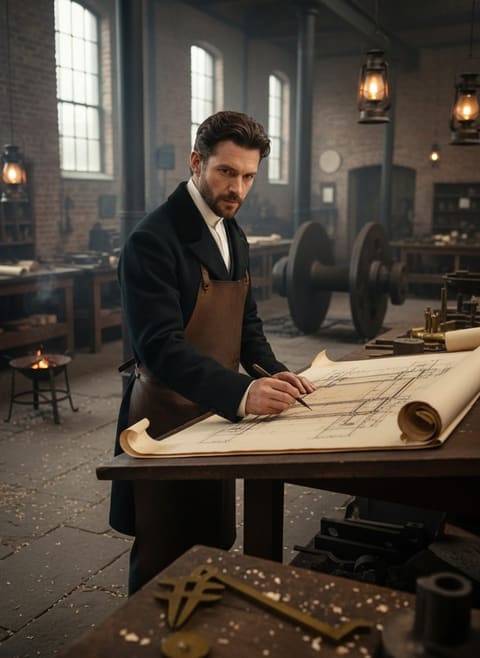
Swan's achievements extended far beyond that first electric bulb. His innovations in photography—including the invention of bromide paper—revolutionised the art of image-making. His experiments with artificial fibres predated the invention of rayon by decades. He held more than 70 patents and continued inventing well into his eighties.
Yet perhaps Swan's greatest legacy lies in demonstrating that world-changing innovation doesn't require vast laboratories or enormous funding—it requires curiosity, persistence, and the willingness to challenge the impossible. Working from his modest home laboratory, using equipment he largely built himself, Swan solved one of humanity's oldest problems: how to banish darkness safely and efficiently.
Today, as we take electric lighting utterly for granted, it's worth remembering that February evening in 1879 when a roomful of Newcastle gentlemen witnessed the birth of the modern world. In an era when innovation seems to flow exclusively from Silicon Valley and tech giants, Joseph Swan's story reminds us that the next world-changing idea might come from the most unexpected place—and the most overlooked inventor.
The light bulb that blazed to life in Newcastle that winter evening didn't just illuminate a room—it illuminated the path to our electric future. And it all began with a quiet Geordie chemist who refused to accept that darkness was humanity's eternal companion.