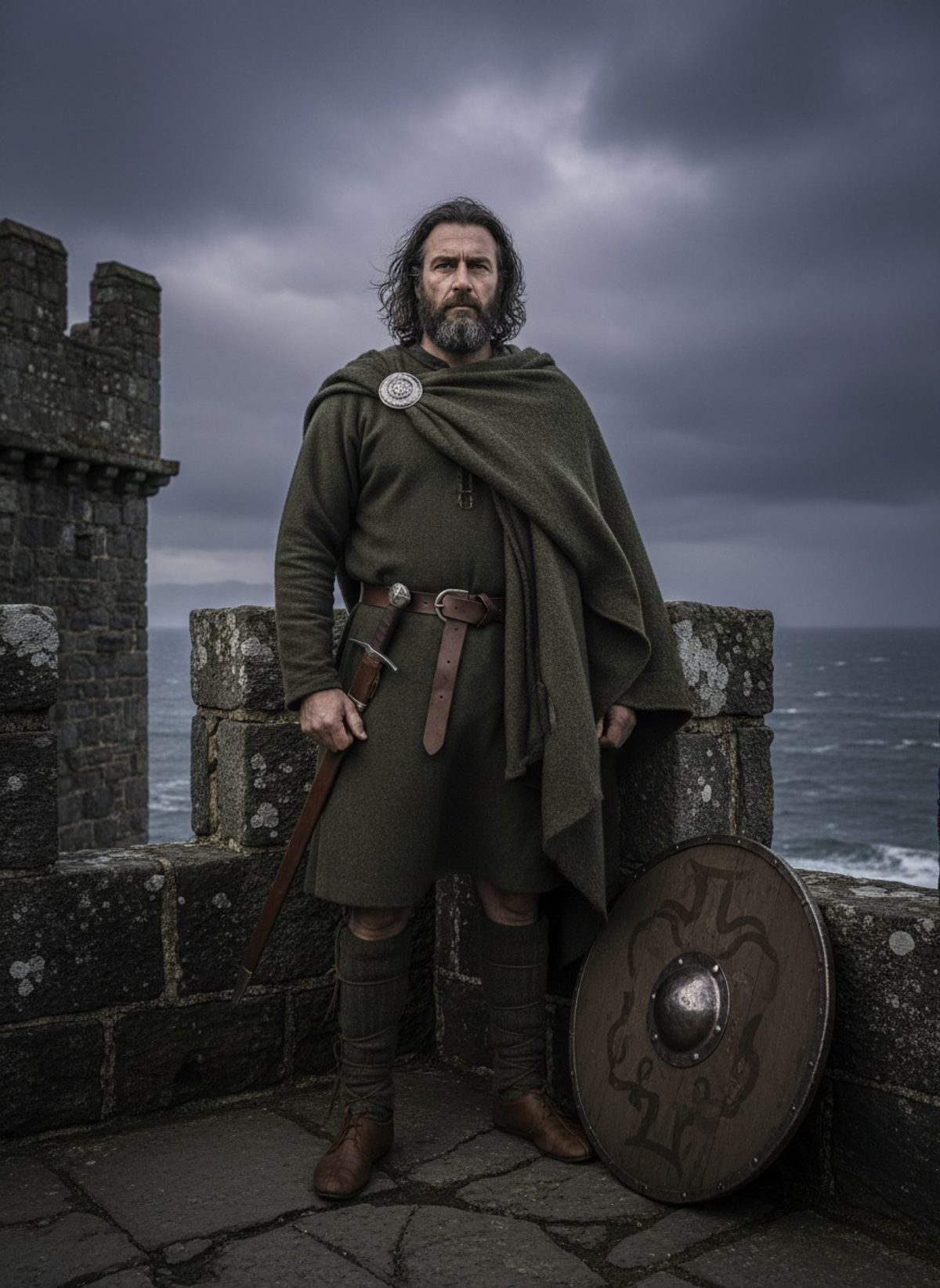
He was half-Pictish, half-Scot, and entirely underestimated. Yet, Kenneth MacAlpin was the man who became king of a land that would one day be known as Scotland. He was the architect of a union that changed the course of history.
The Winds of Change
In the early 9th century, nothing seemed more permanent than the division of the lands north of Hadrian's Wall. Pictland lay to the east, a mysterious realm behind a veil of myths and runestones, while the kingdom of Dalriada, home to the Gaelic-speaking Scots, nestled in the rugged west. Two distinct cultures, two peoples with their own fierce identities, were never to be united—or so it was thought.
The Pictish identity was as deeply carved into history as their unmistakable standing stones. For centuries, they warded off Roman invasions and other would-be conquerors from their lands. Meanwhile, the Scots of Dalriada, though famed for their warrior spirit, were facing their own challenges, including Norse raids from across the sea. The idea of these two kingdoms merging seemed as improbable as taming the wild highlands themselves.
The Gael Who Would Be King
Kenneth MacAlpin appears first as a whisper on the winds of change. Taking the throne of Dalriada in the early 9th century, just when the beleaguered kingdom faced incessant Viking incursions, his early reign was shaped by the necessity of survival rather than conquest. Yet, survival bred a cunning pragmatism within MacAlpin. The man who might have been dismissed as an ordinary king of a turbulent petty kingdom had far greater aspirations.
Read next: The Day a Scots Village Chose Its Own Name and Kept It
Regarded as both Gael and Pict through his maternal line, Kenneth MacAlpin possessed a rare legitimacy. Such blood ties presented him with a unique opportunity; he could lay a claim to both thrones. And yet, in a land fraught with tribal allegiances and ancestral feuds, the ascension to Pictish kingship by a Gaelic king required a deft hand and, perhaps, a touch of destiny.
The Seamless Succession
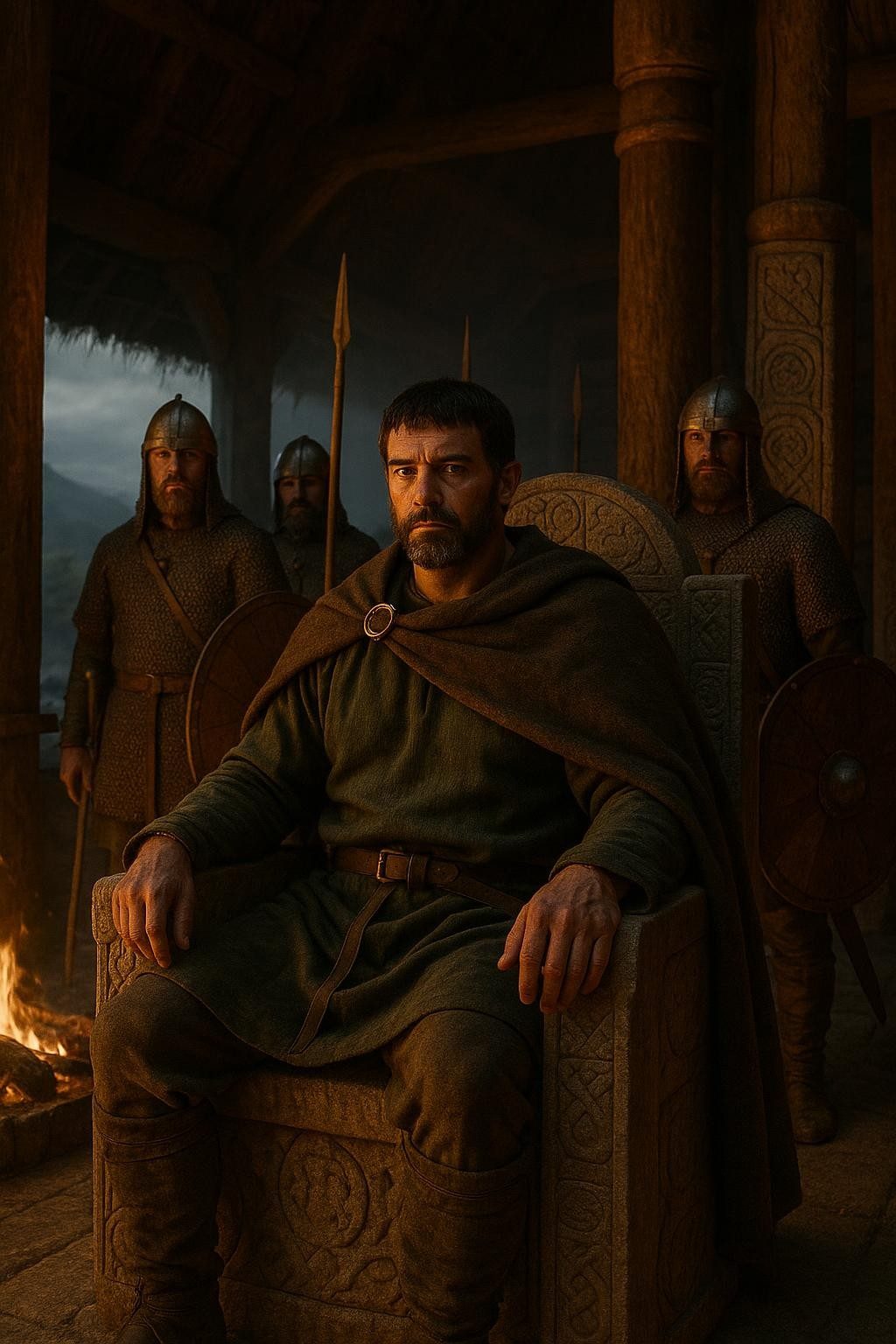
In 843 AD, an event unfolded that later chroniclers would spin into a tapestry of legend. Kenneth MacAlpin made his move, riding into Forteviot, the Pictish royal seat, with intent clear as the mountain springs. By sitting himself on the Stone of Destiny, the ancient symbol of legitimate rule, he declared an unparalleled unification of crowns. Confidence radiated from him, perhaps because he understood that culture, alliances, and bloodlines were powerful tools, often more so than the sword.
No army rose to meet him. No rival power struck his claim down. The Pictish resistance faded into the mists of history, their ancient customs and norms accommodating the new Gaelic influence. In the chronicles of the time, this seamless transition appears almost miraculous—a testament to MacAlpin’s strategic prowess or perhaps a reflection of the tumultuous climate which made the Scots an acceptable alternative to chaos.
Integration and Innovation
The merger of the Scots and the Picts into a single kingdom was not merely a political coup; it was a transformative cultural harmony. MacAlpin's reign fostered the integration of two distinct civilizations. The Gaelic language gradually extended its reach eastward, while Pictish artistry, known for its intricate carvings and metalwork, imprinted itself indelibly on Scottish culture.
Kenneth MacAlpin, however, was no mere overseer of peace; he pioneered innovation to ensure the longevity of his united kingdom. He solidified territorial boundaries and reinforced societal structures that enabled Scottish heritage to endure Viking threats and internal dissent alike. This unique amalgamation enriched the cultural tapestry of the nascent nation, sowing seeds of a vibrant and resilient identity.
The Legacy of Unity
The unification wrought by Kenneth MacAlpin was not simply a confluence of two kingdoms but the birth of a nation that would stand the test of time—a sentiment more poignant with each passing century. A seamless succession and strategic foresight led not only to a stable rule over diverse peoples but to the foundation of what would eventually grow into modern Scotland.
The significance of that moment in 843 AD cannot be overstated. Kenneth MacAlpin’s act of union is a reminder that leadership grounded in understanding and shared destiny can bridge ancient divides. As history unrolls its tapestry, few threads are as vibrant or enduring as that of MacAlpin's Scotland—woven with foresight, unity, and the indomitable spirit of a resilient people. History remembers him not as a conqueror by force, but as a visionary who saw in disparate pieces the possibility of a whole.