Joseph Lister is hardly a household name. Yet, his discovery has saved countless lives.
The Silent Killer
In the 1860s, the halls of Glasgow Royal Infirmary resonated with the groans of the dying. The Victorian era, with all its technological marvels and industrial might, was no match for the specter of infection. Surgery was as much a gamble as it was a necessity; a surgeon might skillfully weave his needle through flesh, only for the patient to succumb to an unseen foe days later. The culprit? Infection—a sinister aftermath that claimed up to half of all surgical patients.
This grim reality did not stem from the inadequacy of surgeons, but rather from the environment in which they operated. Hospitals were breeding grounds for bacteria, and antisepsis was unknown. Theories swirled about the cause of post-operative deaths, yet solutions proved evasive. The surgical wards of Glasgow were no exception, where the very air seemed tainted with death. Joseph Lister, a man of logic and curiosity, was uniquely perturbed by this state of affairs. He believed there must be a way to stem this relentless tide.
An Inspired Hypothesis
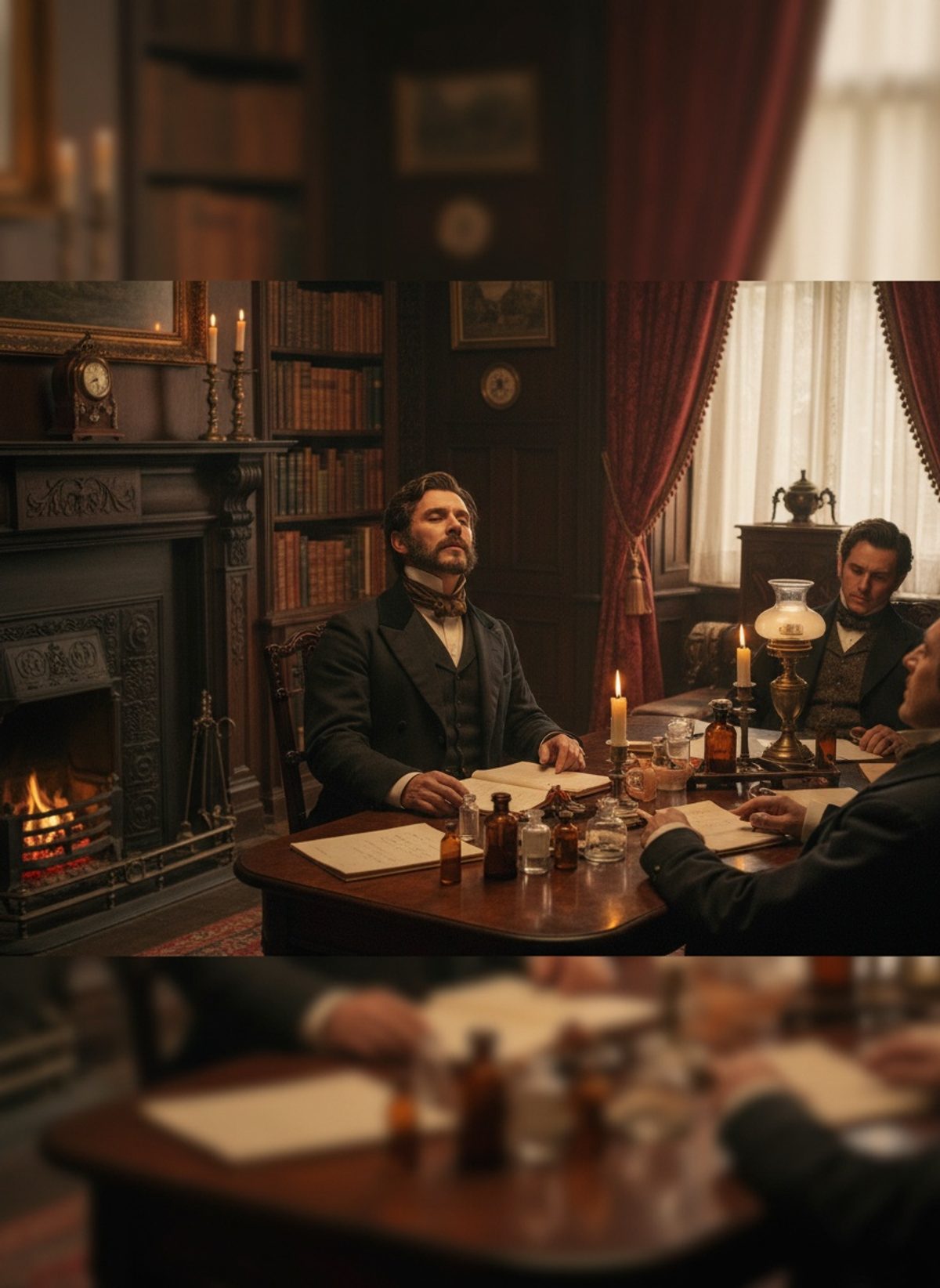
Joseph Lister, a professor of surgery at Glasgow, was not content to watch helplessly as his patients succumbed to infection. His mind was a fertile ground for ideas, drawing on influences from unexpected sources. One such influence was the work of Louis Pasteur, the French chemist who had made significant strides in understanding germ theory. Pasteur had shown that microorganisms were responsible for fermentation—and Lister began to wonder if similar processes were at play in post-surgical infections.
Read next: The Day a Widow's Son Lit Up the Victorian Night
Motivated by this germ theory, Lister hypothesized that these invisible invaders might indeed be the agents of infection. If bacteria could be destroyed, perhaps the harrowing death toll could be reduced. It was a revolutionary thought that went against centuries of accepted medical wisdom. Lister, unperturbed by the enormity of this leap, sought an empirical solution—a means to annihilate these microscopic foes before they took their toll on the living.
Carbolic Courage
Lister's answer lay in an unlikely substance: carbolic acid, also known as phenol. Originally used to deodorize sewage, its antiseptic properties caught Lister's attention. He hypothesized that by applying it to surgical wounds, he could kill the bacteria responsible for infection. It was a daring gamble, one that could risk the lives of his patients or save them. With determined resolve, Lister set out to test his theory.
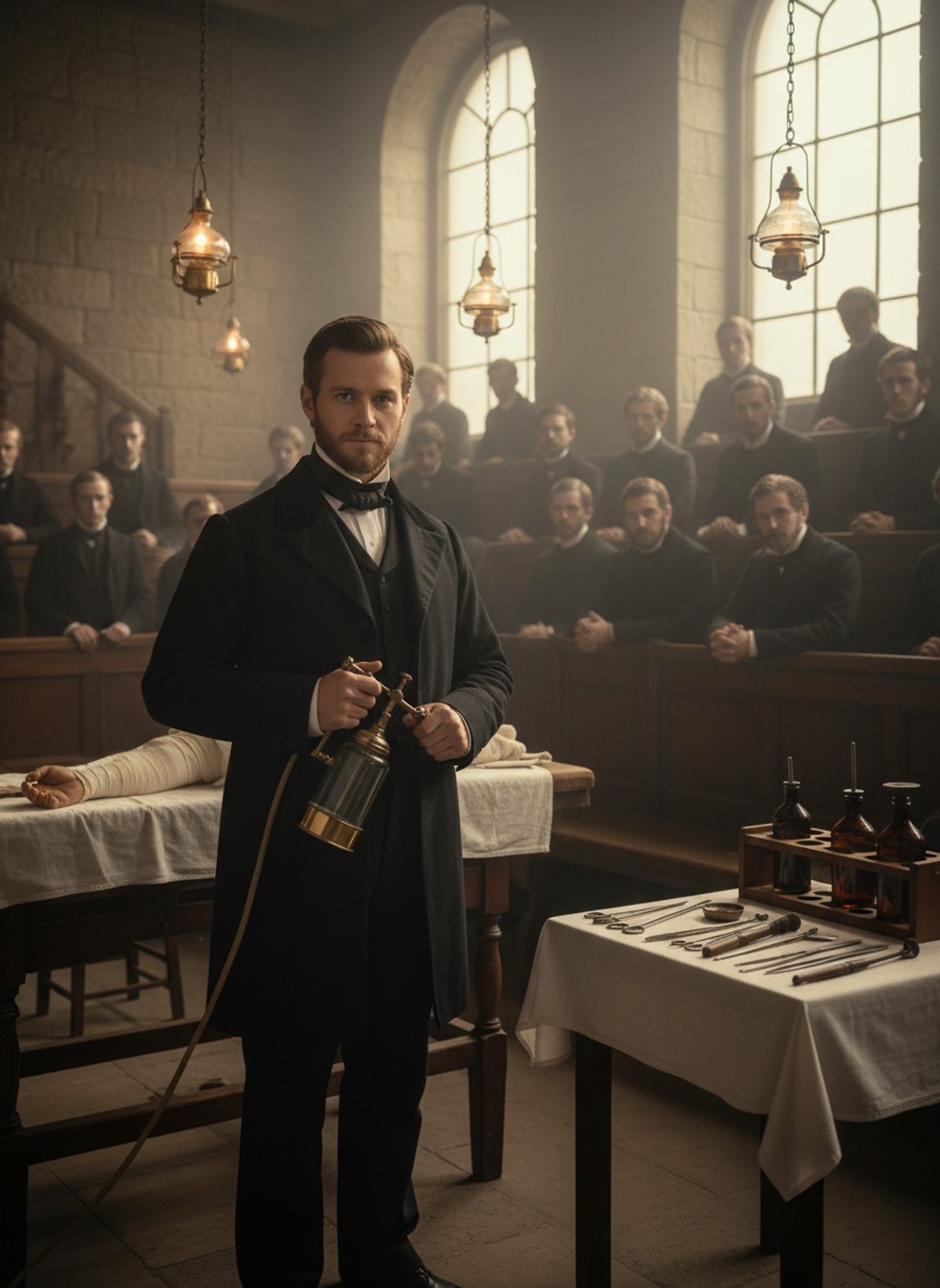
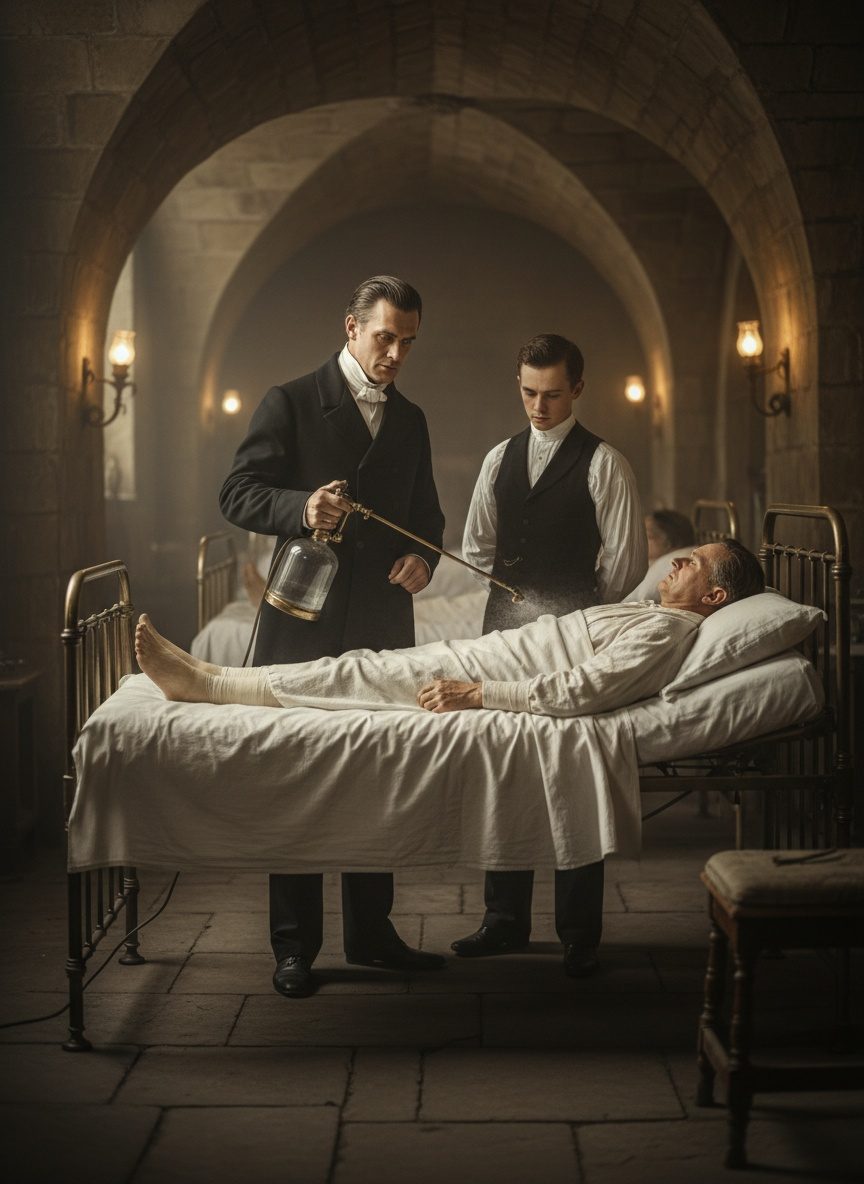
The scene inside Lister's operating theatre must have seemed almost alchemical. Instruments were soaked in a carbolic solution, and a fine mist of it hung in the air over the open wound. This was not just surgery—this was a battle against an unseen army, fought with an arsenal that was painfully simple yet deeply profound. As Lister worked, he must have been keenly aware of the potential for both success and failure in equal measure.
Post-surgery, the aftermath was watched with bated breath. To the astonishment of the medical world, the results were immediate and dramatic. Patients who would have otherwise faced a grim prognosis began to recover. The antiseptic technique had worked: the wards that once echoed with the moans of the dying now fell into a silence—a silence wrought by survival rather than surrender.
A New Era of Medicine
Lister's work was nothing short of transformative, ushering in the era of antiseptic surgery. It was a scientific revolution in real-time, and its implications were vast. Instead of operating in fear of the inevitable infections, surgeons across the world began to adopt Lister's methods. Carbolic acid paved the way for the modern antiseptic protocols we know today, marking a seismic shift in medical history.
Yet, acceptance did not come without resistance. Many in the medical community, entrenched in their ways, met Lister's claims with skepticism. However, the undeniable success of his methods slowly eroded this opposition, earning him recognition and admiration. His story is a reminder that innovation often requires challenging the status quo. Lister's courageous curiosity not only transformed his field but set the stage for countless medical advancements that followed.
In the grand tapestry of history, the work of Joseph Lister may seem a mere thread. Yet this thread binds together a world where surgery is no longer a death sentence, but a lifeline. His legacy lives on in every operating room across the globe, a testament to the power of perseverance and the relentless pursuit of knowledge. The ghostly silence of those Victorian wards now echoes through the annals of history—not as a haunting reminder of lives lost, but as the triumphant refrain of those saved.