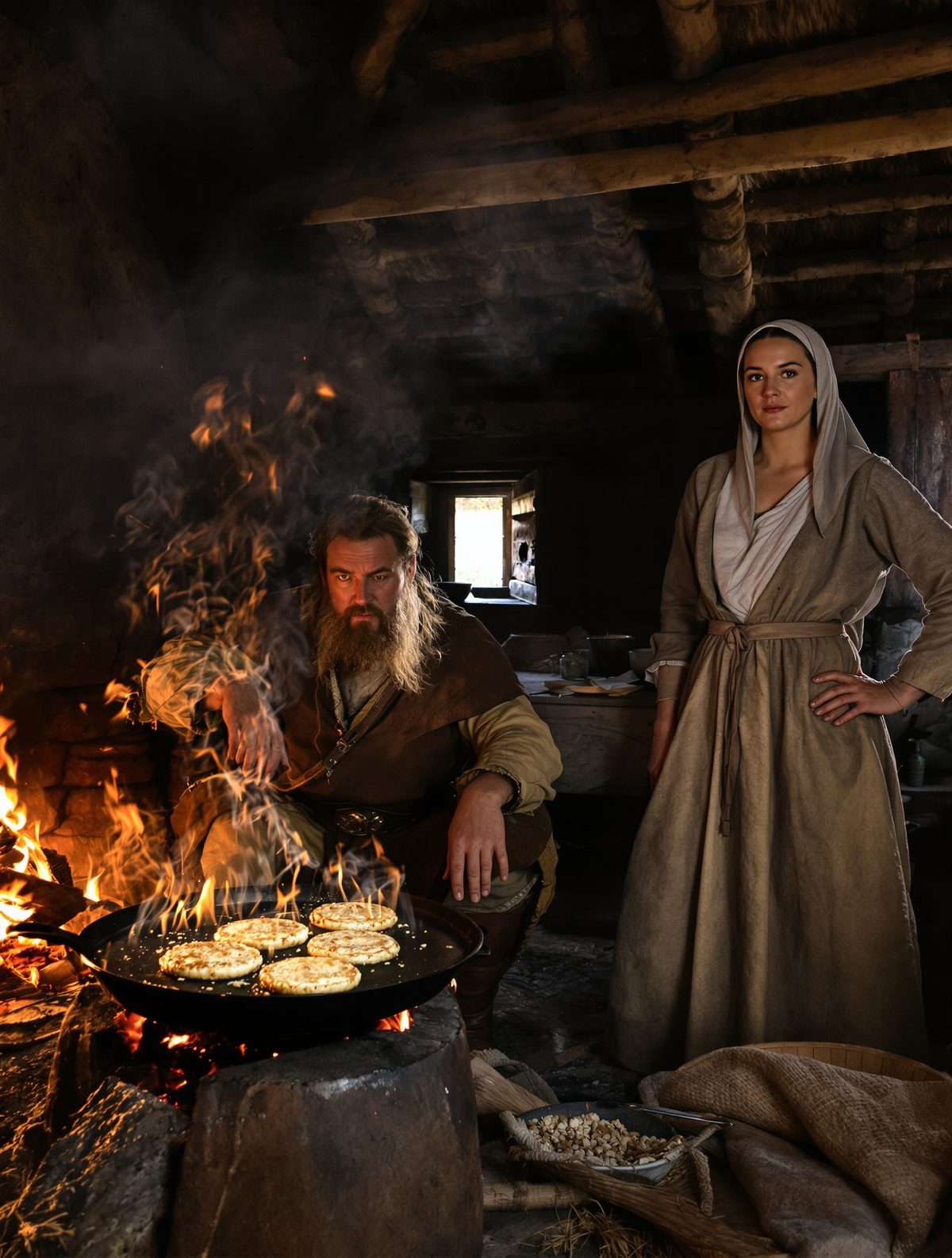
The acrid smell of burning oatcakes filled the smoky hut as a peasant woman's voice cut through the winter air like a blade: "Look here, man! You were quite happy to warm yourself by my fire, but you're too lazy to turn the cakes when you can see them burning!" The cowled figure hunched by the hearth said nothing, accepting the scolding in silence. What the woman didn't know—couldn't possibly know—was that she had just berated the King of Wessex, the last free English ruler in a land overrun by Viking armies.
It was January 878 AD, and Alfred the Great was at the lowest point of his reign, hiding like a fugitive in the Somerset marshes. The future saviour of England, the man who would earn the title "the Great"—the only English monarch ever to do so—was reduced to sheltering with strangers who had no idea they were harbouring royalty. And he had just failed at the simple task of watching cakes bake.
When the Vikings Came for Christmas
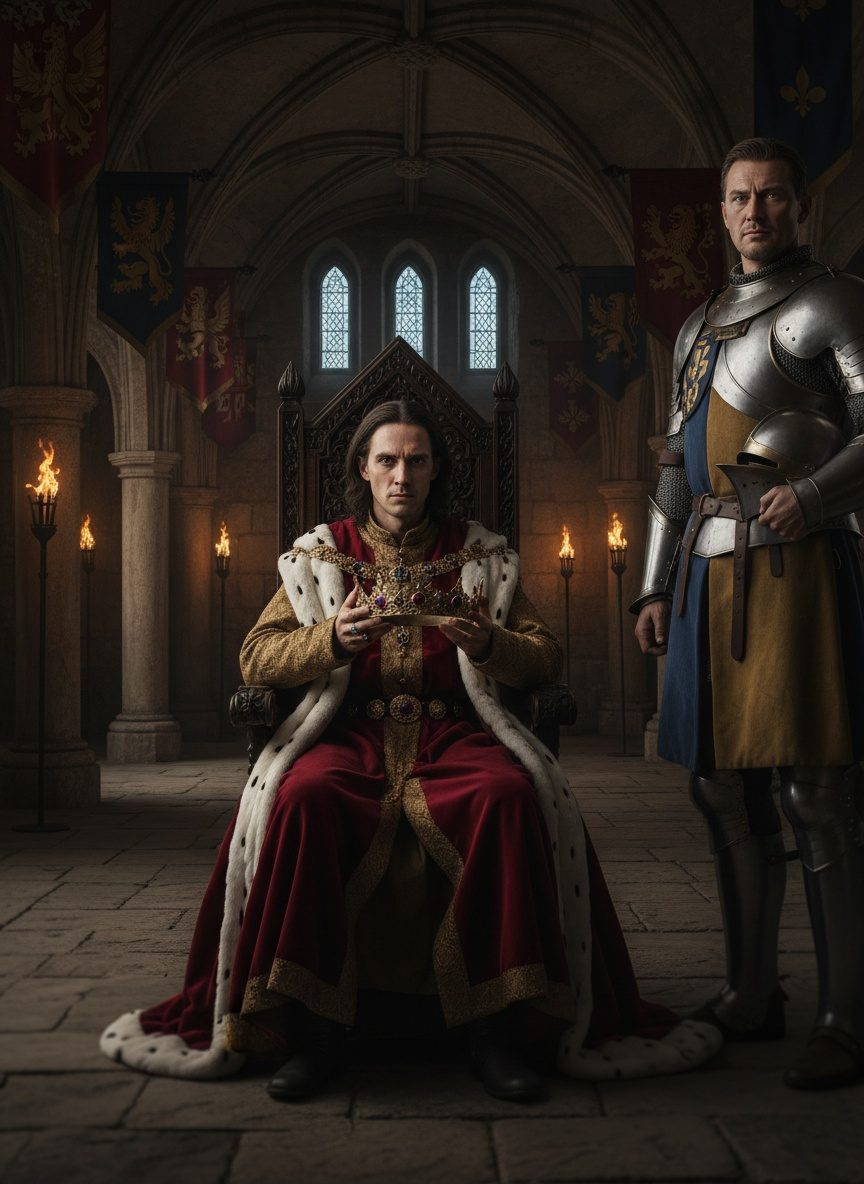
To understand how a king ended up as an incompetent kitchen assistant, we must rewind to the shock attack that changed everything. Christmas 877 had been a time of relative peace. Alfred held court at Chippenham in Wiltshire, celebrating the season with his nobles, believing the Viking threat temporarily contained. The Great Army of the Danes had been defeated before, and winter was traditionally a time of truce.
But Guthrum the Old, the cunning Danish king, had other plans. In a move that broke all conventions of medieval warfare, he launched a surprise assault on Twelfth Night—January 6, 878. As Alfred's court nursed their post-Christmas hangovers, Viking longships were already cutting through the winter darkness toward Chippenham.
Read next: The Day a Defeated King Sailed Away and Never Looked Back
The attack was devastating in its audacity. In a single night, the last independent Anglo-Saxon kingdom crumbled. Alfred's army scattered like leaves before a storm. Some fled overseas, others submitted to Viking rule, and many were simply cut down where they stood. The king himself barely escaped with his life, riding hard through the frozen Wiltshire countryside with just a handful of loyal companions.
Within days, Guthrum controlled everything from the Wash to the English Channel. After decades of Viking raids and conquest, it seemed the dream of an English kingdom was finally dead.
Into the Wasteland: The Somerset Levels
Alfred's destination was one of the most inhospitable places in Anglo-Saxon England—the Somerset Levels. This vast wetland, larger than modern-day Greater London, was a maze of rivers, marshes, and islands that had remained virtually unchanged since the last Ice Age. Here, among the reed beds and treacherous bogs, small communities of fishermen, fowlers, and eel-catchers eked out a living on scattered patches of higher ground.
It was perfect country for a fugitive. The labyrinthine waterways were impossible to navigate without local knowledge, and the scattered settlements were connected only by ancient trackways built on wooden causeways. Any approaching army would be visible for miles across the flat marshland, yet could easily become lost in the maze of channels and false paths.
Alfred established his base on the Isle of Athelney, a small island where the rivers Tone and Parrett converged. The name itself told the story—Æthelingaigge in Old English, meaning "Prince's Island." Whether it was named for Alfred's arrival or had borne the name since earlier times remains a mystery, but it would become the birthplace of English resistance.
The Woman Who Didn't Bow: A Royal Encounter
Here, in this landscape at the edge of the world, occurred one of the most famous encounters in English folklore. The story, first recorded by the chronicler Asser just a decade later, tells of Alfred seeking shelter in the hut of a swineherd named Cowherd and his wife. But what makes this tale extraordinary isn't just its royal protagonist—it's what it reveals about the democratic spirit of Anglo-Saxon England.
The woman—sadly, history never recorded her name—treated the mysterious stranger exactly as she would any other traveler seeking shelter. There was no bowing, no deference, just the practical hospitality of the marshlands. When Alfred failed to tend her precious oatcakes properly, letting them burn while he brooded over his kingdom's fate, she delivered a scolding that would have made his nobles quake.
This wasn't just about burned cakes—it was about a society where even kings had to earn their keep. In the harsh world of the Somerset Levels, royal blood counted for nothing if you couldn't handle basic tasks. The woman's sharp words contained a profound lesson about responsibility and attention to duty that would shape Alfred's later reign.
Archaeological evidence from the area suggests these marsh dwellers lived in remarkable egalitarian communities. Recent excavations have revealed settlements where differences in wealth and status were minimal—survival depended on cooperation, not hierarchy. For a king accustomed to the rigid protocols of court, this must have been a revelation.
The Making of a Legend: From Ashes to Victory
The months that followed were a masterclass in guerrilla warfare. From his island stronghold, Alfred began what would become known as the "marsh campaigns"—a series of lightning raids that slowly bled Viking confidence and restored English morale. Using the waterways as highways and the scattered islands as bases, his growing band of followers struck Viking supply lines and isolated garrisons with devastating effect.
But Alfred was doing more than just fighting—he was learning. The egalitarian spirit of the marsh communities, where leadership was earned rather than inherited, influenced his thinking about kingship. The harsh lessons of practical responsibility, symbolized by those burned cakes, shaped his understanding of what it truly meant to serve his people.
The turning point came in May 878, at the Battle of Edington. Alfred had spent the winter months not just gathering troops, but forging a new kind of army—one built on the fierce independence of the marshland folk combined with the military discipline of his surviving nobles. When they finally faced Guthrum's forces on the chalk downs of Wiltshire, they fought with the desperation of the dispossessed and the cunning learned in the wetlands.
The victory was so complete that Guthrum himself converted to Christianity and withdrew permanently north of Watling Street, establishing the boundary that would define England for generations. The kingdom that had seemed lost forever was reborn in a single day.
The Cakes That Changed History
Why does this story of burned cakes continue to resonate more than a thousand years later? Perhaps because it captures something essential about leadership under pressure—the moment when grand strategies matter less than basic competence, when kings must prove themselves worthy of the humblest trust.
The tale has often been dismissed as mere folklore, but its early recording by Asser and its deep embedding in Anglo-Saxon culture suggest it preserves a genuine memory. More importantly, it represents a pivotal moment in Alfred's development as a ruler. The king who emerged from the Somerset marshes was different from the one who had fled Chippenham—humbler, more practical, more connected to his people's daily struggles.
These qualities would define his later achievements: the creation of England's first navy, the establishment of fortified towns across Wessex, the translation of Latin classics into English, and the foundation of schools for both noble and common children. The man who learned responsibility from a swineherd's wife would become the architect of English civilization.
In our age of distant leaders and ivory-tower decision-making, Alfred's burned cakes remind us that the best leaders are those who can be trusted with the smallest tasks as well as the largest. Sometimes the fate of nations really does hang on whether you're paying attention when the cakes are baking.