The executioner's axe gleamed in the bitter January morning as King Charles I stepped onto the scaffold outside Whitehall Palace. But 400 miles north in Edinburgh, something unprecedented was already unfolding. The Scottish Parliament had proclaimed his eldest son, Prince Charles, as King Charles II. For the first time in English history, two men would simultaneously claim the same crown—one about to lose his head, the other about to begin a desperate fight for survival in exile.
This wasn't just royal succession gone wrong. This was the moment England accidentally created a constitutional crisis that would echo through centuries, establishing precedents about kingship, legitimacy, and the very nature of divine right that still influence monarchies today.
The King Who Refused to Bow
Charles I had always believed God had appointed him to rule. Even as he stood trial before a court he refused to recognize, even as 59 commissioners signed his death warrant, he maintained that no earthly power could judge a king. "I am not suffered to speak," he declared during his trial, "expect what justice other people will have."
But Charles had fatally misunderstood the mood of his subjects. After years of civil war, religious turmoil, and what Parliament saw as tyrannical overreach, the king had become expendable. The man who had tried to arrest five Members of Parliament in their own chamber, who had raised his standard against his own people at Nottingham, was now facing the ultimate consequence of his actions.
Read next: The Day a Defeated King Sailed Away and Never Looked Back
On January 27, 1649, the court pronounced its verdict: Charles Stuart was guilty of treason against the people of England. He would die within three days. Yet even as the king's fate was sealed in Westminster Hall, his supporters were already ensuring his legacy would survive his body.
A Crown Crosses the Border
The Scots had been watching events in London with growing alarm. While many had opposed Charles I's religious policies—his attempt to impose Anglican practices on Presbyterian Scotland had sparked the Bishops' Wars—they drew the line at regicide. The divine right of kings ran deep in Scottish political thought, and executing an anointed monarch was not just murder but sacrilege.
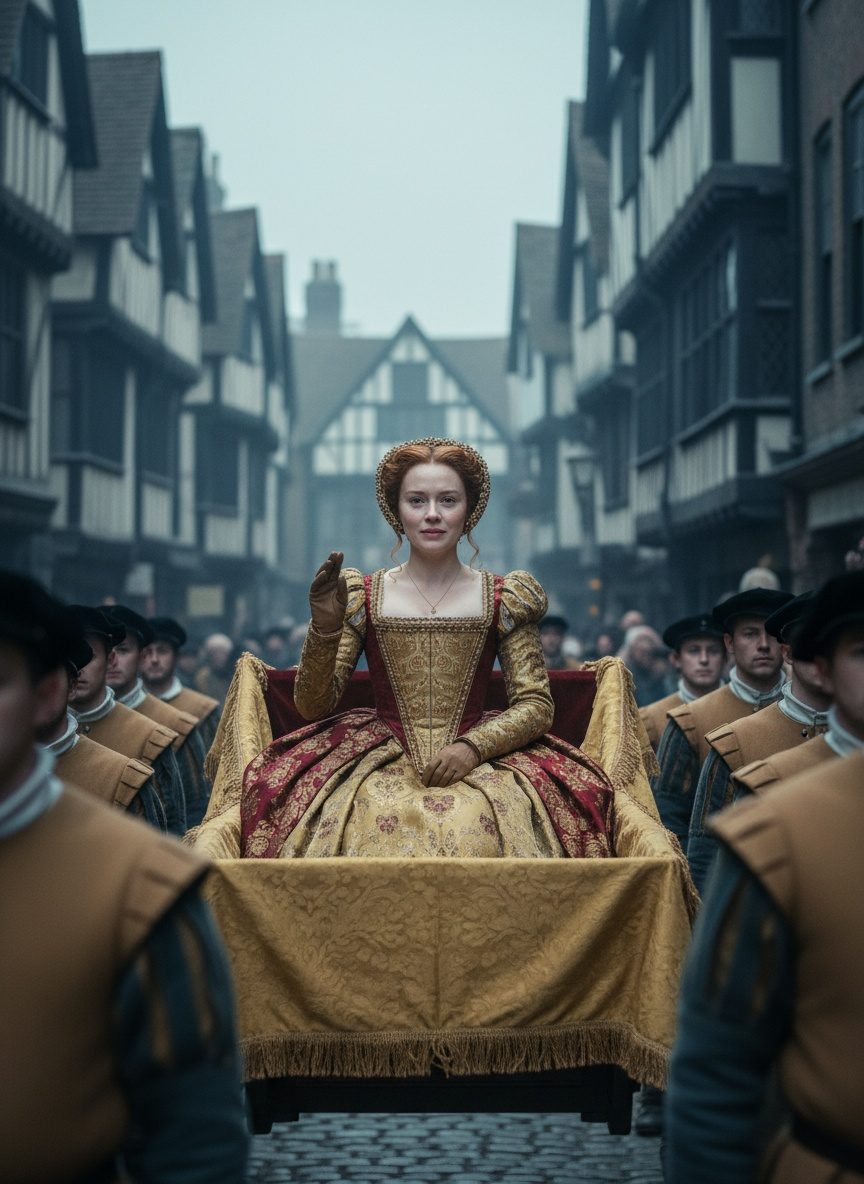
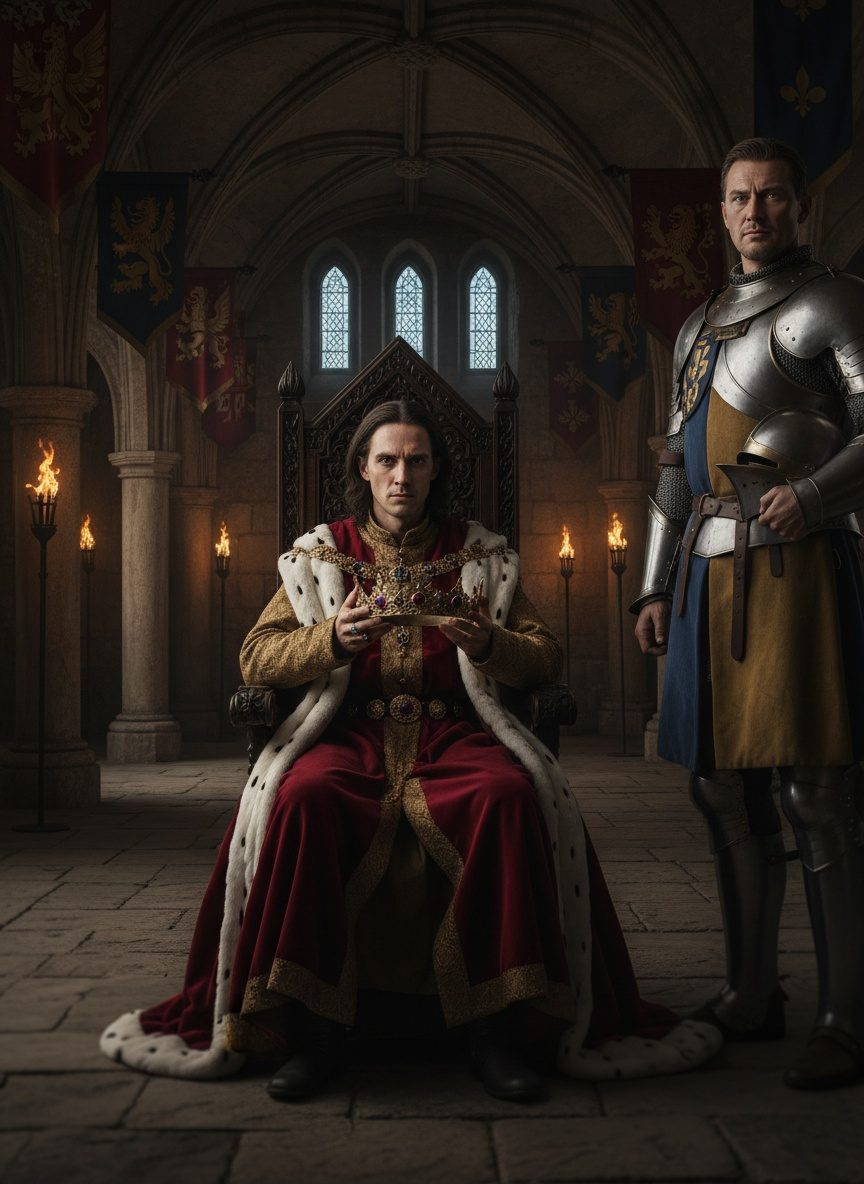
On February 5, 1649—just five days after Charles I's execution—the Scottish Parliament made their move. In a ceremony at Edinburgh Castle, they proclaimed nineteen-year-old Prince Charles as King Charles II of Scotland, England, and Ireland. The young prince, exiled in The Hague, suddenly found himself king of three kingdoms while controlling none of them.
This wasn't mere symbolism. The Scots were making a bold political statement: the English Parliament might have the power to kill a king, but they couldn't kill the monarchy itself. Only God could do that, and God, they believed, had already chosen Charles II as his earthly representative.
Two Kings, One Kingdom
For a brief, surreal moment in February 1649, England had two competing kings. From January 30 until his execution, Charles I remained king in his own eyes and those of his supporters. Meanwhile, Charles II was already king in Scottish law and would soon be recognized by royalist strongholds across Ireland and parts of England.
This created legal chaos that lawyers and constitutional scholars are still debating. Who signed the treaties? Whose coins were legal tender? If you were a royalist merchant in Cornwall, which Charles did you serve? The practical implications were staggering.
Oliver Cromwell and his Commonwealth government solved the problem with characteristic bluntness: they simply declared themselves the legitimate authority and began hunting down anyone who disagreed. But they couldn't hunt down an idea, and the idea of Charles II's legitimacy proved remarkably resilient.
The young king faced an impossible situation. He was monarch of three kingdoms but master of none. His supporters expected him to fight for his throne, but with what army? His treasury was empty, his father's supporters scattered or dead, and the most powerful military force in Europe—Cromwell's New Model Army—was actively hunting him.
The King in the Oak Tree
Charles II's attempt to reclaim his throne reads like an adventure novel. In 1651, he invaded England with a Scottish army, only to be crushed by Cromwell at the Battle of Worcester. What followed was one of the most dramatic escape stories in British history.
For six weeks, the young king was a fugitive in his own kingdom. He disguised himself as a servant, blackened his face with soot, and at one point spent an entire day hiding in an oak tree while Cromwell's soldiers searched below. Local Catholics risked their lives to shelter him, knowing that discovery meant certain death.
The most remarkable detail? Charles was six feet two inches tall—a giant by 17th-century standards—making disguise almost impossible. Yet he evaded capture through a combination of luck, loyalty, and sheer audacity. When he finally escaped to France, he left behind a country that officially denied his existence while secretly harboring thousands who would die for him.
The Hollow Crown
During his exile, Charles II remained king in theory while learning harsh lessons about power in practice. European courts treated him with the courtesy due to his rank but offered little real support. His mother, Henrietta Maria, pawned her jewelry to keep the exiled court fed. The king of three kingdoms sometimes couldn't afford dinner.
Yet this exile proved crucial to Charles's later success. He learned diplomacy, patience, and pragmatism—qualities his father had fatally lacked. He also learned that being king meant more than divine appointment; it required the consent, however grudging, of the governed.
Meanwhile, back in England, Cromwell's Commonwealth struggled with its own legitimacy crisis. They had executed one king and banished another, but they couldn't execute the idea of monarchy. Every time they faced opposition, critics asked the same uncomfortable question: by what right do you rule?
The Lesson of Two Kings
When Charles II finally returned in 1660, invited back by a Parliament exhausted by republican experiment, he had learned something his father never understood: compromise was not weakness but wisdom. The Restoration Settlement that followed would reshape the British monarchy forever, establishing the principle that kings ruled with Parliament, not over it.
The strange tale of England's two kings reveals a profound truth about power and legitimacy. Charles I died believing his authority came from God alone, but his son learned that even divine right required human acceptance. The brief period when England had two competing kings highlighted the difference between theoretical authority and practical power—a distinction that continues to shape constitutional monarchies today.
Perhaps most remarkably, this crisis established precedents we still live with. The idea that Parliament could choose its monarch, that kings ruled by consent rather than divine fiat, and that legitimacy required more than bloodline—all emerged from those chaotic months when a dead king's crown passed to his exiled son while Parliament tried to abolish monarchy altogether.
In our age of contested elections and questions about political legitimacy, the story of Charles I and Charles II offers a timeless reminder: true authority comes not from proclamation but from acceptance, not from theory but from practice. Sometimes it takes two kings to teach a kingdom what kingship really means.