The telegram arrived at Buckingham Palace on a sweltering July morning in 1917. German Gotha bombers had just killed 162 civilians in broad daylight over London—the deadliest air raid in British history. As King George V read the casualty reports, angry crowds were already gathering in the streets below, their chants growing louder: "Down with the Germans! Down with all Germans!"
The bitter irony wasn't lost on the King. Here he was, monarch of an empire at war with Germany, yet his own family name—Saxe-Coburg-Gotha—was as German as sauerkraut and lederhosen. In the span of a few terrifying weeks, George V would face the most perilous decision of his reign: abandon centuries of royal tradition or watch his dynasty crumble under the weight of anti-German fury.
A Kingdom Drowning in German Blood
By 1917, the British Royal Family was swimming in German ancestry so deep that George V himself was more Germanic than British. His grandmother, Queen Victoria, had married Prince Albert of Saxe-Coburg-Gotha, effectively making the British throne a branch office of German nobility. George's wife, Queen Mary, was born Princess Victoria Mary of Teck—another German principality. His cousins included Kaiser Wilhelm II, the very man whose armies were slaughtering British soldiers in the muddy trenches of France.
The royal family spoke German at private gatherings. They vacationed in German spas. Their personal libraries overflowed with German literature and philosophy. When George V's father, Edward VII, had been Prince of Wales, he'd been mockingly called "the German Prince" by republican newspapers. But that was during peacetime, when such things seemed merely quaint.
Read next: The Day a King Knelt to Wash a Beggar's Feet
Now, with over 700,000 British soldiers dead and the war grinding into its fourth hellish year, quaint had become catastrophic.
When London Burned with Anti-German Rage
The breaking point came on July 7, 1917, when twenty German Gotha G.IV bombers droned across London's summer sky like mechanical vultures. At 11:35 AM, their bombs struck Poplar, killing eighteen children at Upper North Street School. The sight of tiny bodies pulled from the rubble sent London into a frenzy of rage unlike anything seen since the Gordon Riots of 1780.
Within hours, mobs were smashing every German-sounding business they could find. They torched Schmitt's bakery in Bethnal Green, looted Mueller's delicatessen in Whitechapel, and dragged Frederick Gartner—a naturalized British citizen who'd lived in London for thirty years—from his shop and beat him bloody in the street. Police reports from that terrible week describe "gangs of hundreds" roaming through working-class neighborhoods, searching for anyone with a German accent, German name, or German appearance.
The violence wasn't random—it was systematic. Angry Londoners had compiled lists of German businesses, German residents, even German street names. They demanded the government intern every person of German descent, regardless of citizenship. Some radical newspapers suggested something even darker: mass deportations.
And through it all, Britain's King bore the most German name of all.
The King's Impossible Choice
Lord Stamfordham, the King's private secretary, didn't mince words in his memo to George V: "The monarchy faces an existential crisis." Republican sentiment was growing. Labor leaders were openly questioning why Britain should be ruled by what they called "the German dynasty." Even loyal Conservative MPs were whispering that perhaps it was time for a change.
The pressure intensified when H.G. Wells published a scathing article calling the royal family "an alien and uninspiring court." Wells wrote: "The British Empire is fighting for its life against German militarism, yet we bow to a king whose very name proclaims his Germanic origins. This contradiction is becoming intolerable."
George V was trapped between two impossible options. He could maintain the Saxe-Coburg-Gotha name, honoring centuries of royal tradition but risking revolution. Or he could do something no British monarch had ever done: voluntarily abandon his family name, effectively admitting that his German heritage was shameful.
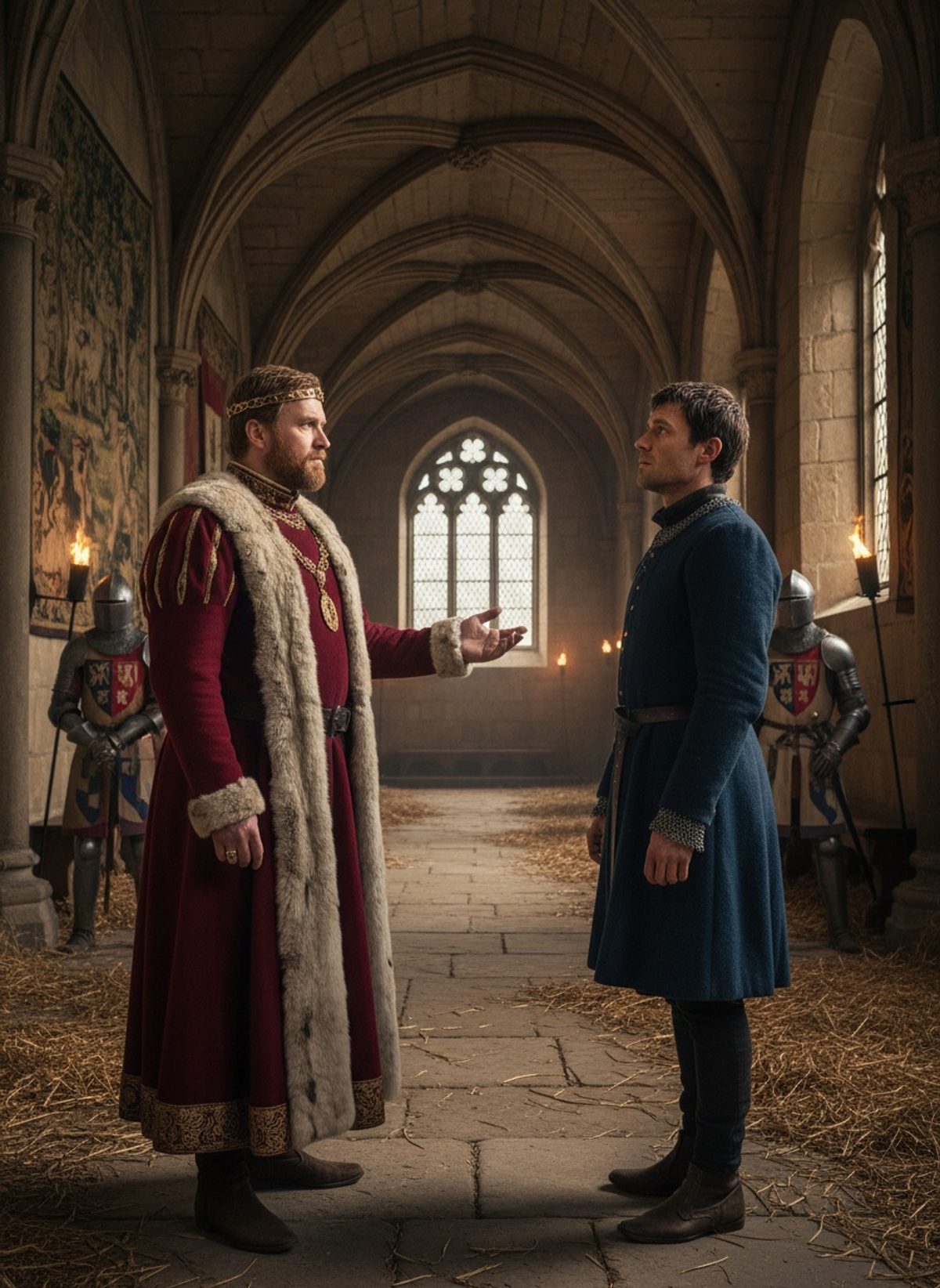
The King's own relatives were divided. Some urged him to weather the storm, arguing that changing the royal name would appear weak and opportunistic. Others, led by Queen Mary, recognized the mortal danger. "Better to be Windsor than to be nothing at all," she reportedly told her husband.
The Birth of a Dynasty
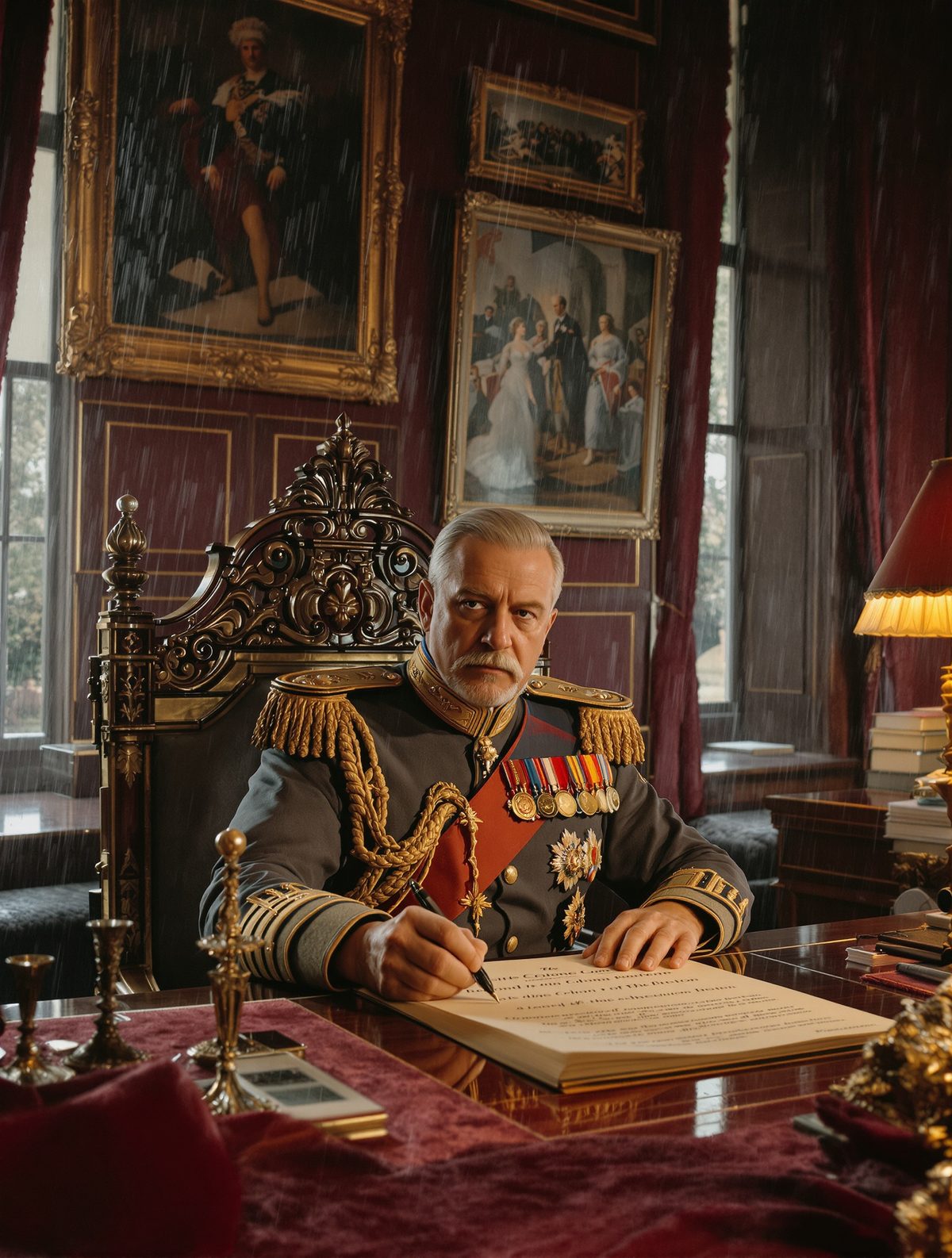
On July 17, 1917, King George V summoned his private secretary and made a decision that would echo through history. In a voice witnesses described as "quiet but firm," he declared: "We are no longer Saxe-Coburg-Gotha. We are Windsor."
The choice of "Windsor" was inspired genius. The name came from Windsor Castle, the royal residence that had housed British monarchs for over 800 years. Nothing could sound more English, more traditional, more thoroughly British than Windsor. It evoked images of medieval knights, Tudor roses, and ancient oak trees—everything that Saxe-Coburg-Gotha was not.
But the King went further than anyone expected. His royal proclamation didn't just change his own name—it obliterated the German heritage of the entire extended royal family. His cousins, the Battenbergs, became the Mountbattens. The Tecks became the Cambridges. Prince Louis Alexander of Battenberg, who had already been forced to resign as First Sea Lord due to his German name, finally had his redemption.
The proclamation was published on July 18, 1917, and the transformation was immediate. Newspapers that had been sharply critical of the "German court" suddenly praised the King's "patriotic sacrifice." The Daily Mail, which had spent months attacking royal German connections, declared it "an act of true British leadership."
The Surprising Aftermath
Kaiser Wilhelm II's reaction to his cousin's name change was pure Germanic wit: "I'm looking forward to seeing Shakespeare's play 'The Merry Wives of Saxe-Coburg-Gotha,'" he reportedly joked to his staff. But beneath the humor lay genuine shock. The Kaiser had never imagined that George V would abandon their shared heritage so completely.
The name change had unexpected consequences throughout Europe's royal families. The King's decision embarrassed his German relatives so thoroughly that several minor German princes quietly changed their own names to avoid association with the "turncoat" British royals. In Spain, Queen Victoria Eugenie—George V's cousin and another Battenberg—found herself defending her British relatives' decision to Spanish nobles who viewed the name change as cowardly.
Perhaps most surprisingly, the Windsor name became so successful that it retroactively changed how people remembered British royal history. Within a generation, most Britons had forgotten that their beloved royal family had ever been anything but Windsor. The German century of British royalty had been effectively erased from popular memory.
Legacy of a Single Signature
Today, as King Charles III reigns over the House of Windsor, few Britons remember that their royal family's name is barely over a century old—younger than the London Underground, younger than the BBC, younger than fish and chips as a popular dish. The Windsor brand has become so thoroughly British that it's almost impossible to imagine the monarchy without it.
George V's decision reveals something profound about the nature of royal power in the modern world. For centuries, monarchs had derived legitimacy from ancient bloodlines and inherited titles. But in July 1917, a king discovered that sometimes survival requires sacrifice—even the sacrifice of identity itself. In choosing to be Windsor rather than Saxe-Coburg-Gotha, George V didn't just save his dynasty; he created the template for modern monarchy: adaptable, pragmatic, and willing to reinvent itself when history demands it.
The next time you see the Windsor name on a royal wedding invitation or a ceremonial proclamation, remember: you're witnessing the power of a single, desperate decision made during history's darkest hour. Sometimes the most profound changes come not from grand battles or sweeping legislation, but from one man with a pen, choosing survival over tradition in a palace room heavy with the weight of an empire's expectations.