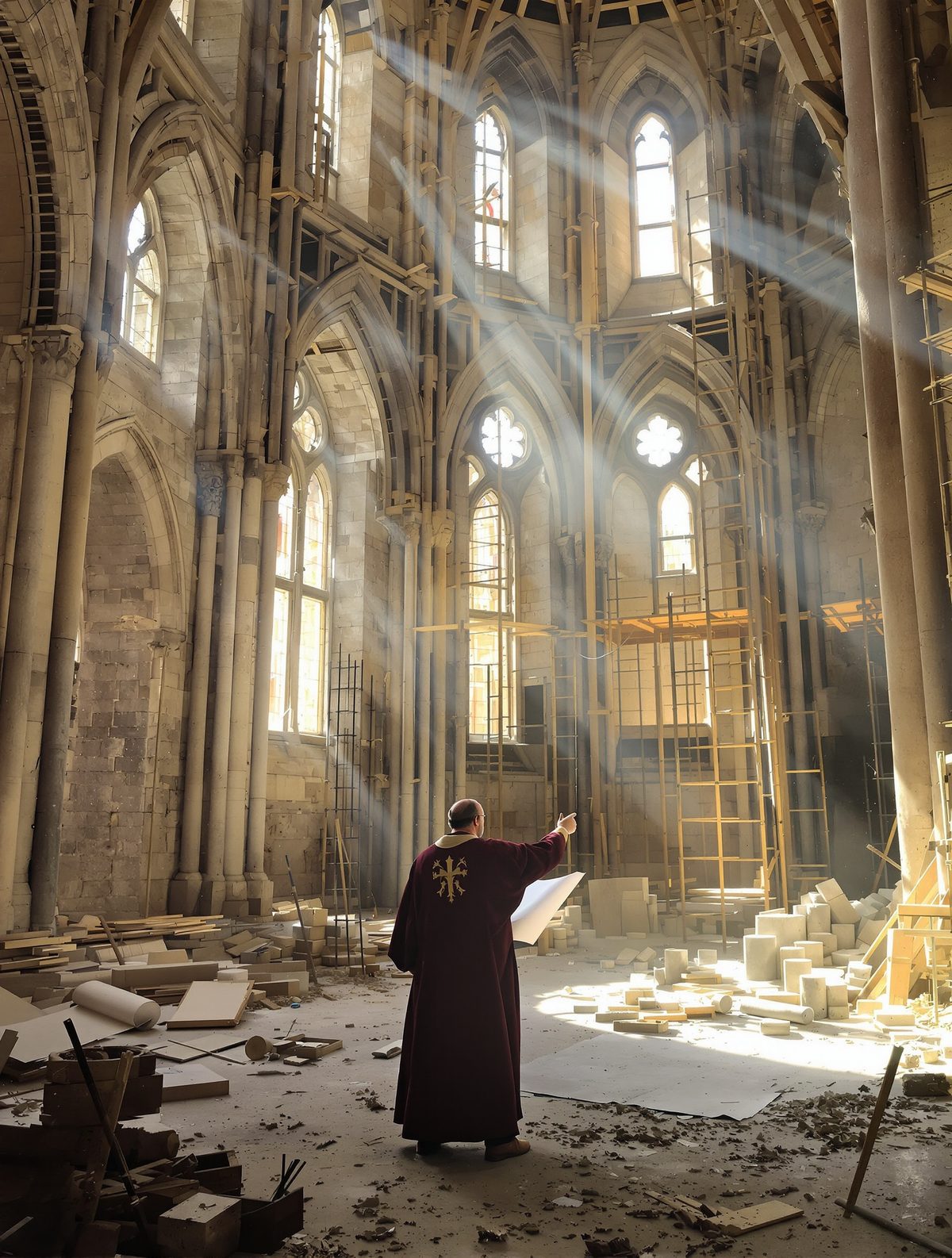
The morning of September 11th, 1178, began like any other at Canterbury Cathedral. Masons chiseled limestone into delicate tracery, apprentices hauled buckets of mortar up wooden ladders, and the sound of chanting drifted from the temporary altar where monks continued their daily prayers. High above it all, perched on scaffolding that seemed to scrape the very belly of heaven, worked the most celebrated architect in Christendom: William de Sens.
Then, in an instant that would echo through the centuries, the master mason who was transforming England's most sacred cathedral into a Gothic marvel plummeted fifty feet to the stone floor below. The crack of his bones breaking seemed to silence even the angels.
But this is not just a story about a terrible accident. This is the tale of how one man's catastrophic fall became the catalyst for one of medieval Europe's most revolutionary architectural achievements—and how his obsession with perfection nearly cost him everything.
When Heaven Burned: The Fire That Changed Everything
To understand William's story, we must first travel back four years to September 5th, 1174, when Canterbury Cathedral became a vision of hell itself. The fire started in the early afternoon, likely from sparks that leaped from nearby cottages onto the ancient wooden roof. Within hours, the flames had consumed the entire eastern end of the cathedral—the choir where Archbishop Thomas Becket had been murdered just four years earlier.
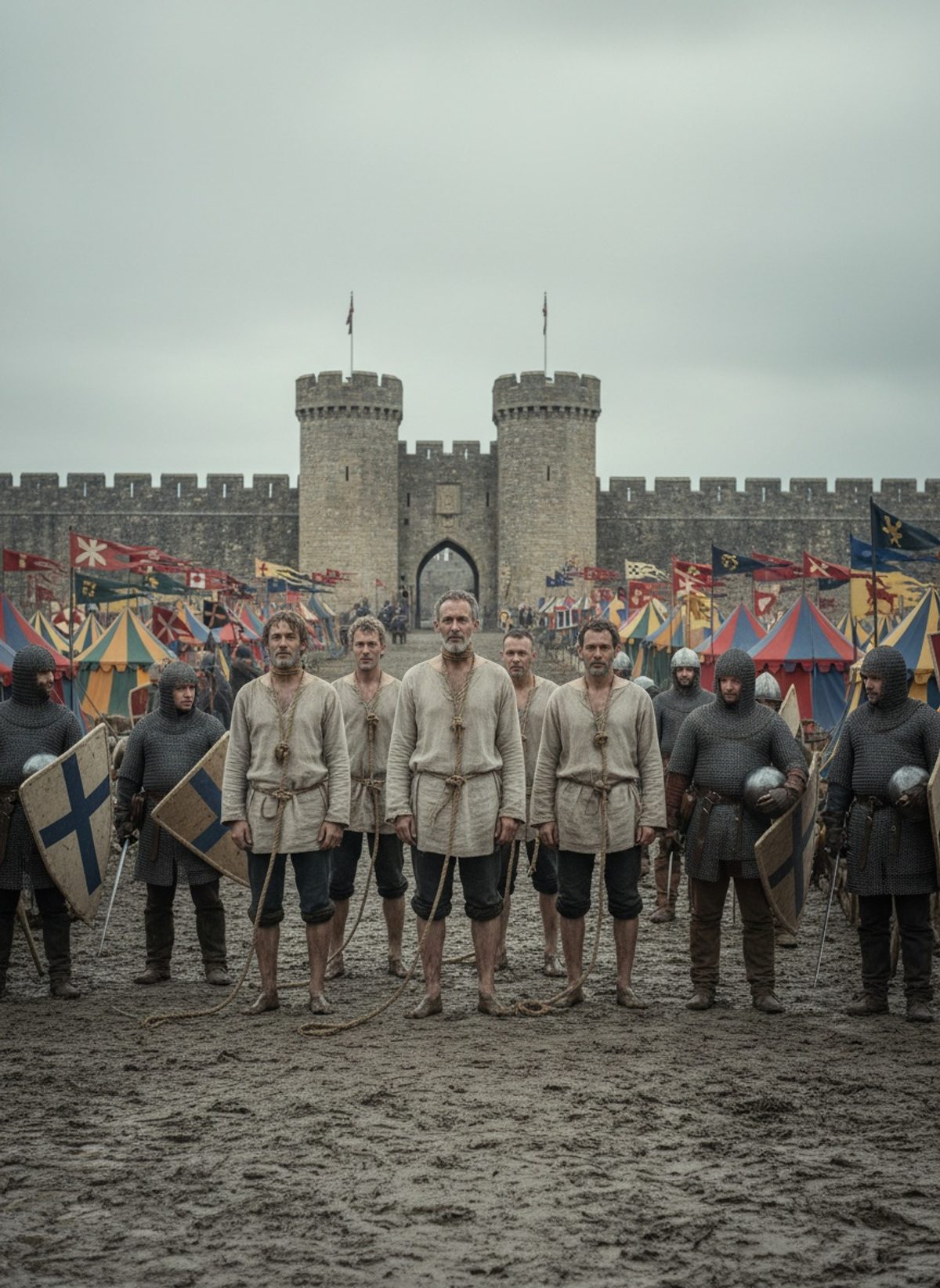
Read next: The Day a Queen Walked Into a Rebel Camp Alone
The devastation was biblical in scope. Lead from the roof melted and poured through the stone joints like metallic rain. The heat was so intense that the very stones cracked and crumbled. Ancient pillars that had stood for centuries split apart with sounds like thunder. When the flames finally died, Canterbury's monks stood amid ruins that seemed to mock their faith.
But here's what the textbooks rarely mention: this disaster became medieval England's greatest architectural opportunity. The monks needed more than mere repairs—they needed a miracle in stone. And they were willing to pay handsomely for it.
Enter the master masons. These weren't mere builders but medieval superstars, commanding fees that would make modern architects weep with envy. They arrived at Canterbury like contestants in history's most exclusive competition, each promising to resurrect the cathedral in ways that would glorify God and astound pilgrims.
The English masters proposed rebuilding in the familiar Romanesque style—thick walls, rounded arches, the architectural equivalent of a fortress for God. Safe. Predictable. Boring.
Then came William de Sens.
The French Revolutionary with a Stone-Cutter's Soul
William de Sens wasn't just any mason—he was architectural royalty. Fresh from supervising construction at Sens Cathedral in France, he brought with him the radical new Gothic style that was setting Europe ablaze with wonder. Where English masons saw problems, William saw possibilities that would make Canterbury the envy of Christendom.
His proposal was audacious beyond belief. Instead of thick, heavy walls, he would create soaring spaces held aloft by revolutionary pointed arches and flying buttresses. Light would pour through enormous windows like liquid gold. The ceiling would vault so high that visitors would crane their necks in amazement, feeling as though they truly stood at the threshold of heaven.
The monks were mesmerized. Here was a man offering to build them not just a cathedral, but a gateway to the divine itself.
William's methods were as revolutionary as his vision. While other masters worked from rough sketches and tradition, he arrived with detailed drawings and precise measurements. He introduced the Canterbury masons to new techniques: how to cut stones with mathematical precision, how to mix mortar that would last a thousand years, how to engineer structures that seemed to defy the very laws of gravity.
By 1178, four years into the project, Canterbury Cathedral was being transformed into something unprecedented in England. Pilgrims traveled hundreds of miles just to witness the work in progress. The soaring arches and ribbed vaults were already causing visitors to gasp in wonder. William de Sens was literally reaching toward heaven—and succeeding.
But pride, as the monks well knew, comes before the fall.
The Day Heaven Fell Silent
September 11th, 1178, began as a day of triumph. The great arches of the eastern transept were nearing completion, their stone ribs reaching skyward like the fingers of giants in prayer. William had climbed to his usual perch high above the cathedral floor, overseeing the placement of a crucial keystone that would lock the entire arch system in place.
Contemporary accounts suggest that William insisted on supervising this critical moment personally. This wasn't unusual—master masons were notorious perfectionists who trusted no one else with the most delicate work. But on this morning, something went catastrophically wrong.
Whether it was a rotten plank, faulty rope, or simply the weight of destiny, William's scaffolding gave way. Witnesses described a moment of terrible silence as the master mason tumbled through the air, his tools scattering like deadly rain. The sound of his body striking the stone floor echoed through the half-built cathedral like a crack of doom.
For a heart-stopping moment, everyone assumed they had witnessed the death of genius itself. William lay motionless among the scattered stones and timber, blood pooling beneath his broken form. The greatest architectural mind in England had been struck down by the very building he was creating.
But William de Sens was tougher than the limestone he carved. Consciousness returned slowly, bringing with it a agony that would have broken lesser men. His legs were shattered, his spine damaged, his body a roadmap of fractures and bruises. Medieval medicine offered little beyond prayer and crude splinting.
Any reasonable man would have accepted defeat, taken what payment he could, and returned home to heal. William de Sens was not a reasonable man.
The Master's Final Gambit: Directing Heaven from Hell
What happened next reveals the true measure of William's obsession with his Gothic vision. Unable to climb scaffolding or even stand, he had his assistants carry his bed directly into the cathedral. From this improvised command center, surrounded by the smell of sawdust and stone dust, he continued to direct every aspect of the construction.
Picture the scene: the most renowned architect in Christendom, propped up on pillows among the building debris, sketching modifications with trembling hands while apprentices held up drawings for his approval. Every stone placement, every arch curve, every decorative detail still required his personal blessing.
For nearly a year, this extraordinary arrangement continued. William's assistant, another William known to history as "William the Englishman," became his legs and eyes, scrambling up ladders to check measurements and report back on progress. The French master's bed became a pilgrimage site of its own—visiting masons and church officials would pay their respects to the broken genius who refused to abandon his masterpiece.
The quality of work never declined. If anything, William's brush with mortality seemed to intensify his perfectionism. He caught mistakes that would have escaped notice, refined details that other masters would have deemed adequate, and pushed his craftsmen to achieve levels of precision that bordered on the supernatural.
But the human body has limits that even the most determined spirit cannot overcome. By 1179, it became clear that William de Sens faced a choice: return to France for proper medical treatment, or die among the stones he loved.
Legacy Written in Light and Stone
The departure of William de Sens from Canterbury in late 1179 marked the end of an era, but not the end of his vision. "William the Englishman" took over the project, and here's the remarkable thing—he didn't try to impose his own style. Instead, he became the faithful guardian of his master's Gothic dream.
The Trinity Chapel, completed under the English William's direction, showcases details that could only have come from the French master's sickbed sketches. The Corona chapel, built to house Becket's relics, achieves a delicacy of stonework that seems almost impossible given medieval tools and techniques.
William de Sens never saw his masterpiece completed. Whether he recovered from his injuries or died in France remains one of history's mysteries—master masons, despite their celebrity status, rarely left detailed records of their personal lives. But his architectural DNA runs through every stone of Canterbury's eastern end.
The cathedral that rose from the ashes of 1174 became the prototype for English Gothic architecture. Lincoln Cathedral, Westminster Abbey, Salisbury Cathedral—all owe debts to the innovations that William pioneered during his four years at Canterbury. The pointed arch, the ribbed vault, the flying buttress—these weren't just architectural features, they were revolutionary technologies that allowed buildings to soar higher and admit more light than ever before.
More importantly, William's work at Canterbury proved that architecture could be more than mere shelter—it could be a form of prayer made manifest in stone. The space he created doesn't just house worship; it inspires it. Even today, visitors entering Canterbury's choir experience something that transcends the merely aesthetic. They feel lifted, both literally and spiritually, by spaces that seem to channel divine light and energy.
Perhaps most remarkably, William's catastrophic fall became part of Canterbury's legend. Medieval chroniclers saw divine intervention in both the accident and his survival. Some suggested that God had tested his servant's faith and found it worthy. Others whispered that the devil himself had tried to stop the holy work, only to be thwarted by William's indomitable will.
The truth, as always, lies somewhere between legend and fact. William de Sens was neither saint nor supernatural being—he was an artist whose vision was larger than his mortality, a craftsman whose dedication transcended physical limitations, and a dreamer who quite literally reached too high and paid the price.
In our age of computer modeling and safety regulations, it's easy to forget that medieval cathedrals were built by men who risked everything—their health, their wealth, their very lives—in service of visions that stretched beyond their own lifespans. William de Sens fell from heaven, but in falling, he proved that some dreams are worth any price. His broken body healed, but his broken scaffolding gave birth to wonders that still take our breath away nearly a thousand years later.
Every time we stand beneath Gothic arches and feel our spirits soar, we're experiencing the legacy of a man who refused to let catastrophe kill his vision of the divine made manifest in stone. That's a lesson worth remembering in any age.