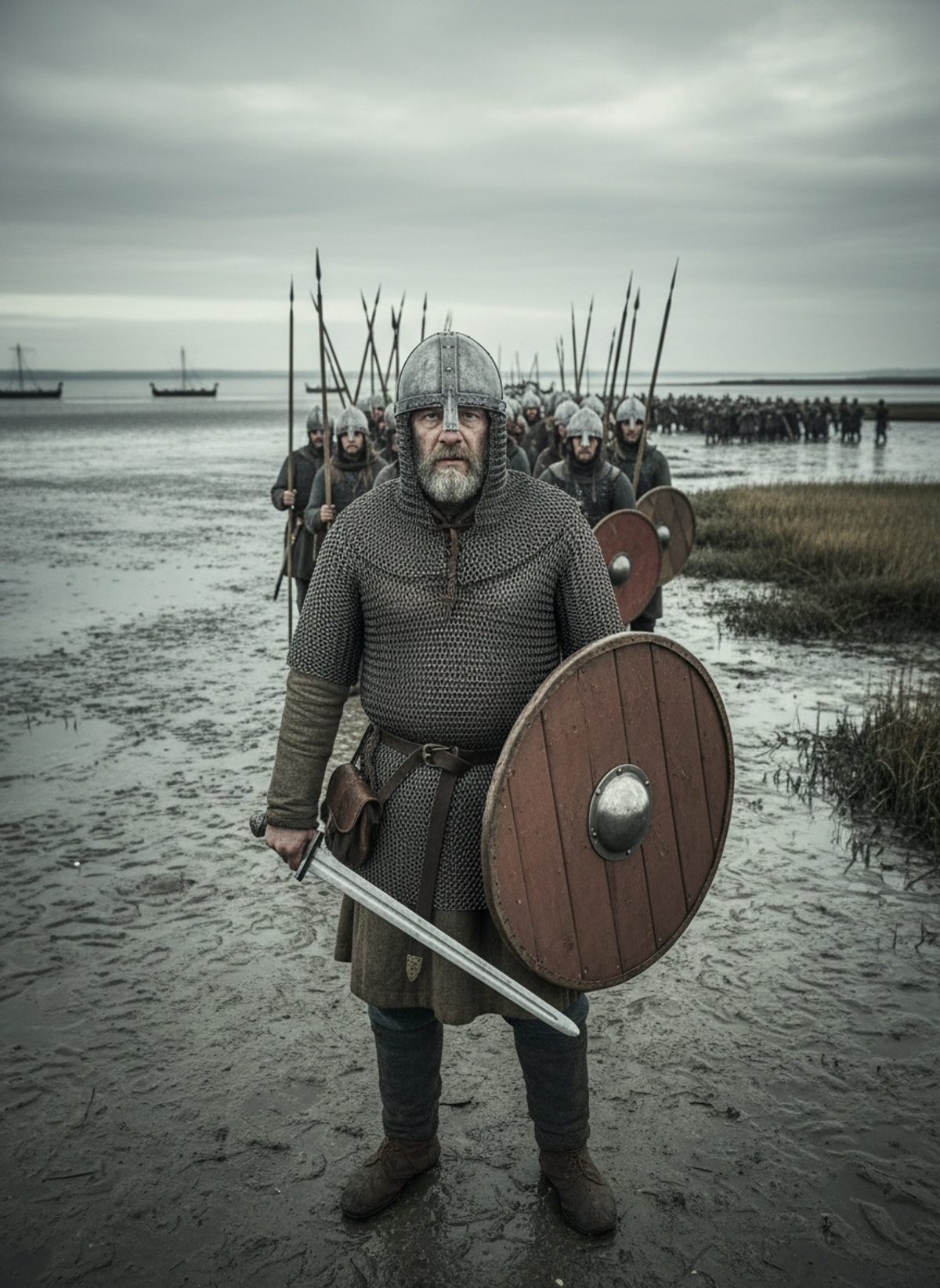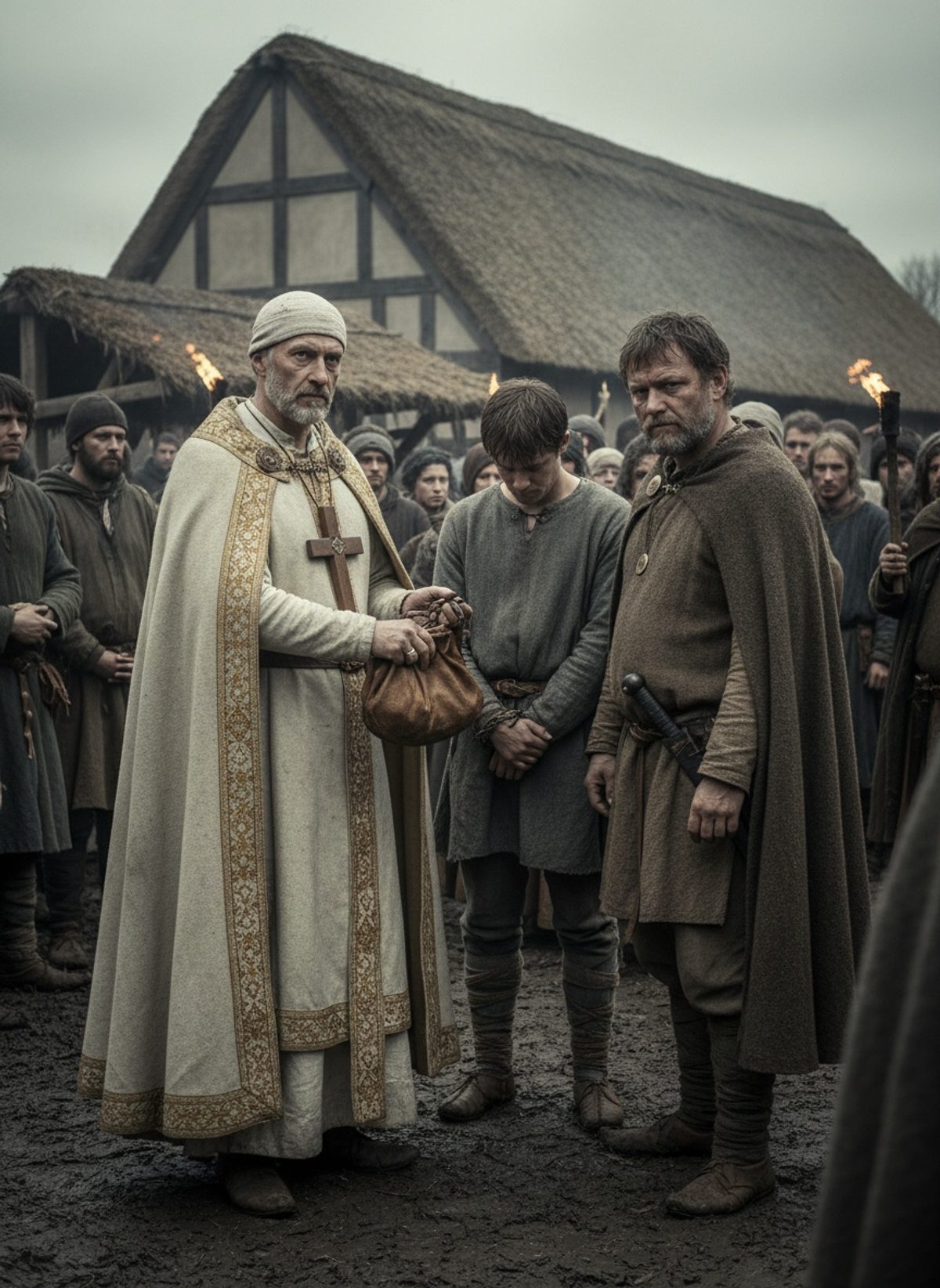
The summer of 910 was blood-soaked and desperate. Viking longships crowded the rivers of England like wolves gathering for a kill. The great kingdoms of Northumbria and East Anglia had already fallen to Danish axes. Now the raiders turned their hungry eyes toward Mercia, the heart of England, where one woman stood between them and total conquest.
She was Æthelflaed, daughter of Alfred the Great, and she was about to save a kingdom with stone and steel.
While history remembers her father as "the Great," it was Æthelflaed who turned the tide of England's darkest hour. In just eight years, this remarkable woman would construct a chain of ten fortified towns across Mercia, each one a calculated masterpiece of military engineering. Her fortresses didn't just hold back the Viking tide—they became the foundation stones upon which England itself was built.
The Warrior Princess Who Learned From the Best
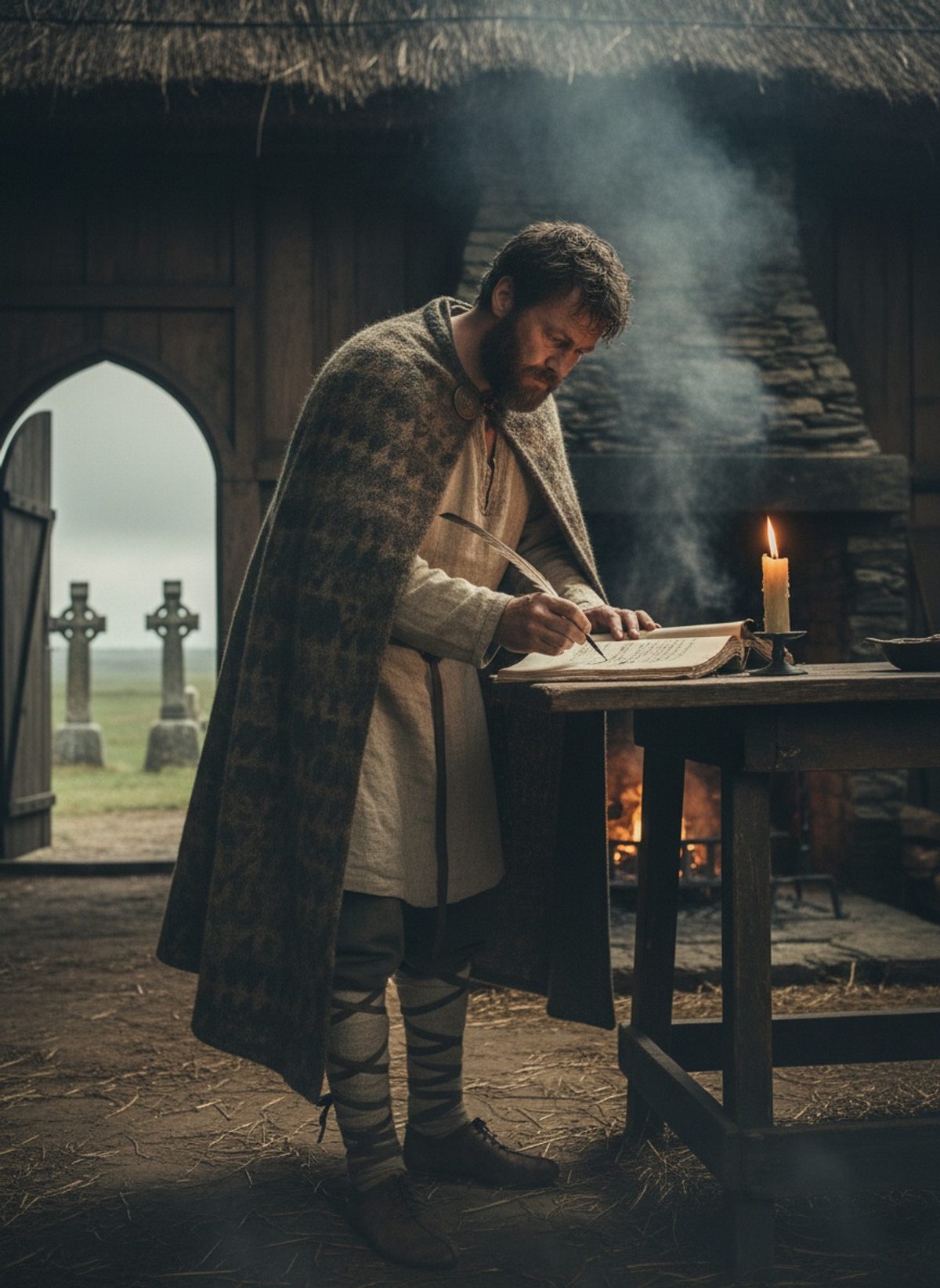
Born around 870, Æthelflaed grew up watching her father fight for England's survival. Alfred the Great wasn't just teaching his daughter courtly manners and needlework—he was showing her how to read landscapes like a general, how to position defenses, and how to think like both protector and predator.
Read next: The Day a Saxon Abbot Walked Into a Slave Market Alone
When she married Æthelred, Lord of the Mercians, around 886, it wasn't just a political alliance—it was England's insurance policy. The couple ruled Mercia jointly, but after Æthelred's death around 911, something unprecedented happened. Instead of remarrying or stepping aside for a male ruler, Æthelflaed took sole command of Mercia. The chroniclers called her "Myrcna hlæfdige"—the Lady of the Mercians—but her enemies knew her by a different name: the woman who could not be conquered.
What made this even more remarkable was that she ruled not as a regent for a son, but as a sovereign in her own right. In an age when women were expected to be silent partners, Æthelflaed commanded armies, negotiated treaties, and made decisions that would echo through centuries.
The Grand Design: Fortresses That Changed History
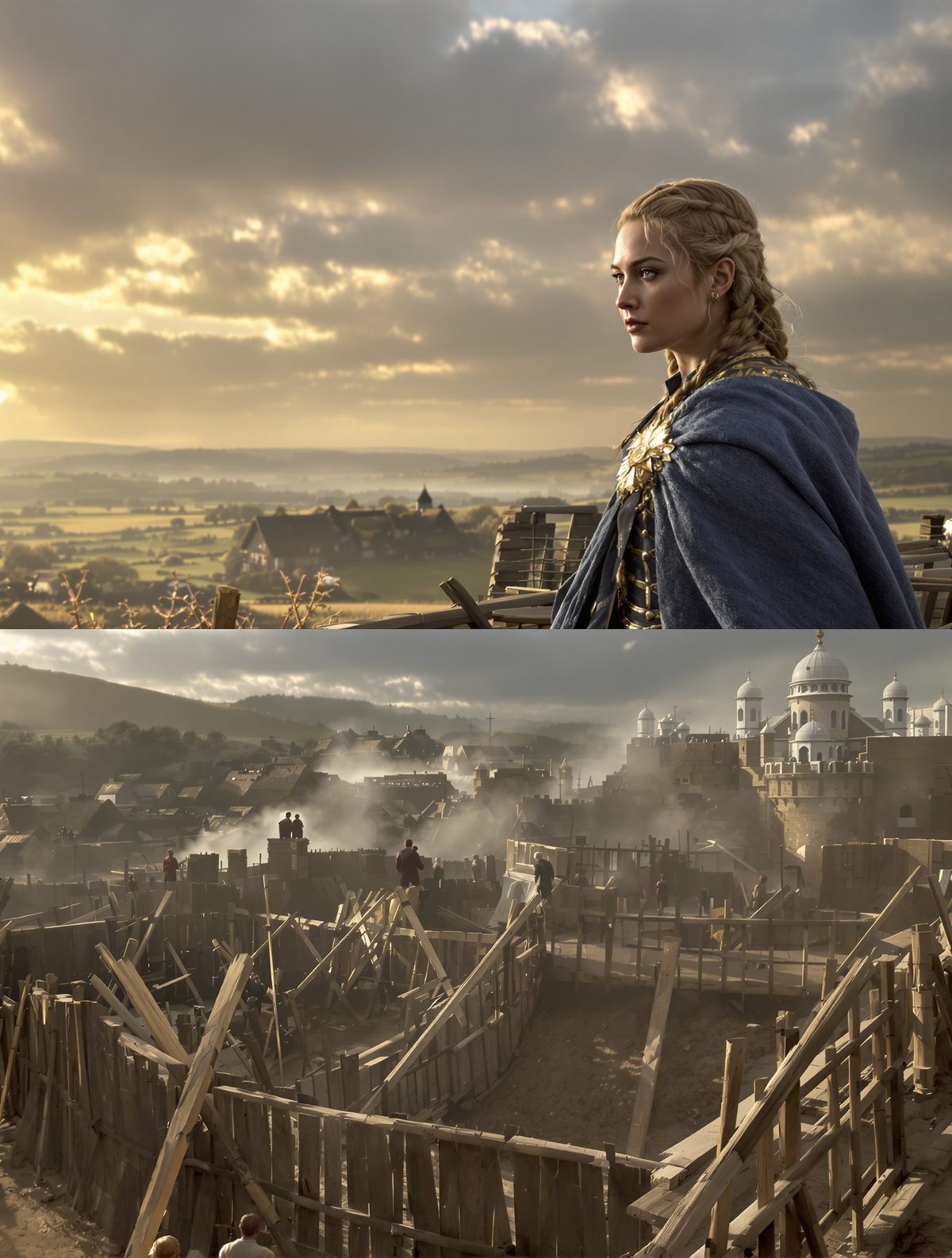
Starting in 910, Æthelflaed began implementing what modern military historians recognize as one of the most sophisticated defense strategies of the early medieval period. Her plan was audacious in its scope: she would ring Mercia with a chain of burhs—fortified towns that could shelter civilians, store supplies, and serve as bases for counterattacks.
But these weren't just any fortresses. Each one was positioned with mathematical precision. No point in Mercia was more than twenty miles from a burh—exactly one day's march for a relief army. This meant that Viking raiders, who relied on speed and surprise, would find themselves constantly within striking distance of Æthelflaed's forces.
Her first fortress rose at Bremesburh (Bromsgrove) in 910, followed rapidly by others at Scergeat and Bridgnorth in 912. Each construction project was a marvel of organization. Thousands of workers—masons, carpenters, diggers, and guards—swarmed across the Mercian countryside. Timber was felled, stones quarried, and earth moved on a scale not seen since Roman times.
What's truly remarkable is the speed. While medieval castle-building typically took decades, Æthelflaed was completing major fortifications in months. How? She had learned from her father's innovations, using standardized designs and prefabricated elements that could be quickly assembled by experienced teams.
The Fortress That Broke Viking Hearts
The true test came in 913 when Æthelflaed constructed the fortress at Tamworth—the ancient capital of Mercia. This wasn't just another strategic position; this was a statement. The Vikings had sacked Tamworth repeatedly, treating it as their personal treasure chest. By fortifying it, Æthelflaed was drawing a line in the earth and daring them to cross it.
The archaeological evidence tells an incredible story. The ramparts at Tamworth weren't just impressive—they were revolutionary. Æthelflaed's engineers created a double-wall system with a fighting platform between them, allowing defenders to rain arrows and spears down on attackers from multiple levels. The walls themselves were built using a technique that combined Roman engineering knowledge with Saxon innovations—stone foundations supporting timber and earth ramparts that could absorb the impact of siege engines.
But perhaps most ingenious of all was the water supply. Each of Æthelflaed's fortresses was positioned to control fresh water sources, meaning that even under lengthy siege, her people could outlast their attackers. The Vikings, master tacticians themselves, quickly realized they were facing something new: an opponent who thought further ahead than they did.
The Queen of the Battlefield
Æthelflaed didn't just build fortresses—she led from the front lines. In 916, when a massive Viking army marched on her fortress at Runcorn, contemporary chroniclers record that she personally commanded the defense. This wasn't symbolic leadership; she was making tactical decisions in real-time while arrows whistled overhead.
The siege of Runcorn became the stuff of legend. For three weeks, the Vikings hammered at Æthelflaed's walls while she coordinated a defense that combined everything she had learned from eight years of fortress-building. Her archers used the elevated platforms to devastating effect, while cavalry sallied out from hidden gates to strike at the Viking flanks.
But the masterstroke came when she signaled her other fortresses. Within hours, relief armies were marching from Stafford, Warwick, and Chirbury—all precisely positioned according to her grand design. The Vikings found themselves caught between multiple armies, exactly as Æthelflaed had planned years earlier when she positioned her first stones.
The result was a rout so complete that Viking raids into Mercia essentially ceased. Word spread along the dragon-prowed longships: the Lady of the Mercians had built something unbreakable.
The Network That Became a Nation
By 918, Æthelflaed's achievement was complete. Ten major fortresses—Bremesburh, Scergeat, Bridgnorth, Tamworth, Stafford, Warwick, Chirbury, Weardbyrig, Runcorn, and Cledemutha—formed an interconnected web of defense that had transformed Mercia from a Viking hunting ground into an impregnable stronghold.
But these fortresses did something even more important than repel invaders: they became centers of commerce, culture, and civilization. Markets sprang up in their shadows. Craftsmen established workshops within their walls. Children who had cowered from Viking raids grew up in safety, learning trades and traditions that might otherwise have been lost forever.
Modern archaeologists studying Æthelflaed's fortresses have discovered something remarkable: several of them show evidence of urban planning so sophisticated that it wouldn't look out of place in a Roman city. Streets laid out in grids, designated areas for different crafts, even primitive sewage systems. This wasn't just military engineering—this was nation-building, one stone at a time.
When Æthelflaed died in 918, she left behind more than just fortresses. She had created the infrastructure that would allow her brother Edward to unite England under a single crown. Her strategic vision had quite literally built the foundation of the English nation.
The Fortress-Builder's Legacy
Today, as we face our own uncertain times, there's something deeply inspiring about Æthelflaed's story. Here was a woman who inherited a kingdom under siege and transformed it through patient, methodical preparation. She understood that lasting security doesn't come from winning a single battle—it comes from building systems that can withstand whatever storms the future might bring.
Her fortresses weren't just walls and towers; they were investments in the future, expressions of faith that civilization could not only survive but thrive. Many of the towns she fortified—Warwick, Stafford, Bridgnorth—remain important centers today, over a thousand years later. Walk through their streets and you're following paths first laid out by the Lady of the Mercians.
Perhaps most remarkably, Æthelflaed achieved all this while challenging every assumption her age held about women and power. She proved that leadership isn't about who shouts loudest or swings the heaviest sword—it's about who thinks furthest ahead and builds something lasting. In an era of chaos and destruction, she chose to be a creator, a protector, a builder of the future.
The Vikings may have had their saga-singers and warrior-poets, but it was Alfred's daughter who wrote her legacy in stone and mortar, creating something that would outlast every sword that was ever forged.