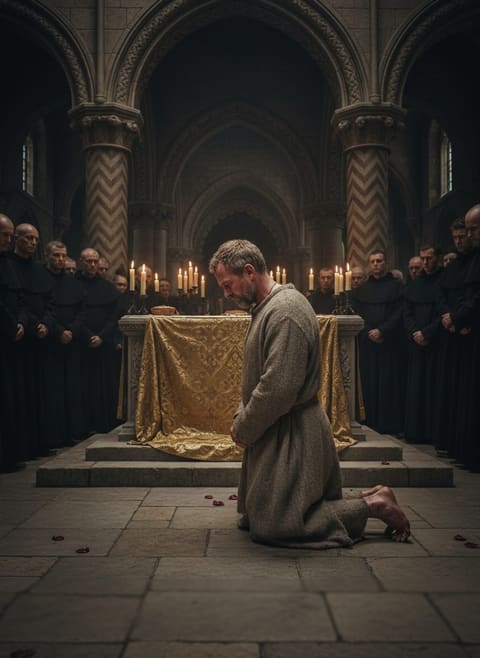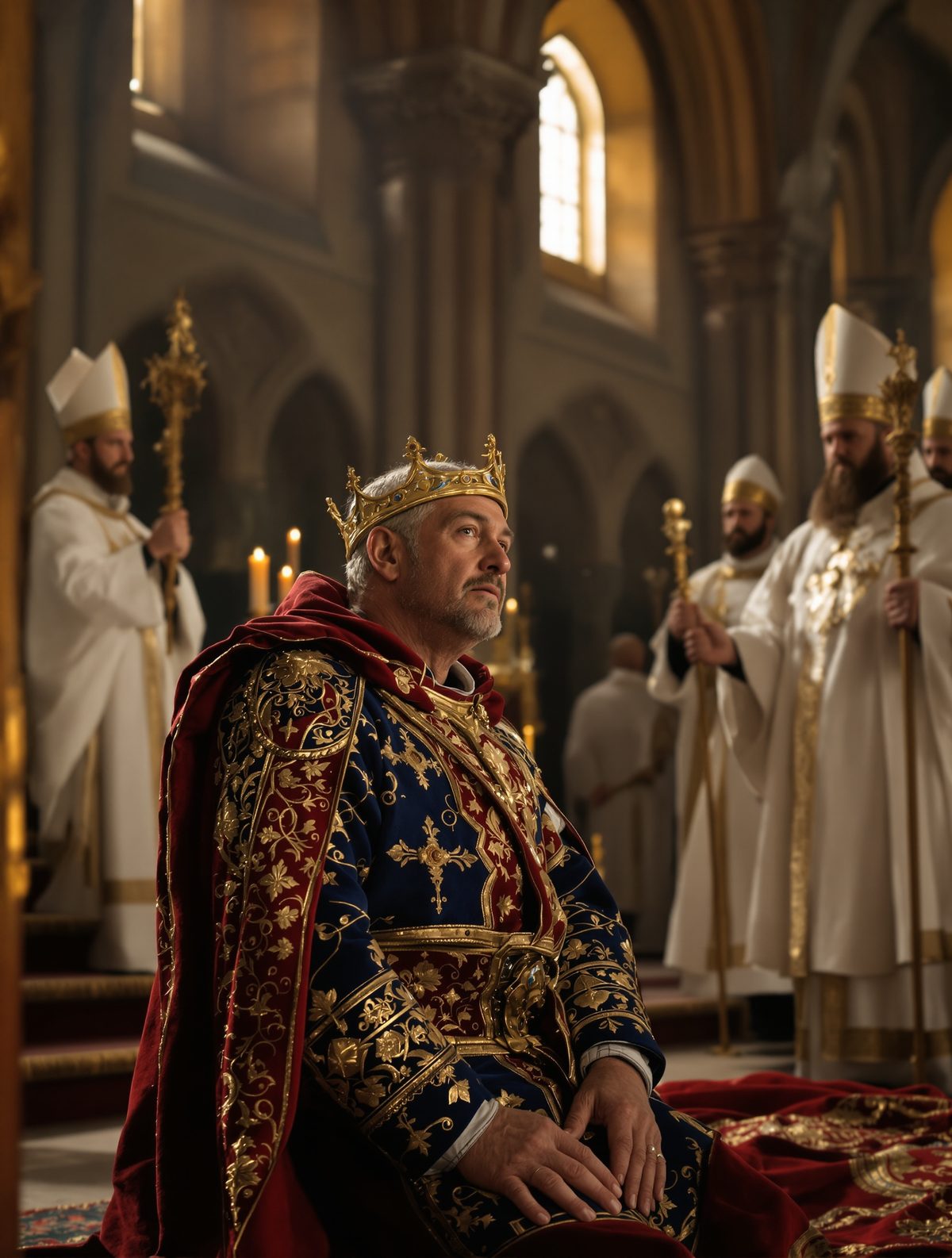
The ancient stones of Westminster Abbey had witnessed many ceremonies, but never one quite like this. On the bitter morning of January 6th, 1066, as Harold Godwinson knelt before the altar to receive England's crown, a celestial fire blazed across the winter sky above London. Halley's Comet, that wandering harbinger of change, had arrived uninvited to his coronation—and Norman chroniclers would later claim it came bearing God's own death sentence for a usurper king.
What Harold couldn't have known, as the golden circlet settled upon his brow, was that he had just begun the shortest and most catastrophic reign in English royal history. In exactly 302 days, he would lie broken on a blood-soaked battlefield at Hastings, three Norman arrows in his body, and England would never be the same again.
The Hasty Crown
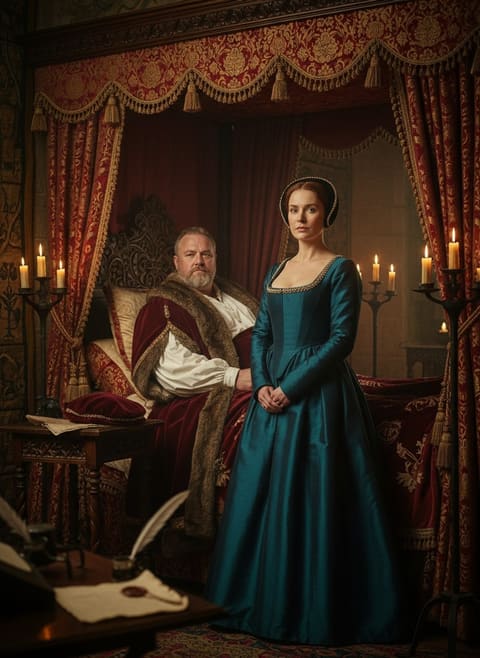
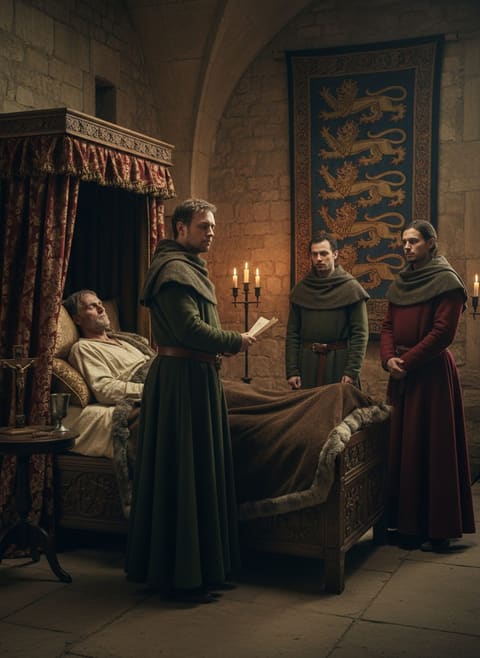
Harold's path to the throne had been lightning-fast and legally murky. Just twenty-four hours earlier, Edward the Confessor had died childless in his bed at Westminster Palace, ending a reign that had lasted over two decades. The old king's death shouldn't have surprised anyone—he'd been ailing for months—yet it caught the kingdom woefully unprepared for the succession crisis that would follow.
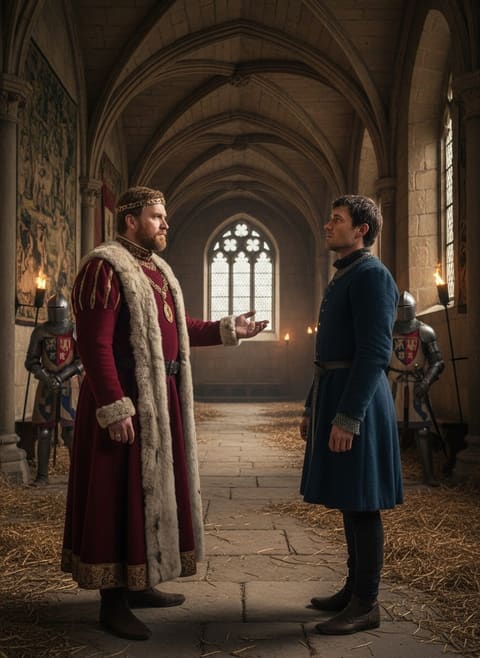
According to the Anglo-Saxon Chronicle, Edward had whispered Harold's name on his deathbed, effectively naming the powerful Earl of Wessex as his heir. But this deathbed designation contradicted a promise Edward had allegedly made years earlier to his cousin, William of Normandy. Even more problematically, Harold himself had sworn an oath to William in 1064, pledging to support the Norman duke's claim to the English throne—an oath he was now spectacularly breaking.
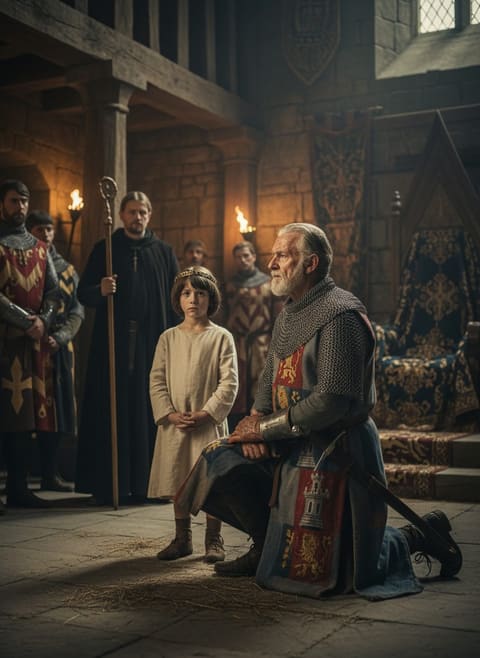
Read next: The Day a Young Prince Knelt and Refused a Crown
The speed of Harold's coronation was unprecedented and telling. Medieval kings typically waited weeks or even months between a predecessor's death and their own crowning, allowing time for nobles to gather and legitimacy to solidify. Harold waited less than a day. The Vita Ædwardi Regis records that he was crowned "while the funeral baked meats were still warm"—a detail that reveals just how desperately he needed to present the nobility and people with a fait accompli before rival claimants could mobilize.
Standing in that hallowed abbey, surrounded by England's greatest lords and bishops, Harold must have felt the weight of more than just the crown. He was gambling everything on speed and audacity, hoping that possession would prove nine-tenths of the law when it came to medieval kingship.
Fire in the Heavens
As if the political drama weren't enough, the cosmos itself seemed determined to steal the show. Halley's Comet—though it wouldn't bear that name for another six centuries—had been visible in the northern sky since late December, growing brighter each night. By January 6th, it blazed like a celestial sword pointed directly at England.
Medieval people understood comets very differently than we do today. These weren't beautiful astronomical phenomena but terrifying portents, quite literally called "hairy stars" (stella crinita in Latin) because their tails resembled wild, unkempt hair—a sign of divine fury. The Anglo-Saxon Chronicle recorded that people "gazed upon it with great wonder, and some said it betokened great misfortune."
What makes this celestial timing so extraordinary is its rarity. Halley's Comet returns only once every 75-76 years, making its appearance during Harold's coronation a once-in-a-lifetime event that seemed pregnant with meaning. Norman chroniclers like William of Poitiers would later claim it as divine validation of William's cause, writing that "God himself lit a torch in the heavens to guide the righteous to victory over the oath-breaker."
But the comet held an even more chilling significance that no one could have known at the time. The last time it had appeared, in 989 AD, England had endured devastating Viking raids. The next time it would return, in 1145, the country would still be reeling from the Norman conquest and embroiled in civil war. Halley's Comet, it seemed, had developed a distinctly unhealthy relationship with English stability.
The Oath-Breaker's Dilemma
The most damning weapon in William of Normandy's propaganda arsenal wasn't military might but moral authority. Harold, the duke claimed, was no mere rival claimant but a sacred oath-breaker—one of the most heinous crimes in medieval Christendom.
The story of Harold's oath has become legendary, immortalized in the Bayeux Tapestry's vivid embroidery. In 1064, Harold had been shipwrecked on the Norman coast while on a diplomatic mission. William had rescued him, entertained him lavishly, and then—in a move of stunning political cunning—induced him to swear on holy relics to support the Norman claim to England's throne.
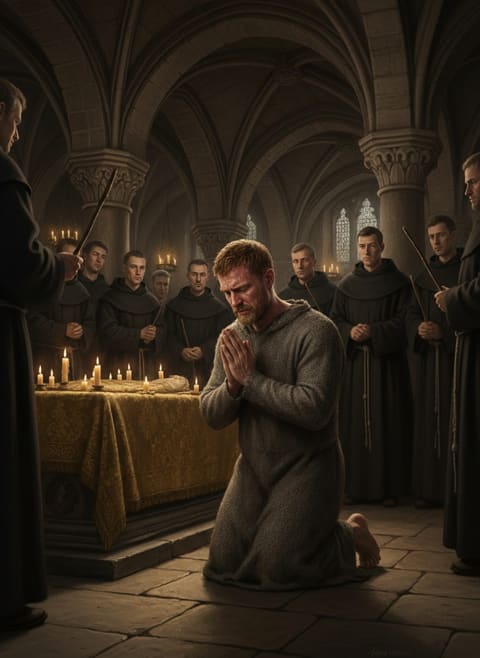
What made this oath particularly devastating was its sacred nature. Harold hadn't simply given his word; he had sworn before God, with his hands upon the bones of saints. Medieval chroniclers describe the ceremony in chilling detail: Harold, unaware that additional relics had been hidden beneath the altar cloth, had unknowingly sworn upon the combined spiritual power of dozens of martyred saints.
When Harold accepted the crown on January 6th, he wasn't just breaking a political promise—he was committing what medieval minds saw as a form of spiritual suicide. The monk Orderic Vitalis wrote that Harold "called down divine wrath upon his own head" the moment he placed the crown upon his brow. In an age where kings ruled by divine right, this was tantamount to declaring war on Heaven itself.
Three Thrones, One Crown
As Harold celebrated his coronation in London, two other men were making their own plans for England's throne, and both had compelling claims to legitimacy.
In Normandy, William the Bastard (as he was then known) received news of Harold's coronation with cold fury. The chronicler William of Malmesbury records that the duke "neither spoke nor smiled for seven days" upon hearing that his supposed vassal had claimed the crown. William immediately began preparations for what he saw not as an invasion but as a righteous war to reclaim stolen property. He dispatched envoys to Rome, successfully persuading Pope Alexander II that his cause was just. The papal banner that would fly over Norman forces at Hastings transformed William's army from mere invaders into crusaders fighting a holy war.
Meanwhile, in the fjords of Norway, King Harald Hardrada—called "the last great Viking"—was assembling his own invasion fleet. Hardrada's claim stretched back to an agreement between his predecessor Magnus and the Danish king Harthacanute, giving Norway rights to the English throne. At nearly seven feet tall and bearing scars from battles across the Mediterranean, Hardrada was perhaps the most fearsome warrior in Europe. His very nickname, "Hard Ruler," struck terror into enemies from Byzantium to the Baltic.
What Harold Godwinson couldn't have foreseen was that these two threats would materialize almost simultaneously, forcing him into the impossible position of fighting a war on two fronts with medieval communication and transportation. The comet that blazed over his coronation seemed to whisper of the chaos to come.
Read next: The Day a Queen Rode Alone Into a Mutinous Army
The Killing Year
The year 1066 unfolded like a Greek tragedy, each act building inexorably toward Harold's doom. The Norwegian threat materialized first, with Hardrada's massive invasion fleet—over 300 ships carrying perhaps 15,000 warriors—sailing up the Humber in September.
Harold's response was masterful. In a forced march that covered 185 miles in just four days, he rushed north with his army and caught the Vikings completely off guard at Stamford Bridge on September 25th. The battle was an English triumph so complete that only 24 of Hardrada's 300 ships were needed to carry home the survivors. Both Harald Hardrada and Harold's own treacherous brother Tostig lay dead on the field.
But Harold's northern victory came at a terrible price. While he celebrated at Stamford Bridge, Norman scouts were already watching William's invasion fleet beach at Pevensey on England's southern coast. Harold had won one throne-defining battle only to learn he would have to fight another immediately.
The second forced march—this time 250 miles south in six days—pushed Harold's army beyond human endurance. When the English finally faced the Normans at Hastings on October 14th, many of Harold's best warriors lay buried in Yorkshire, and those who remained were exhausted from their epic journey.
The Battle of Hastings lasted from dawn until dusk, far longer than most medieval engagements. For hours, the English shield wall held firm on Senlac Hill while Norman cavalry crashed against it like waves against a cliff. But eventually, exhaustion and Norman tactical genius broke English resistance. As darkness fell, Harold lay dead with his royal standard, pierced by arrows and hacked beyond recognition.
The Comet's Legacy
The celestial fire that blazed over Harold's coronation proved remarkably prophetic. Within ten months, not only was Harold dead, but Anglo-Saxon England had died with him. William's conquest brought not just a new king but an entirely new civilization—Norman French language, architecture, law, and culture that would reshape England forever.
Perhaps what makes Harold's story so compelling isn't just the drama of his brief reign, but what it reveals about the razor's edge between triumph and catastrophe in medieval politics. On January 6th, 1066, Harold seemed to have achieved the impossible—a commoner's son had seized the throne of England. By October 14th, he was a footnote in history, remembered mainly for how spectacularly he lost everything.
The comet that witnessed his coronation reminds us that even in our own age of political upheaval, power remains far more fragile than it appears. Like Harold, modern leaders who seem unassailable can find themselves fighting for survival faster than anyone thought possible. In politics, as in astronomy, the brightest flames often burn out the quickest—and sometimes, the universe provides its own commentary on human ambition.