The wind howled across the grey waters of the Atlantic like a banshee's wail, driving mountainous waves against the jagged teeth of Brittany's coast. It was November 20th, 1759, and any sensible mariner would have been running for the safety of deep water. Instead, Admiral Sir Edward Hawke was doing the unthinkable—chasing a French fleet into one of the most treacherous stretches of water in Europe, a graveyard of ships known as Quiberon Bay.
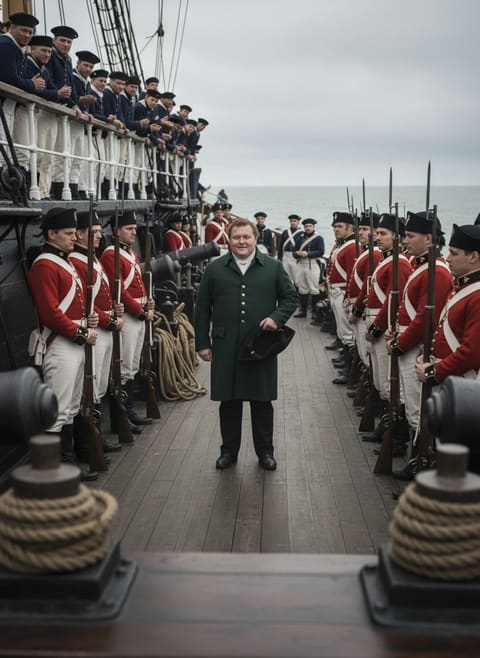
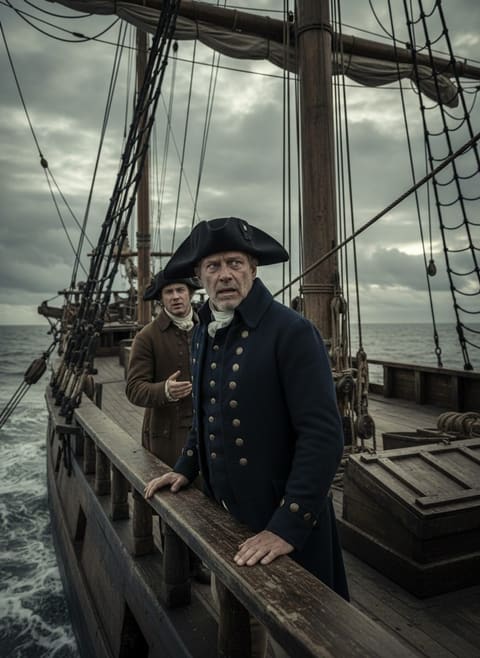
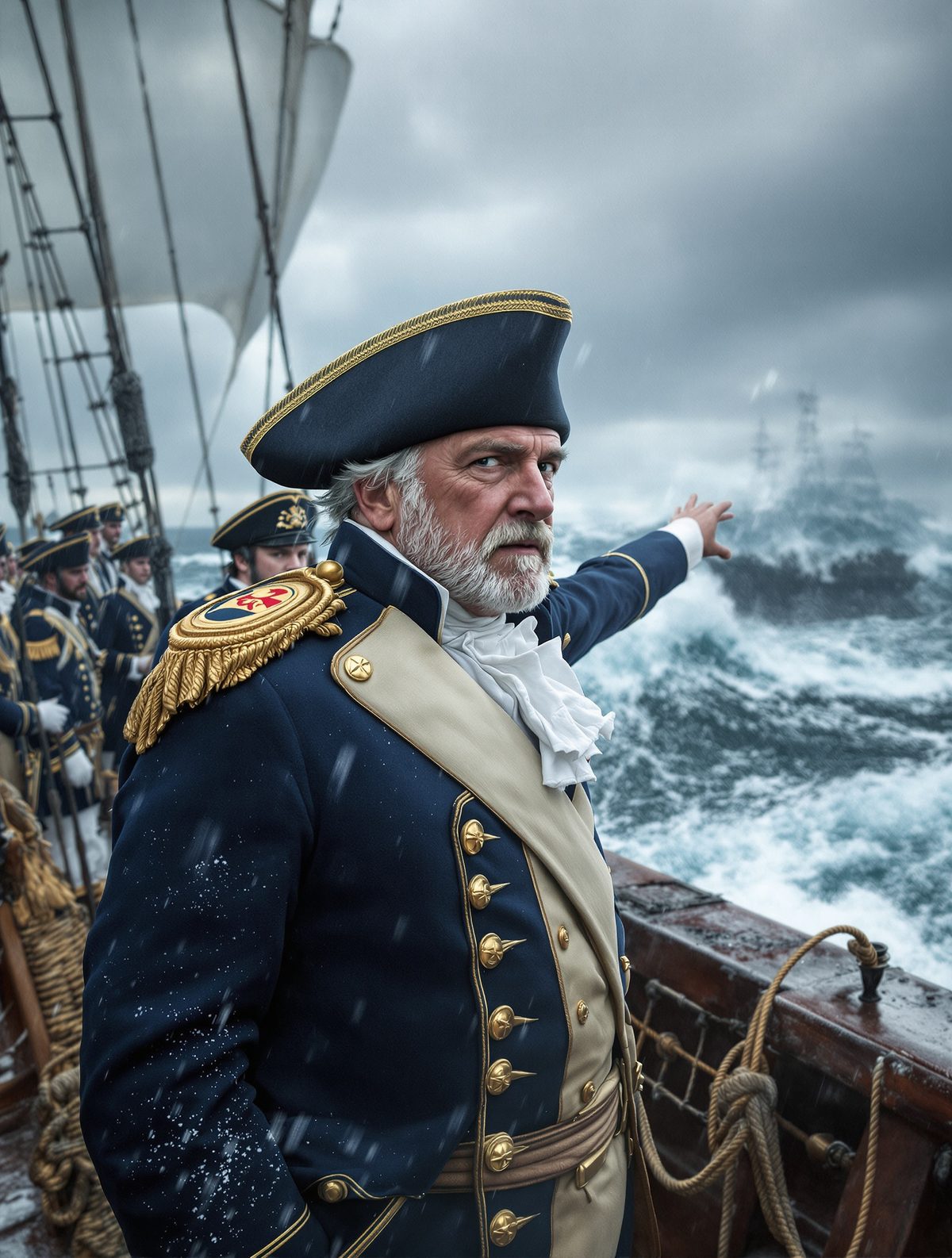
As his flagship HMS Royal George plunged through the storm-tossed seas, his officers gathered around him with faces pale as sailcloth. The message was clear: turn back now, or watch the pride of the Royal Navy smash itself to splinters on the rocks. Hawke's response would echo through naval history: "You have done your duty in warning me. Now lay me alongside the French admiral."
What happened next would not only save Britain from invasion but demonstrate that sometimes, the greatest victories come from the most desperate gambles.
The Shadow of Invasion
To understand Hawke's audacious decision, we must first grasp just how dire Britain's situation had become. The year 1759—later dubbed the "Year of Miracles"—had seen British forces triumph from the Plains of Abraham to the fields of Minden. Yet for all these victories, the greatest threat to Britain wasn't on some distant battlefield but lurking in French ports just across the Channel.
Read next: The Night the British Ate the President's Dinner
The Duc de Choiseul, Louis XV's chief minister, had conceived an invasion plan of breathtaking ambition. While British attention was fixed on far-flung campaigns, France would strike at the heart of the enemy. The plan called for a two-pronged assault: Admiral Conflans would break out of Brest with 21 ships of the line, rendezvous with transports at Quiberon Bay, then escort 20,000 troops across the Channel while a second force from Le Havre would simultaneously land in Scotland.
The beauty of the scheme lay in its timing. British naval forces were scattered across the globe, and the autumn gales that traditionally protected Britain's coasts might equally serve to blow invasion barges across the narrow waters. If successful, French troops could be marching on London within days.
Standing between this nightmare and reality was Edward Hawke—a 54-year-old admiral whose weathered face bore the marks of four decades at sea. Unlike the aristocratic officers who dominated the Admiralty, Hawke was a sailor's sailor, a man who had earned his reputation through relentless aggression and an almost supernatural ability to read wind and weather.
The Hunter Becomes the Hunted
For months, Hawke had maintained a strangling blockade of Brest, the principal French naval base. It was soul-crushing work—endless patrols in hostile waters, ships and men worn down by constant vigilance. When Atlantic storms finally forced him back to Torbay for repairs in early November, the French seized their chance.
On November 14th, Admiral Hubert de Brienne, Comte de Conflans, led his fleet out of Brest under cover of a fierce westerly gale. His 21 ships of the line represented the cream of the French navy, including his magnificent flagship Soleil Royal, an 80-gun giant that had never tasted defeat. Conflans was no fool—he knew Hawke's reputation and had no intention of fighting. His orders were simple: reach Quiberon Bay, collect the invasion transports, and slip across to Britain before the Royal Navy could react.
But Conflans had underestimated his opponent. The moment news reached Hawke that the French had sailed, he abandoned all caution. Ignoring the worsening weather, he led 23 British ships out of Torbay and into the teeth of the gale. What followed was one of the most remarkable chases in naval history—two great fleets racing through mountainous seas at speeds that would have been impressive in calm weather.
Here's what the history books rarely mention: Hawke's ships were in no condition for battle. Months of blockade duty had left them with fouled hulls, patched sails, and exhausted crews. Several ships could barely keep up with the fleet. Yet somehow, driven by Hawke's relentless determination, they gained on their quarry with each passing hour.
Into the Maelstrom
At 8:30 AM on November 20th, Hawke's leading ships spotted the French fleet off the entrance to Quiberon Bay. Conflans found himself caught in the worst possible position—too far from Brest to retreat, too close to the treacherous bay to maneuver freely. The wind was now blowing a full gale from the northwest, driving both fleets toward the maze of rocks and shoals that made Quiberon Bay a nightmare for navigators.
Any conventional admiral would have waited. The sensible course was to stand off in deep water, maintain contact with the enemy, and fight when conditions improved. But Hawke had not spent months hunting Conflans only to let him escape into the labyrinth of the French coast. Besides, every hour's delay brought the invasion transports—somewhere in the bay's inner reaches—closer to their rendezvous.
As the British fleet bore down on them, Conflans made his fatal decision. Rather than turn and fight in open water, he would lead his ships into Quiberon Bay itself. The French knew these waters intimately; surely the British wouldn't dare follow into such a deathtrap?
They had reckoned without Edward Hawke.
The Leap of Faith
What happened next defied every principle of seamanship. As the French fleet disappeared into the foam-wreathed chaos of Quiberon Bay, Hawke ordered his entire fleet to follow. His officers were aghast. Captain John Campbell of HMS Royal George pointed out that they had no detailed charts of these waters, no local pilots, and a rising gale that was driving them toward a lee shore studded with ship-killing rocks.
Hawke's reply has become the stuff of legend, though witnesses recorded several variations. The most dramatic version—"You have done your duty in warning me. Now lay me alongside the French admiral"—may be embellished, but it captures perfectly the admiral's mindset. He had spotted Conflans' flagship and meant to destroy it, regardless of the cost.
The scene that followed was unlike anything in naval warfare. Two great battle fleets, 44 ships of the line in total, fought a running battle through waters that would challenge a single frigate in calm weather. Ships fired broadsides while navigating by instinct through barely-charted channels. Captains who had never seen these waters before somehow found themselves fighting within pistol shot of French ships while avoiding rocks that could gut their vessels like fish.
The French ship Thésée was among the first casualties, not to British guns but to the sea itself. Attempting to bring her lower deck cannon into action, her gun ports were swamped by massive waves. She foundered with all hands—over 700 men—in sight of both fleets. The 50-gun Superbe followed her to the bottom shortly after, victim of British gunfire and the merciless sea.
Read next: The Day a One-Eyed Admiral Sailed Into the Line of Fire
Twilight of Titans
As afternoon faded to evening, the battle took on an almost surreal quality. Ships appeared and vanished in the spray like phantoms. HMS Resolution found herself surrounded by French vessels but fought her way clear. The French Formidable, overwhelmed by multiple British ships, struck her colors just as darkness fell.
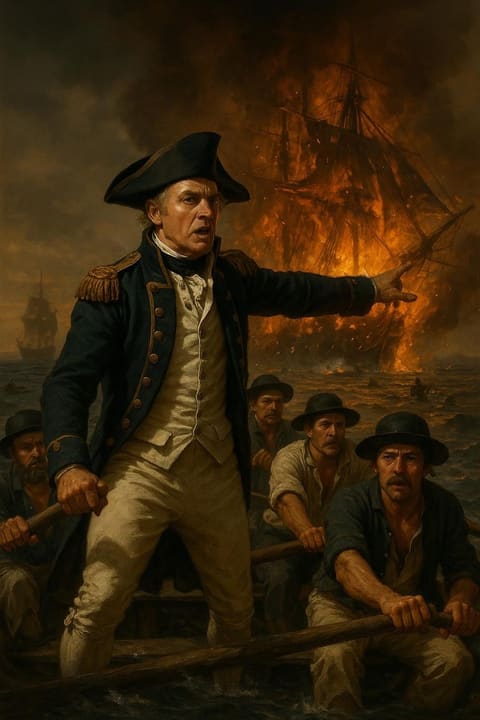
But the most dramatic moment came when Conflans himself, aboard Soleil Royal, found his retreat cut off by British ships. In desperation, he ran his flagship aground on a mudbank near the village of Le Croisic. The mighty vessel that had never known defeat would be burned by her own crew the next morning rather than face capture.
By nightfall, what remained of the French fleet was scattered across the bay. Some ships had escaped to the south, others lay wrecked on the shores, and a few were anchored in the inner bay, trapped until the weather cleared. Hawke, showing characteristic boldness, kept his fleet at anchor in the bay despite his officers' pleas to seek safer waters. He would not risk letting any French ship escape in the darkness.
When dawn broke on November 21st, the extent of French defeat was clear. Seven ships of the line had been destroyed or captured, and the remainder were so scattered and damaged that they posed no threat. More importantly, the invasion transports that had been gathering in the bay's inner reaches scattered like leaves before a gale, their escort destroyed and their purpose rendered meaningless.
The Victory That Changed Everything
The Battle of Quiberon Bay marked more than just another naval victory—it shattered forever France's dreams of invading Britain. The invasion army that had been poised to cross the Channel was disbanded, the carefully hoarded resources squandered, and French naval power broken so completely that it would never fully recover during the Seven Years' War.
What makes Hawke's achievement even more remarkable is that he accomplished it with minimal losses to his own fleet. Only two British ships ran aground, and both were later refloated. His willingness to risk everything had paradoxically saved almost everything.
Yet perhaps the true lesson of Quiberon Bay lies not in its tactical brilliance but in its demonstration that calculated audacity can triumph where caution fails. In an age when naval battles were typically formal affairs fought in open water with established protocols, Hawke threw away the rulebook and won through sheer aggressive instinct.
Today, as we face our own moments of crisis and uncertainty, Hawke's words echo across the centuries: sometimes, when the stakes are highest, the greatest risk is playing it safe. The admiral who sailed through death to save Britain reminds us that extraordinary times demand extraordinary courage—and that fortune, as Napoleon would later observe, favors the bold.