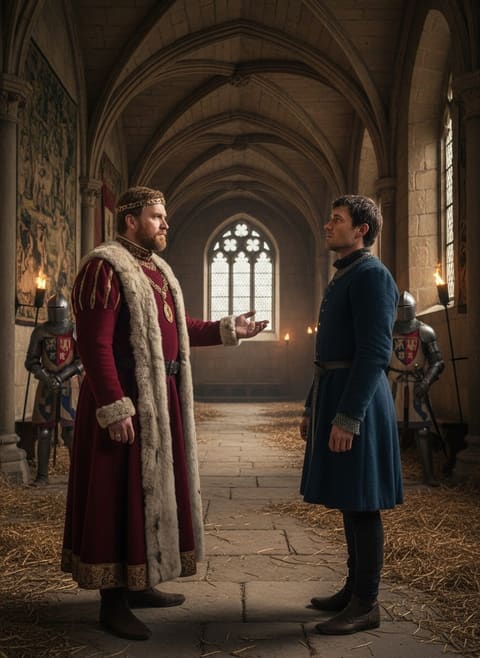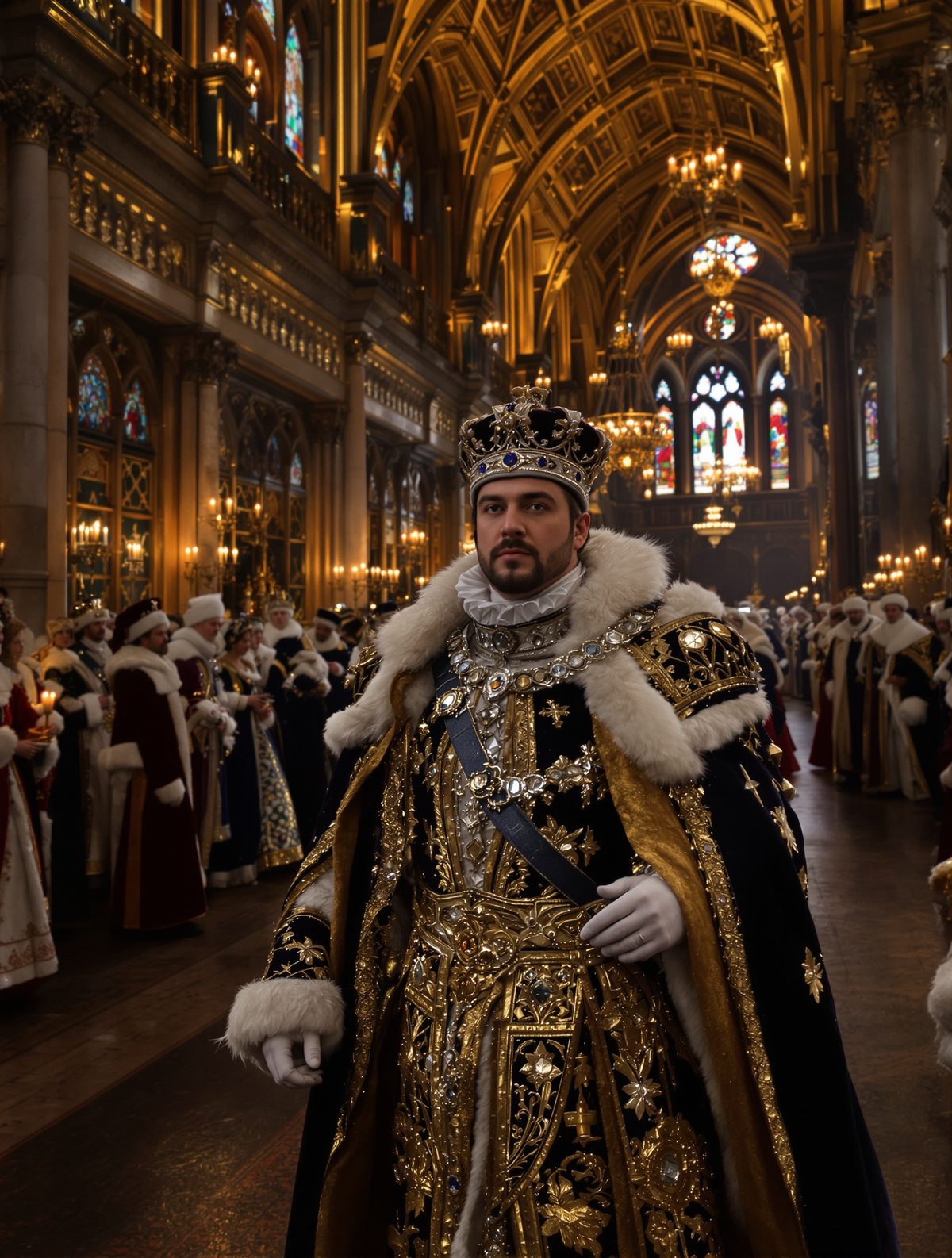
The gilt-edged royal carriage rolled through Westminster's cobbled streets as dawn broke on November 5th, 1605. Inside, King James I of England adjusted his ceremonial robes, preparing for the State Opening of Parliament. He had no idea that beneath the very chamber where he would soon sit, enough gunpowder lay hidden to reduce the entire Palace of Westminster to rubble. In just a few hours, one Catholic revolutionary with a pocket watch and a length of slow match would attempt to commit what we would now recognize as history's most audacious act of terrorism.
As the King's procession approached Parliament, thirty-six barrels of gunpowder—nearly two tons of the stuff—waited in the darkness below. Had Guy Fawkes succeeded in lighting his fuse, the explosion would have been heard across London, and the course of British history would have been altered forever.
The Powder Keg Beneath Power
The cellar beneath the House of Lords was a maze of medieval stonework and timber supports, perfect for concealing the tools of revolution. For months, Guy Fawkes and his fellow conspirators had been quietly stockpiling their deadly cargo in this forgotten corner of Westminster. The gunpowder they'd accumulated was military grade—the same explosive compound that had revolutionized siege warfare across Europe.
To put the scale in perspective, the 1,800 pounds of gunpowder hidden beneath Parliament was enough to level a castle wall. When the Gunpowder Plot was finally uncovered, munitions experts calculated that the blast would have created a crater 100 feet wide and completely destroyed not just the House of Lords, but surrounding buildings for several city blocks.
Read next: The Day a Young Prince Knelt and Refused a Crown
Fawkes, a battle-hardened veteran of the Spanish Netherlands wars, was no amateur. He understood explosives intimately, having learned his craft during years of military service. The conspirators had positioned their barrels strategically, using Fawkes's expertise to maximize the destructive potential. Iron bars and stones were packed around the gunpowder to create deadly shrapnel that would have turned the entire building into a killing field.
Perhaps most chilling of all: Fawkes planned to watch the explosion from across the Thames before escaping to continental Europe. He had already secured a boat and plotted his escape route. This wasn't a suicide mission—it was calculated mass murder on an unprecedented scale.
A Web of Desperate Men
The Gunpowder Plot wasn't the work of a lone fanatic, but a sophisticated conspiracy involving thirteen men, substantial financial resources, and international connections. At its heart was Robert Catesby, a charismatic Catholic gentleman whose family had suffered severe persecution under Protestant rule. Catesby's father had been imprisoned for his faith, and the family had paid crippling fines for refusing to attend Anglican services.
The conspirators represented a fascinating cross-section of Jacobean society. There was Thomas Percy, a gentleman pensioner with access to government buildings; Thomas Winter, who had traveled to Spain seeking foreign support for English Catholics; and John Wright, a swordsman renowned for his skill in combat. These weren't desperate peasants, but educated, wealthy men driven to extremism by religious persecution.
Their plan extended far beyond simply blowing up Parliament. After eliminating King James and his government, they intended to kidnap his nine-year-old daughter Princess Elizabeth from nearby Coombe Abbey and install her as a Catholic puppet queen. Horses were stationed at strategic points for the kidnapping, and safe houses prepared across the Midlands.
The conspiracy had been eighteen months in the planning. They had rented the cellar under the cover of Thomas Percy's legitimate government connections, slowly accumulating their arsenal while maintaining the facade of respectable gentlemen. The attention to detail was extraordinary—they even hired Guy Fawkes under the false name "John Johnson" to avoid suspicion.
The Anonymous Letter That Saved a Kingdom
On October 26th, 1605—just ten days before the planned attack—everything began to unravel with a single piece of paper. Lord Monteagle, a Catholic peer, received an anonymous letter at his Hoxton home that would change everything. The letter, written in a disguised hand, warned him in cryptic terms to avoid the Parliament opening because "they shall receive a terrible blow this Parliament."
The identity of the letter's author remains one of history's great mysteries. Most historians suspect it was Francis Tresham, one of the conspirators, who couldn't bear the thought of Catholic peers dying alongside their Protestant colleagues. Others believe it might have been a government agent who had infiltrated the plot. What we know for certain is that Monteagle, rather than keeping the warning to himself, immediately took it to the authorities.
Robert Cecil, the King's chief minister and spymaster, recognized the letter's significance instantly. Cecil was no fool—he had been tracking Catholic dissent for years and understood that this crude warning likely masked a sophisticated plot. Rather than immediately searching Parliament, he waited, hoping to catch the conspirators in the act and uncover the full extent of the conspiracy.
The delay was a calculated risk that almost proved disastrous. For nine days, Guy Fawkes continued his preparations, unaware that government agents were watching from the shadows. The fuse was prepared, the gunpowder checked and rechecked, and the timing mechanisms tested. Britain's government continued to function normally, completely oblivious to how close it was to annihilation.
Midnight in the Cellar of History
At around midnight on November 4th—less than twelve hours before King James would enter Parliament—Sir Thomas Knyvet led a search party into the cellars beneath Westminster. What they found there would have chilled the blood of any man: Guy Fawkes, dressed in a dark cloak and boots, standing guard over enough explosives to level half of London.
In Fawkes's possession were the tools of his trade: a pocket watch to time the fuse, slow matches that would burn reliably for a predetermined period, and a small lamp to light the charge. Most tellingly, he carried touchwood and tinder—the 17th-century equivalent of a lighter. He was literally minutes away from being able to execute his plan.
When challenged by the search party, Fawkes gave his name as John Johnson and claimed to be the caretaker for his master Thomas Percy. But something about his manner aroused suspicion. A more thorough search revealed the devastating arsenal hidden beneath piles of coal and firewood. The authorities found not just gunpowder, but also iron bars that would have created devastating shrapnel, magnifying the explosion's deadly reach.
Under initial questioning, Fawkes showed remarkable composure. When asked what he intended to do with so much gunpowder, he allegedly replied that he meant "to blow you Scotch beggars back to your native mountains"—a reference to King James's Scottish origins. His defiance was extraordinary; even facing certain death, he expressed no regret about his intended actions.
The timing of the discovery was crucial in another way: Fawkes had been planning to light the fuse at exactly the moment when King James entered the chamber above. The slow match he carried was calculated to burn for precisely the right amount of time to explode as the ceremony reached its climax, ensuring maximum carnage among England's ruling elite.
The Torture Chamber Revelations
What happened next reveals the brutal realities of Jacobean justice. Fawkes was taken to the Tower of London, where King James personally authorized the use of torture—initially "gentler tortures," progressing to the rack if necessary. The King's warrant, which survives in the National Archives, makes chilling reading: the interrogation was to proceed "per gradus ad ima"—by degrees to the uttermost.
Read next: The Day a Queen Rode Alone Into a Mutinous Army
For two days, Fawkes endured questioning without breaking. His signature on early interrogation documents is firm and clear. But after sessions on the rack—a device that slowly stretched victims until joints dislocated—his handwriting deteriorated to barely legible scrawl. The contrast between his signatures tells a story of physical agony that no words could convey.
Under torture, Fawkes revealed the full scope of the conspiracy. The plot, it emerged, extended far beyond London. Armed uprisings were planned across the Midlands, with weapons caches hidden at Warwick Castle and other strongholds. Foreign mercenaries had been recruited, and escape routes to Catholic Europe carefully mapped. This wasn't just an assassination attempt—it was the opening move in what the conspirators hoped would be a Catholic revolution.
The revelations sent shockwaves through the government. Cecil's agents fanned out across England, pursuing the fleeing conspirators. Robert Catesby and several others were eventually cornered at Holbeche House in Staffordshire, where they died in a gun battle with government forces. Others, including Fawkes, faced the full horror of a traitor's death: hanging, drawing, and quartering.
The Explosion That Never Was
Had Guy Fawkes succeeded, the blast would have represented more than just a spectacular assassination. The entire structure of English government—King, Lords, and Commons—would have been obliterated in a single moment. Princess Elizabeth, installed as a Catholic puppet queen, would have ruled over a traumatized nation while Spanish armies possibly invaded from the continent.
The religious settlement that had brought relative stability to England would have collapsed overnight. The fledgling colonial ventures in Virginia and elsewhere might have failed without royal support. The scientific revolution, which flourished under the relative religious tolerance of later Stuart rule, could have been stillborn in a new age of Catholic orthodoxy.
Even the failure of the plot changed Britain forever. November 5th became a national celebration of Protestant deliverance, with elaborate bonfires and effigies burned annually. The discovery of the Gunpowder Plot intensified anti-Catholic prejudice for generations, creating legislation that wouldn't be fully repealed until the 19th century.
Perhaps most significantly, the Plot established a template for political terrorism that resonates today. The use of explosives against civilian targets, the careful planning, the international connections, and the religious extremism—all these elements would reappear in terrorist movements across the centuries. In many ways, Guy Fawkes was history's first modern terrorist.
On that November morning in 1605, as King James entered Parliament safely, he unknowingly survived what would have been the single most consequential moment in British history. The fact that we remember Guy Fawkes' name while forgetting his intended victims speaks to terrorism's enduring power to haunt our collective memory. Sometimes, the history that doesn't happen shapes a nation just as powerfully as the history that does.