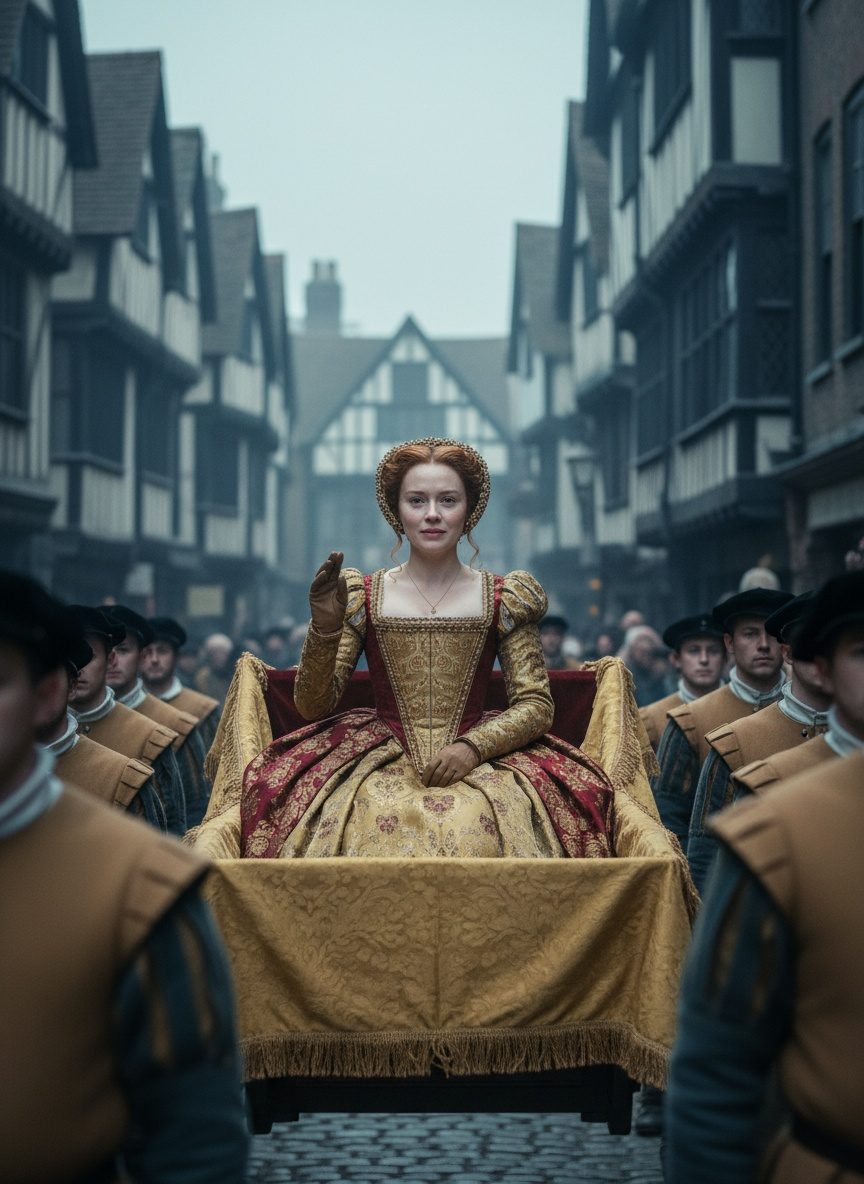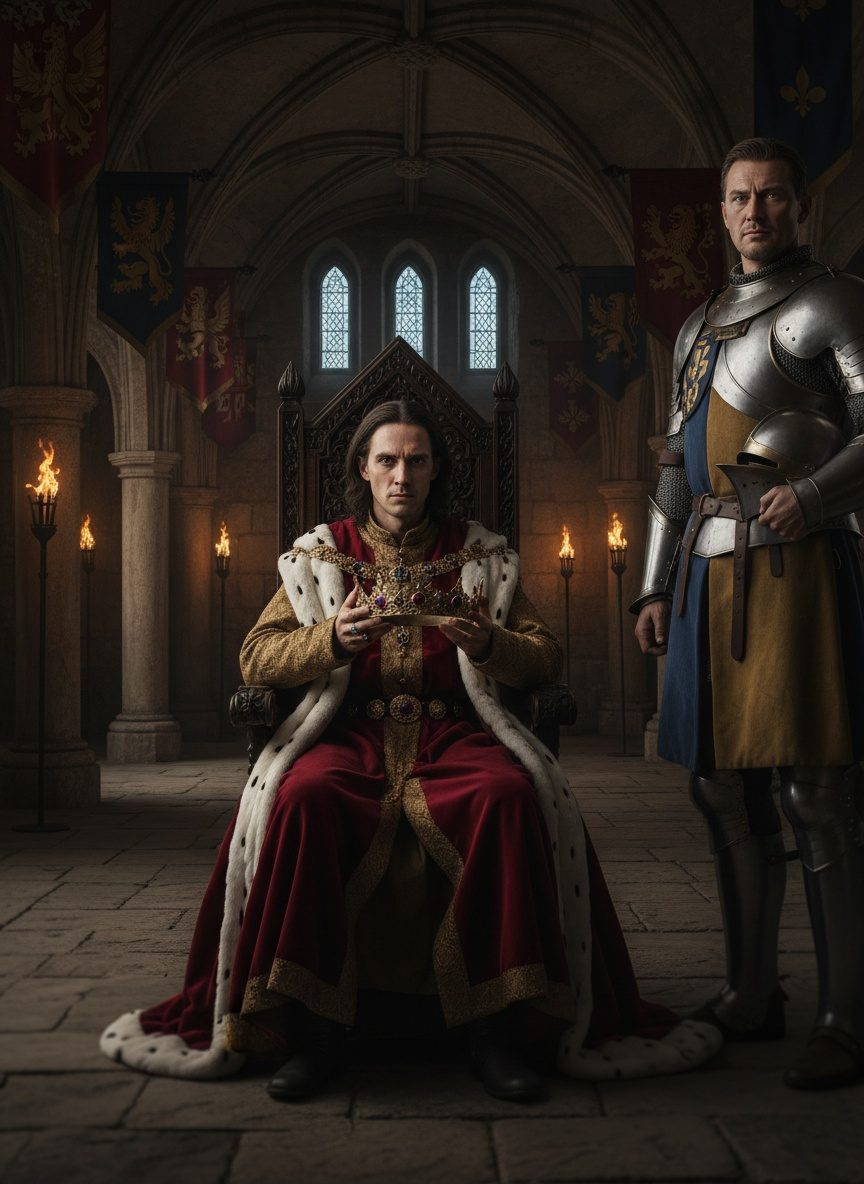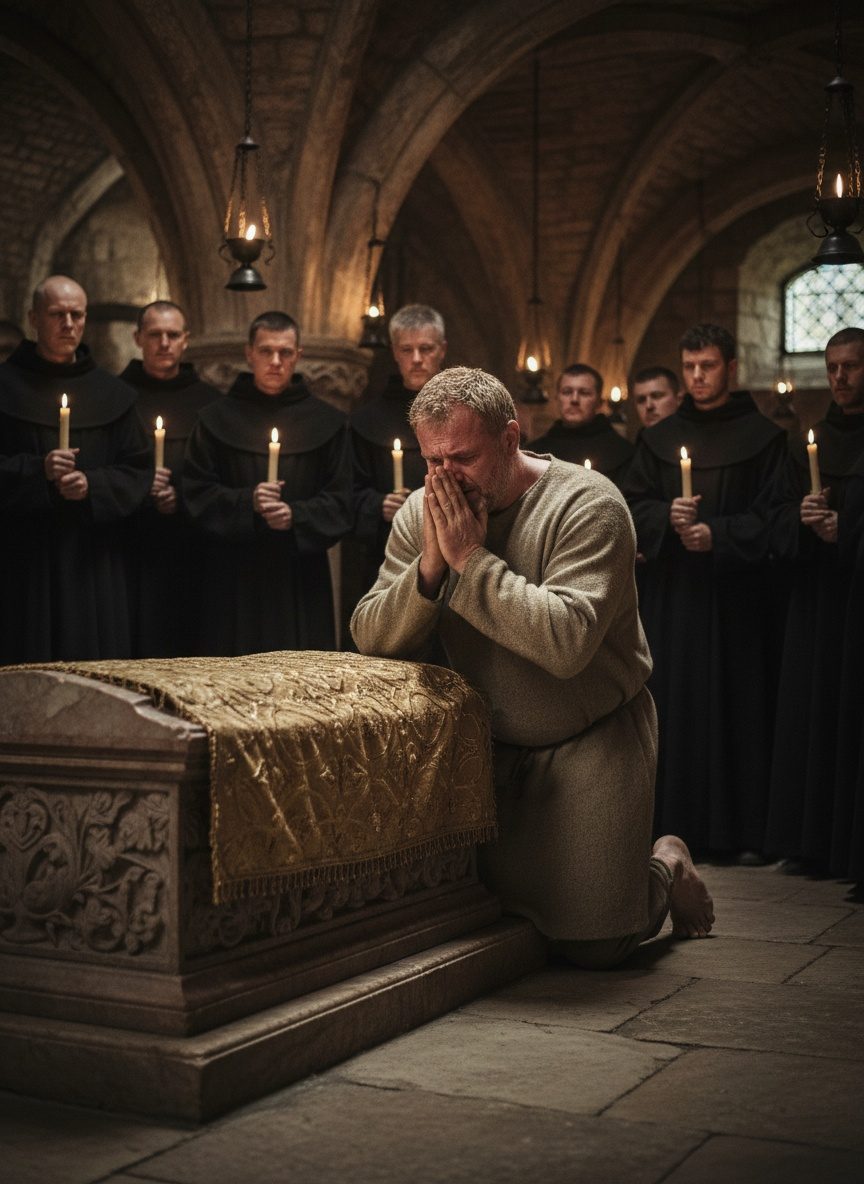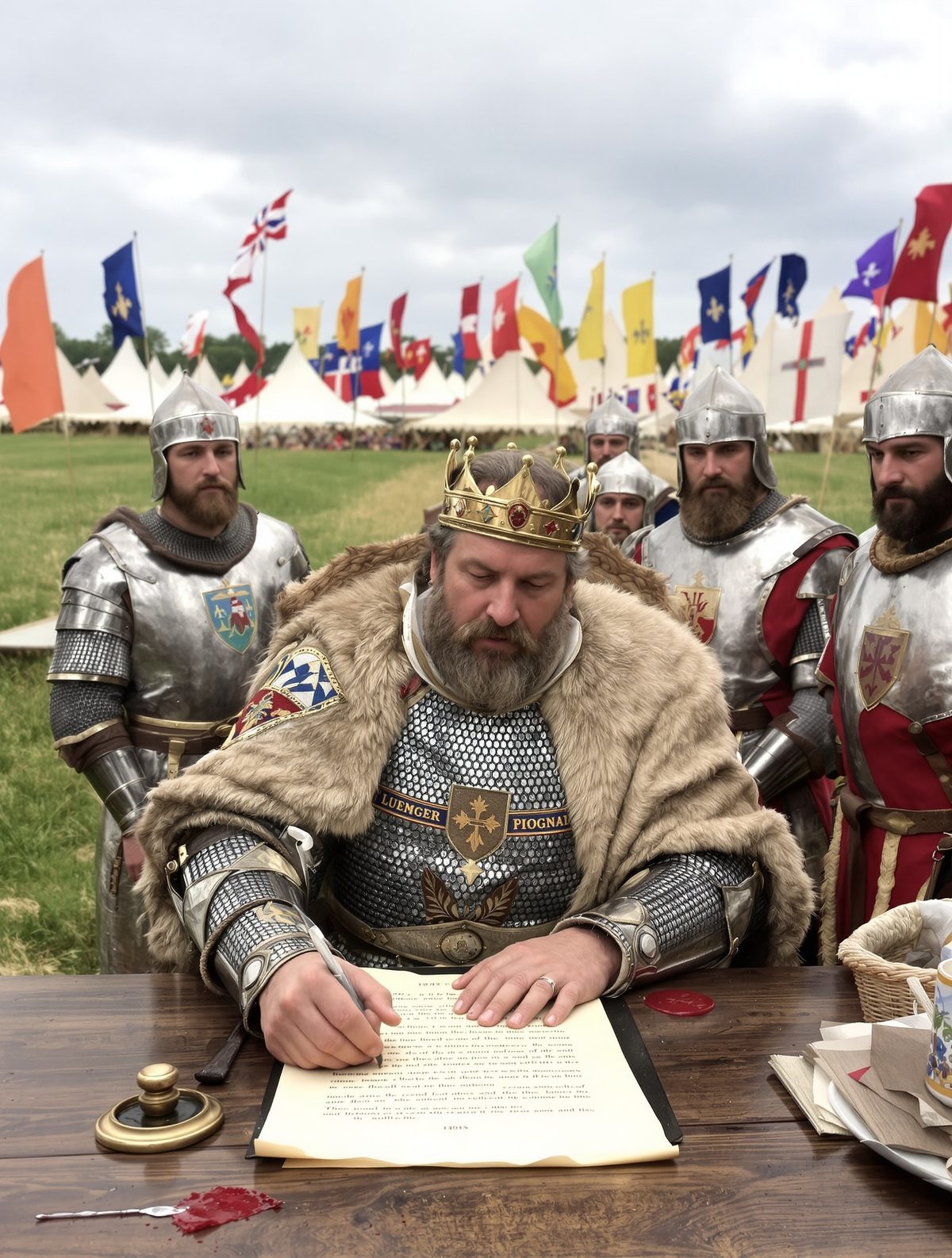
The summer morning air hung thick with tension as King John of England stared across the water meadow at Runnymede. His hands shook—not from age, for he was only forty-eight—but from a mixture of rage and fear that had been building for months. Before him stood twenty-five of the most powerful barons in his kingdom, their swords at their sides and rebellion in their eyes. It was June 15th, 1215, and the most despised king in English history was about to be brought to his knees.
What happened next in that unremarkable field beside the Thames would echo through eight centuries of history. A single document, pressed with trembling royal hands into warm wax, would strip away the divine right of kings and plant the first seeds of constitutional democracy. Yet the man who sealed it did so not out of noble conviction, but from sheer, desperate terror.
The Tyrant Who Lost an Empire
To understand why John's hand trembled that day, you need to grasp just how spectacularly he had failed as a king. His subjects called him "John Softsword" and "John Lackland"—nicknames that cut deeper than any blade. In just sixteen years of rule, he had managed to lose most of England's vast territories in France, including the ancestral home of Normandy, earning him the additional mockery of being called "the Land-Loser."
But it wasn't just military incompetence that brought him to Runnymede. John had systematically terrorated his own nobility with a reign of arbitrary cruelty that shocked even medieval sensibilities. When the wife and son of rival claimant Arthur of Brittany fell into his hands, they simply vanished—most likely murdered on John's orders. He had seduced the wives and daughters of his barons, imposed crushing taxes to fund his failed wars, and sold justice to the highest bidder.
Read next: The Day a Defeated King Sailed Away and Never Looked Back
Perhaps most remarkably, he had even managed to get himself excommunicated by Pope Innocent III in 1209, placing all of England under papal interdict for six years. No bells rang, no masses were held, no Christian burials took place. The very soul of medieval England was frozen because its king had quarreled with Rome over who should be Archbishop of Canterbury.
The Spark That Lit the Rebellion
The final straw came in 1214 at the Battle of Bouvines in France. John had assembled a massive coalition against his nemesis, King Philip Augustus of France, emptying England's treasury in the process. When his allies were crushed on the battlefield, John's military reputation—and his ability to justify his endless taxation—crumbled completely.
The barons had endured enough. Led by Robert Fitzwalter, who styled himself "Marshal of the Army of God," they began meeting in secret. Their demands were revolutionary for the time: a king must obey the law just like everyone else. By spring 1215, they had captured London itself, with the city's merchants throwing open the gates in welcome. John's kingdom was slipping through his fingers like sand.
What many don't realize is that this wasn't a spontaneous uprising—it was a carefully orchestrated political revolution. The barons had done their homework, consulting legal scholars and even studying the coronation charter of John's great-grandfather, Henry I. They weren't just angry nobles throwing a tantrum; they were constitutional reformers with a detailed plan for limiting royal power.
The Meadow Where History Changed Course
Runnymede was chosen for negotiations precisely because it was neutral ground—a marshy meadow that belonged to neither king nor barons but to the Church. The name itself means "council island," and it had been used for important meetings since Saxon times. John arrived with his small retinue of loyal supporters, including his half-brother William Longsword and the papal legate Pandulf, who had recently helped reconcile him with Rome.
The document they presented to him—sixty-three clauses of limitations on royal power—was unlike anything a medieval king had ever been forced to accept. Clause 39 alone was revolutionary: "No free man is to be arrested, or imprisoned, or disseised, or outlawed, or exiled, or in any other way destroyed, nor will we go against him, nor will we send against him, except by the lawful judgment of his peers or by the law of the land."
Here's a detail that rarely makes it into history books: John actually tried to flee. As the negotiations dragged on for days, he was spotted by scouts attempting to slip away toward Windsor Castle under cover of darkness. The barons, however, had anticipated this and had the area surrounded. There would be no escape from Runnymede without agreement.
A King's Humiliation in Wax and Parchment
When John finally pressed his great seal into the warm wax, witnesses reported that his face was flushed with anger and his hands visibly shook. He knew he was signing away powers that kings had claimed since time immemorial. The great seal itself—a piece of silver measuring four inches across, depicting John enthroned on one side and mounted for war on the other—had never been used for such a humiliating purpose.
But here's what most people don't know: John never actually signed Magna Carta in the way we might imagine. Medieval kings didn't sign documents—they sealed them. The famous phrase "signed and sealed" comes from this practice. John would have held the heavy silver seal and pressed it into warm wax while witnesses watched. It was far more ceremonial and binding than a mere signature.
The charter wasn't even called "Magna Carta" at first—that name came later to distinguish it from shorter charters. To the men at Runnymede, it was simply "the Charter of Liberties," but its impact was anything but simple.
The King Who Tried to Take It All Back
What happened next reveals John's true character. Within weeks of leaving Runnymede, he was plotting to undo everything he had agreed to. He wrote to his new ally Pope Innocent III, arguing that the charter had been extracted under duress and should be annulled. The Pope, surprisingly, agreed—declaring Magna Carta "null and void of all validity forever."
John then did something that seems almost unbelievably spiteful: he hired an army of foreign mercenaries to wage war against his own barons. These soldiers, mostly from Flanders and France, terrorized the English countryside while John tried to reclaim his absolute power by force. The civil war that followed, known as the First Barons' War, devastated England for months.
But John's scheming was cut short by the most medieval of endings. In October 1216, just sixteen months after Runnymede, he died of dysentery while campaigning in the north. Legend has it that he lost the crown jewels crossing the Wash—a fitting end for a king who had lost so much else. His nine-year-old son Henry inherited the throne, and with it, the constitutional limitations his father had tried so desperately to escape.
The Document That Outlived Its Creator
Today, we remember Magna Carta as the foundation of constitutional government, but that wasn't how it began. Most of its original clauses dealt with very specific grievances about feudal law and taxation. Only a few addressed the broader principles of justice that would later inspire constitutional reformers across centuries and continents.
Yet those few clauses changed everything. The idea that even a king must obey the law—that power has limits—traveled from that Thames-side meadow to the American colonies, where it inspired the Declaration of Independence and the Constitution. When the Founding Fathers wrote about "due process" and trial by jury, they were echoing words first forced from a trembling king's hands eight centuries ago.
Four copies of the original 1215 charter survive today—two in the British Library, one at Lincoln Cathedral, and one at Salisbury Cathedral. They are written in Latin on sheepskin parchment, their wax seals long since crumbled to dust. But the principles they contain have proven far more durable than the materials that record them.
Perhaps the greatest irony is that John, history's most incompetent king, inadvertently gave the world its most important constitutional document. His failures, his cruelty, and ultimately his cowardice at Runnymede created something far greater than any military victory could have achieved. In trying to preserve absolute power, he instead ensured that no ruler would ever possess it again. Eight hundred years later, we still live in the world that King John's trembling hands helped create—a world where the law, not the king, is supreme.