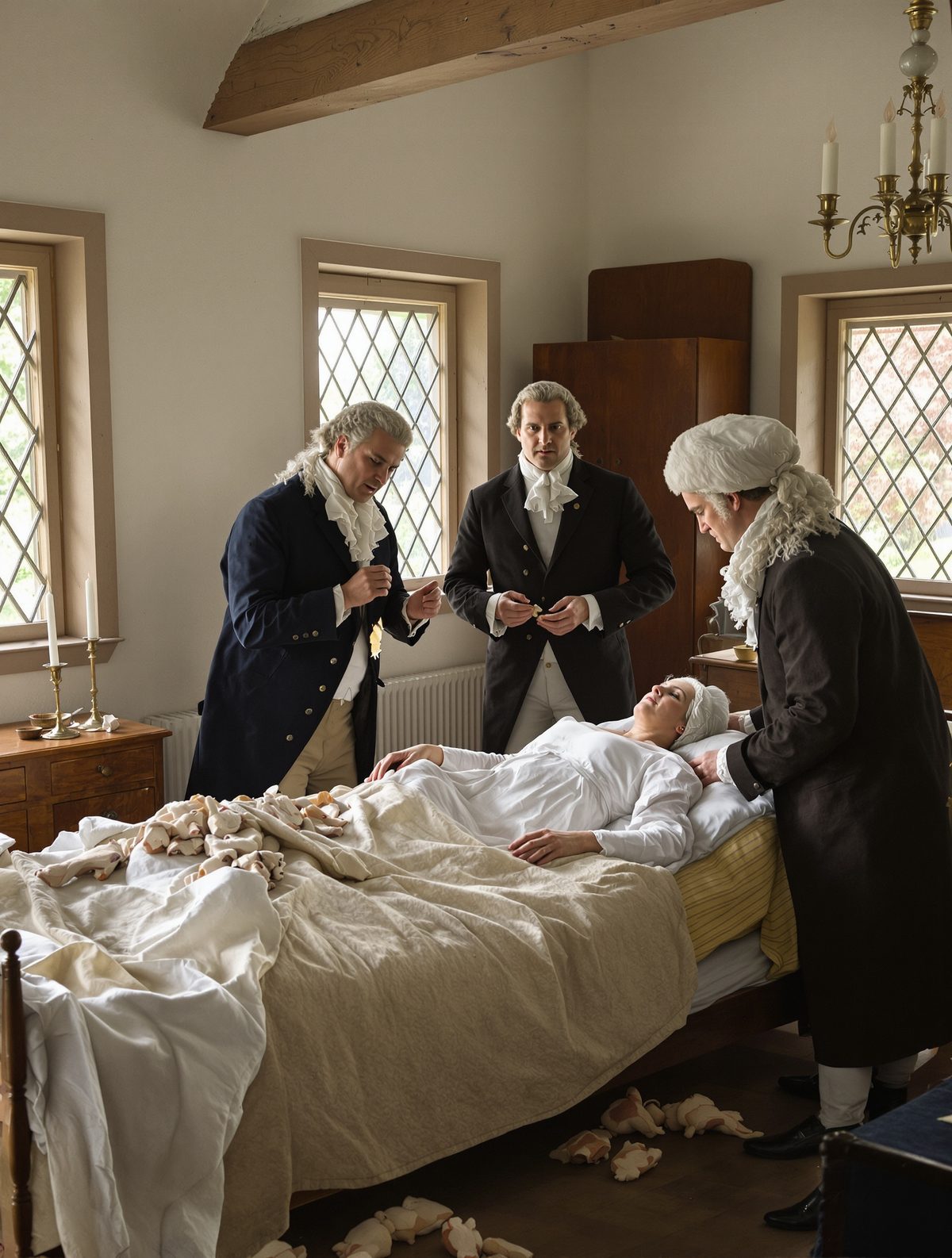
The midwife's hands trembled as she held what should have been impossible. In the flickering candlelight of a modest cottage in Godalming, Surrey, Mary Toft lay exhausted on her birthing bed, having just delivered not a human child, but something that defied every law of nature: the severed parts of a rabbit. It was September 27th, 1726, and what began as routine labour pains would soon grip the entire kingdom in a medical frenzy that reached the very throne of King George I.
This wasn't Mary's first impossible delivery. For weeks, the 25-year-old servant had been producing rabbit parts from her womb—legs, torsos, heads—sometimes still warm and twitching with life. Word spread like wildfire through the Surrey countryside, and soon England's most distinguished physicians were racing to witness what they believed might be the medical miracle of the century.
The Impossible Labours Begin
Mary Toft's extraordinary tale began innocuously enough in early September 1726. The wife of a journeyman clothworker, she lived in grinding poverty in the small market town of Godalming, about 40 miles southwest of London. When she first complained of labour pains, her neighbours assumed she was carrying her fourth child. But what emerged from her body that autumn day left everyone speechless.
Local midwife Mary Gill was the first to witness the impossible. Instead of a baby, Toft delivered what appeared to be parts of a rabbit—furry limbs and organs that seemed fresh, as if from a creature recently killed. When the "births" continued over the following days, Gill summoned John Howard, a local surgeon and man-midwife, who would become the first medical professional to examine this bewildering case.
Read next: The Day a Surgeon Walked Into a Prison and Freed a Madman
Howard was initially skeptical, but what he witnessed challenged everything he thought he knew about human anatomy. On September 27th, he watched as Toft delivered what he described as "several pieces of the Backbone and Ribs of a Rabbit, and other parts." The pieces appeared fresh, warm to the touch, and unmistakably rabbit in origin. Even more bizarrely, Toft seemed to be delivering these parts through genuine labour contractions, complete with the physical distress typical of childbirth.
What happened next reveals just how seriously the medical establishment took these claims. Rather than dismissing Howard as a country quack, the medical community began to take notice. This was, after all, an age when the boundaries between science and superstition remained blurry, and when respected physicians still believed in the power of maternal imagination to physically alter unborn children.
The King's Surgeon Investigates
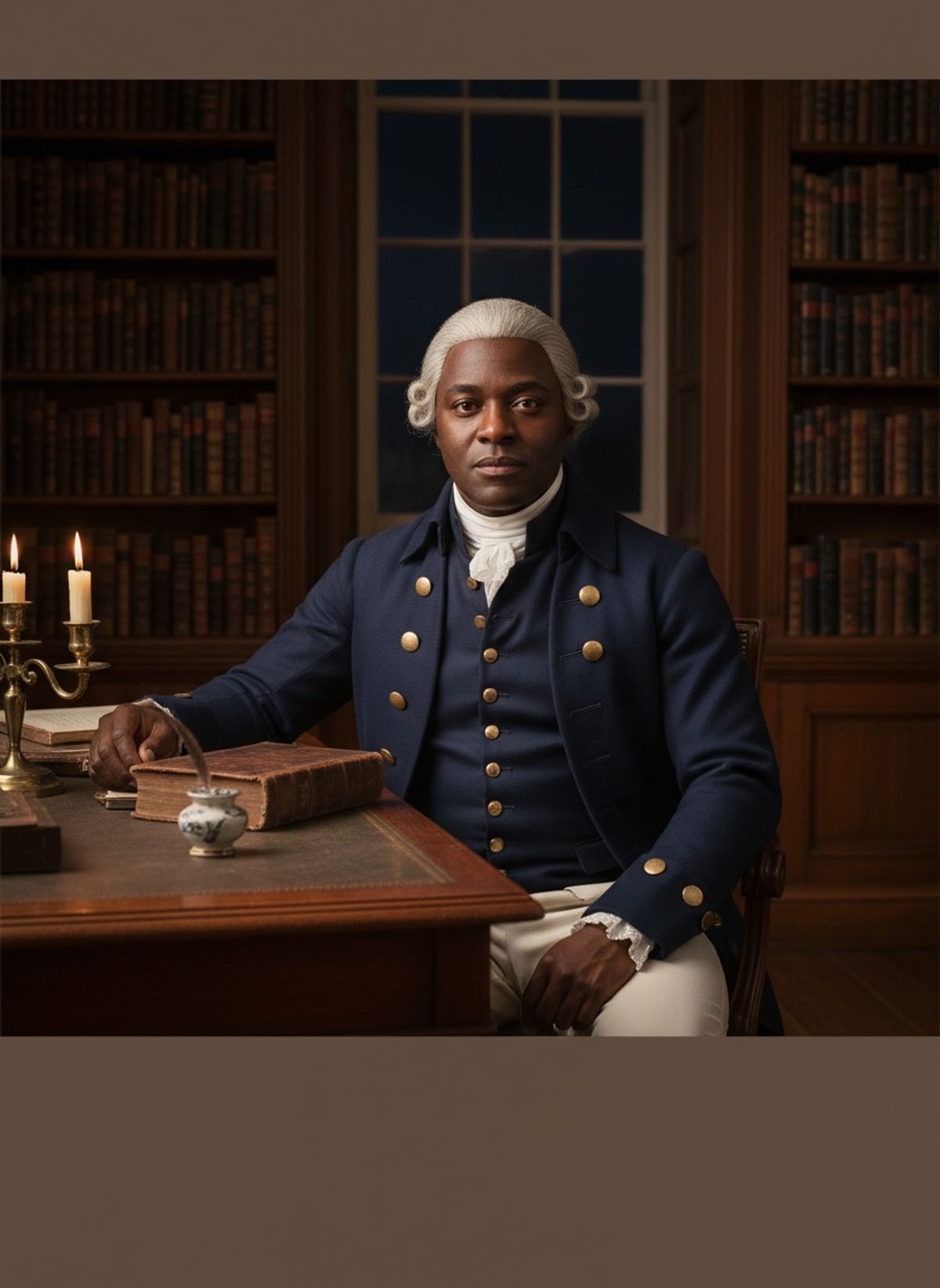
Word of Mary Toft's rabbit births reached London's medical elite with startling speed. Among those who took immediate interest was Nathanael St. André, surgeon-anatomist to King George I himself. St. André was no provincial doctor easily fooled by rustic trickery—he was a fellow of the Royal Society and one of the most respected medical men in England. When he decided to travel to Godalming to investigate personally, it lent unprecedented credibility to Toft's claims.
On October 15th, St. André arrived in Surrey with his reputation on the line. What he witnessed there would make him one of history's most distinguished medical professionals to fall for an elaborate hoax. He watched as Toft delivered more rabbit parts, including what he described as "a Rabbit's Head, and several pieces of a Rabbit." The births appeared genuine, complete with authentic labour pains and physical symptoms that seemed impossible to fake.
St. André's examination was thorough and professional. He noted the warmth of the delivered parts, their apparent freshness, and the authentic nature of Toft's labour. Most convincingly, he observed that the rabbit pieces emerged gradually during contractions, exactly as a normal birth would progress. When he returned to London, he carried with him several of the rabbit parts as evidence, along with sworn testimonies from local witnesses.
The surgeon's report to his colleagues was unequivocal: Mary Toft was genuinely giving birth to rabbits. Coming from the King's own surgeon, this endorsement sent shockwaves through London's medical community. Here was a man whose reputation was built on anatomical precision, declaring that he had witnessed the impossible with his own eyes.
A Nation Gripped by Rabbit Fever
The story exploded across England with a force that modern viral sensations would recognize. Pamphlets flooded the streets of London, each more sensational than the last. "The Wonder of Wonders: or, the Strange Birth in Surrey" became required reading in coffee houses from Westminster to Whitechapel. Satirical prints showed Mary Toft surrounded by rabbits, while learned physicians debated the theological implications of human-animal births.
Even King George I took notice. Palace sources reported that His Majesty was "very inquisitive" about the case and had commanded regular updates from St. André. The story transcended mere medical curiosity—it became a matter of national fascination that crossed all social boundaries. Aristocrats and commoners alike debated the implications: if a woman could give birth to rabbits, what did this mean for human understanding of reproduction and divine creation?
The medical establishment split into camps. Some supported St. André's conclusions, pointing to the impossibility of faking such detailed anatomical evidence. Others remained skeptical, led by physicians like Dr. James Douglas, who argued that human-rabbit births violated fundamental principles of anatomy and natural law. The debate raged in medical journals, with careers and reputations hanging in the balance.
Mary Toft herself became a celebrity of sorts. Visitors flocked to Godalming to catch a glimpse of the woman who had supposedly rewritten the laws of nature. Some came seeking scientific truth, others driven by morbid curiosity, and many hoping to witness another impossible birth firsthand. The attention transformed the obscure servant into the most famous woman in England, though whether as a medical marvel or elaborate fraud remained hotly disputed.
The Unraveling of an Impossible Truth
By November 1726, the rabbit fever had reached such heights that serious investigation became inevitable. Sir Richard Manningham, one of London's most respected physicians and a specialist in midwifery, decided to conduct his own examination. Unlike previous investigators, Manningham approached the case with systematic skepticism, determined to uncover the truth behind the sensational claims.
Mary Toft was brought to London and housed in Lacey's Bagnio in Leicester Fields, where she could be observed around the clock. This constant supervision would prove to be her undoing. When no rabbit births occurred under close watch, Manningham grew increasingly suspicious. He began investigating how fresh rabbit parts might be smuggled to Toft, and his inquiries soon uncovered a network of accomplices.
The breakthrough came when Manningham's servants caught Mary Toft's sister-in-law attempting to smuggle a dead rabbit into the lodging house. Under interrogation, the woman confessed that she had been supplying rabbit parts for months. Faced with mounting evidence, several of Toft's confederates began to crack, revealing the elaborate nature of the deception.
On December 4th, 1726, Mary Toft herself finally confessed. Under threat of painful surgical investigation, she admitted that she had never given birth to any rabbits. Instead, she had been inserting freshly killed rabbit parts into her body and using her knowledge of childbirth to simulate authentic labour. The confession revealed a conspiracy involving her husband, her sister-in-law, and local accomplices who had helped procure and prepare the rabbit parts needed to sustain the hoax.
Aftermath and Consequences
The revelation sent shockwaves through England's medical and social establishments. Nathanael St. André, the King's surgeon who had staked his reputation on the case's authenticity, found himself professionally ruined. Satirical prints mocked him mercilessly, showing him as a fool taken in by a servant woman's crude trick. His standing in the Royal Society never recovered, and he spent his remaining years defending his earlier conclusions.
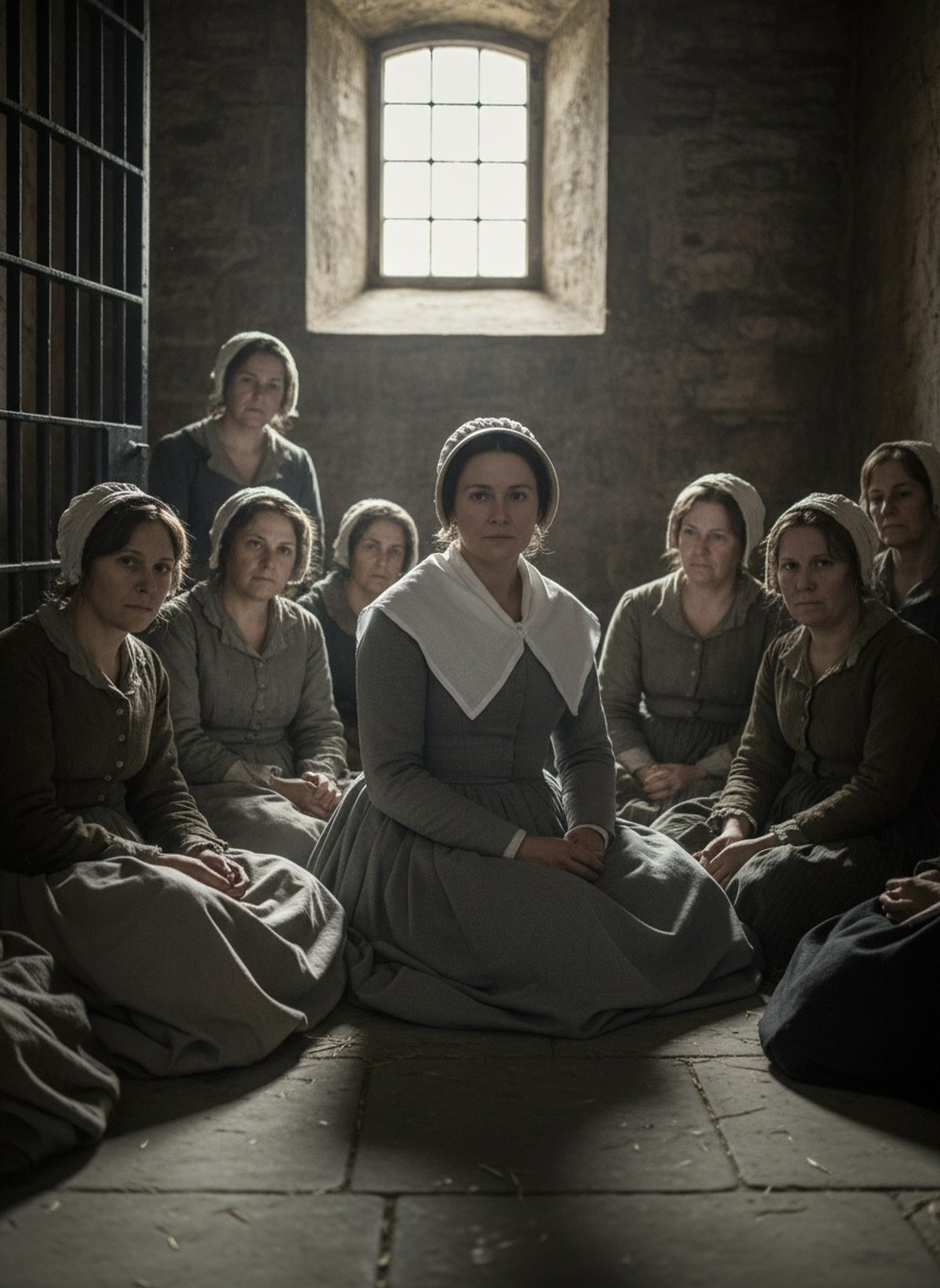
Mary Toft faced imprisonment and potential charges of fraud, though public sympathy for her desperate poverty led to relatively lenient treatment. She was eventually released and returned to obscurity in Surrey, where she lived out her days as a cautionary tale about the dangers of seeking fame through deception. The rabbit births had brought her temporary notoriety but ultimately cost her family their reputation and security.
The case had broader implications for the medical profession itself. It highlighted the dangers of confirmation bias and the need for more rigorous investigative methods. The episode contributed to growing demands for systematic observation and controlled conditions in medical research, helping lay groundwork for more scientific approaches to unusual medical claims.
The Legacy of England's Greatest Medical Hoax
Mary Toft's rabbit births represent more than just an elaborate fraud—they reveal fundamental truths about human psychology and social dynamics that remain relevant today. In an age before modern media, her story demonstrates how quickly misinformation can spread when it tells people what they want to hear, especially when endorsed by trusted authorities.
The case eerily prefigures our modern struggles with viral misinformation and expert credibility. Just as St. André's reputation lent false legitimacy to Toft's claims, today's misinformation often gains traction through endorsement by seemingly credible sources. The rabbit birth hoax reminds us that critical thinking and systematic verification remain our best defenses against deception, no matter how prestigious the source.
Perhaps most remarkably, Mary Toft's story shows how desperation and poverty can drive people to extraordinary lengths for attention and potential reward. Her willingness to endure the physical discomfort and social scrutiny of her elaborate performance speaks to the grinding hardships faced by England's working poor in 1726. In our own age of social media fame and viral sensations, her story offers a sobering reminder that the desire for recognition and escape from obscurity remains a powerful human motivator, capable of driving people to remarkable extremes.