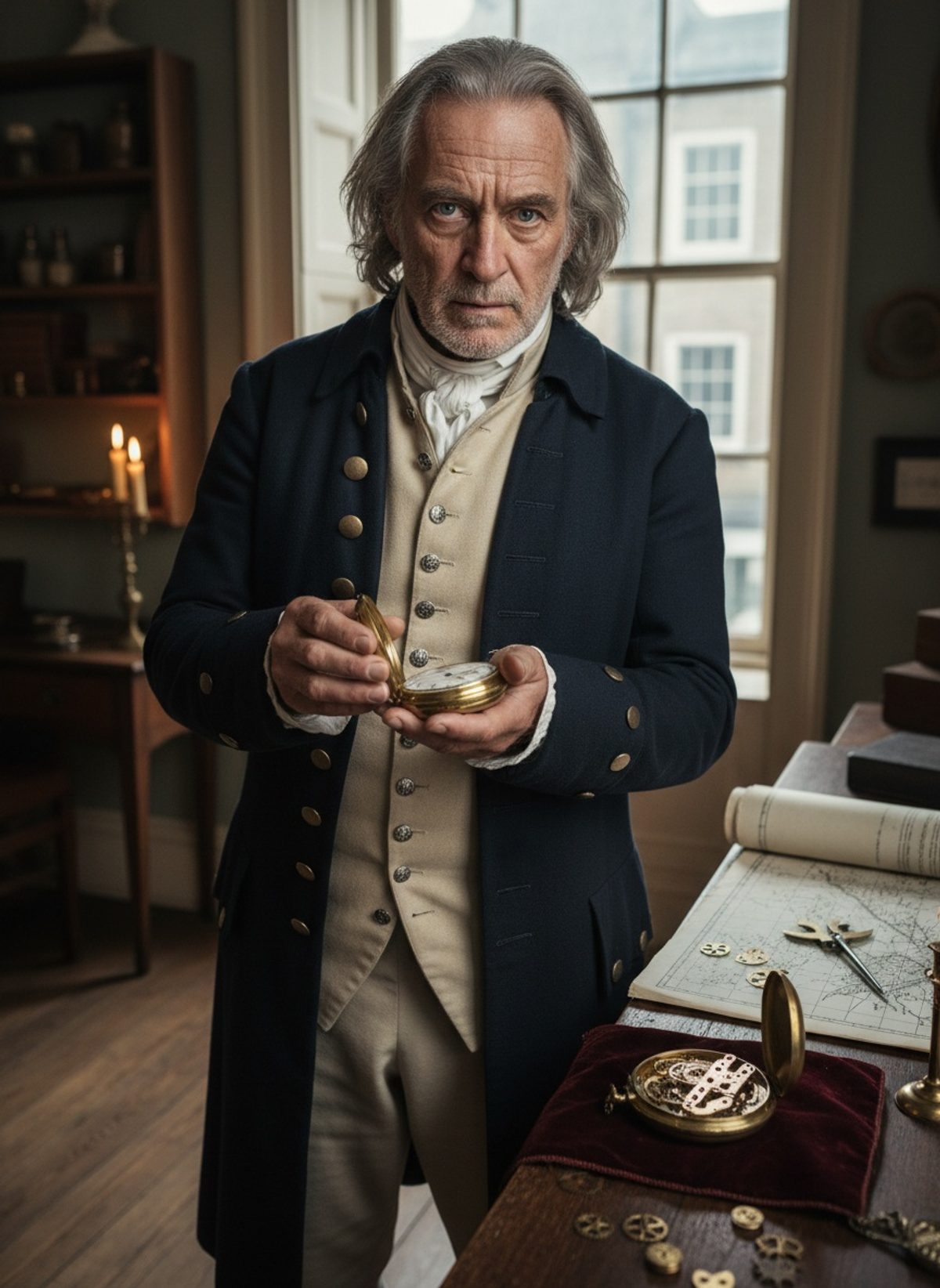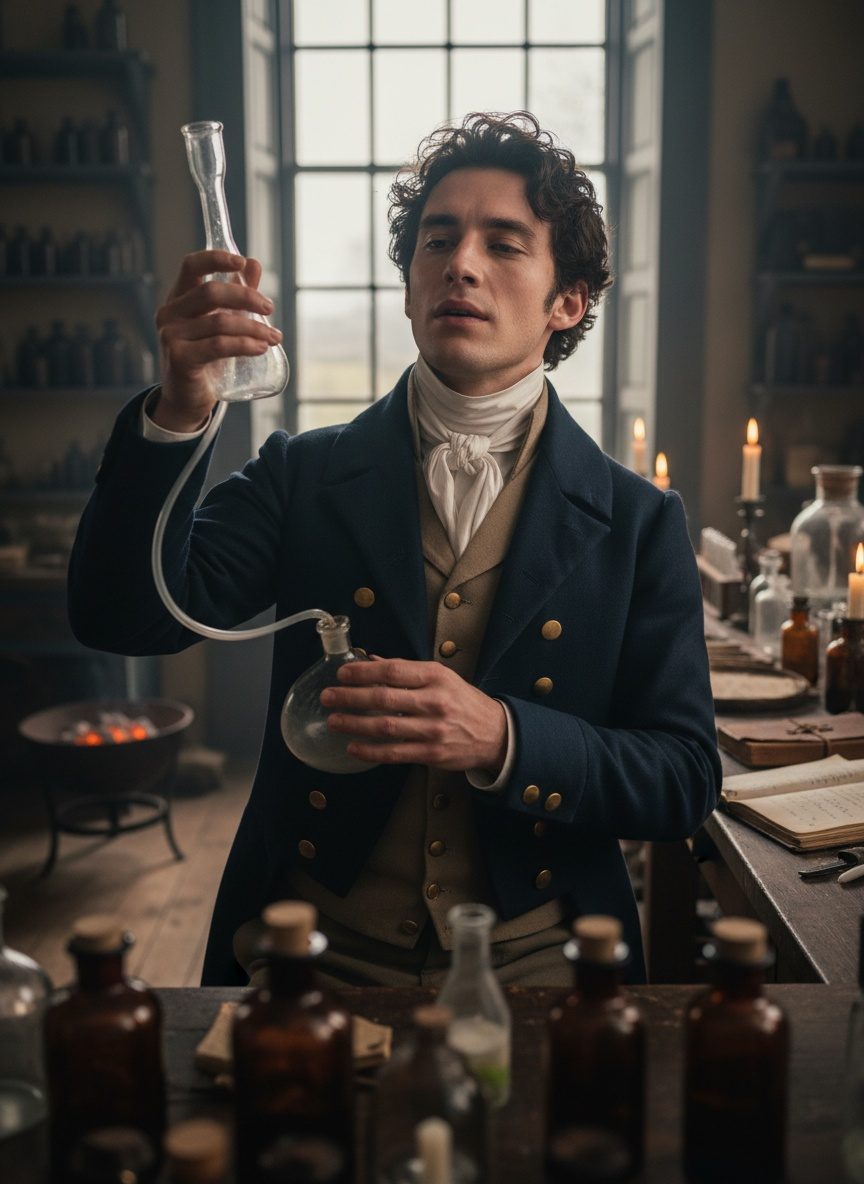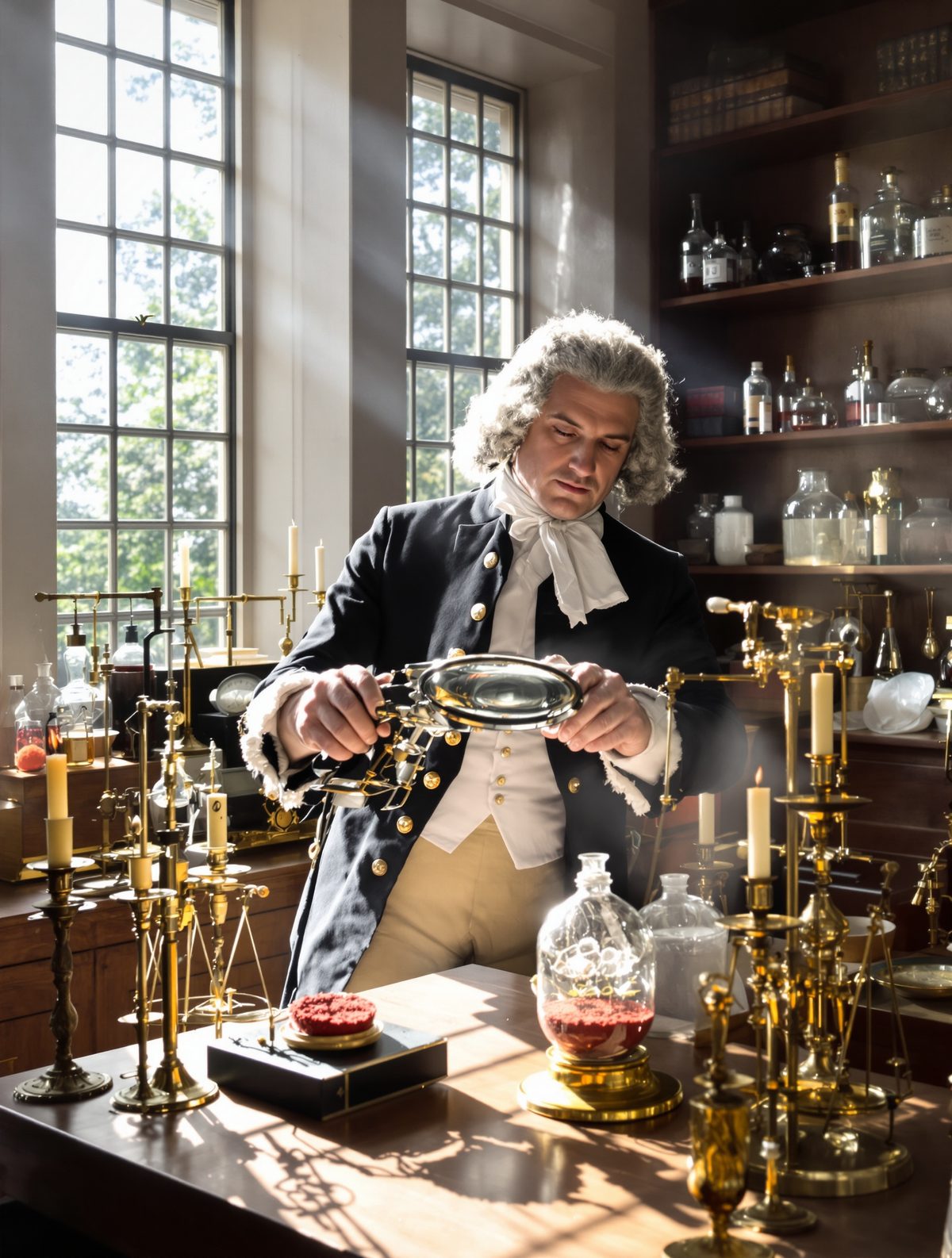
The August sun blazed mercilessly through the windows of Joseph Priestley's makeshift laboratory in Birmingham, but the 41-year-old minister barely noticed the sweat beading on his brow. His hands trembled slightly—not from the heat, but from anticipation—as he positioned his twelve-inch burning lens with mathematical precision. Below it sat a small sample of red mercury oxide, innocent enough in appearance, yet about to unleash something that would change everything humanity thought it knew about the very air we breathe.
What happened next would make Priestley the first human being to consciously breathe pure oxygen. It nearly killed him in the process.
The Radical Minister's Dangerous Hobby
Joseph Priestley was already a marked man by 1774. As a Nonconformist minister who denied the Trinity and supported the American colonists' rebellion, he lived under constant suspicion in Georgian England. His radical theological views had cost him positions and made him enemies among the Anglican establishment. Perhaps that's why he threw himself so enthusiastically into his "hobby"—conducting chemical experiments that would have made professional natural philosophers green with envy.
Working from his home at Fair Hill in Leeds (he wouldn't move to Birmingham until later), Priestley had already isolated several mysterious "airs," as gases were then called. Nitrous oxide, hydrogen chloride, ammonia, sulfur dioxide—his laboratory was becoming a veritable factory of atmospheric discovery. But he had no idea he was about to stumble upon the most important gas of all.
Read next: The Day a Deaf Man Gave the World Its First Electric Motor
The irony was delicious: while the Royal Society's fellows conducted their experiments in grand, well-funded laboratories, here was a dissenting minister working with homemade apparatus, about to make the discovery of the century. His burning lens, crafted by the instrument maker John Canton, could focus sunlight to temperatures approaching 1,000 degrees Celsius—hot enough to decompose almost any substance.
The Moment That Changed Everything
On that fateful day—August 1, 1774—Priestley arranged his experimental setup with the methodical care of a man accustomed to precision. The mercury oxide, known then as "mercurius calcinatus per se," sat in a small glass retort connected to a pneumatic trough filled with mercury. This apparatus, largely of his own design, allowed him to collect whatever gas might emerge from heating the red powder.
As the focused sunlight hit the mercury oxide, something extraordinary happened. The powder began to decompose, and a colorless, odorless gas bubbled up through the mercury with unusual vigor. Priestley watched, fascinated, as the gas displaced the mercury and filled his collection vessel. This was already more gas than he'd expected, and it was being released far more readily than previous experiments had suggested.
But the real shock came when he tested the gas's properties. Priestley inserted a glowing splint into the vessel and nearly jumped backward in alarm. The wood didn't just continue burning—it blazed with an intensity he'd never witnessed. The flame was so bright, so fierce, that it seemed to consume the wood in seconds rather than minutes.
Here was an "air" that didn't just support combustion—it supercharged it.
The Breath That Nearly Stopped His Heart
Any sensible person would have proceeded with extreme caution. Joseph Priestley, however, was possessed by the kind of scientific curiosity that borders on recklessness. If this mysterious gas made flames burn so brilliantly, what would it do to the flame of life itself?
On August 8, just one week after his initial discovery, Priestley made a decision that could easily have killed him. He filled a glass vessel with his new gas and, placing it over water to trap the contents, inverted it and brought it to his lips. Taking a deep breath, he inhaled pure oxygen for the first time in human history.
The sensation was immediate and alarming. His chest felt peculiar—"light and easy" were the words he later used, but also strangely different. His heart began to race, not from exertion but from the pure oxygen flooding his bloodstream. For several terrifying moments, Priestley experienced what we now know as oxygen toxicity. His body, adapted to breathe air that was only 21% oxygen, was suddenly receiving a 100% concentration.
Fortunately, the amount he inhaled was small, and the exposure brief. But Priestley, ever the experimenter, noted every sensation with scientific detachment. "The feeling to my lungs was not sensibly different from that of common air," he wrote, though he admitted to a "light dizzy sensation" afterward. What he didn't realize was that prolonged exposure to pure oxygen can cause seizures, lung damage, and death.
The Mouse That Lived Too Well
Priestley's animal experiments were equally dramatic. When he placed a mouse in a sealed container filled with ordinary air, the creature would typically survive for about fifteen minutes before suffocating in what Priestley called "phlogisticated air"—what we now know as carbon dioxide and nitrogen.
But when he placed a mouse in a container filled with his new gas, something remarkable happened. The mouse didn't just survive—it seemed to thrive. It remained active and alert for far longer than should have been possible. Even more astonishing, after the mouse had "corrupted" the air with its breathing, a candle would still burn brightly in the same container. This defied everything natural philosophers believed about respiration and combustion.
"One day I happened to observe a mouse in a glass vessel in which a candle had burned out," Priestley wrote. "I had expected that the mouse would have died immediately in such corrupted air, but was surprised to find that it lived a long time in it, and seemed to suffer no inconvenience."
The implications were staggering, though Priestley didn't fully grasp them. He had stumbled upon the fundamental process that sustains all complex life on Earth.
The Discovery That Nearly Stayed Hidden
In one of history's great "what ifs," Priestley almost never published his discovery. Initially, he interpreted his results through the lens of phlogiston theory—the dominant but incorrect explanation for combustion that proposed all flammable substances contained a fire-element called phlogiston. To Priestley's mind, his new gas simply had a greater capacity to absorb phlogiston, which was why flames burned so brightly in it.
He called his discovery "dephlogisticated air"—air that had been purged of phlogiston and was therefore hungry to absorb more. It was a completely wrong explanation that nevertheless led him to the right conclusion: this gas was fundamentally different from ordinary air and crucial to both combustion and respiration.
The breakthrough that ensured his place in history came from an unlikely source: a dinner party. In October 1774, Priestley traveled to Paris and dined with Antoine Lavoisier, the brilliant French chemist. Over wine and conversation, Priestley casually mentioned his discovery of this remarkable new air. Lavoisier, with his superior understanding of chemical theory, immediately grasped the significance of what the English minister had found.
Lavoisier would later conduct his own experiments, correctly identify the gas as an element, and give it the name we know today: oxygen, from Greek words meaning "acid-former." The irony was that Priestley, despite discovering oxygen first, never accepted Lavoisier's explanation and remained wedded to phlogiston theory until his death.
The Legacy of a Near-Fatal Breath
That sweltering August day in 1774 marked more than just the discovery of oxygen—it heralded the birth of modern chemistry and medicine. Priestley's willingness to risk his life by breathing an unknown gas opened the door to understanding respiration, combustion, and the very nature of life itself. Within decades, physicians would be using oxygen therapy to treat patients, and our entire understanding of how living things extract energy from their environment would be revolutionized.
Today, as ventilators deliver precisely controlled oxygen mixtures to patients in intensive care units, and as we monitor atmospheric oxygen levels to understand climate change, we might pause to remember the radical minister who nearly gassed himself in pursuit of knowledge. Joseph Priestley's willingness to take that first, dangerous breath of pure oxygen reminds us that the greatest discoveries often come from those brave enough—or perhaps foolish enough—to venture into the unknown and risk everything for a glimpse of truth.
In an age when we worry about air pollution and atmospheric chemistry, Priestley's story carries special resonance. He discovered the very essence of the air we breathe, the molecule that keeps our cells alive and our civilization running. Not bad for a dangerous hobby.