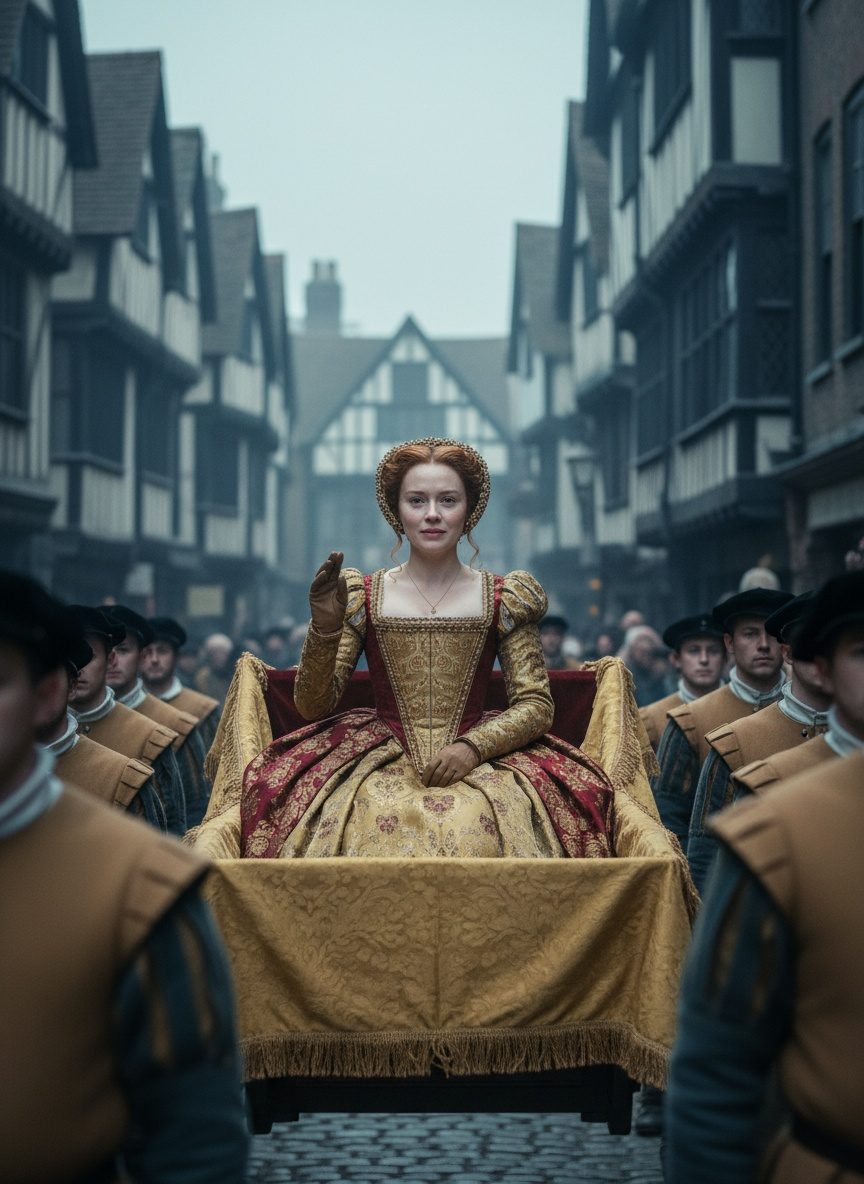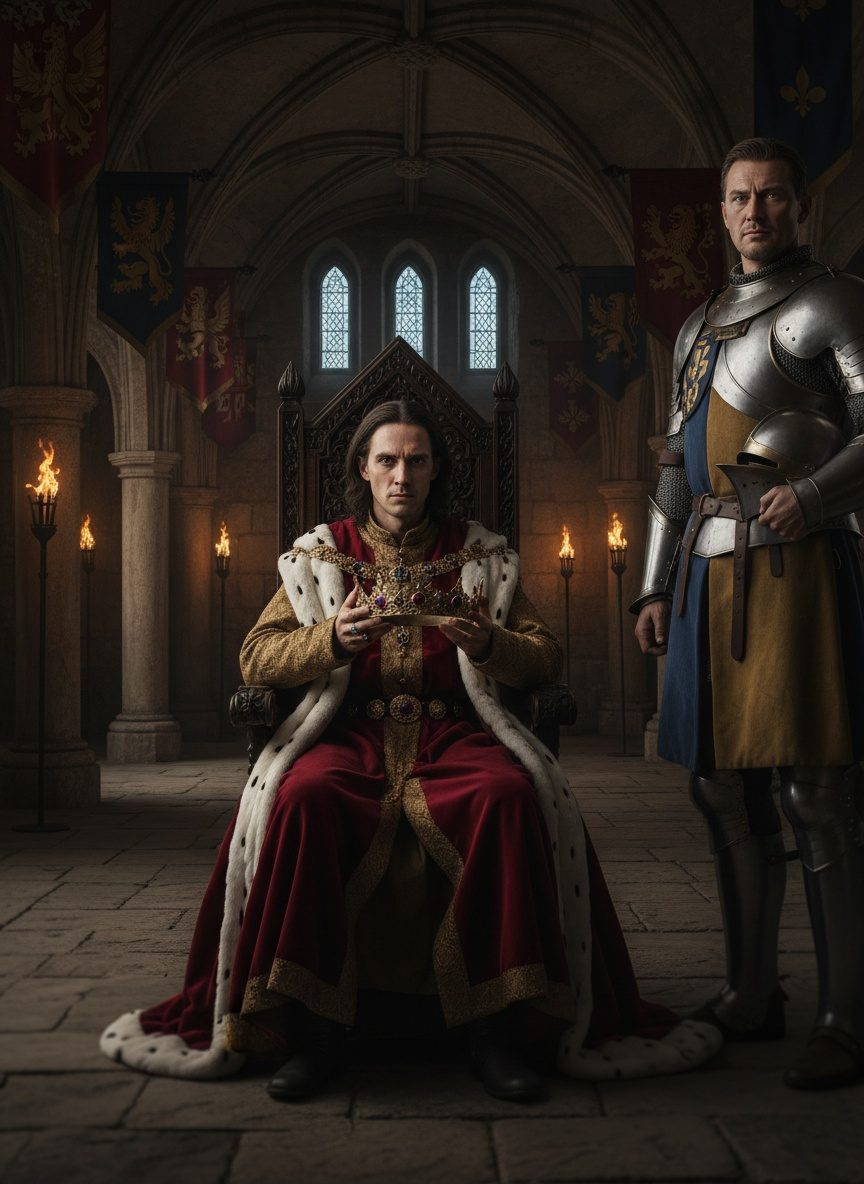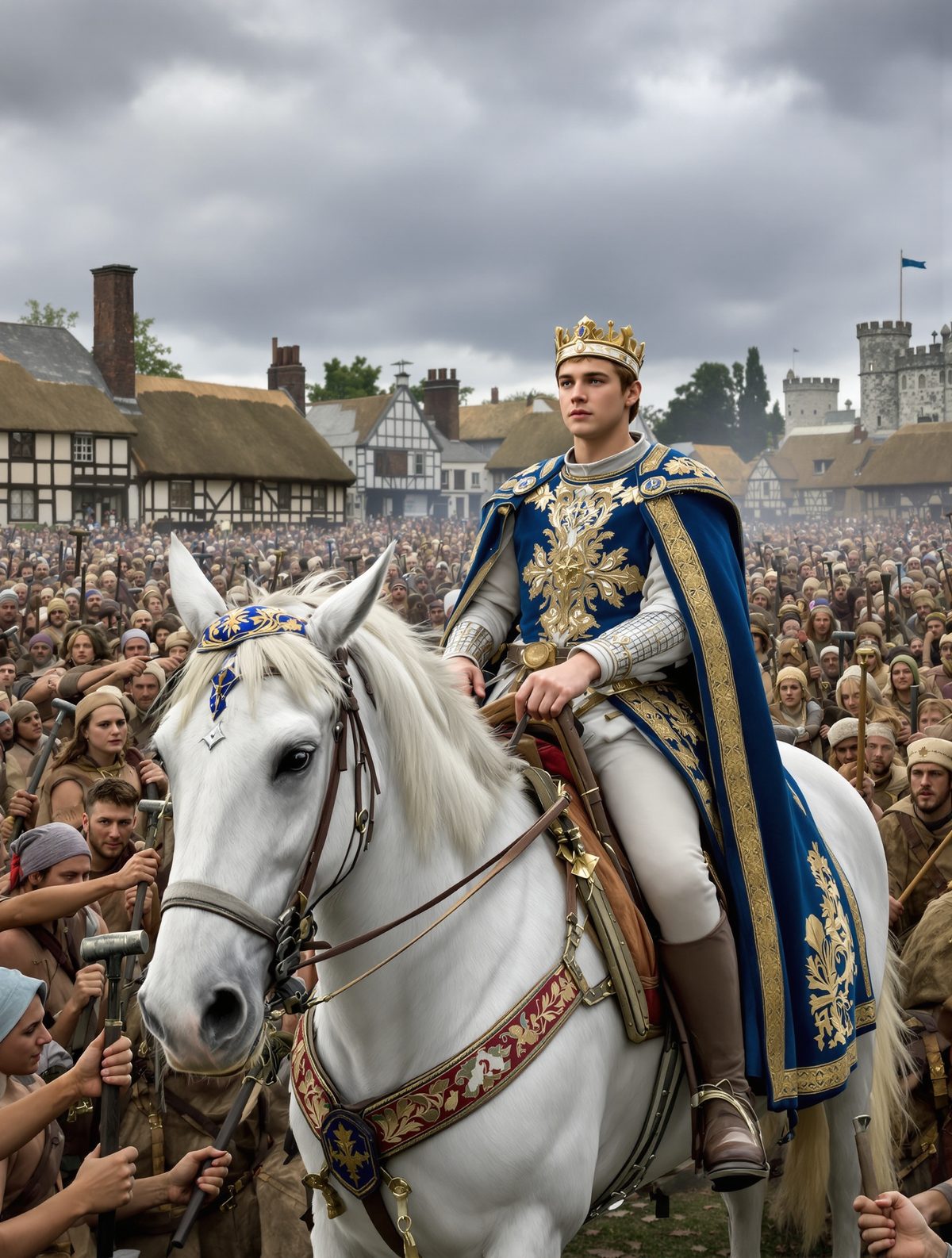
The summer heat hung heavy over Smithfield on the morning of June 15th, 1381. A teenage king sat astride his destrier, watching 100,000 armed peasants surge toward him like a human tide. Their leader lay dead in the dirt, struck down moments before by the Mayor of London's dagger. Now these desperate souls—who had marched from Kent and Essex with nothing but hope and fury—faced the ultimate betrayal. Their fury was about to explode into regicide.
What happened next would be talked about for centuries. Fourteen-year-old Richard II spurred his horse forward, riding alone into that sea of rage. In that moment, with the crown itself hanging in the balance, a boy became a king.
The Powder Keg Explodes
The Peasants' Revolt of 1381 didn't emerge from nowhere—it had been brewing for decades. The Black Death had killed a third of England's population, leaving survivors in a position to demand higher wages and better conditions. But the nobility fought back with oppressive laws, fixing wages at pre-plague levels and binding peasants to their land.
The final straw came in the form of the poll tax—a brutal levy that demanded the same payment from a duke as from a ditchdigger. When tax collectors arrived in Essex villages in May 1381, they found more than they bargained for. In Fobbing, the villagers simply refused to pay. In Brentwood, they attacked the tax commissioners outright.
Read next: The Day a Defeated King Sailed Away and Never Looked Back
Within days, the rebellion had a leader: Wat Tyler, a charismatic roof-tiler from Dartford whose own daughter had allegedly been assaulted by a tax collector. Tyler possessed something rare among medieval peasants—the ability to organize and inspire across county lines. By June, his ragtag army had swollen to unprecedented numbers, drawing supporters not just from the peasantry but from minor clergy, small merchants, and even some lesser nobles who felt squeezed by the same oppressive system.
March on London: When the Impossible Became Inevitable
What makes Tyler's rebellion extraordinary isn't just its size—it's how efficiently it moved. These weren't mindless mobs stumbling toward London. Tyler's forces displayed remarkable coordination, with rebels from Kent and Essex timing their movements to converge on the capital simultaneously.
On June 12th, Tyler's Kentish army reached Blackheath, just southeast of London. They carried banners declaring "With King Richard and the True Commons," a crucial detail that reveals their sophisticated political thinking. This wasn't anarchism—it was revolution with a royalist face. They claimed to love their teenage king while demanding the heads of his advisors.
Meanwhile, panic gripped the capital. London's gates were sealed, but the rebels found unexpected allies among the city's poor. When Tyler's forces reached London Bridge on June 13th, sympathizers inside the city lowered the drawbridge. The impossible had happened: a peasant army had taken London.
Young King Richard II watched from the Tower of London as smoke rose across his capital. The rebels had torched the Savoy Palace, home to his uncle John of Gaunt. They'd stormed Fleet Prison, freeing hundreds of inmates. Most shocking of all, they'd dragged the Archbishop of Canterbury and the Lord Treasurer from the Tower itself and beheaded them on Tower Hill.
The Boy King's Gamble
On June 14th, Richard attempted his first meeting with the rebels at Mile End, east of the city. Surrounded by advisors and guards, the fourteen-year-old king granted extraordinary concessions: he abolished serfdom, fixed land rents, and promised pardons for all rebels. It was the most radical royal charter in English history up to that point.
But Tyler wasn't finished. While many rebels accepted the king's promises and began heading home, the hardcore remained. Tyler demanded a second meeting—this time at Smithfield, the notorious site of executions and tournaments just outside London's walls.
What Tyler planned for this second encounter remains one of history's great mysteries. Some chroniclers suggest he intended to make even more radical demands—perhaps the complete abolition of the nobility or even the elimination of private property. Others whisper that he planned to take the young king hostage or worse.
Richard arrived at Smithfield on the morning of June 15th with a small retinue including Mayor William Walworth and several knights. Facing them across the field: an estimated 100,000 rebels, the largest armed gathering in English history to that date.
When Everything Went Wrong
The meeting began civilly enough. Tyler rode out to speak with the king, but contemporary accounts describe his behavior as increasingly aggressive. Some chroniclers claim he drank from a flagon of ale during negotiations—a shocking breach of protocol. Others suggest he made threatening gestures or spoke disrespectfully to the teenage monarch.
What happened next unfolded in seconds but changed everything. Mayor Walworth, apparently believing Tyler was about to attack the king, drew his sword and wounded the rebel leader. As Tyler tried to flee, the king's esquire John Cavendish finished him off with a dagger thrust.
In an instant, the largest popular uprising in English history had become a potential massacre. One hundred thousand rebels watched their leader fall dead before their eyes. The royal party—perhaps thirty strong—sat frozen as that vast crowd began to surge forward, crying "They have killed our captain!"
Arrows were nocked. Weapons raised. The fury of three decades of oppression focused on the small group of nobles who had just committed what appeared to be cold-blooded murder during a parley.
A Boy Becomes a King
What Richard II did next defied every instinct of self-preservation and political wisdom. As his advisors prepared for a final desperate charge and probable annihilation, the fourteen-year-old king spurred his horse forward—alone.
Riding directly into that sea of armed rebels, Richard called out words that chroniclers recorded with wonder: "Sirs, will you shoot your king? I am your captain, follow me!"
The moment balanced on a knife's edge. These rebels had already proven they would kill archbishops and lord treasurers. They had nothing left to lose. Yet something in that young voice—perhaps its very youth and fearlessness—gave them pause.
Medieval chroniclers struggled to explain what happened next because it seemed to defy human nature itself. The crowd, moments away from tearing the royal party to pieces, instead began to follow the boy king. Richard led them away from Smithfield to Clerkenwell Fields, where he repeated his promises of pardons and reforms.
By evening, the great rebellion was over. The rebels dispersed to their homes, trusting in royal promises that would, inevitably, be broken within months.
The Legend They Left Out
Most textbooks remember the Peasants' Revolt as a footnote—a failed uprising crushed by medieval authorities. They focus on the social and economic causes, the violence in London, perhaps Wat Tyler's death. But they rarely dwell on what may be the most psychologically fascinating moment in English royal history.
What drove a fourteen-year-old boy to ride alone into 100,000 armed rebels? Was it calculated courage, teenage recklessness, or something deeper—an instinctive understanding that sometimes leadership means risking everything on a single moment of trust?
Richard II's moment at Smithfield reveals something profound about power and charisma that remains relevant today. In our age of focus groups and carefully managed public appearances, there's something both inspiring and terrifying about a leader gambling everything on direct, unmediated contact with an angry crowd.
The teenage king's courage that day saved the Plantagenet dynasty and changed English history. But it also created a myth of royal authority that Richard himself never quite lived up to again. Perhaps that's the real tragedy—not that the boy lacked courage, but that he spent the rest of his reign trying to recapture the magic of that single, extraordinary moment when he rode alone into the storm.