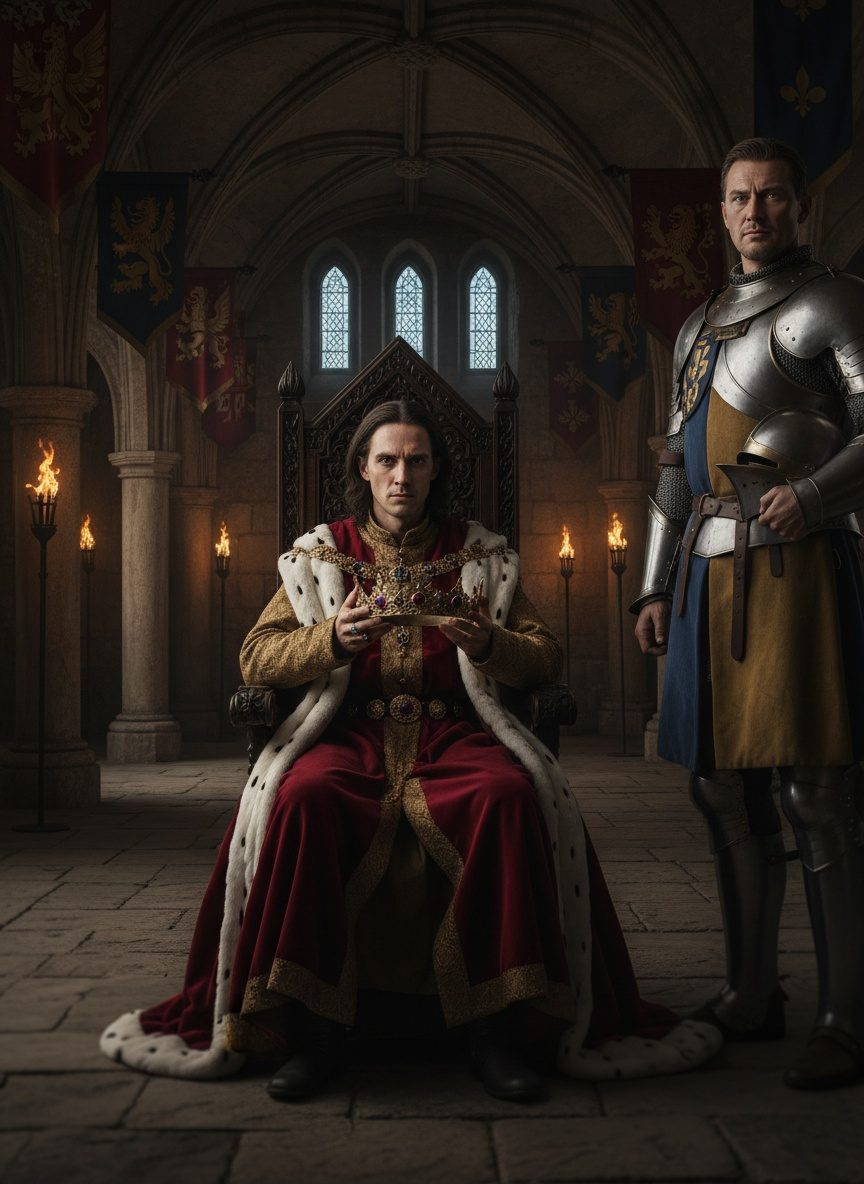
The chill of December was typical, even expected—a cloak of frost covering England’s moors and towns, a harbinger of Yuletide, but in 1135, the icy wind bore more than just the promise of winter’s breath. With King Henry I’s abrupt death on December 1st in Normandy, a storm was brewing, its eye fixed on the throne. Nineteen days later, England had a new king. The audacity, the urgency, and the betrayal that followed would embroil a nation in a nineteen-year civil war. Welcome to the whirlwind chronicle of how Stephen of Blois—the unlikely usurper—seized the English crown.
A Kingdom Left Untethered
On the first day of that fateful December, King Henry I closed his eyes for the last time. He left behind a kingdom nestled in the heart of medieval politics—a political tapestry woven with ambition and treachery. Henry’s only legitimate male heir had tragically perished at sea during the infamous White Ship disaster of 1120, a maritime catastrophe that drowned the future of the English monarchy. With no direct male successor, Henry had secured loyalty for his daughter, Matilda, the Empress of Germany, as his heir. Loyally, his nobles had sworn on sacred scripture to support Matilda's ascension.
But in an age dominated by male authority, a queen ruling alone was a bitter draught for many to swallow. Amidst this volatile milieu of promise and power, Stephen of Blois, nephew to the late king, saw a golden opportunity.
The Daring Channel Crossing
Stephen’s gamble began within hours of Henry’s death. The windswept tides of the Channel were perilous in winter, an unyielding barrier stretched like a frosty serpent between Normandy and England. Yet, with determination sharper than any sword, Stephen gathered a small fleet and crossed the churning waters, landing at the Port of Dover under the shadowy shroud of December gales. It was a midnight rush, a headlong race to grasp a crown that was not his own by divine or legal right.
Read next: The Day a Defeated King Sailed Away and Never Looked Back
Upon reaching London, the heart of the realm, Stephen moved swiftly. On December 22, while snowflakes danced from the darkened sky, a council gathered, and Stephen laid his claim—the throne, he argued, was empty; a steward was needed, a king willing to restore stability.
The Coronation Coup
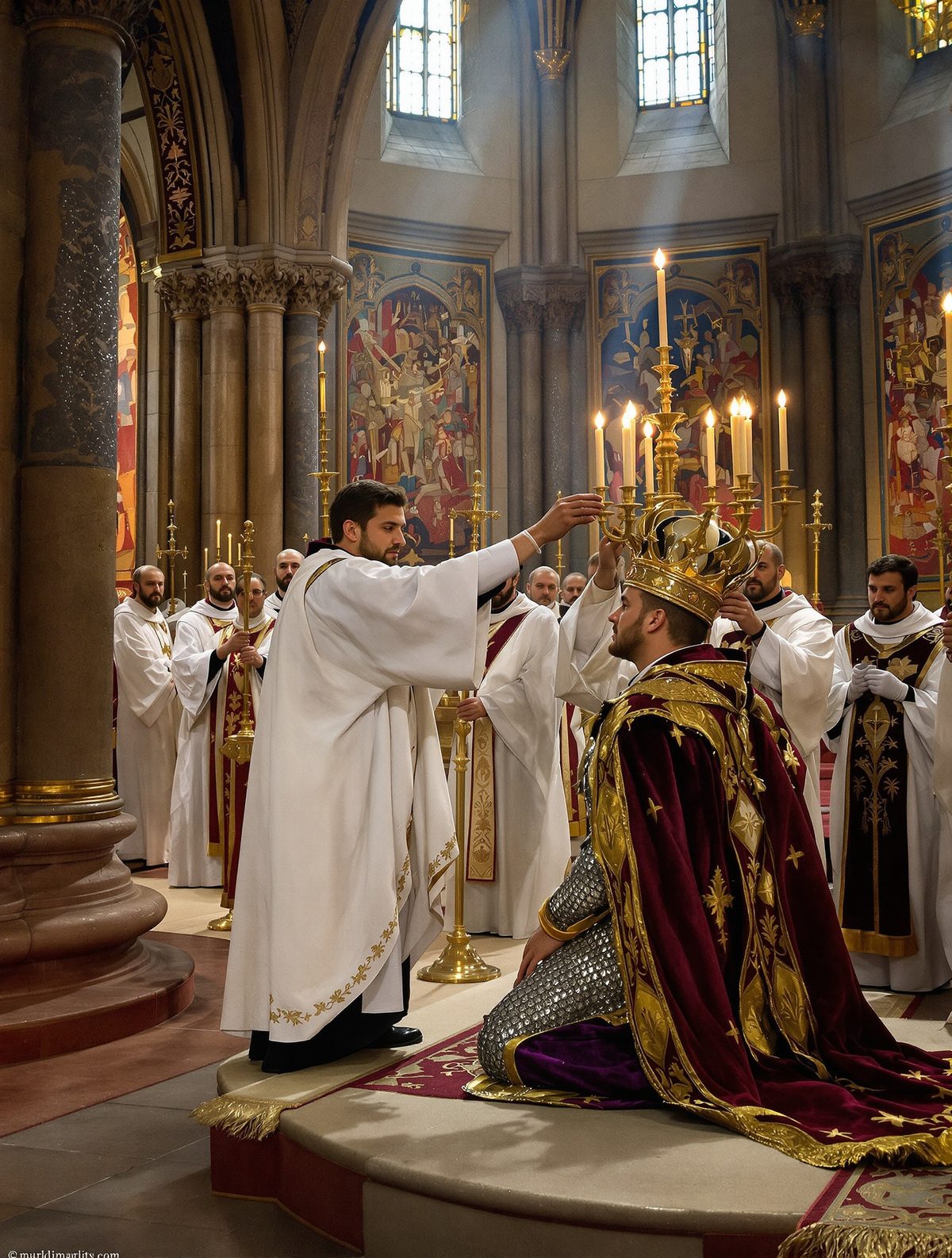
Stephen was a man of charm and persuasive vigor, and with a hopeful promise to restore England's peace, he garnered the support of key nobles and clergy. Here began the irreversible breach of trust: Archbishop William of Corbeil, swayed by Stephen’s promises and perhaps his own ambitions, defied his prior oath to Matilda. On December 26th, Stephen was crowned King of England in Canterbury—a city sacred and ancient in its legacy—a mere nineteen days after his uncle had fallen.
In a tapestry of history dominated by solemnity and reverence, this was a brazen spectacle of political upheaval. Yet intriguingly, just a year before this dramatic events, a papal legate, Matilda’s uncle, David I of Scotland, had reportedly given clandestine support to Stephen’s claim, either a masterstroke of political foresight or a desperate grasp for power.
The King’s Gambit and the Usurper’s Legacy
The intense speed of Stephen's ascent pegged the start of England’s period of turmoil known to history as The Anarchy. It was an era marked by shifting allegiances, sporadic battles, and a fractious realm splintered by loyalty and doubt. Queen Matilda—waiting in Normandy—was not a woman to settle in shadow. Her claims drew supporters and scorn alike, sparking flames of rebellion that would blaze across the countryside.
Ebbw of Ely, the Welsh historian, later exclaimed, “Such a land, such a crown, to be seized with style yet gobbled up in turmoil!” It’s a sentiment echoed by many contemporaries and historians alike. Stephen’s reign was as tumultuous as his ascent, a labyrinth of victories and defeats. Fortresses swayed like reeds in the wind, besieged by her forces or reclaimed under Stephen’s banner.
Why Nineteen Days Matter Now
Stephen’s audacity in those nineteen days echoes across centuries of power struggles—a haunting reminder of ambition unbridled, of loyalty turned brittle under the weight of opportunity. In our modern political landscape, his story serves as a potent allegory: how fragile the structures of authority can become when ambition overshoots its bounds and where personal drives might provoke relentless conflict.
The vivid imagery of those frosty channels, the hurried nighttime gatherings, and the bold coronation reinforce a timeless truth: the grasp for power oftentimes begins not in the splendor of ceremony but in the shadows of consequence. The Anarchy, with its hardships and reckonings, stands as a historic lesson of how quickly order may dissolve—when the sacred is broken, and when oaths become mere whispers on the winter wind.