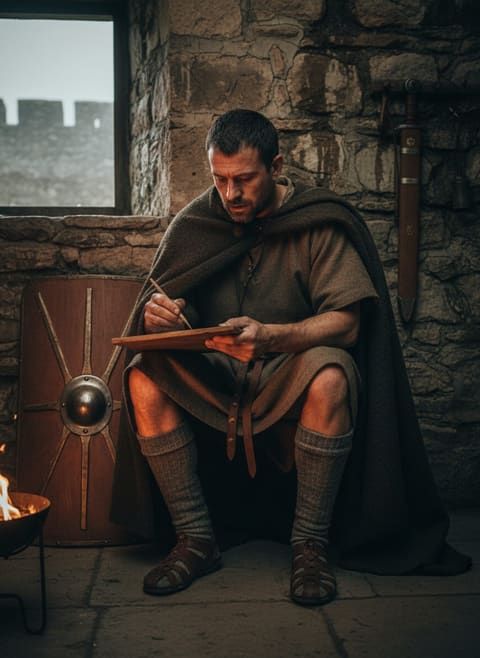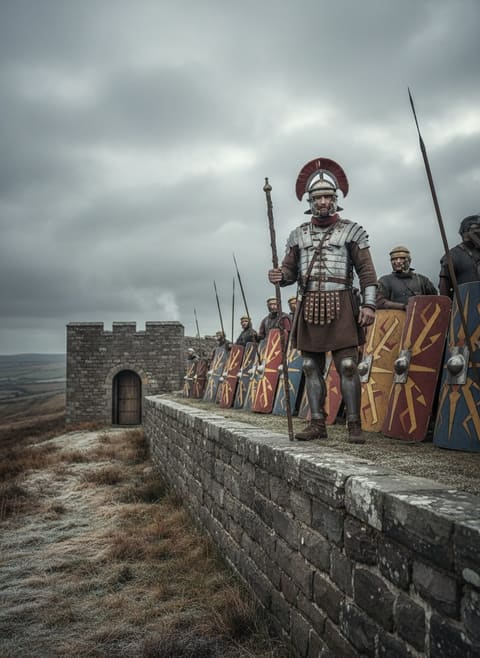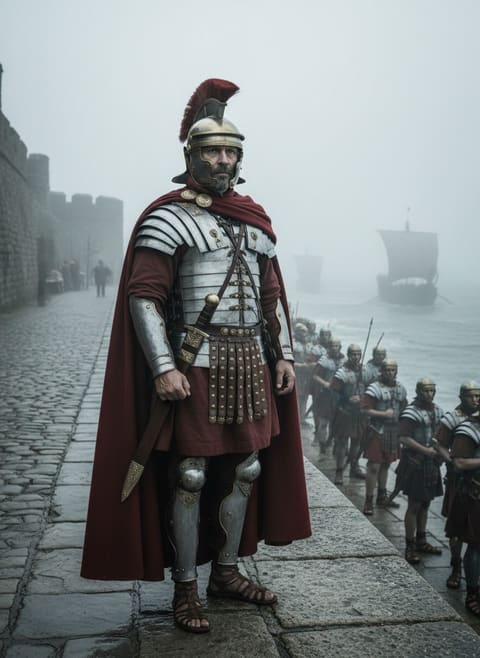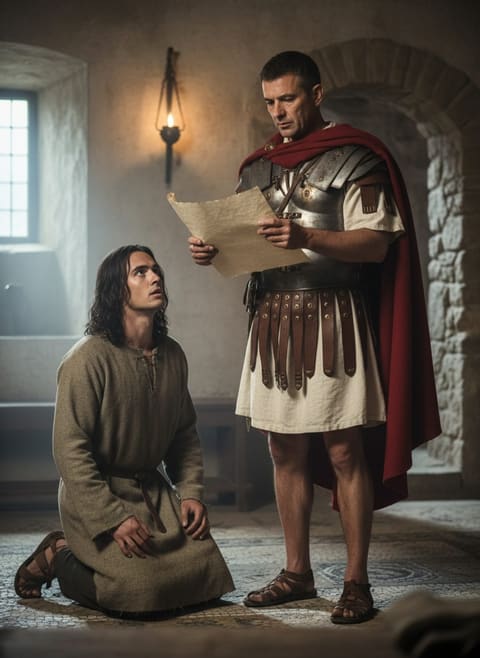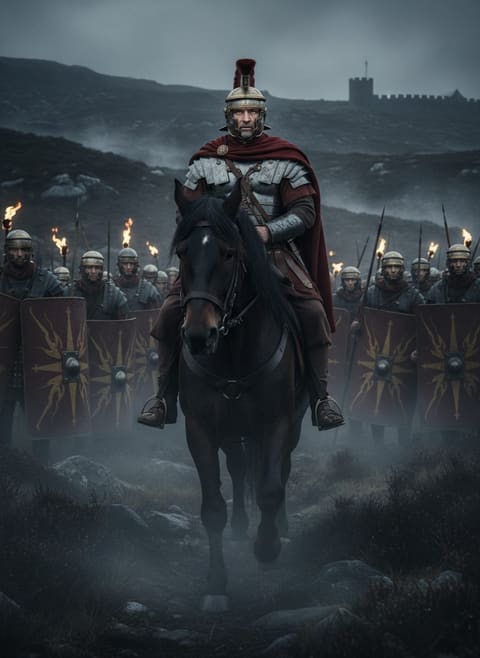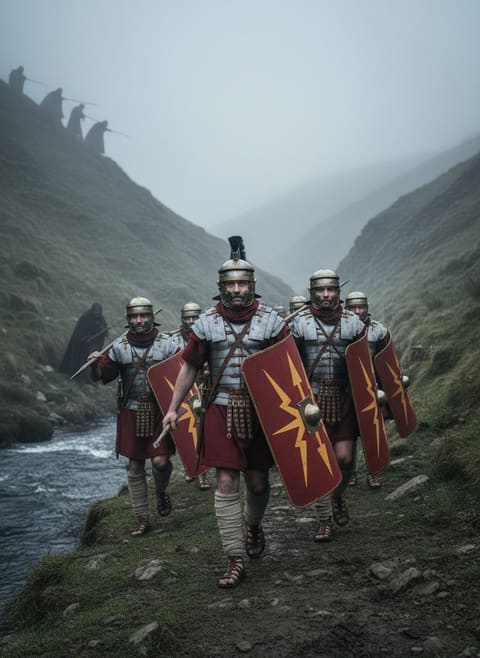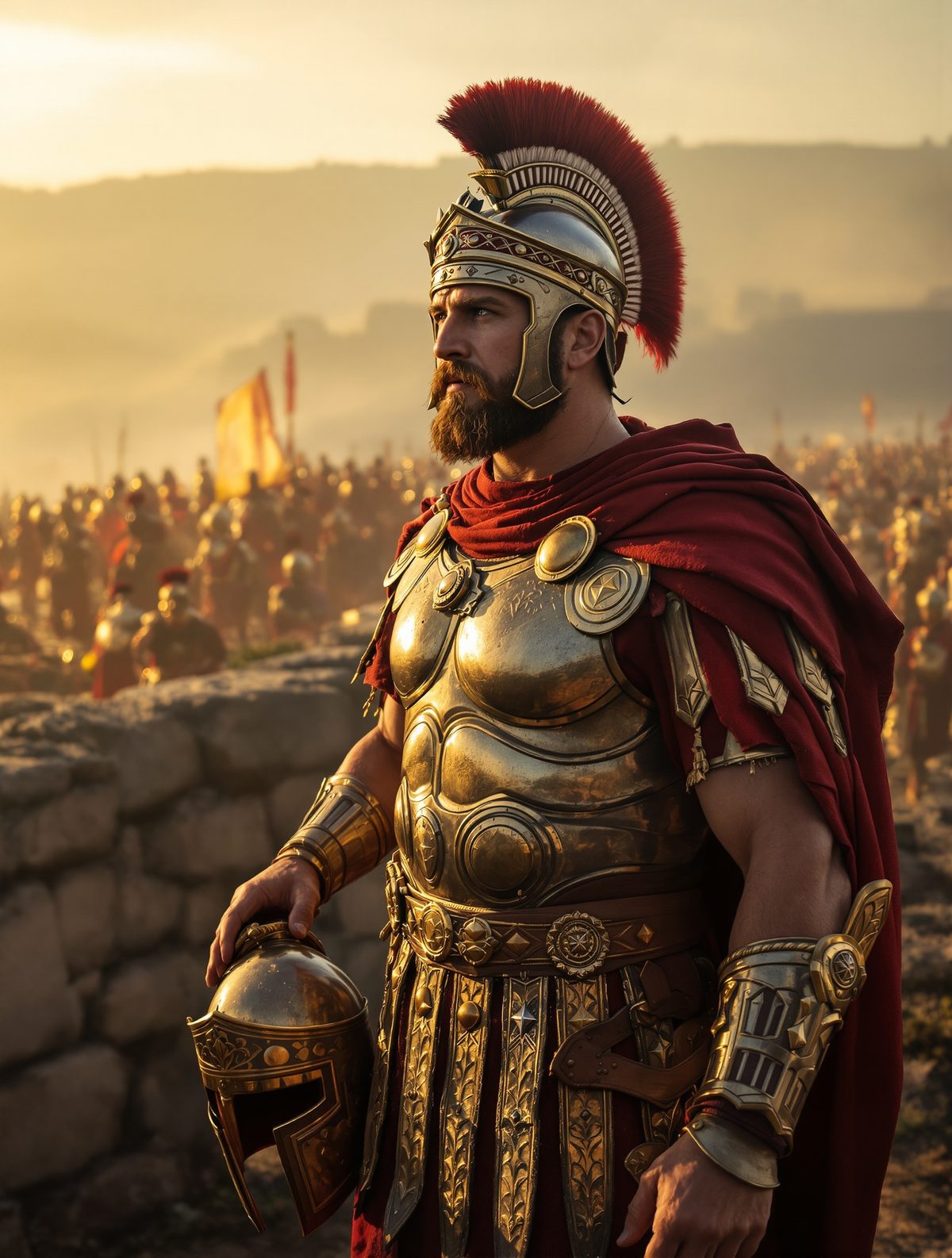
Picture this: a windswept fortress on Hadrian's Wall, 383 AD. Roman legionnaires huddle around braziers as bitter northern winds howl across the moors. Their commander, a battle-hardened Spanish general named Magnus Maximus, stands before them with news that will change the course of an empire. Within hours, these same soldiers will commit the ultimate act of military rebellion—proclaiming their general Emperor of Rome. But this isn't just another provincial uprising. This is the moment when Britain, perched on the very edge of the known world, would dare to reach out and seize the heart of the greatest empire in human history.
What happened next defied every rule of Roman politics and military strategy. Maximus didn't just accept his soldiers' acclamation—he stripped Britain bare of its legions and marched them across Europe to claim not just the title of Emperor, but actual control of half the Roman world. For five extraordinary years, the man who started his reign in the mists of northern Britain would rule from the marble halls of power, commanding legions from the Atlantic to the Alps.
The General Who Came from Nowhere
Magnus Maximus wasn't supposed to become emperor. Born in northwestern Spain around 335 AD, he belonged to that new generation of provincial commanders who had clawed their way up through merit rather than noble birth. By the 380s, he commanded the western legions stationed in Britain—hardened troops who had spent decades fighting Picts beyond Hadrian's Wall and Irish raiders along the western coasts.
But Maximus possessed something that would prove more valuable than aristocratic connections: the absolute loyalty of his men. These weren't pampered palace guards or green recruits. They were comitatenses—elite mobile troops who had followed Maximus through countless skirmishes in the Scottish highlands and Welsh valleys. When your commander has led you to victory against howling Celtic warriors in the fog-shrouded hills of Caledonia, you tend to believe he can accomplish the impossible.
Read next: The Day a Roman Slave Left a Message That Outlasted an Empire
The spark that ignited rebellion came from an unexpected source: religious politics. Emperor Theodosius I had been making increasingly unpopular decisions back in Constantinople, particularly regarding Christian orthodoxy. But more crucially for Maximus, there were rumors that Theodosius was planning to replace him with a more politically reliable commander. In the brutal calculus of late Roman politics, being recalled from your command often meant exile, disgrace, or death.
The Acclamation That Shook an Empire
The exact date remains lost to history, but sometime in early 383 AD, Magnus Maximus made his move. According to the chronicler Zosimus, it happened with dramatic suddenness. At a military assembly—possibly at Segontium (modern Caernarfon) in Wales, though some sources suggest it occurred at Eboracum (York)—Maximus addressed his assembled legions about the state of the empire and their own uncertain future.
What happened next followed an ancient Roman ritual, but one that hadn't been seen in Britain for generations. The soldiers lifted Maximus on their shields and acclaimed him Imperator—Emperor. Purple cloth, hastily procured from local traders, was fashioned into imperial robes. Someone found a makeshift diadem, perhaps a torque looted from some long-dead Celtic chieftain. In that moment, Britain had its first and only home-grown Roman Emperor.
But here's the detail that makes this story truly extraordinary: Maximus didn't hesitate. Other usurpers might have spent months consolidating their position, building defenses, or negotiating. Instead, Maximus immediately began stripping Britain of virtually every available soldier. Archaeological evidence suggests that by late 383 AD, Hadrian's Wall was effectively abandoned, its garrisons withdrawn. Coastal forts that had protected against Saxon pirates for generations stood empty. Maximus was betting everything on a single, audacious gamble—that his British legions could march across Europe and seize half an empire before anyone could stop them.
The March That Defied All Logic
The numbers tell an incredible story. Maximus appears to have assembled somewhere between 15,000 and 25,000 troops—virtually every combat-ready soldier in Britain. These weren't just infantry; his force included crack cavalry units, artillery specialists, and siege engineers. Imagine the logistics: thousands of men, horses, and wagons streaming through the British countryside toward the Channel ports.
The crossing to Gaul must have been one of the largest military sea-lifts in British history up to that point. Roman ships, hastily commandeered merchant vessels, and probably fishing boats pressed into service carried Maximus's army across the narrow waters that had protected Britain since Julius Caesar's time. By summer 383 AD, this provincial army from the edge of the world was marching through the heart of Gaul.
What happened next shocked everyone, including probably Maximus himself. Instead of facing determined resistance, his advancing columns found Gallic cities opening their gates in welcome. Local governors, long resentful of heavy taxation and arbitrary imperial commands, chose to support the charismatic general from Britain. More importantly, the regular Roman legions stationed in Gaul—men who shared the same grievances as Maximus's British troops—began defecting wholesale to his banner.
By autumn 383 AD, Maximus controlled everything from the Atlantic to the Rhine. When Emperor Gratian finally moved to confront the usurper near Paris, his own bodyguard abandoned him. Gratian fled toward the Alps but was murdered near Lyon by Maximus's agents on August 25, 383 AD. The boy from Spanish Gallaecia who had been proclaimed emperor on a windswept British fortress now controlled half the Roman world.
The Emperor Who Ruled from Britain's Shadow
For five years, Magnus Maximus proved that his acclamation hadn't been mere military rebellion—it was a viable claim to imperial power. He established his capital at Trier, the traditional seat of western imperial administration, but his true power base remained the legions that had followed him from Britain. These British veterans formed his praetorian guard, the elite troops who protected his person and enforced his will across Gaul, Spain, and Britain.
Maximus proved surprisingly effective as emperor. He maintained stable frontiers along the Rhine, keeping Germanic tribes at bay through a combination of diplomacy and military strength. His coinage shows sophisticated imperial imagery, and he corresponded with bishops and provincial governors as an equal to any other emperor. The eastern emperor Theodosius I was forced to recognize him officially in 384 AD—meaning that for a brief, remarkable period, the Roman Empire was effectively ruled by a partnership between Constantinople and a Spanish general who owed his throne to British soldiers.
But Maximus made one crucial error: he believed his own success. In 387 AD, perhaps feeling that his position was secure, he invaded Italy itself, seeking to claim the western imperial throne completely. This was a step too far. Theodosius I, who had been content to share power with a western colleague, couldn't tolerate a direct threat to imperial unity.
Read next: The Day a Roman Officer Freed His Captive and Walked Away
The Fall of the British Emperor
The end came with shocking swiftness. Theodosius assembled a massive army and marched west in 388 AD. When the two forces met at the Battle of Save (modern Slovenia), Maximus's luck finally ran out. His British veterans, so far from home after five years of campaigning, found themselves outnumbered and outmaneuvered. The battle became a rout.
Maximus fled to Aquileia, where Theodosius cornered him. On August 28, 388 AD—almost exactly five years after his rebellion began—Magnus Maximus was executed. The Spanish general who had reached for an empire died as so many Roman usurpers did: abandoned by fortune, betrayed by allies, and cut down by the very system he had sought to control.
But perhaps the most tragic consequence wasn't Maximus's death—it was what happened to the legions that had followed him from Britain. Many of the British veterans were settled in Gaul and never returned home. Archaeological evidence suggests that several British tribes took advantage of the power vacuum to reclaim territory from Roman control. The Hadrian's Wall frontier, abandoned during Maximus's march, was never fully restored to its former strength.
The Echo of Ambition
Magnus Maximus failed, but his story resonates across fifteen centuries because it captures something fundamental about human ambition and the relationship between periphery and center. Here was a man who understood that in times of imperial crisis, legitimacy could flow from the margins to the heart. His British soldiers didn't just proclaim him emperor—they made him emperor, through their willingness to follow him across a continent.
In Welsh legend, Maximus became Macsen Wledig, the emperor who married a British princess and whose descendants ruled Wales. The historical reality was more complex, but the mythic power of his story suggests something important: sometimes the edge of the world produces figures who refuse to accept their marginal status.
Today, as we watch political movements emerge from unexpected places to challenge established centers of power, Magnus Maximus reminds us that geography isn't destiny. Sometimes, the most audacious gambles come from those with the least to lose and the furthest to travel. For five brief years, the man proclaimed emperor on Britain's frontier proved that distance from power can be transformed into power itself—if you're bold enough to risk everything on a single throw of the dice.