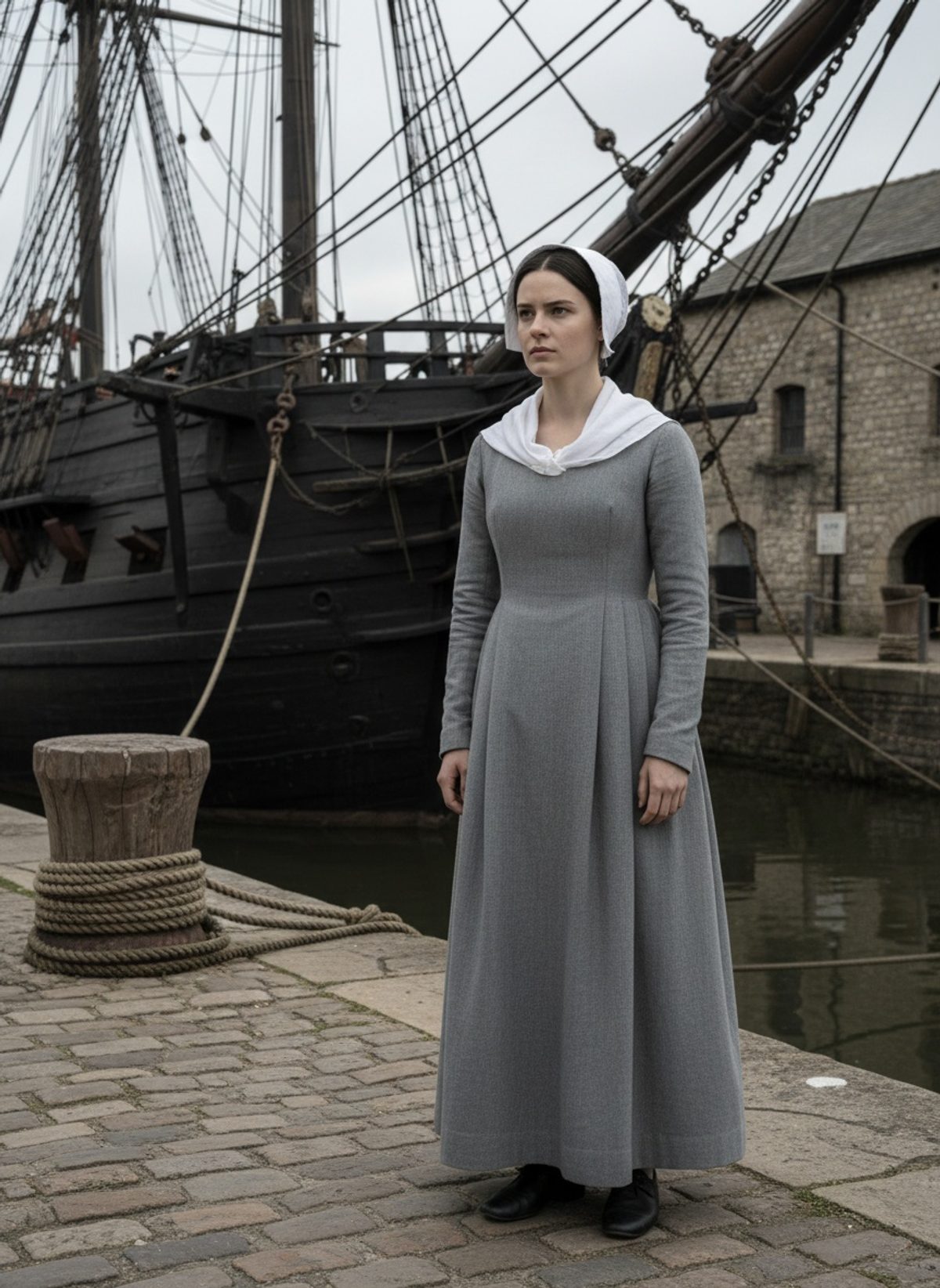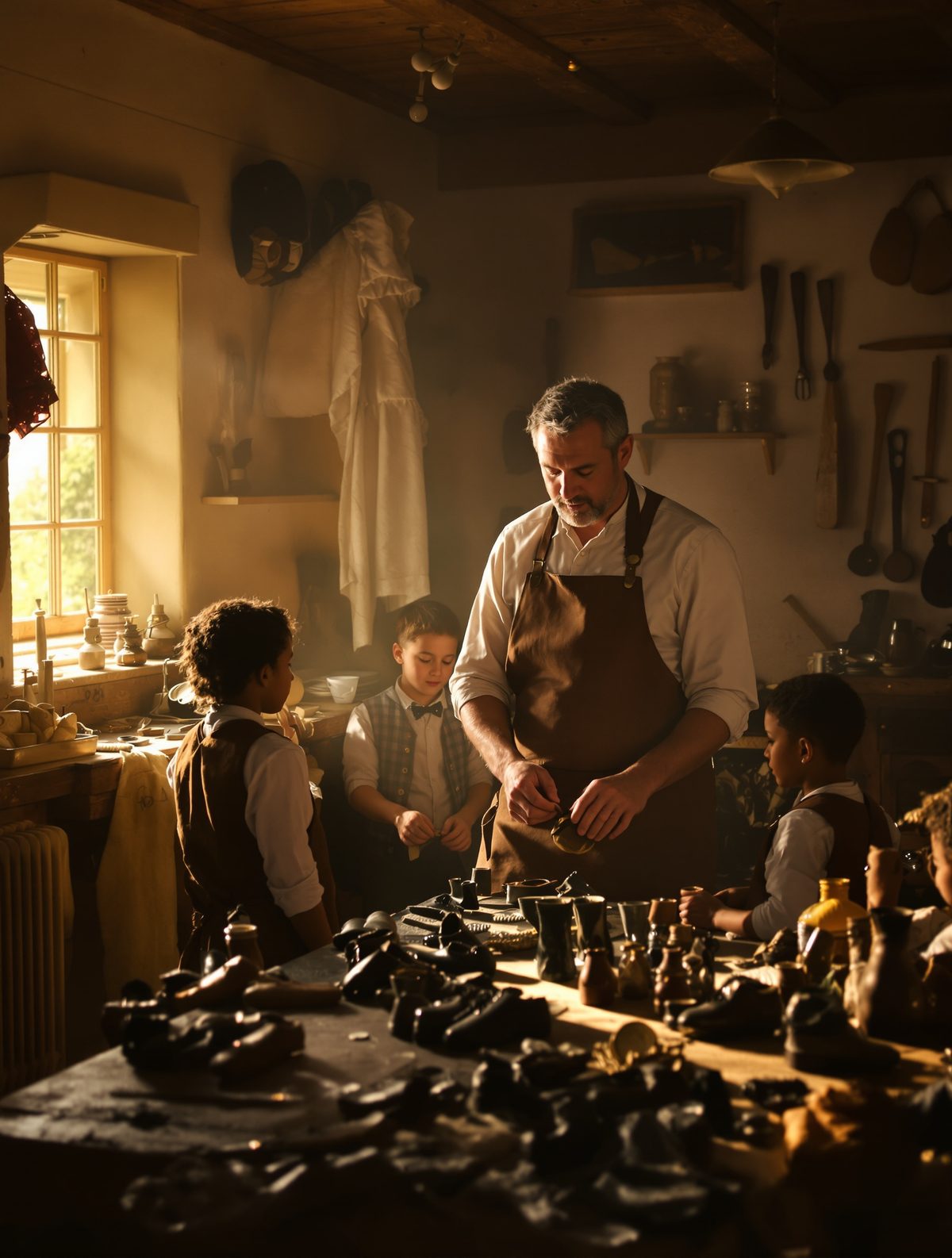
The year was 1818, and the cobwebs in John Pounds' cramped Portsmouth workshop trembled as tiny bare feet scampered across the wooden floor above his workbench. While the prosperous citizens of England debated the merits of educating the poor in their comfortable drawing rooms, a lame cobbler with calloused hands was already doing something about it. Between the rhythmic tap-tap-tap of his hammer on leather, you could hear something revolutionary: the voices of street children learning to read.
What started as one man's inability to watch hungry children beg outside his shop would grow into a movement that educated over 300,000 of Britain's most forgotten souls. This is the story of how a humble shoemaker accidentally invented a new kind of school—and changed the face of British education forever.
The Cobbler Who Couldn't Look Away
John Pounds never intended to become an educator. Born in 1766, he'd started life as a shipwright in Portsmouth's bustling naval yards, but a workplace accident in his teens left him with a permanently damaged leg and a limp that would stay with him for life. Unable to continue the physical demands of shipbuilding, he turned to cobbling—a trade that allowed him to work sitting down, hammering soles and stitching uppers in the narrow confines of St. Mary Street.
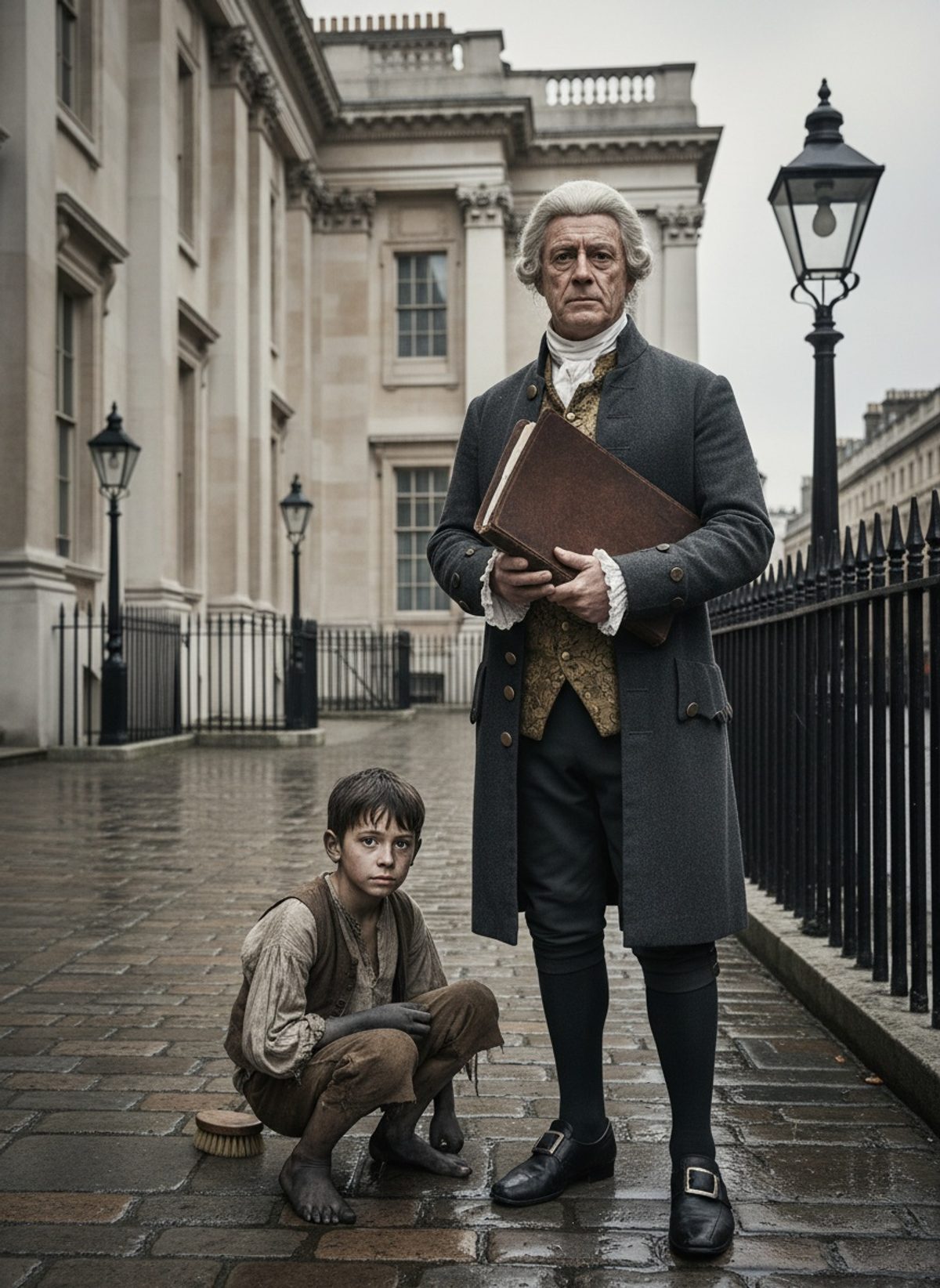
From his workshop window, Pounds had a front-row seat to one of Regency England's most heartbreaking spectacles: armies of ragged children roaming the streets like feral cats. These weren't the rosy-cheeked urchins of Dickensian imagination, but genuinely desperate souls—orphans, runaways, and abandoned children who survived by begging, stealing, or selling whatever they could find. Portsmouth, with its constant flow of sailors and naval traffic, was a magnet for such lost children.
Read next: The Day a Blind Pauper Boy Sang Before a Queen
The sight that finally broke Pounds' resolve came on a bitter winter morning in 1818. A young boy, no more than seven years old, was crouched in the doorway opposite his shop, so weak from cold and hunger that he could barely lift his head. Instead of simply offering the child food, Pounds did something different. He brought the boy inside, sat him by the fire, and while he warmed up, began teaching him the alphabet using a piece of leather and some chalk.
That single act of compassion would spark a revolution.
Lessons Between the Last and the Leather
Word spreads quickly among street children when someone offers genuine kindness without strings attached. Within weeks, Pounds found himself with a growing classroom of ragamuffins who would slip into his shop whenever they could. His teaching methods were as unconventional as his students were unruly.
Unable to afford proper slates, Pounds taught letters by scratching them into leather offcuts with his awl. He used the wooden lasts (shoe-shaping blocks) as makeshift desks, and scraps of paper became precious writing material. Mathematics lessons involved counting nails and calculating the cost of repairs. Geography came alive through stories of the ships that docked in Portsmouth's harbor, their exotic cargoes sparking discussions about distant lands.
But perhaps most remarkably, Pounds never stopped working. As he taught a child to sound out words, his hands continued stitching. While explaining sums, he hammered heels. The children learned that education didn't mean abandoning practical work—it enhanced it. Many of his pupils learned basic cobbling skills alongside their letters, giving them a potential path out of destitution.
The numbers grew steadily. By 1820, Pounds was regularly teaching around 40 children, ranging from toddlers who could barely walk to teenagers who towered over their teacher. His "school" operated from dawn to dusk, six days a week, with no fees, no uniforms, and no questions asked about background or behavior.
The Ragged School Revolution Takes Flight
News of the cobbler's extraordinary work began to filter beyond Portsmouth's narrow streets. In 1844, six years after Pounds' death, a young aristocrat named Lord Ashley (later the Earl of Shaftesbury) visited Portsmouth to see the legacy for himself. What he found amazed him: former street children who could read, write, and hold down honest jobs, all thanks to their education in a cramped cobbler's shop.
Lord Ashley had been wrestling with the problem of educating the poor through conventional means—church schools required regular attendance and decent clothing, while the new National Schools charged fees that street children could never afford. Pounds had solved these problems through sheer practical necessity. His approach was simple: take children exactly as they were, teach them where they were, and never turn anyone away.
Inspired by this model, Ashley established the Ragged School Union in 1844, formally launching what would become one of Victorian Britain's most successful educational movements. The name "ragged school" came directly from Pounds' original pupils—children so poor their clothes were literally falling apart.
The movement exploded across industrial Britain. By 1870, there were 350 ragged schools operating from London to Liverpool, teaching over 44,000 pupils daily. These weren't just classrooms but community centers offering food, basic healthcare, and job training alongside education. Some operated in railway arches, others in abandoned warehouses or converted stables—anywhere that could shelter society's forgotten children.
More Than ABCs: A Different Kind of Education
What made Pounds' approach revolutionary wasn't just that he taught poor children—it was how he taught them. While mainstream Victorian education relied on rote learning, strict discipline, and rigid timetables, the ragged schools pioneered a more flexible, compassionate approach born from necessity.
Pounds understood that hungry children couldn't concentrate, so he often provided basic meals. He knew that irregular attendance was inevitable when survival came first, so he made his lessons adaptable to whoever showed up on any given day. Most importantly, he recognized that traditional moral lectures meant nothing to children who'd been abandoned by society—kindness and respect had to come first.
This philosophy spread to other ragged schools. Teachers learned to be flexible, patient, and endlessly creative. Lessons incorporated whatever materials were available, from newspaper clippings to industrial waste repurposed as writing materials. The curriculum expanded beyond basic literacy to include practical skills—cooking, cleaning, basic trades, and money management—that could genuinely improve lives.
Perhaps most surprisingly, many ragged schools became breeding grounds for social reform. Alumni didn't just escape poverty; they became advocates for others. Several prominent Victorian social reformers and educators got their start as either pupils or teachers in ragged schools, creating a ripple effect that extended far beyond the original classroom walls.
The Cobbler's Lasting Legacy
When John Pounds died in 1839 at the age of 72, still working at his bench, Portsmouth mourned him like a lost father. His funeral procession stretched for miles, led by hundreds of former pupils whose lives he'd transformed. The Portsmouth Mercury reported that "rich and poor, gentle and simple" joined the cortege, testament to how his work had touched the entire community.
But Pounds' real monument wasn't built from stone—it was constructed from transformed lives and revolutionary ideas about education. The ragged school movement he inspired continued growing throughout the Victorian era, eventually educating over 300,000 children who might otherwise have remained illiterate.
Many of these schools evolved into the foundation of Britain's state education system. The Education Act of 1870, which established compulsory elementary education, drew heavily on lessons learned in ragged schools about inclusive, flexible teaching methods. The principle that every child deserved education regardless of background or circumstances—radical when Pounds first practiced it—became enshrined in British law.
Even today, echoes of Pounds' approach resonate in educational philosophy. The idea that schools should adapt to children's needs rather than demanding children conform to rigid systems; the recognition that learning happens best in environments of warmth and acceptance; the understanding that education must be relevant to students' real lives—these concepts trace their lineage back to a Portsmouth cobbler who simply couldn't bear to watch children suffer.
In our modern debates about inclusive education, alternative learning environments, and supporting disadvantaged students, we're still grappling with questions John Pounds answered with characteristic directness over two centuries ago. He didn't theorize about educational reform—he simply opened his door, shared what he knew, and proved that extraordinary change could begin with the smallest act of human kindness. Perhaps that's the most important lesson of all: sometimes the most profound revolutions start not with grand declarations, but with one person who decides they simply can't walk past suffering without stopping to help.