Picture this: it's a crisp September morning in 1726, and London's most distinguished physicians are racing through the Surrey countryside in their horse-drawn carriages, medical bags bouncing beside them. Their destination? A modest cottage in Godalming, where a servant woman named Mary Toft has just delivered something that would shake the very foundations of Georgian medicine. Not a baby—but a litter of rabbits.
What happened next would captivate a nation, fool the King's own doctors, and expose just how much the Age of Reason still had to learn about the mysteries of human biology.
The Servant Who Started a Scientific Revolution
Mary Toft was nobody special—at least, not until September 27, 1726. The 25-year-old servant lived with her husband Joshua, a clothworker, in the small market town of Godalming. She already had three children and was, by all accounts, an ordinary woman living an ordinary life in Georgian England. But ordinariness was about to become a very distant memory.
It began with what seemed like a routine pregnancy that took an extraordinary turn. Mary claimed that during her pregnancy, she had been startled by rabbits while working in the fields—a common enough occurrence in the Surrey countryside. But according to the medical theories of the time, this seemingly innocent encounter had triggered something unprecedented in the annals of human reproduction.
Read next: The Day a Black Sailor Walked Into Court and Freed Himself
When Mary went into labor, instead of delivering a human child, she produced something that defied all known laws of nature: parts of rabbits. The local surgeon-apothecary, John Howard, was summoned to attend what he assumed would be a difficult but conventional birth. What he witnessed instead would launch him into the history books and nearly destroy his career.
Howard watched in amazement as Mary delivered rabbit parts—legs, a torso, pieces that appeared to be from multiple animals. In the days that followed, she continued to produce more rabbit remains. By Howard's count, she had delivered parts from at least nine rabbits. The implications were staggering: had they discovered a new form of human reproduction?
When Kings' Physicians Came Calling
Word of Mary's miraculous births spread like wildfire through Georgian society. This wasn't merely village gossip—this was potential scientific revolution. The reports reached London's medical establishment, where they caused immediate sensation. If true, Mary Toft's case would rewrite everything doctors understood about human reproduction and challenge the very nature of species themselves.
The gravity of the situation demanded the highest medical authorities. Nathanael St. André, surgeon to King George I's household, made the journey to Godalming in November 1726. St. André was no country quack—he was one of the most respected medical minds in Britain, a man whose word carried weight in both royal circles and scientific society.
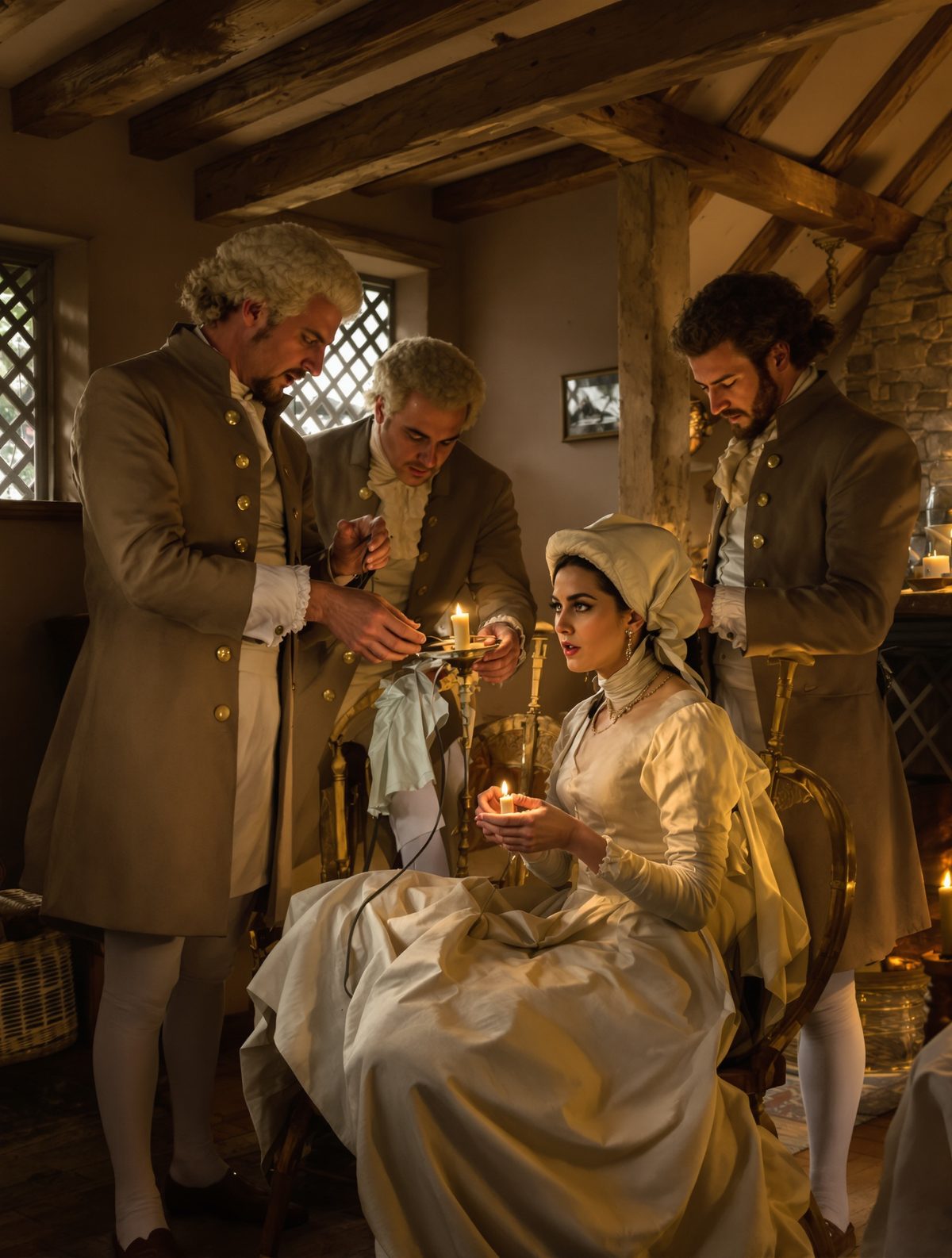
What St. André witnessed convinced him completely. He observed Mary deliver what appeared to be rabbit parts, examined the specimens, and found them anatomically consistent with genuine rabbit anatomy. The royal surgeon was so convinced that he immediately penned detailed reports back to London, describing the extraordinary case in clinical detail.
But St. André wasn't the only distinguished physician to make the pilgrimage to Surrey. Dr. James Douglas, a fellow of the Royal Society and one of London's most prominent obstetricians, also traveled to examine Mary. Like St. André, Douglas emerged convinced that he had witnessed something genuinely supernatural—or at least beyond current medical understanding.
The case became so significant that Mary was brought to London for further examination under controlled conditions. She was installed in Lacy's Bagnio in Leicester Fields, where the capital's medical elite could observe her more closely. The King himself was reportedly fascinated by the case, eagerly awaiting updates from his physicians.
The Science Behind the Impossible
To understand how Britain's brightest medical minds could be so thoroughly deceived, we must step into the worldview of Georgian medicine. The early 18th century was a time of transition between medieval superstition and modern scientific method—and that transition was far from complete.
The prevailing theory that made Mary's claims believable was called "maternal impression"—the idea that a pregnant woman's experiences could directly affect her developing child. If a pregnant woman was frightened by a fire, her child might be born with burn-like marks. If she craved strawberries, the baby could emerge with strawberry-shaped birthmarks. This wasn't folklore—it was accepted medical doctrine, taught in universities and practiced by learned physicians.
In Mary's case, the theory suggested that her encounter with rabbits during pregnancy had been so profound that it had literally transformed her reproductive process. Her womb, impressed by the form and nature of rabbits, had begun producing rabbit offspring instead of human babies. To Georgian doctors, this wasn't just possible—it was scientifically logical.
The anatomical examinations seemed to support this extraordinary conclusion. The rabbit parts Mary produced appeared genuine, complete with proper bone structure, organs, and tissue. When dissected, they displayed all the characteristics of real rabbit anatomy. For physicians working with the medical knowledge of 1726, the evidence seemed overwhelming.
What these distinguished doctors didn't realize was that they were witnessing one of history's most elaborate medical hoaxes—and Mary Toft had become a master of deception that would have impressed any stage magician.
The House of Cards Begins to Crumble
Mary's extraordinary run couldn't last forever. As the weeks passed and the scrutiny intensified, cracks began to appear in her remarkable story. The constant observation in London made it increasingly difficult to maintain the deception, and some physicians began to notice inconsistencies that troubled their scientific minds.
The first major crack came from an unexpected source: economics. Thomas Howard (no relation to the original surgeon John Howard), another physician investigating the case, began to notice something odd. Every time Mary produced rabbit parts, they appeared to be from rabbits that had been dead for some time—yet they were supposed to be fresh births. Moreover, the types of rabbits she was "delivering" seemed to correlate suspiciously with what was available in local markets.
Dr. Cyriacus Ahlers, a German physician, raised additional concerns. He noted that the rabbit parts showed signs of decomposition inconsistent with fresh births, and that some pieces appeared to have been cut with a knife rather than naturally separated. These observations planted seeds of doubt among the medical community, though many still clung to the extraordinary explanation.
The pressure mounted when Mary was placed under even stricter surveillance. Guards were posted, and her every movement was monitored. Under these conditions, she stopped producing rabbit parts entirely—a development that her supporters explained as natural exhaustion from her unprecedented reproductive efforts.
But the most damning evidence came from an unexpected confession. A porter was caught attempting to smuggle a rabbit into Mary's chambers at the bagnio. Under questioning, he revealed that he had been paid to provide Mary with rabbits—not for food, but for purposes he didn't fully understand. The conspiracy was beginning to unravel.
The Confession That Shattered Georgian Science
On December 4, 1726, faced with mounting evidence and the threat of prosecution for fraud, Mary Toft finally broke. In a detailed confession, she admitted to the elaborate hoax that had captivated England for months and fooled some of the nation's most brilliant medical minds.
Read next: The Day a London Clerk Walked Into Court for a Dying Slave
The method was as ingenious as it was disturbing. Mary had been inserting pieces of dead rabbits into her birth canal, then "delivering" them during her supposed labors. She had carefully prepared the rabbit parts, sometimes keeping them concealed for days before the staged births. The whole scheme had been orchestrated with the help of several accomplices, including the original surgeon John Howard, who may have been motivated by the fame and money the case was bringing him.
The confession sent shockwaves through Georgian society. Nathanael St. André, the King's own surgeon, found his reputation in ruins. He had staked his professional credibility on Mary's case, writing detailed accounts and defending her authenticity to the highest levels of society. James Douglas and other distinguished physicians who had supported the case faced similar professional embarrassment.
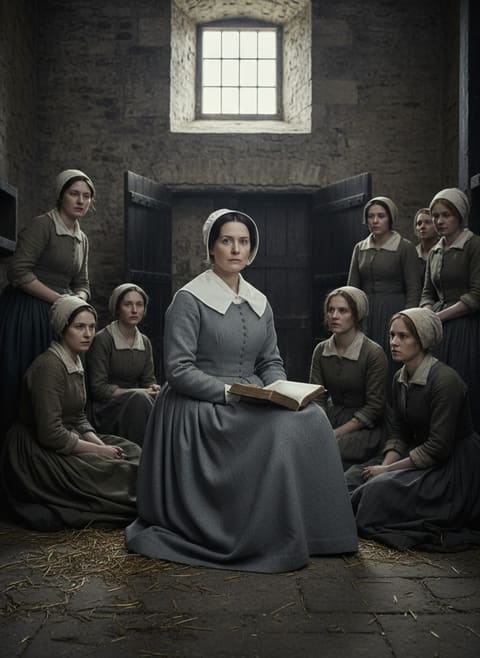
Mary Toft was briefly imprisoned in Bridewell Prison but was released without trial after several months. The authorities seemed more interested in making the embarrassing episode disappear than in pursuing criminal charges that would only further highlight how thoroughly the medical establishment had been deceived.
John Howard faced more serious consequences, with his medical practice effectively destroyed by the scandal. The man who had started it all by reporting the first "births" found himself ostracized by the medical community and struggled to rebuild his career in the aftermath.
The Legacy of History's Greatest Medical Hoax
The Mary Toft affair represents far more than an amusing historical footnote—it marks a crucial turning point in the development of modern medical science. The case exposed the dangerous gap between emerging scientific method and lingering medieval thinking that characterized the early Georgian era.
In the aftermath of the scandal, the British medical establishment began to demand more rigorous standards of evidence and observation. The embarrassment of being fooled by a servant woman prompted doctors to question long-held beliefs about maternal impression and other theories that had been accepted without sufficient scientific scrutiny. In many ways, Mary Toft's hoax accelerated the development of modern medical skepticism.
The case also highlights the enduring human fascination with the impossible and extraordinary. In an age before mass media, Mary's story spread through Georgian society with remarkable speed, capturing imaginations and challenging assumptions about the natural world. People wanted to believe in something miraculous, something that transcended the ordinary boundaries of human experience.
Perhaps most remarkably, the Mary Toft affair reminds us that expertise and authority are no guarantee against deception. The most learned men of their age—physicians who served kings and held positions in prestigious institutions—were completely taken in by an elaborate fraud. Their certainty, their scientific explanations, and their professional reputations counted for nothing against clever deception and their own willingness to believe in the extraordinary.
Today, as we navigate an era of medical misinformation and false claims that spread instantly across digital networks, Mary Toft's rabbit births offer a timeless lesson: even in an age of reason, critical thinking and healthy skepticism remain our most valuable tools for distinguishing truth from fiction.