The autumn mist clung to the cobblestones of Brussels as dawn broke on October 12, 1915. In the courtyard of Tir National shooting range, a small figure in a long blue dress stood perfectly still, refusing the blindfold offered by her German captors. Edith Cavell, a 50-year-old British nurse, faced eight rifles pointed at her chest. Hours earlier, she had written in her final letter: "I have no fear nor shrinking; I have seen death so often that it is not strange or fearful to me."
What the firing squad didn't know was that this quiet woman from Norfolk had orchestrated one of the most audacious rescue operations of the Great War, spiriting nearly 200 Allied soldiers to freedom right under their noses. Her story would become legend, but the full truth of her daring network remained buried in classified files for decades.
The Angel of Brussels Behind Enemy Lines
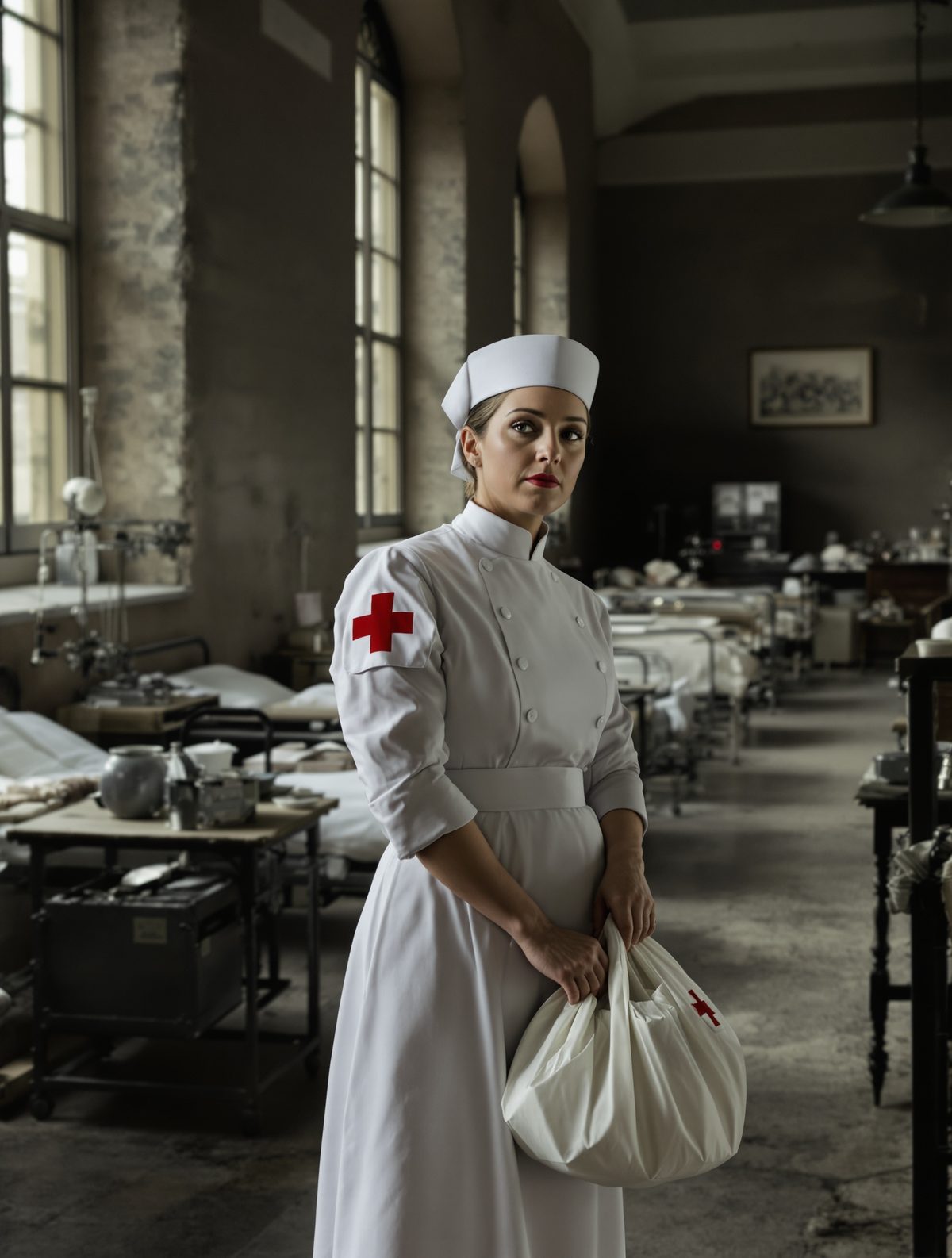
When German forces swept through Belgium in August 1914, Edith Cavell could have fled. Instead, she chose to stay at her post as matron of the Berkendael Medical Institute, a nursing school she had founded in Brussels five years earlier. Born in the tiny village of Swardeston, Norfolk, Cavell had dedicated her life to healing. She spoke fluent French and German, and believed passionately that medicine knew no nationality.
The Germans, recognizing the Red Cross neutrality of her hospital, allowed it to continue operating. What they didn't realize was that they had just handed the key to Brussels to one of Britain's most resourceful citizens. Cavell's hospital sat in the elegant Ixelles district, perfectly positioned near major transportation routes. More importantly, it was staffed by Belgian nurses whose hearts burned with resistance against the occupation.
Read next: The Night a Teenage Gunner Held the Bridge at Arnhem
At first, Cavell genuinely maintained neutrality, treating wounded German soldiers with the same care as Belgian civilians. German officers praised her dedication, never suspecting that the soft-spoken English nurse was quietly cataloguing every detail of their operations, memorizing patrol schedules, and noting which guards could be trusted.
From Mercy to Resistance: The Network Takes Shape
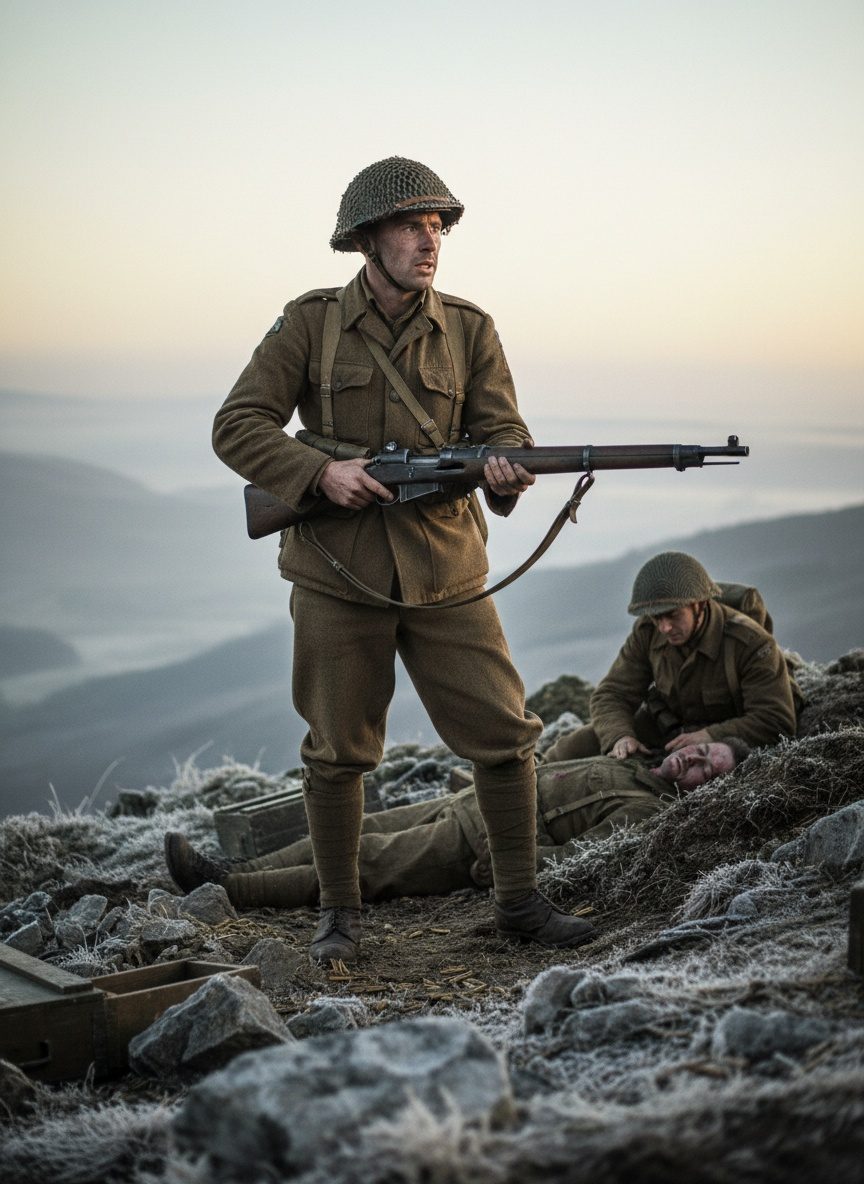
Everything changed in November 1914 when two British soldiers, separated from their units during the chaotic retreat from Mons, stumbled into Cavell's hospital. Colonel Dudley Boger and Sergeant Fred Meachin were exhausted, wounded, and desperate. Under the laws of war, Cavell should have turned them over to German authorities immediately.
Instead, she hid them in the hospital's basement.
This single act of defiance sparked what would become the most sophisticated escape network in occupied Belgium. Working with Philippe Baucq, a Belgian architect and underground newspaper publisher, and Prince Réginald de Croÿ, a Belgian aristocrat whose château near the French border offered the perfect safe house, Cavell began building an operation that would shame modern intelligence agencies.
The network operated with clockwork precision. Escaped Allied soldiers, shot-down pilots, and French civilians fleeing forced labor were smuggled into Brussels through a web of safe houses. They arrived at Cavell's hospital disguised as patients, complete with fake medical records written in her meticulous handwriting. Belgian women, many of them Cavell's former nursing students, risked their lives daily as couriers, carrying coded messages hidden in medical supplies and laundry baskets.
The Underground Railway to Freedom
What made Cavell's operation extraordinary wasn't just its scale, but its sophistication. She created an entire underground identity system, complete with forged papers, Belgian work clothes, and cover stories so detailed they could withstand scrutiny. British soldiers were transformed into Belgian laborers, complete with authentic calluses painted on their hands and crash courses in Flemish phrases.
The escape route itself was a masterpiece of planning. Soldiers would leave Brussels hidden in delivery trucks, travel to Prince de Croÿ's Château de Bellignies near the French border, then slip across during carefully timed German patrol changes. From there, French resistance fighters guided them to Allied lines.
Between November 1914 and July 1915, nearly 200 men made this perilous journey to freedom. Among them was Private Harry Beaumont of the Lancashire Fusiliers, who later wrote: "Miss Cavell saved my life twice – once from my wounds, and once from a German prison camp. She was the bravest person I ever met, man or woman."
But Cavell's network achieved something even more remarkable than individual rescues. The intelligence gathered by escaped soldiers provided British command with crucial information about German troop movements, defensive positions, and morale. In essence, every soldier Cavell saved became a living intelligence report.
The Trap Springs Shut
By summer 1915, German counterintelligence had noticed the suspicious number of Allied soldiers appearing at their own lines with detailed knowledge of German positions. Captain Otto Mayer of German military police began a methodical investigation that would ultimately doom Cavell's operation.
The breakthrough came from an unexpected source. Gaston Quien, a Belgian collaborator posing as an escaped French soldier, infiltrated the network in July 1915. For weeks, he gathered evidence while Cavell's team, believing they were saving another Allied life, showed him every detail of their operation.
On July 31, 1915, German police struck simultaneously across Brussels. Prince de Croÿ was arrested at his château. Philippe Baucq was seized while printing underground newspapers. And at dawn on August 5, German officers arrived at the Berkendael Institute with a warrant for Edith Cavell.
They found her calmly preparing breakfast for her patients. When shown the evidence against her, Cavell made a decision that shocked even her interrogators. Rather than deny the charges or attempt to negotiate, she confessed completely. "I have helped soldiers reach the frontier," she stated simply. "They would have been shot if they had been caught."
The Dawn That Shook the World
Cavell's trial was a foregone conclusion. German military law was clear: anyone assisting enemy soldiers faced execution. But what followed became one of the greatest propaganda disasters in German military history. International law clearly stated that women civilians should not be executed, and the Red Cross frantically negotiated for clemency.
Even German officers were uncomfortable. Captain Mayer himself recommended imprisonment rather than death. But General Moritz von Bissing, military governor of Belgium, was determined to make an example that would terrify other potential resistance fighters.
On the night of October 11, 1915, Cavell was informed she would be shot at dawn. She spent her final hours writing letters and speaking with Reverend Stirling Gahan, an Anglican chaplain. Her last recorded words have become legendary: "Standing as I do in view of God and eternity, I realize that patriotism is not enough. I must have no hatred or bitterness towards anyone."
At 6 AM on October 12, Edith Cavell walked steadily to the execution ground. She refused to wear a blindfold, looking directly at the firing squad. The first volley failed to kill her immediately; an officer had to deliver the coup de grâce with his pistol.
A Legacy Written in Courage
The execution of Edith Cavell became one of the defining moments of World War I, generating more anti-German sentiment than any single military defeat. Within days, recruitment offices across Britain and America were flooded with volunteers seeking to avenge the "murder of the angel of Brussels." The Germans had gained nothing and lost immeasurably in global opinion.
But Cavell's true legacy lies not in propaganda, but in the extraordinary moral courage she displayed. In an age of total war, when hatred seemed the only rational response to brutality, she chose compassion. She saved German soldiers with the same dedication she showed British ones, proving that humanity could survive even in war's darkest corners.
Today, when the world again faces the choice between fear and compassion, between tribal loyalty and universal humanity, Edith Cavell's final words ring with prophetic power. "Patriotism is not enough." In our interconnected world, where the stranger in need might be our neighbor tomorrow, perhaps the quiet nurse from Norfolk understood something about courage that we're still learning to comprehend.