The Battle of Arsuf is often remembered as a clash of mere brute force. But it was the excruciating patience of Richard the Lionheart that won the day.
Walking the Line in the Midday Sun
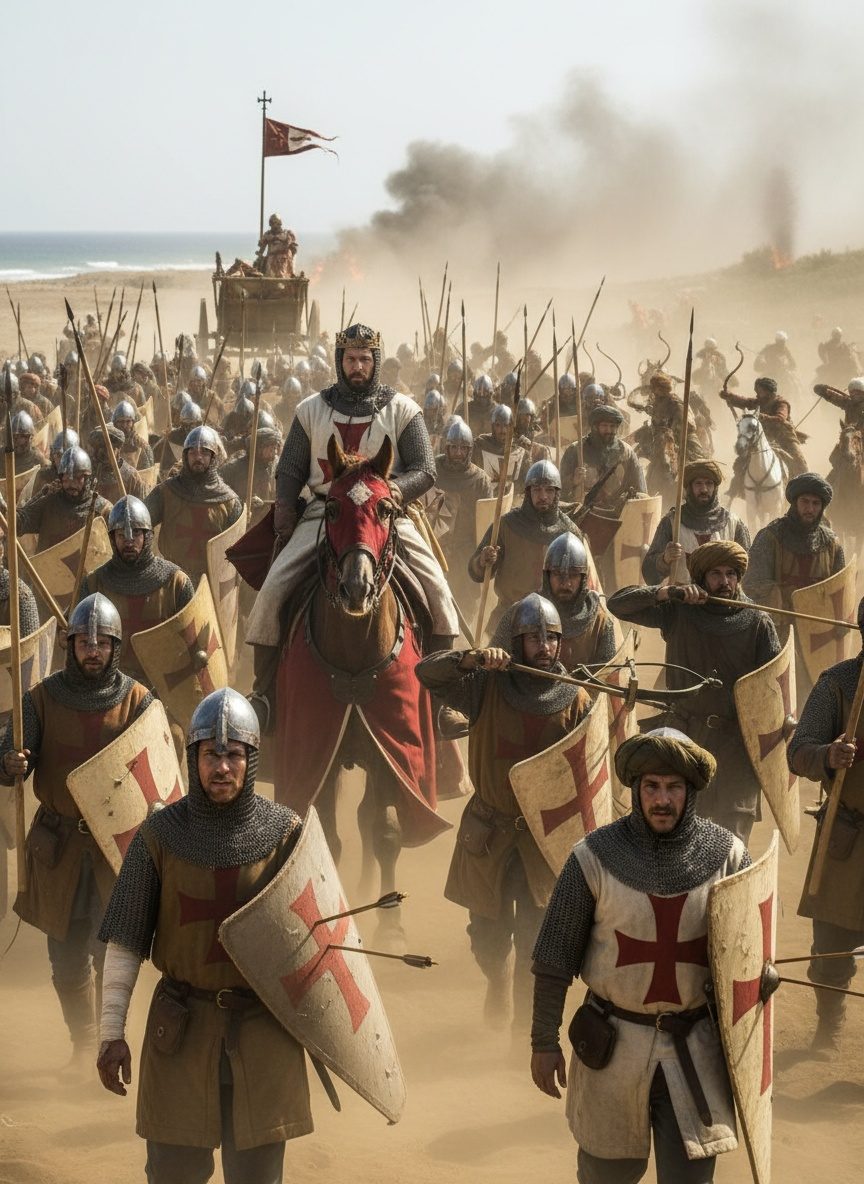
In the scorching September of 1191, Richard I, known as the Lionheart, audaciously led his army south from Acre to Jaffa, cutting a path along the eastern Mediterranean coast of the Holy Land. The march was relentless, not just because of the intensity of sun beaten down on the full-mail-clad Crusaders, but also due to the specter of Saladin, the imposing Sultan of Egypt and Syria, trailing their every step.
With each agonizing mile, Richard's forces were bombarded by wave after wave of arrows, a constant harrowing rain from Saladin’s expert horse archers. The heat was sweltering, with the sun a merciless eye above, reflecting off the burnished armor of the soldiers to become an inferno. Yet, through these discomforts, the horde pressed on, maintaining an unwavering discipline under Richard’s watchful gaze.
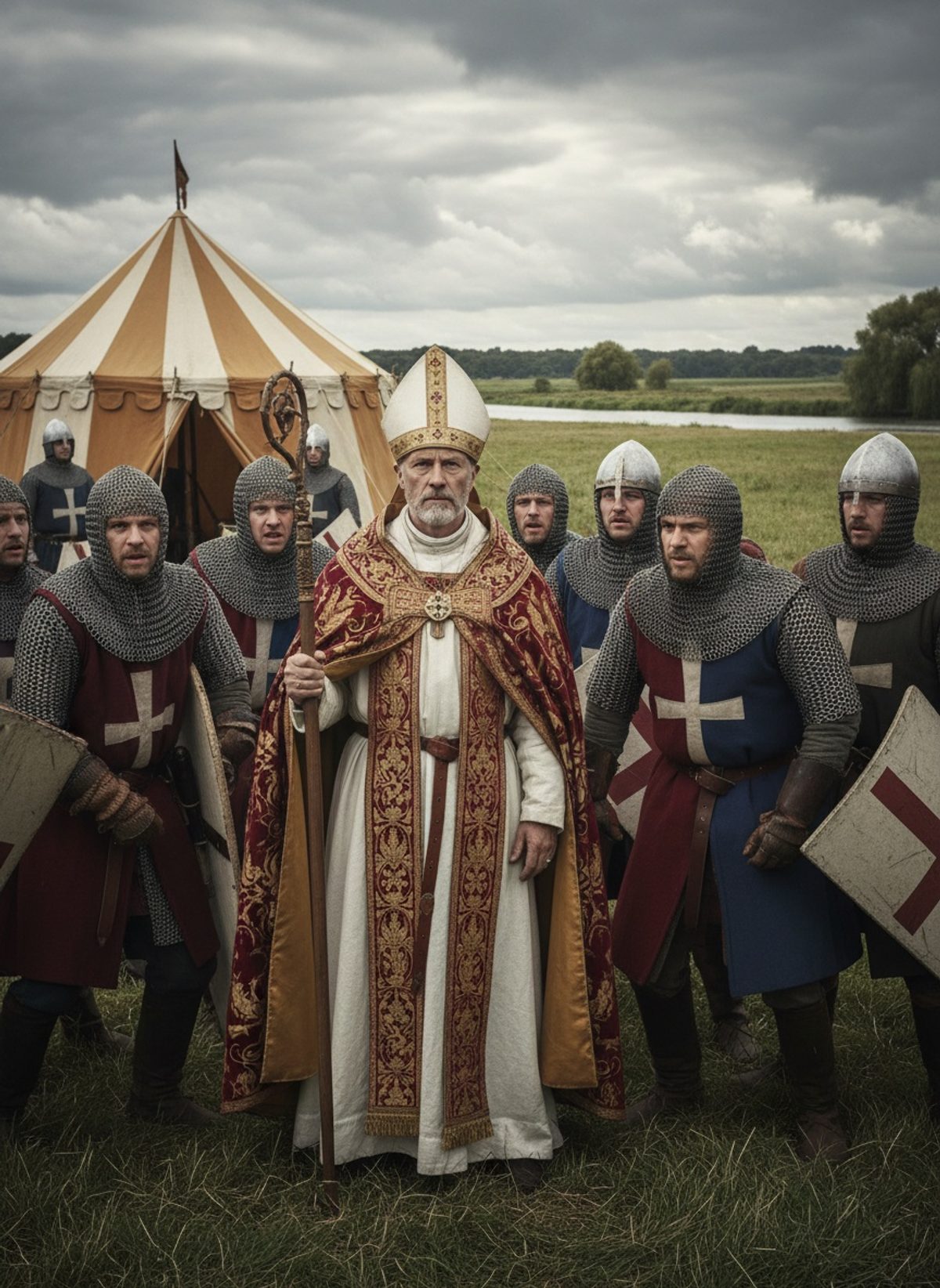
The Crusader knights, fervent and fiery as their king’s emblematic name suggests, grew increasingly restless. Their bloodlust simmered beneath a strict command of restraint. Richard’s iron hand kept them in check, refusing every plea to break ranks and strike back. His vision was greater than individual skirmishes. He had seen what Saladin could do to a disorganized army. Years of campaigning had pressed hard lessons upon him: a disjointed charge would mean disaster.
Read next: The Day a Queen Walked Into a Rebel Camp Alone
Yet, this methodical advance was far from an exercise in caution. Richard, with acute clarity, was laying the groundwork for a strategic masterpiece. His understanding of Saladin’s tactics was intimate; he recognized the signs of a pincered trap that lay ahead should he falter. Thus, rather than being drawn into impulsive retaliation, Richard had chosen to set his own snare in the sands of Arsuf — and he was determined to sustain the discipline necessary to spring it.
A Dance on the Plains of Arsuf
Patience wore thin as they finally reached Arsuf, about 80 miles from their starting point. It was here, amidst the vast, golden plains edged by the azure coastline, that Richard’s plan began to unfurl. The Lionheart deployed his ranks meticulously: the infantry with the crossbowmen formed the backbone, while his mounted knights concealed their zeal behind practiced nonchalance.
Saladin, always the keen strategist, saw an opportunity. Mistaking Richard’s deliberate restraint for fatigue and hesitation, he doubled down on his attacks. Saladin’s cavalry, renowned for their speed and dexterity, launched vehement charges, probing the Crusader lines for any weakness. The chieftains hurled their soldiers into a tempest of conflict, convinced they could shatter Richard’s formations with a decisive strike.
But the Crusaders held firm. Shouts and screams tangled with the violent clash of steel and cries of war echoed across the plains. Dust clouds rose like ghosts, shadows cast by the afternoon sun’s relentless blaze. A tension subdued all, a suspended breath before the inevitable crescendo.
At precisely the right moment, Richard unleashed his trap. With a thunderous charge, reminiscent of celestial wrath, his knights smashed into the Saracen cavalry. The power and speed of their onslaught were irrepressible. Saladin’s men, caught by surprise, faltered as Crusader cavalry swept through their ranks like a scythe, wheeling and diving with practiced precision.
The stalemate erupted into chaos, transforming the calm calculation of Saladin’s approach into frantic survival. It was a sight to behold, a spectacle where calculated patience yielded a triumph of strategy over mere brute strength.
The Lionheart’s Calculated Gambit
The outcome of the Battle of Arsuf did not mark the fall of Saladin, whose resilience and resources remained formidable. Yet, the psychological blow dealt to his confidence was significant. He had underestimated the tenacity and tactical acumen of a king whose reputation was not merely founded on the stories of heroism but tempered through the harsh realities of warfare.
Richard’s victory was not just in the realm of physical conquest. It was a testament to his ability to wield restraint as a weapon, a refusal to be drawn into the impulsive, fiery bravado that could be expected from a king known for his courage. In war, valor must be accompanied by caution, and Richard’s leadership at Arsuf became a case study in the duality of power and patience, laying down markers for military strategies that echoed beyond those dusty plains.
The ramifications rippled through the years — a proof that the greatest victories are often not won by the sword alone but by the mind that guides it, learning when to hold back as when to impose. At Arsuf, under the brutal midday sun, Richard the Lionheart carved his legend into the annals of history, not with immediate conquest, but with a lesson that forward-thinking and discipline can turn the tide of battle.
As we reflect on Arsuf today, the story beckons us to re-evaluate the nature of true leadership. In an age that reveres quick victories and decisive action, Richard’s calculated control provides a potent reminder that sometimes, holding back can become the key to advancing beyond expectation. It's a tale less found in textbooks but no less crucial, urging us to ponder the intricate dance between restraint and power that marks every great endeavor.