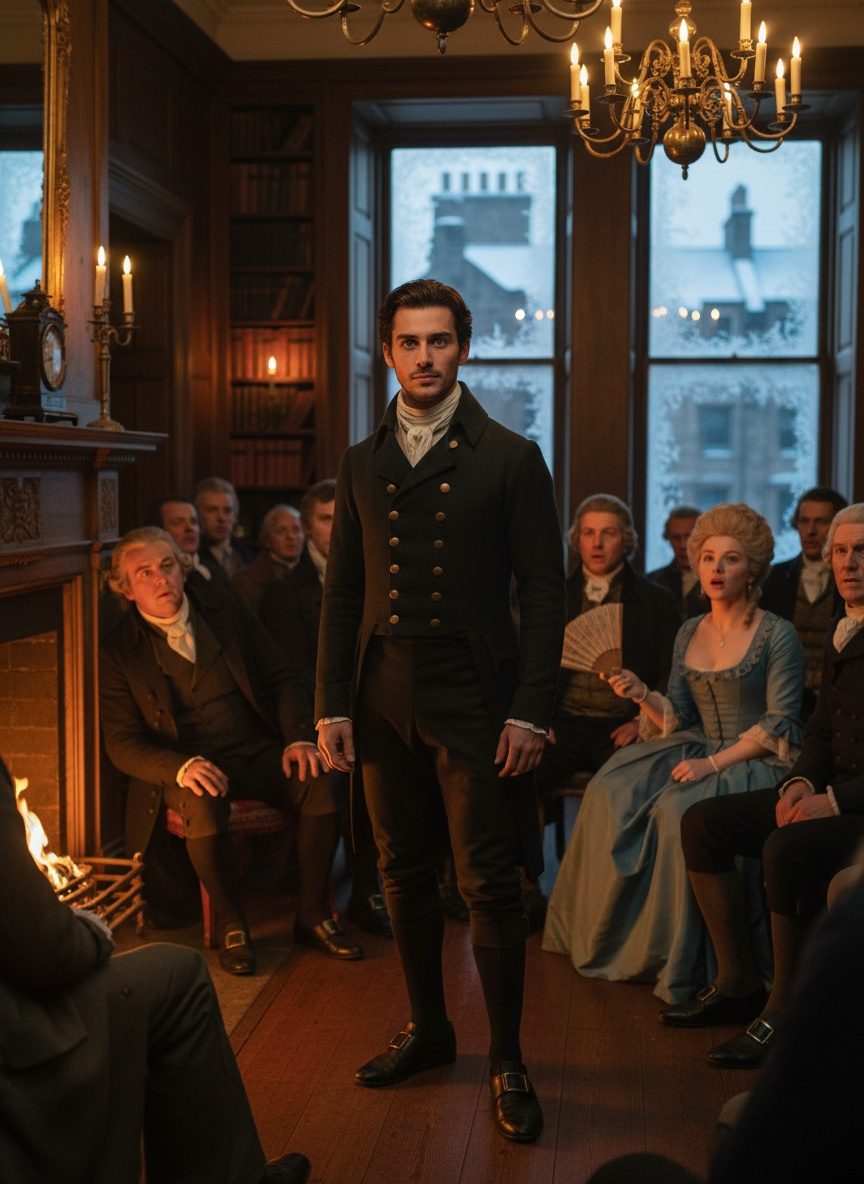
January 3, 1786. Snow clung to the edges of Edinburgh's cobbled streets like a forgotten coat of white paint, residue of a brutal Scottish winter.
A sense of anticipation hung thick in the air. Edinburgh, a city of imposing stone buildings and narrow, winding lanes, was buzzing with eager whispers. The most illustrious minds of the Scottish Enlightenment had gathered in a modest room, the flickering candlelight casting soft shadows on the walls. Philosophers, judges, and scholars huddled together, their breaths momentarily visible in the cold air, united in curiosity and a hint of skepticism. The tales of a farmer’s son from Ayrshire had reached their ears—a young man with a keenness of intellect unheard of among the rural ploughmen they so easily underestimated.
The door creaked open, admitting a man whose presence immediately silenced the room. Robert Burns stood before them, the soil of his journey still visible on his boots, the wind of adventure tousling his dark curls. In his hand, he carried a small book bound in tatty leather—the modest yet profound artifact that had brought him here: *Poems, Chiefly in the Scottish Dialect*, published earlier that year. Burns was not a figure of nobility; he possessed none of the trappings that the cultural elite typically respected. He was, however, a revelation in humble guise, wearing the demeanor of a man both confident and unassuming.
Burns began to speak, his words steeped in the lyricism of his homeland. Each sentence flowed like a melody only a ploughman could know—each phrase deliberate yet resonant, rich with the rhythm of the Scots language and the cadence of an untamed sonnet. His voice carried warmth and wit across the crowded room; listeners, while cloaked in the grandeur of learning and prestige, were left vulnerable to the raw emotional honesty emanating from this man of the land.
Read next: The Day a Scots Village Chose Its Own Name and Kept It
He recited lines that paid homage to the simple beauty of rural life, capturing everyday moments with a clarity that rivaled the most intricate compositions. Images of mice scuttling through fields, lovers exchanging shy glances by the moonlight, and the humble reflections of a weary man echoed in the hall. With every stanza, Burns's words transcended mere sounds; they became vivid pictures that danced in the imaginations of those in attendance. The scholars had come to scrutinize a literary upstart; instead, they found themselves captivated by a voice that spoke directly to the human experience, disregarding societal boundaries.
Burns was not merely reciting poetry, he was drawing from a well of shared experience—common trials and joys that resonated universally, regardless of one's social standing. In that moment, Edinburgh's intellectual elite, governed by their own layers of sophistication, rediscovered the formidable power of emotional authenticity. The pastoral themes that ran through his verses struck a chord, as if they themselves had longed for the simplicity they thought they had forsaken.
The room hung on his every word, suspended in a singular unity of appreciation. The night evolved into a shared journey—a tempestuous ride along the verses that defied time, gingerly excavating the raw truths of life. Little by little, the division between the poet and his audience eroded, and what remained was a connection as pure as it was simple.
As Burns concluded and silence reclaimed the room, a silent acknowledgment rippled amongst the attendees. Here was a man who, despite his modest beginnings, had bridled language with the intimacy of his own experience, translating it from the ploughman's perspective to a tapestry of heartfelt truths. It wasn’t just the themes he explored, but the genuine rawness of his work, his fearlessness in addressing both the charming and the crude, that left an indelible impression.
The impact of Burns’s visit to Edinburgh extended far beyond that singular evening. By capturing the soul of Scotland in his prose, he ignited a spark—not just a celebration of Scottish culture, but a reminder of the power embedded within the spoken word. This self-taught bard from Ayrshire brought to light the worth of vernacular expression with an elegance and grace that defied expectation.
In the years following that night, Burns’ influence only grew, carrying his interpretations of love and humanity well beyond the snowy streets of Edinburgh. His work continues to be cherished centuries later—not simply for its literary brilliance but because it boldly asserts the vitality of the authentic voice. In illuminating the everyday, Burns revealed the extraordinary, and on that icy winter's eve in Edinburgh, he had prompted the most skeptical minds to listen and to remember that, oftentimes, the most profound contributions come not from lofty towers of academia, but from the honest depths of lived experience. Burns reminded us that the power of poetry lies in its ability to silence a room and, in that silence, make us hear the truths we had forgotten to listen for.