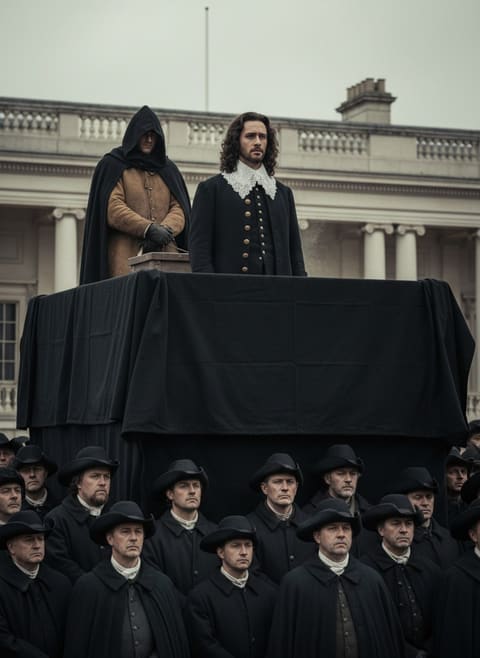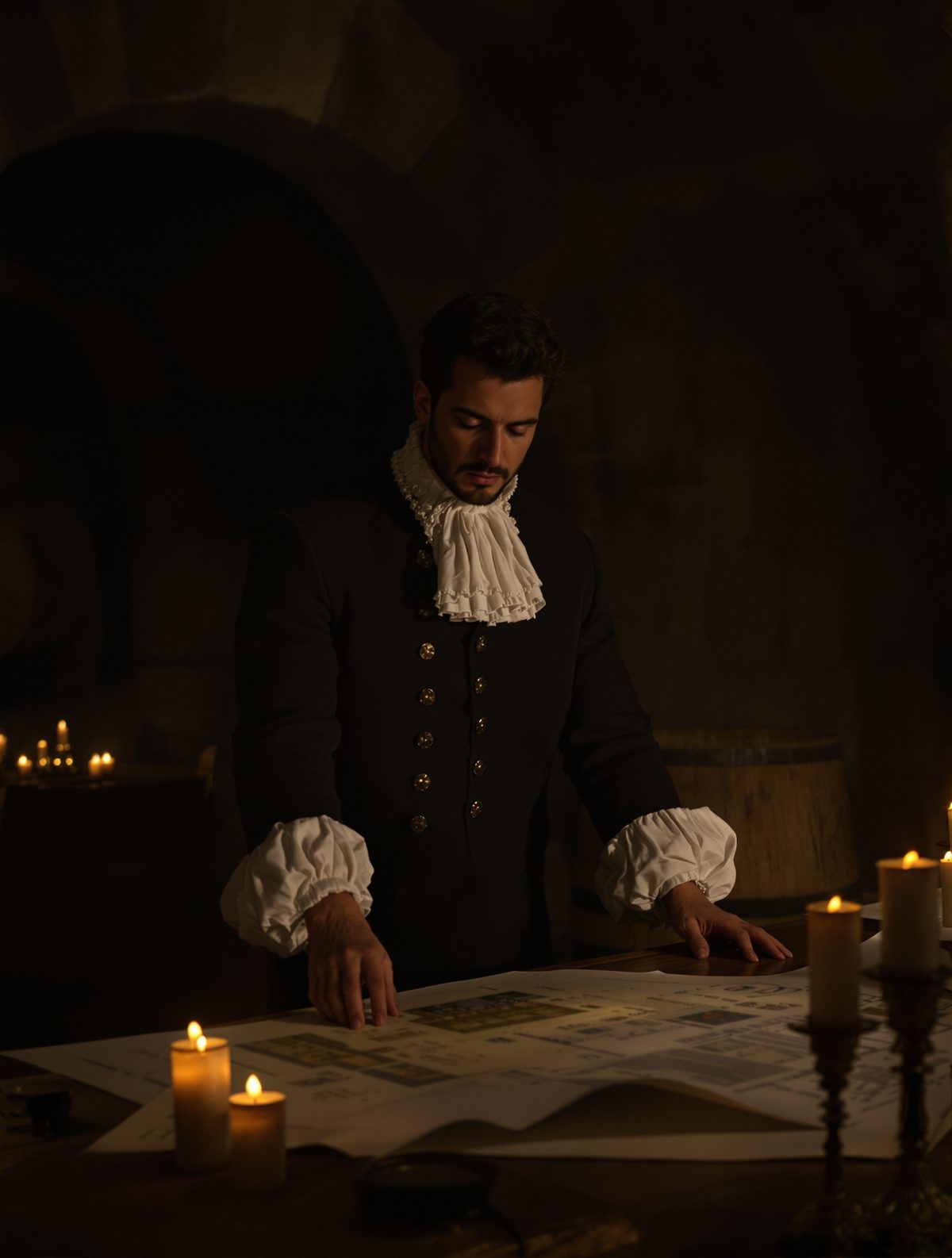
In the flickering candlelight of a London tavern on May 20th, 1604, a handsome gentleman with piercing eyes and an aristocrat's bearing leaned across a wooden table toward four trusted companions. Robert Catesby's voice was barely above a whisper, but his words would echo through history: "The nature of the disease requires so sharp a remedy." What he proposed that night wasn't just treason—it was the complete annihilation of England's Protestant establishment in a single, thunderous moment.
While every British schoolchild knows the rhyme about Guy Fawkes and his gunpowder treason, few realize that the tall, dark-haired Yorkshire convert was merely the hired hand. The true mastermind behind the most audacious terrorist plot in British history was a Warwickshire gentleman whose magnetic personality and unwavering conviction would convince twelve desperate men to attempt something that would have made 9/11 look modest in comparison.
The Making of a Revolutionary
Robert Catesby wasn't born a terrorist—he was forged into one by a Protestant state that systematically crushed Catholic dreams. The heir to Lapworth manor in Warwickshire, Catesby had everything a gentleman could want: wealth, education, charm, and devastating good looks that contemporaries compared to a Renaissance prince. Yet beneath this golden exterior burned the fury of a man who had watched his world crumble.
By 1604, Catesby had already lost a fortune—£4,000 in fines for his role in the Earl of Essex's failed rebellion, equivalent to nearly £2 million today. His beloved wife had died, his social standing lay in ruins, and the new Scottish king, James I, had proven even more hostile to Catholics than Elizabeth I. The Penal Laws were a daily humiliation: Catholics couldn't hold public office, practice law, or even travel five miles from their homes without permission. For a proud man like Catesby, these restrictions weren't just legal inconveniences—they were spiritual suffocation.
Read next: The Day a Tudor Chancellor Chose Death Over a Royal Lie
But what transformed this broken gentleman into history's most charismatic terrorist was his absolute conviction that God demanded action. Unlike other Catholic conspirators who plotted half-heartedly or hoped for foreign intervention, Catesby possessed something far more dangerous: the unshakeable belief that he was Heaven's chosen instrument.
Assembling the Perfect Storm
Catesby understood that successful revolution required more than righteous anger—it needed the right men with the right skills. Like a criminal mastermind casting the perfect heist crew, he spent months identifying and recruiting each conspirator for their specific talents.
Thomas Wintour brought international connections and diplomatic experience from his travels across Catholic Europe. John Wright was the muscle—a swordsman so feared that contemporary accounts describe him as "dangerous beyond measure" in combat. Thomas Percy provided the crucial element they desperately needed: access. As a Gentleman Pensioner of the King, Percy could rent properties near Parliament without suspicion.
And then there was Guy Fawkes—though this wasn't the name Catesby knew him by. The man who would become history's most famous terrorist was then calling himself Guido Johnson, a battle-hardened veteran of Spain's wars in the Low Countries. Catesby didn't recruit him for his fanaticism, but for his technical expertise. Fawkes knew gunpowder like a master chef knows spices—exactly how much was needed, how to store it, and most crucially, how to detonate it for maximum devastation.
What made Catesby's recruitment so effective wasn't just his ability to identify talent, but his genius for understanding what motivated each man. He didn't offer them glory or riches—he offered them salvation. To these desperate, marginalized Catholics, Catesby presented the plot not as terrorism, but as a holy crusade that would restore England to the true faith.
The Deadly Mathematics of Destruction
The plan Catesby conceived was breathtaking in its ambition and terrifying in its simplicity. November 5th, 1605, would see the State Opening of Parliament, when King James I, Queen Anne, Prince Henry, the entire House of Lords, the House of Commons, the senior judiciary, and the Protestant bishops would all be gathered in one building. In a single explosion, Catesby could decapitate the entire Protestant establishment.
The mathematics were coldly calculated. Thirty-six barrels of gunpowder—nearly two tons—stacked in the cellar directly beneath the House of Lords. Modern explosives experts estimate this would have created a blast equivalent to roughly 3,000 pounds of TNT, obliterating not just the Palace of Westminster but damaging buildings for half a mile in every direction. The death toll wouldn't have been in the dozens, but the thousands.
Yet even this apocalyptic destruction was just the opening move in Catesby's grand strategy. While London reeled in chaos, the conspirators would kidnap Princess Elizabeth from Coombe Abbey, proclaim her the new Catholic queen, and trigger a coordinated Catholic uprising across England. It was regime change through terrorism on an almost unimaginable scale.
The technical challenges were immense. The gunpowder had to be transported through London's narrow streets without detection, stored in a damp cellar without deteriorating, and kept dry enough to explode after months of English weather. They needed to maintain absolute secrecy among thirteen conspirators for over a year, while some of them lived double lives at the very heart of the court they planned to destroy.
When Conscience Collides with Conviction
As November 5th approached, cracks began appearing in Catesby's perfect plan—but not where anyone might have expected. The problem wasn't technical difficulties or government suspicion, but the very human complexity of moral conviction. Several conspirators grew uncomfortable with the inevitable civilian casualties, particularly the Catholic peers who would die alongside their Protestant colleagues.
The fatal blow came from an unexpected source: family loyalty. Francis Tresham, recruited late to the conspiracy, couldn't bear the thought of his brother-in-law, Lord Monteagle, perishing in the blast. On October 26th, an anonymous letter warned Monteagle to avoid Parliament because "they shall receive a terrible blow and yet they shall not see who hurts them."
When Monteagle rushed the letter to Secretary of State Robert Cecil, the government finally had the thread that would unravel everything. But even then, Catesby's plot came terrifyingly close to success. The search of Parliament's cellars on November 4th initially found nothing suspicious—Guy Fawkes, posing as Percy's servant "John Johnson," calmly explained he was guarding his master's coal and firewood.
It was only on a second search, in the early hours of November 5th, that guards discovered the gunpowder hidden beneath piles of iron bars and faggots. Fawkes was found with slow matches in his pocket, literally hours away from changing the course of British history forever.
Read next: The Day a Tudor Bishop Refused to Crown a Usurper
The Terrible Price of Conviction
When news of the discovery reached Catesby at Ashby St. Ledgers, he faced the choice that defines every revolutionary: surrender or fight to the bitter end. True to his character, he chose defiance. "We must now stand to our horses," he declared, and led the remaining conspirators in a desperate flight toward Wales, hoping to spark the Catholic uprising that was supposed to follow the explosion.
It was a futile gesture, and Catesby knew it. The support they had hoped for never materialized, and on November 8th, just three days after they should have been celebrating the destruction of Protestant England, Catesby and his remaining followers were cornered at Holbeche House in Staffordshire.
The man who had convinced twelve others to risk everything for their faith died as he had lived—unrepentant and defiant. Shot through the chest by the same bullet that killed Thomas Percy, Robert Catesby never lived to face the Tower's torture chambers or the executioner's block. Perhaps it was a mercy; his fellow conspirators endured agonies that medieval inquisitors would have envied before being hanged, drawn, and quartered before jeering Protestant crowds.
The repercussions of Catesby's plot echoed through centuries. Catholics faced even harsher persecution, Guy Fawkes became the eternal symbol of treachery, and November 5th became a national celebration of Protestant deliverance. The very attempt to restore Catholic England had made Catholic emancipation immeasurably harder.
The Eternal Question of Conviction
More than four centuries later, Robert Catesby remains one of history's most troubling figures—not because his methods were so alien to us, but because his motivations are so recognizable. In our age of religious extremism and political polarization, the psychology of the Gunpowder Plot feels disturbingly contemporary. Here was a charismatic leader who convinced educated, privileged men that their cause justified mass murder, that their oppression warranted the slaughter of innocents, and that God's will aligned perfectly with their political objectives.
Catesby's story forces us to confront uncomfortable questions about the relationship between conviction and fanaticism, between justified resistance and terrorism, between faith and violence. He wasn't a cartoon villain or a religious lunatic, but an intelligent, articulate gentleman who believed so completely in the righteousness of his cause that he was willing to incinerate thousands of men, women, and children to achieve it.
Perhaps that's why history has been more comfortable remembering Guy Fawkes—the grim, silent figure found with matches in his pocket makes a simpler story than the magnetic leader whose absolute certainty in his own righteousness nearly brought down a kingdom. But understanding Robert Catesby, the real architect of the Gunpowder Plot, offers a more valuable and disturbing lesson: the most dangerous terrorists aren't the obviously mad ones, but those who combine unwavering conviction with the charisma to make others believe that Heaven itself demands the unthinkable.