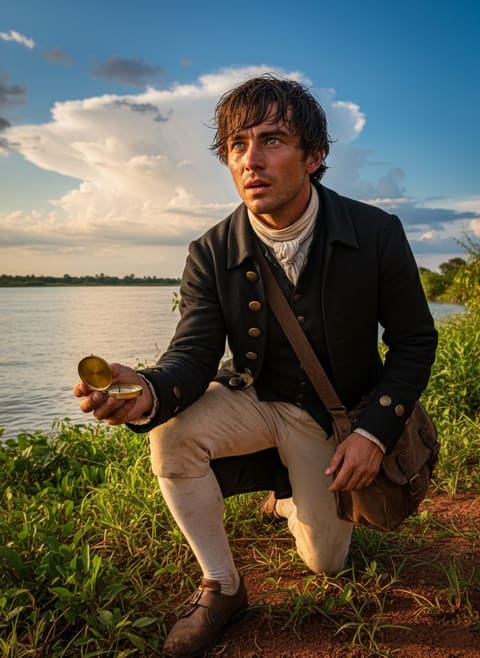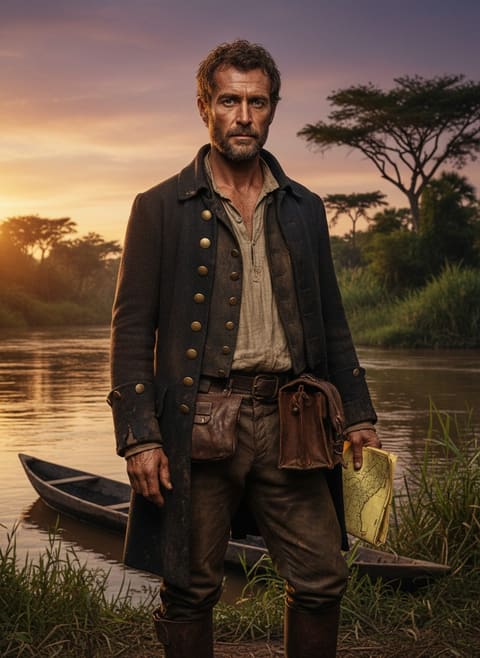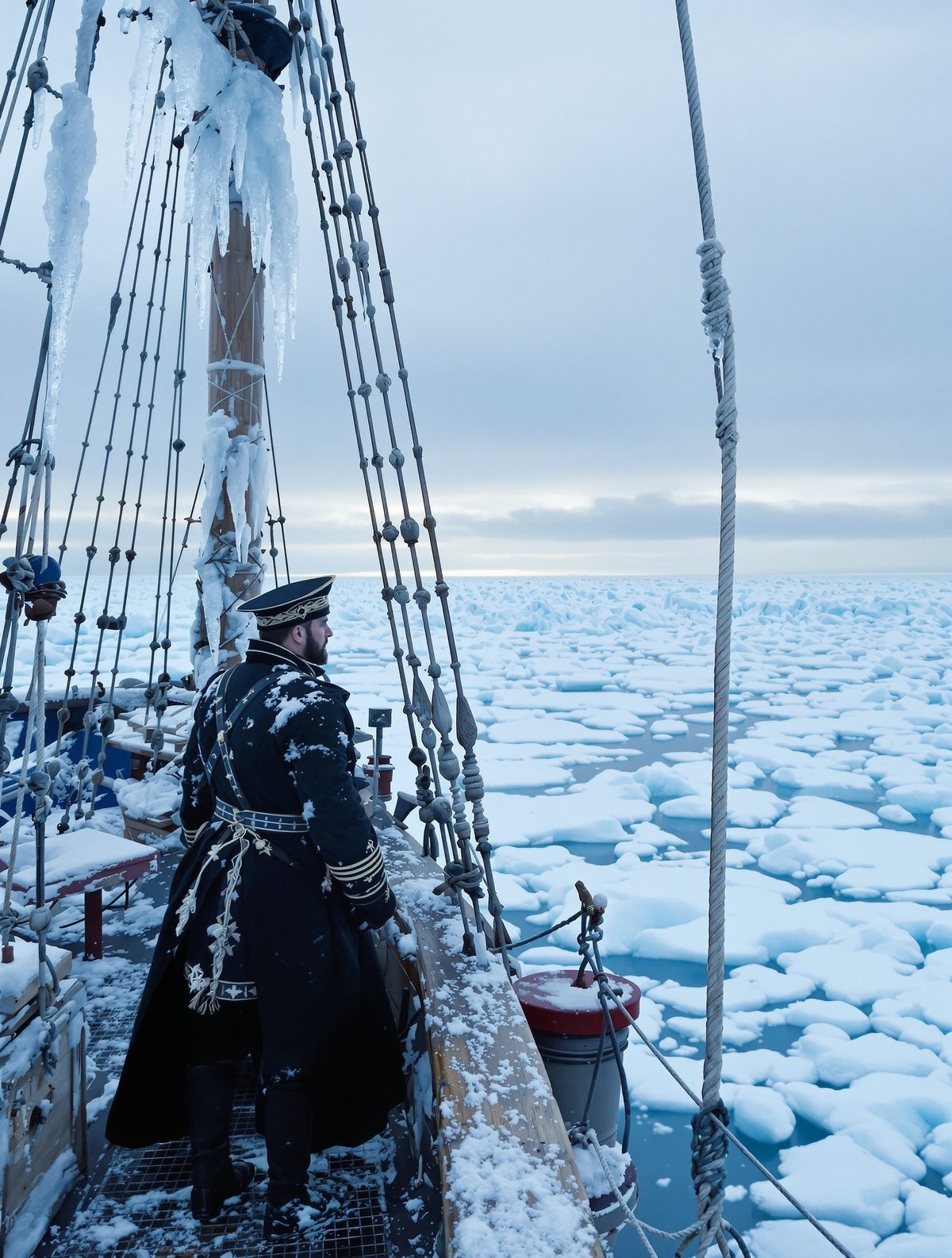
Picture this: Russian fishermen approaching a ghostly vessel locked in Arctic ice, its rigging heavy with frost, silence hanging in the crystalline air. When they finally board the ship in the spring of 1554, they discover something that would haunt maritime history forever—an entire crew of 63 Englishmen sitting frozen at their posts, their captain's logbook still open on his desk, ink crystallized mid-sentence.
This was the Bona Esperanza, flagship of Sir Hugh Willoughby's doomed expedition to find the Northeast Passage to China. What the fishermen had stumbled upon was Britain's first Arctic tragedy—and one of the most haunting maritime mysteries of the Tudor age.
The Merchant Adventurers' Gamble
In 1553, London's merchant elite were growing desperate. The traditional trade routes to the riches of the Orient were controlled by hostile powers—the Ottoman Empire blocked the eastern Mediterranean, while Spain and Portugal jealously guarded the southern sea routes around Africa and Cape Horn. England, still a relatively minor European power under the boy king Edward VI, needed a breakthrough.
Enter Sebastian Cabot, son of the famous explorer John Cabot, with an audacious proposal: sail north around Russia and Siberia to reach China and the Spice Islands. The Company of Merchant Adventurers to New Lands was hastily formed, raising the enormous sum of £6,000—equivalent to over £2 million today—to fund three ships and 110 men for what would become England's first organized Arctic expedition.
Read next: The Day a Devon Captain Charted the Pacific and Changed the World
At the helm was Sir Hugh Willoughby, a career soldier and courtier with no naval experience whatsoever. This wasn't unusual for Tudor expeditions—command often went to those with the right connections rather than maritime expertise. What Willoughby lacked in seamanship, however, he made up for in determination and social standing. The real navigator was Richard Chancellor, an experienced mariner who would command the Edward Bonaventure, while Cornelius Durforth captained the third vessel, the Bona Confidentia.
Into the White Unknown
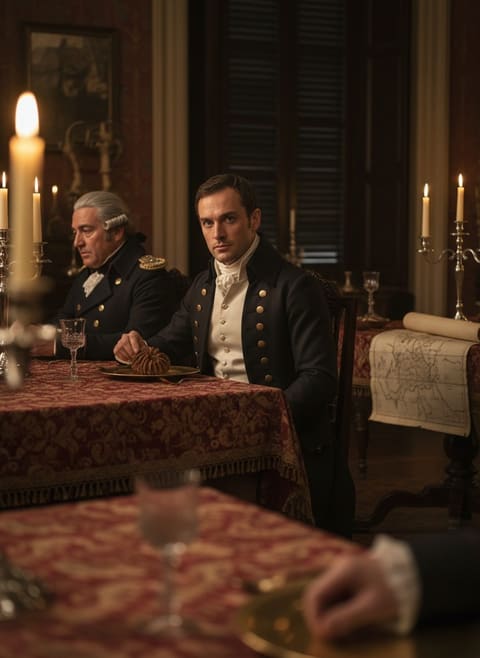
On May 10, 1553, the three ships departed from Ratcliffe near London amid great fanfare. King Edward VI himself had issued letters of introduction to any potentates they might encounter, written in Greek and Latin—as if Chinese emperors might be impressed by Tudor credentials. The expedition carried not just hopes of profit, but England's emerging identity as a maritime nation.
Initially, the voyage proceeded smoothly. The ships rounded the North Cape of Norway—further north than most English sailors had ever ventured—and entered the Barents Sea. But on August 2, disaster struck in the form of a fierce Arctic storm. The three vessels were scattered, their primitive navigation equipment useless in the howling winds and mountainous seas.
Chancellor, the most experienced navigator, managed to reach a prearranged rendezvous point at Vardo in northern Norway. He waited seven days, but Willoughby and Durforth never appeared. Faced with an agonizing decision and with winter approaching, Chancellor pressed on alone—a choice that would save his life and ultimately make history when he reached the White Sea and established first contact with Ivan the Terrible's Russia.
The Captain's Final Entries
Meanwhile, Willoughby's two ships had managed to find each other after the storm, but they were hopelessly lost. The captain's journal, preserved by the Arctic cold, reveals their growing desperation. They sailed blindly along the Russian coast of Novaya Zemlya, that forbidding archipelago that guards the entrance to the Kara Sea, searching for any passage that might lead to their destination.
Willoughby's entries become increasingly terse as summer faded: "We sailed along this coast until the 14th day, not finding any people or any similitude of habitation." The coast was a wilderness of ice, rock, and tundra—beautiful perhaps, but utterly hostile to human life.
By September, with ice beginning to form and their position hopeless, Willoughby made the fateful decision to winter on the coast of the Kola Peninsula, in a harbor they called Nokhuev. It was a reasonable choice given their circumstances—the harbor offered protection from storms, and they had supplies for several months. What they didn't have was any understanding of just how savage an Arctic winter could be.
The captain's final entries speak of sending out parties to search for inhabitants who might provide food or shelter. They found abandoned huts and fish weirs, but no living souls. The region was seasonally inhabited by Sami people, but by the time the English arrived, they had long since retreated to their winter settlements far inland.
Frozen in Time
Willoughby's last dated entry was September 18, 1553. After that, the Arctic winter closed in with a vengeance that no Englishman could have imagined. Temperatures plummeted to levels that would freeze a man's breath and turn ship's rigging into crystal sculptures. The harbor became a prison of ice, locking the ships in an icy embrace that would not release them until spring—if at all.
What happened next can only be reconstructed from the scene the Russian fishermen discovered months later. The crew hadn't died in panic or chaos. Instead, they seem to have maintained discipline to the very end, perhaps believing rescue was coming or that they could outlast the winter. Some were found in their hammocks, others at their posts. Willoughby himself was discovered in his cabin, slumped over his logbook as if he had simply fallen asleep while writing.
The cause of death remains debated. While exposure and starvation certainly played roles, some historians suggest carbon monoxide poisoning from their desperate attempts to heat the ships. Tudor vessels weren't designed for Arctic conditions, and the crew may have sealed themselves too tightly while trying to conserve warmth, inadvertently creating a death trap.
Read next: The Day a Devon Sailor Mapped the Roof of the World Alone
The Grim Discovery
When Chancellor returned to England in 1554 with news of his successful mission to Russia, there was still hope that Willoughby might have found passage to China or established a colony somewhere in the Arctic. That hope died when Russian fishermen brought word of the gruesome discovery.
More shocking than the death toll was the preservation of everything aboard the ships. The Arctic cold had turned the Bona Esperanza and Bona Confidentia into time capsules. Documents were perfectly preserved, including Willoughby's journal and the expedition's detailed instructions. Personal belongings remained exactly where their owners had left them. Even the ships themselves were largely intact, frozen solid but undamaged.
The Russians, following the maritime customs of the time, carefully preserved everything for return to England. Willoughby's journal, along with other expedition documents, eventually made their way back to London, providing a haunting record of England's first Arctic disaster.
Legacy of Ice and Ambition
Sir Hugh Willoughby's frozen fate became a cautionary tale that echoed through centuries of polar exploration. His expedition established a pattern that would repeat tragically: bold ambitions meeting Arctic reality, inadequate preparation confronting nature's extremes, and European arrogance colliding with indigenous knowledge they were too proud to seek.
Yet from this disaster came triumph. Chancellor's successful mission to Russia established the Muscovy Company, England's first major trading corporation and a crucial step in the nation's evolution into a maritime empire. The Northeast Passage that killed Willoughby would eventually be conquered—but not until the 20th century, with icebreakers and modern technology.
Today, as climate change opens new Arctic shipping routes and nations again compete for polar resources, Willoughby's story resonates with fresh urgency. His frozen logbook reminds us that the Arctic remains one of Earth's most unforgiving environments, where human ambition must yield to natural forces beyond our control. In our age of GPS and satellite communication, it's sobering to remember 63 brave men who sailed into the white unknown with nothing but courage, compasses, and the kind of Tudor audacity that would eventually rule the waves—but not, as they discovered, the ice.