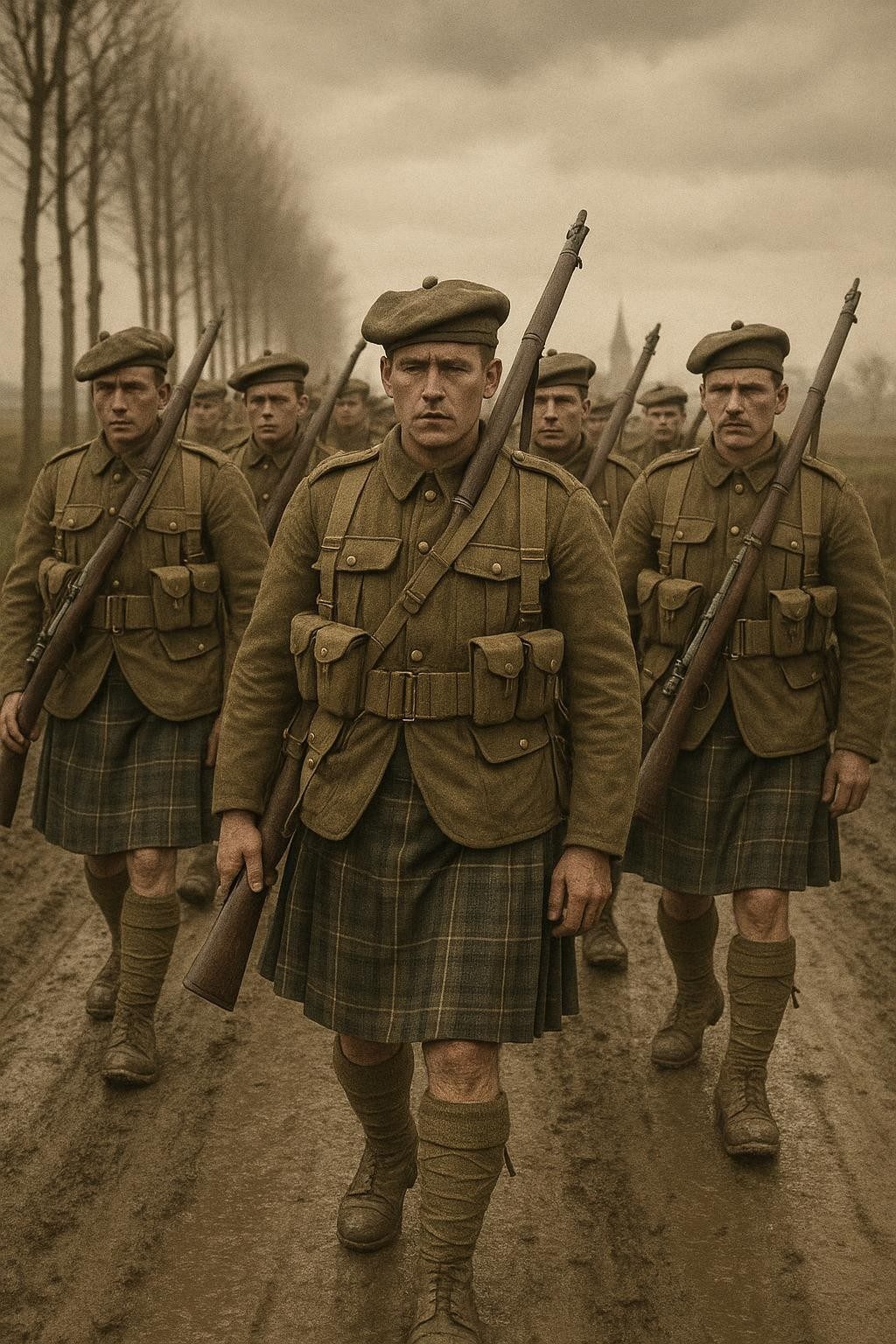
On the mist-shrouded morning of October 31, 1914, the quiet village of Messines in Western Belgium awaited its appointed role in history. As dawn broke, it heralded not just another day of World War One, but a defining moment for a unique group of men clad in kilts. The London Scottish Regiment, composed of ordinary men from London—bank clerks, shopkeepers, and office workers—marched not in drab khaki but in full Highland dress. Their tartans fluttered defiantly in the crisp autumn air, making them the first Territorial Force unit to engage in combat on the Western Front. Here is the remarkable story of how these men, wielding both rifles and a deep sense of duty, etched their legacy into the annals of history.
The Call to Arms: Tradition Meets Modern Warfare
In the early months of 1914, the world teetered on the brink of what would become the Great War. For the London Scottish Regiment, based in Westminster, this meant preparing for a conflict that none could predict the scale of. Established in 1859, the regiment carried the proud tradition of Scotland’s warrior past—though its ranks were now filled with the men of London, their Scottish connection was in spirit more than geography.
When orders were received on October 15, 1914, there was no hesitation. Within two weeks, these part-time soldiers, many with no previous battle experience, transformed from city denizens to frontline warriors. Equipped principally with the .303-inch Short Magazine Lee-Enfield rifles, they donned their distinctive Hodden Grey tunics and the kilts that connected them back to their regimental origins. The men were a testament to the era’s blend of ancient tradition with the grim reality of modern warfare.
A March to Remember: From London to the Line
As word of their deployment swept through London, the city enveloped the regiment with unwavering support. Boarding the trains at Westminster, the men were cheered by throngs of proud Londoners. The journey was both a physical and mental transition, punctuated by a palpable blend of anxiety and excitement as they moved from the familiarity of home to the unpredictability of the battlefield.
Read next: The Day a British Padre Carried the Dying From No Man's Land
Their destination was Messines—a small but strategically vital location—it lay just south of Ypres, a name that soon would be etched with blood and sacrifice. Marching into position on October 29 under the eerie light of a crescent moon, the regiment was greeted by a calm that belied the terror to come.
The Clash at Messines: Courage Under Fire
On the night of October 31, the tranquility of the Belgian landscape was shattered as German forces launched an offensive. The London Scottish held the southern end of a ridge overlooking the town of Messines. Their mission was clear yet daunting: hold the line at any cost.
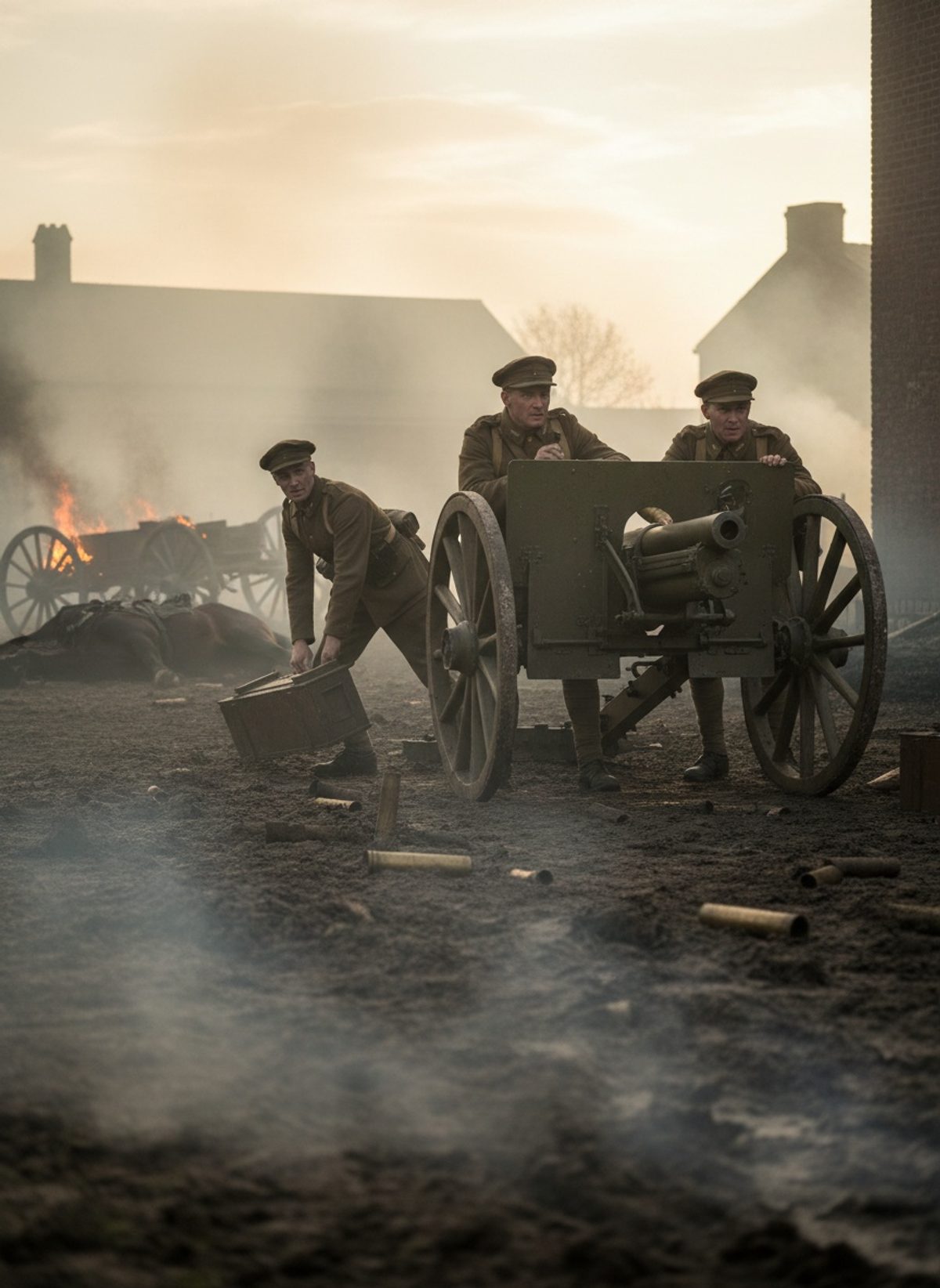
Under constant rifle and artillery fire, these men, whose peacetime lives were spent amid London’s hustle, faced their baptism of fire with indomitable resolve. As bullets ripped through the night, the regiment remained unyielding. Throughout the five-hour engagement, despite their precarious position and heavy casualties, the London Scottish did not flinch. One later report captured the moment succinctly: "They advanced in a hail of bullets, and not a man wavered."
A Legacy of Valor: First in the Field
The battle of Messines lasted until November 2nd, yet the actions of that Halloween night became legendary. The London Scottish had suffered nearly 400 casualties, a sobering testament to their fierce stand. Notably, it was their descent onto the battlefield in kilts that captured the imagination of the public back home—images of the regiment’s unique march into history blazed through the newspapers, instilling a sense of pride intermingled with the somber recognition of sacrifice.
As the first Territorial Army unit to engage in combat on the Western Front, their actions were not just military maneuvers but symbolic. They embodied the courage and persistence that would become legendary in World War One’s storied battles.
Remembering the London Scottish: Lessons for Today
The story of the London Scottish at Messines is more than a historical account; it is a testament to resilience and the spirit that binds communities to causes greater than themselves. Though the kilts on that foggy Belgian morning were ultimately replaced by battle attire more suited to the trenches, their initial act of bravery continued to resonate.
Today, as we reflect on history during times of uncertainty, the actions of these office workers turned soldiers remind us of the powerful impact of collective resolve and the indomitable spirit of ordinary citizens facing extraordinary challenges. This narrative is a poignant reminder that in unity and determination, even the most daunting obstacles can be met with courage.
In commemorating the legacy of the London Scottish, we honor their contribution by understanding how moments of bravery in the past can shape the resilience we need for challenges yet to come. The kilts, the march, and the men—they remind us of human capacity for courage, a lesson timeless and essential.