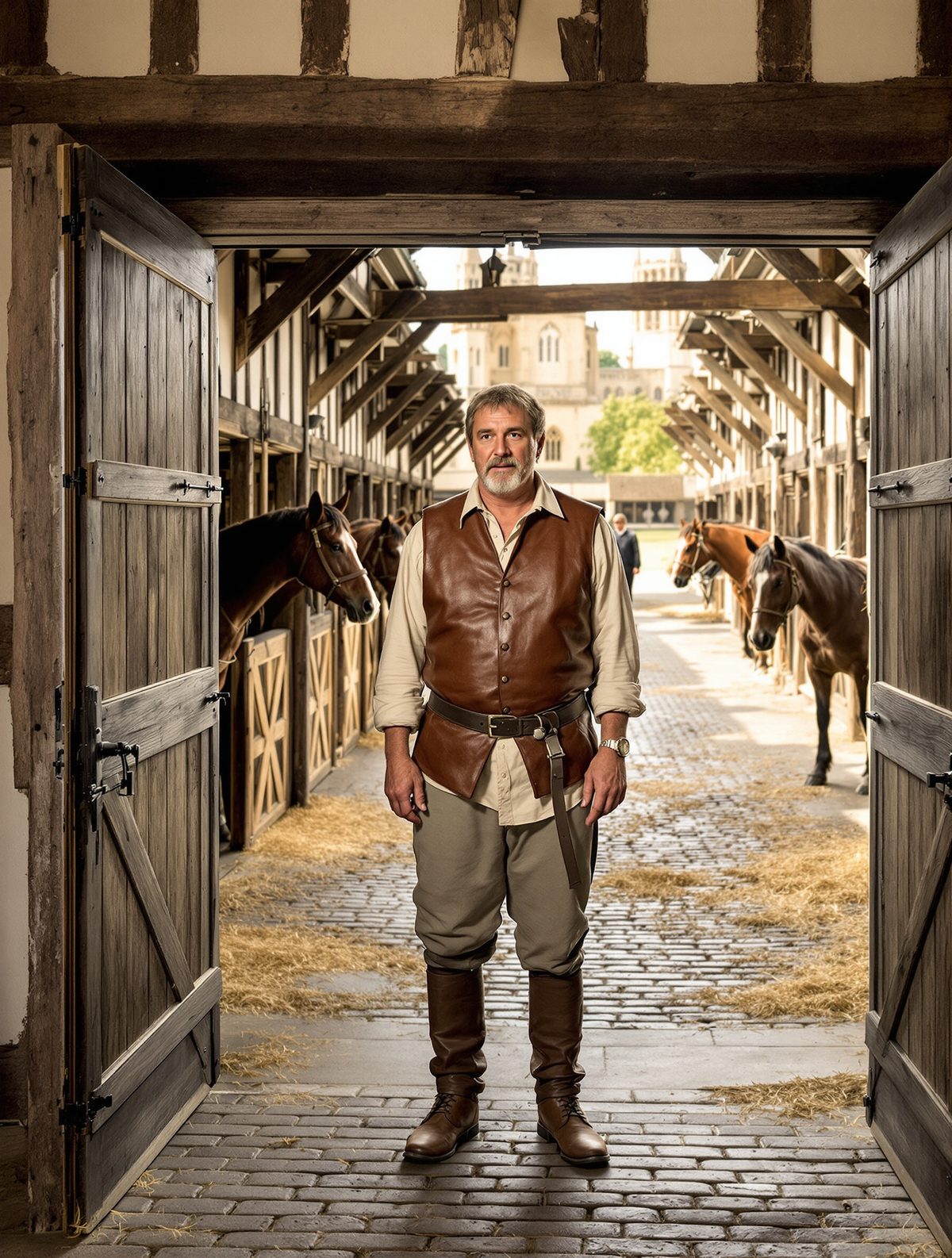
The year was 1598, and a travel-weary merchant had just arrived in Cambridge after a grueling journey from London. His horse was lame, his back ached, and he desperately needed a fresh mount to continue north to Lincoln. Standing before Thomas Hobson's livery stable on the corner of what is now Sidney Street, he could see dozens of fine horses through the stable doors — sleek mares, sturdy geldings, spirited stallions that looked capable of carrying him swiftly to his destination.
"I'll take that bay mare there," the merchant declared, pointing to a particularly impressive specimen in the back stall.
Thomas Hobson, a bear of a man with steel-gray hair and eyes to match, didn't even glance in the direction the merchant indicated. Instead, he gestured toward a perfectly ordinary brown horse standing nearest the stable door — a creature that looked as if it had seen better decades.
"You'll take this one, or you'll take your business elsewhere," Hobson replied matter-of-factly.
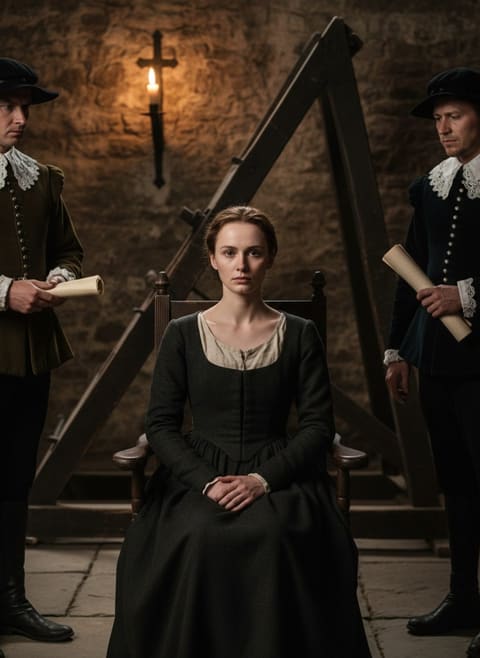
Read next: The Day a Tudor Queen Knelt and Begged for a Man's Life
And just like that, the most famous phrase about having no choice at all was born in a Cambridge stable.
The Carrier King of Cambridge
Thomas Hobson wasn't just any stable owner — he was the stable owner in late Tudor and early Stuart Cambridge. Born around 1544, he had built his empire from a single horse and cart into the most successful carrying business between Cambridge and London. By the time of his stubborn encounter with our hypothetical merchant, Hobson controlled what amounted to the 16th-century equivalent of a transport monopoly.
His official title was "Carrier," but locals knew him as much more. Every Thursday, Hobson's wagon train would rumble out of Cambridge toward London, loaded with goods, letters, and passengers. The journey took two days each way, and Hobson had been making this trip religiously for over four decades. University students depended on him to carry letters home to worried parents. Merchants relied on his service to transport everything from wool to manuscripts. Even the University itself used Hobson's services for official correspondence.
But it was his horse-hiring business that would make him immortal — and drive his customers to distraction.
The Great Rotation System
Hobson's stable housed approximately 40 horses at any given time, a considerable investment that would be worth hundreds of thousands of pounds in today's money. These weren't just any horses — many were fine specimens that could easily command premium prices from discerning customers. Cambridge was, after all, home to one of England's two universities, and wealthy students and faculty members had both the means and desire for quality mounts.
Any reasonable stable owner would have charged different rates for different horses, allowing customers to pay more for better animals. The economic logic was simple: supply, demand, and profit maximization.
Hobson had other ideas.
His system was elegantly simple and infuriatingly rigid. Every customer, regardless of status, wealth, or urgent need, had to take whichever horse stood closest to the stable door. No exceptions. No negotiations. No sob stories about urgent business or important meetings. The horse by the door, or nothing at all.
When that horse was taken, the next horse in line moved forward. It was a strict rotation system that ensured every animal got equal work and equal rest. While Cambridge's gentry fumed and students complained, Hobson's horses remained remarkably healthy and long-lived — no small feat in an era when overworked animals often died young.
The Students' Nemesis
Nowhere was Hobson's inflexibility more legendary than in his dealings with Cambridge University students. These young men — and they were exclusively men in Hobson's era — came from England's wealthiest families. They were accustomed to getting what they wanted, when they wanted it, for the right price.
Hobson treated the Earl of Essex's son exactly the same as he treated a grocer's apprentice.
The stories became the stuff of university legend. There was the tale of young Lord Pemberton, who arrived at the stable with a purse full of gold, demanding Hobson's finest stallion for an urgent ride to court. He left on foot, muttering curses, because the horse by the door was a placid old mare better suited for carrying laundry than impressing royalty.
Then there was the incident involving three Trinity College students who attempted to outsmart the system by sending servants to hire all the horses in front of the ones they actually wanted. Hobson saw through their scheme immediately and banned all three from his establishment for a month.
The university's relationship with Hobson was complicated. They needed his services — he was simply too reliable and too entrenched to replace — but his stubborn policies created constant friction. Faculty members found themselves defending their dignity while mounted on horses that looked like they belonged pulling vegetable carts rather than carrying learned professors.
The Method Behind the Madness
Modern business analysts might recognize Hobson as a pioneer of systematic thinking. His rotation system solved multiple problems that plagued other stables of his era. By ensuring equal usage of all horses, he prevented the common scenario where popular animals were worked to death while others stood idle and grew fat.
The system also eliminated the time and energy spent negotiating with customers. While other stable owners had to assess each horse's condition, match animals to customers' needs and budgets, and haggle over prices, Hobson could process customers with remarkable efficiency. Take it or leave it — literally.
Read next: The Queen Who Died Giving England Its Most Wanted Heir
There was also an element of quality control that his customers didn't initially appreciate. Hobson's reputation depended on reliability, and a horse that wasn't fit for work simply wouldn't be placed at the front of the line. If it was by the door, it was ready to work. This systematic approach meant that customers might not get the horse they wanted, but they always got a horse that could do the job.
Financial records from the period suggest that Hobson's unusual business model was remarkably successful. By the time of his death in 1631, he had accumulated significant wealth and owned property throughout Cambridge. His estate was valued at over £1,000 — a substantial fortune that would be equivalent to several million pounds today.
Literary Immortality
The phrase "Hobson's Choice" had already entered common usage by the 1620s, but it was the literary community that truly ensured its immortality. John Milton, the future author of Paradise Lost, was studying at Cambridge during Hobson's lifetime and penned not one but two epitaphs for the famous carrier when he died.
In one of these poems, Milton wrote: "Death was half glad when he had got him down, For he had any time this ten years full, Dodged with him betwixt Cambridge and the Bull." The "Bull" was the Bull Inn in Bishopsgate, London, where Hobson's weekly journey terminated.
Other writers of the period referenced Hobson and his peculiar business practices. The phrase appeared in plays, pamphlets, and letters throughout the 17th century. By the time Daniel Defoe wrote about "Hobson's Choice" in the early 1700s, it had evolved beyond its original meaning of taking the available horse to signify any situation where apparent options existed but real choice did not.
The Choice That Echoes Through Time
Thomas Hobson died on January 1, 1631, at the remarkable age of 87 — a lifespan that exceeded the average by several decades. He had outlived Elizabeth I, James I, and lived to see Charles I's reign begin. His business had survived plague, political upheaval, and countless frustrated customers who wanted nothing more than to choose their own horse.
Today, "Hobson's Choice" appears in contexts Hobson never could have imagined. Political scientists use it to describe elections where only one candidate appears on the ballot. Economists apply it to markets dominated by monopolies. Consumer advocates invoke it when describing situations where apparent competition masks the absence of real alternatives.
But perhaps Hobson's most enduring legacy isn't the phrase itself, but what it represents about the tension between individual preference and systematic fairness. In our age of infinite consumer choice and personalized everything, there's something both maddening and refreshing about Hobson's approach. He prioritized the welfare of his horses over the desires of his customers, operational efficiency over individual satisfaction, and long-term sustainability over short-term profits.
The next time you find yourself facing a "Hobson's Choice" — whether it's a monopolistic cable company, a sole-source government contractor, or simply life circumstances that offer the illusion of options while providing none — remember the stubborn stable owner who turned inflexibility into immortality, one frustrated customer at a time.