The rhythmic thwack-thwack-thwack echoed through the crisp Scottish morning as twenty farmhands worked in perfect synchrony, their wooden flails rising and falling like a primitive orchestra. It was harvest time in East Lothian, 1786, and the same backbreaking ritual that had enslaved farmers since medieval times was playing out once again. But in a cluttered workshop just miles away, millwright Andrew Meikle was about to obliterate eight centuries of agricultural drudgery with a contraption that would change the world forever.
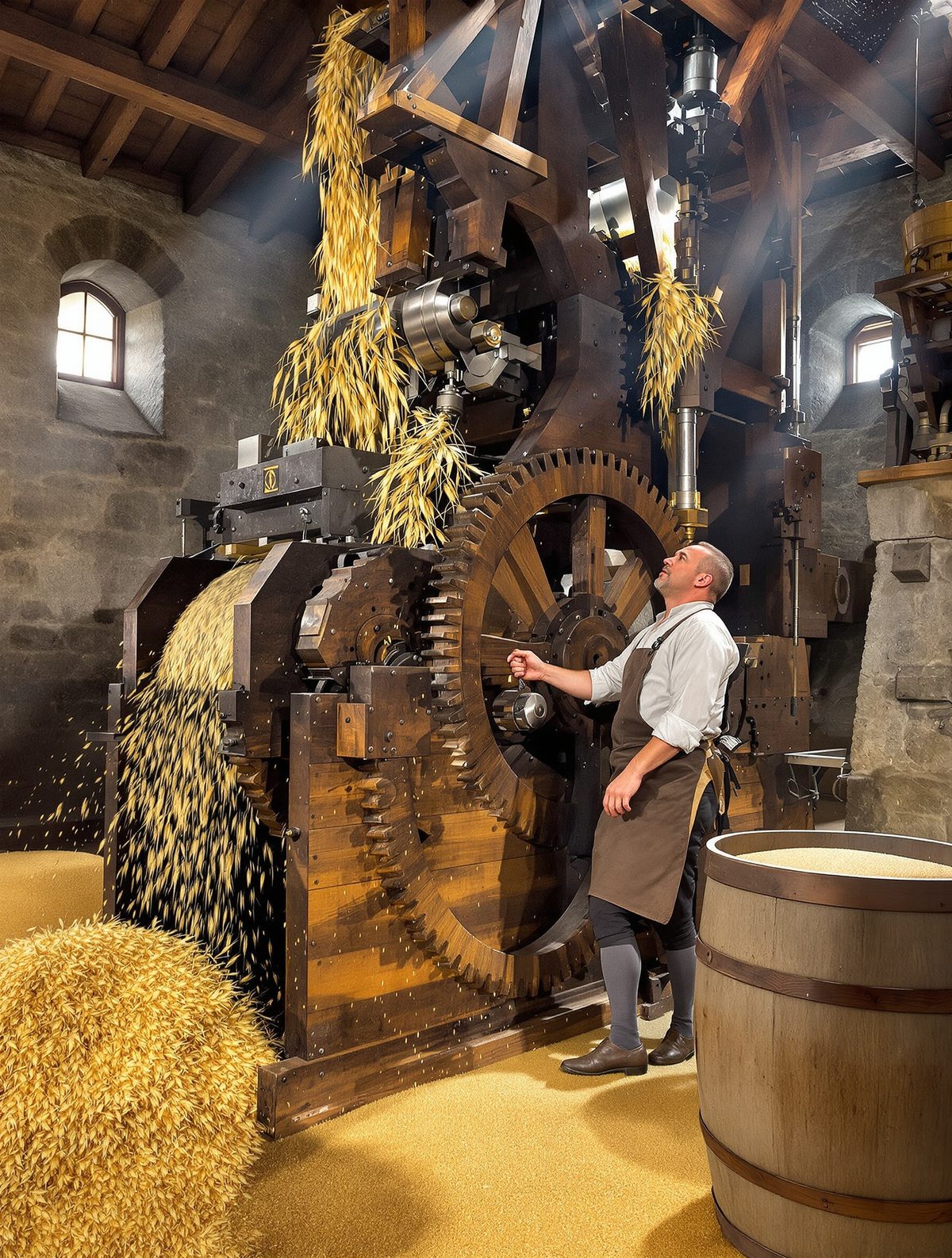
As Meikle pulled the lever on his mechanical threshing machine for the first time, watching it devour sheaves of grain at impossible speed, he couldn't have known he was witnessing the moment British farming leaped from the Dark Ages into the Industrial Revolution. The machine's wooden drums spun with methodical precision, separating grain from chaff faster than his eyes could follow. In one morning, this curious assemblage of wood, metal, and revolutionary thinking would accomplish what twenty men couldn't finish in a week.
The Millwright's Obsession
Andrew Meikle wasn't supposed to revolutionize agriculture. Born in 1719 in Houston Mill, East Lothian, he was destined to follow his father James into the respectable but unremarkable trade of millwrighting. For decades, the Meikle family had built and maintained the windmills and watermills that dotted the Scottish countryside, content to tinker with established technology rather than reinvent it entirely.
But Andrew possessed something his contemporaries lacked: an engineer's eye for inefficiency and the stubborn determination to fix it. By the 1770s, he had already earned a reputation as an innovator, improving mill machinery and experimenting with new designs. However, it was the grinding reality of harvest season that truly captured his imagination.
Read next: The Day a Collier's Son Gave the Mines a Light
Every autumn, Meikle watched local farmers struggle with the ancient process of threshing—beating grain with wooden flails to separate the valuable kernels from their protective husks. A skilled thresher could process about seven bushels of wheat per day, working from dawn to dusk in a monotonous, exhausting rhythm that had remained unchanged since Norman times. For Meikle, this represented everything wrong with traditional agriculture: it was slow, labor-intensive, and utterly resistant to improvement.
The millwright began sketching designs for a mechanical alternative, filling notebook after notebook with increasingly sophisticated diagrams. His vision was audacious: a machine that could replicate the threshing action automatically, powered by wind, water, or horses rather than human muscle.
The Machine That Almost Wasn't
Meikle's first attempts were spectacular failures. Early prototypes either destroyed the grain entirely or proved so cumbersome they offered no improvement over traditional methods. The technical challenges seemed insurmountable—how do you create mechanical force strong enough to separate grain but gentle enough not to pulverize it?
The breakthrough came through careful observation of the threshing process itself. Traditional flails worked through a combination of beating and rubbing actions, and Meikle realized his machine needed to replicate both motions simultaneously. His solution was elegantly simple: a wooden drum fitted with fixed beaters that would strike the grain while the drum's rotation provided the crucial rubbing action.
But the real innovation lay in Meikle's feeding mechanism. Unlike previous attempts at mechanized threshing, which simply battered grain indiscriminately, Meikle's design controlled the flow of material through the machine. Sheaves were fed onto a moving surface that carried them past the rotating drum at precisely the right speed, ensuring optimal separation without waste.
By 1786, after years of refinement, Meikle had perfected a machine that stood roughly eight feet long and four feet wide—compact enough to fit in a typical barn yet powerful enough to transform agricultural productivity forever. The completed threshing machine could process up to 130 bushels of grain per day—nearly twenty times the output of a skilled human thresher.
The Dawn of Agricultural Revolution
News of Meikle's machine spread across Scotland with the speed of wildfire. Farmers who had struggled to process their harvests before winter set in suddenly found themselves with a tool that could complete the work in mere days rather than months. The economic implications were staggering—not only could harvests be processed faster, but the quality of the grain improved dramatically since it no longer depended on human consistency.
The machine's first major test came during the harvest of 1787 at Phantassie, near East Linton. Local landowner George Rennie had commissioned Meikle to build a threshing machine for his estate, and the entire neighborhood gathered to witness this mechanical marvel in action. The crowd watched in stunned silence as the machine devoured an entire day's worth of traditional threshing work in just two hours.
Word reached Edinburgh's intellectual elite, including members of the Board of Agriculture, who recognized the machine's revolutionary potential. By 1788, orders were flooding into Meikle's workshop from across Scotland and northern England. The millwright found himself at the center of an agricultural transformation that would reshape British farming forever.
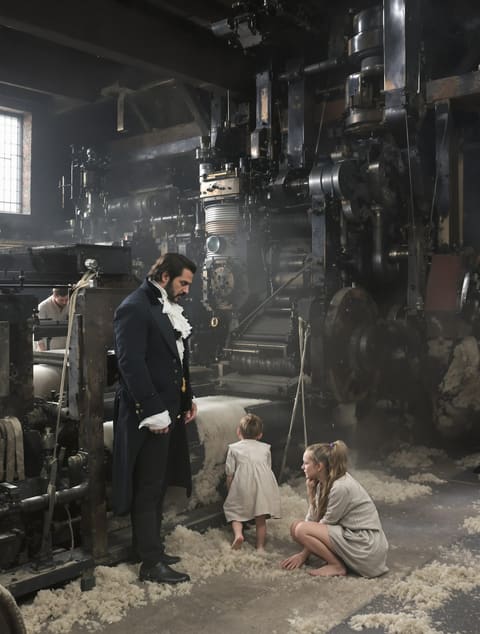
But success came with unexpected consequences. While landowners celebrated their newfound efficiency, farm laborers viewed Meikle's invention with growing alarm. Threshing had provided crucial winter employment for thousands of rural workers, and the machine threatened to eliminate these jobs entirely. By 1790, reports of machine-breaking and protests were emerging across Scotland as displaced workers fought to preserve their livelihoods.
The Price of Progress
The social upheaval triggered by Meikle's threshing machine revealed the double-edged nature of technological revolution. While agricultural productivity soared, rural unemployment became a persistent problem. Many displaced farm workers were forced to migrate to industrial cities, swelling the ranks of factory laborers and fundamentally altering Britain's demographic landscape.
Read next: The Day a Cornish Engineer Lit the World's First Steam Locomotive
The machine's impact extended far beyond individual farms. By dramatically reducing the labor required for grain processing, Meikle's invention freed up human resources for other activities—including the manufacturing industries that would define the Industrial Revolution. Historians now recognize the threshing machine as one of the crucial technologies that enabled Britain's transformation from an agricultural to an industrial economy.
Meikle himself remained largely unaware of these broader implications. Despite his machine's revolutionary impact, he struggled financially throughout his later years. Patent protection was weak in 18th-century Britain, and countless imitators copied his design without compensation. When Meikle died in 1811, aged 92, he was virtually penniless—a bitter irony for the man whose invention had generated enormous wealth for landowners across the country.
Parliament eventually recognized Meikle's contribution, granting him a pension of £1,500 in his final years, but this gesture came too late to provide meaningful financial security. The contrast between the machine's transformative impact and its inventor's modest circumstances highlighted the often-unfair distribution of technological progress's benefits.
Legacy of Innovation
The threshing machine's influence extended far beyond British shores. American farmers adopted Meikle's design enthusiastically, with manufacturers like Cyrus McCormick building upon his principles to create even more sophisticated agricultural machinery. By the mid-19th century, mechanical threshers based on Meikle's original concept were operating across North America, Europe, and the British colonies.
More importantly, Meikle's success demonstrated the potential for mechanical solutions to age-old agricultural problems. His threshing machine inspired a generation of inventors to tackle other farming challenges, leading to the development of mechanical reapers, seed drills, and plows that would collectively revolutionize global agriculture.
Today, modern combine harvesters still use the same basic principles Meikle pioneered in his Scottish workshop—rotating drums with fixed beaters that separate grain through a combination of impact and friction. The scale has changed dramatically, but the fundamental concept remains identical to the machine that transformed British farming over two centuries ago.
As we face contemporary challenges around food security and agricultural sustainability, Meikle's story offers both inspiration and caution. His invention demonstrates how individual innovation can trigger sweeping social change, but it also reminds us that technological progress always comes with human costs. The farmhands whose livelihoods vanished with the threshing machine's success were the first casualties of automation—a phenomenon that continues to reshape our world today. Perhaps that's the most relevant lesson from that transformative morning in 1786: innovation changes everything, but rarely in ways its inventors anticipate.