Picture this: the most powerful ruler in northern Europe, dragging his gilded throne across the sand like a man possessed. The year is 1028, and King Cnut—master of England, Denmark, and Norway—is about to stage one of history's most peculiar demonstrations of humility. As the cold waters of the Solent lap at his feet and soak his royal robes, he's not having a breakdown. He's teaching his boot-licking courtiers the lesson of a lifetime.
This isn't the story they taught you in school. This is the day a Viking king became a philosopher, and changed how we think about power forever.
The King Who Conquered Everything
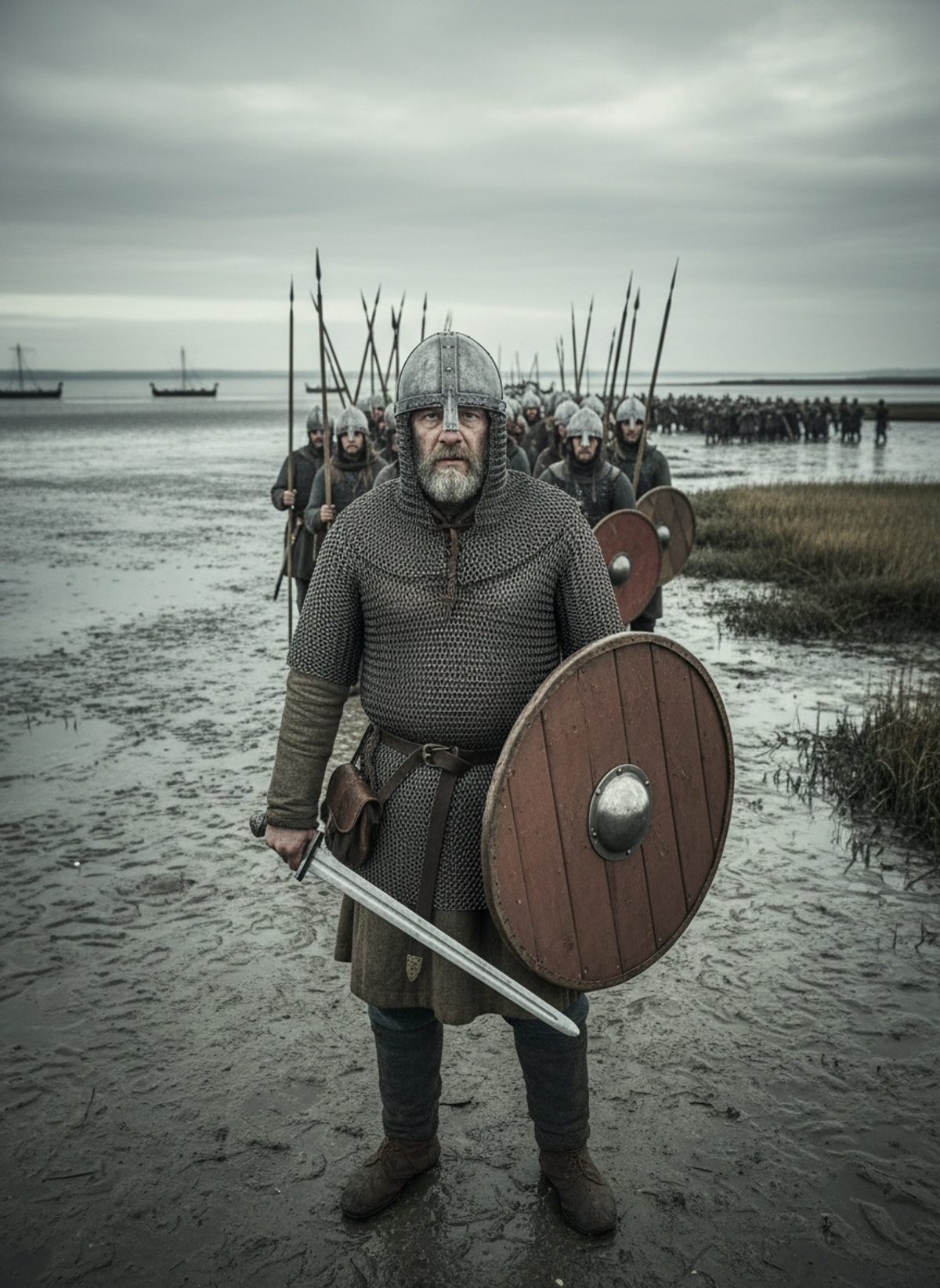
By 1028, Cnut the Great wasn't just great in name—he was the stuff of legend. Born around 995 to Sweyn Forkbeard, King of Denmark, Cnut had spent his youth watching his father terrorize Anglo-Saxon England with Viking raids that would make modern generals weep with envy. When Sweyn died suddenly in 1014, eighteen-year-old Cnut didn't just inherit a kingdom—he inherited a war.
What happened next defied all expectations. This teenage Viking didn't just complete his father's conquest of England; he transformed himself from a brutal raider into one of medieval Europe's most sophisticated rulers. By 1016, he'd defeated the legendary Edmund Ironside and claimed the English throne. By 1018, he was King of Denmark. By 1028, Norway had fallen under his dominion too.
Read next: The Day a Saxon Abbot Walked Into a Slave Market Alone
Cnut's empire stretched from the Arctic Circle to the English Channel—a maritime superpower that controlled the North Sea like a Viking Lake Michigan. His fleet could darken the horizon, his armies could march from the fjords to the Thames, and his treasury overflowed with English silver and Scandinavian amber. In an age when most kings struggled to control a few hundred square miles, Cnut commanded nearly half a million.
But here's what your history teacher never mentioned: Cnut was also that rarest of medieval creatures—a king who could read the room.
When Flattery Becomes a Problem
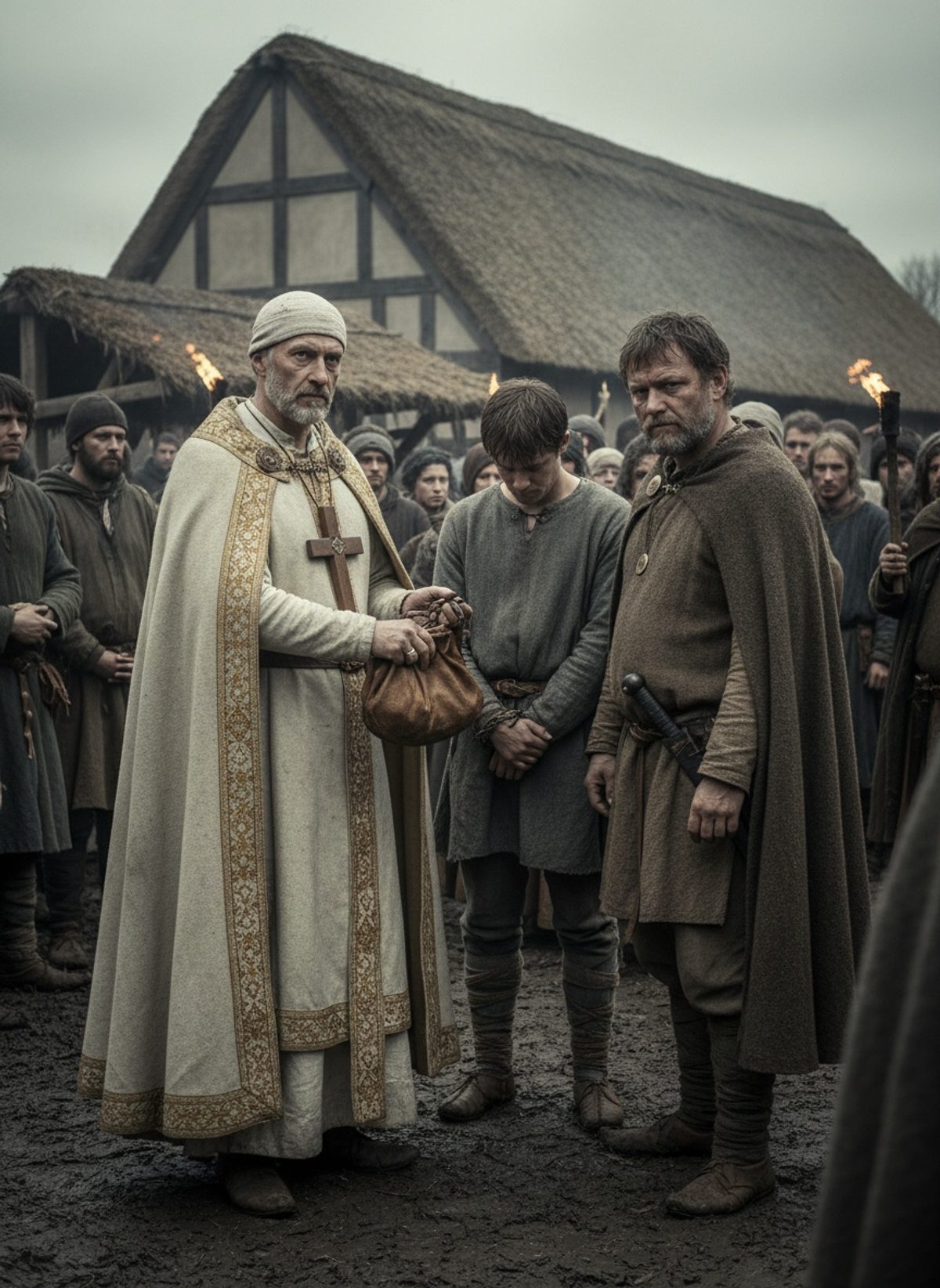
Success, as any modern CEO will tell you, breeds sycophants. By the late 1020s, Cnut's court had become a chorus of competitive flattery that would make a Hollywood talent agency blush. Danish jarls, English ealdormen, and Norwegian nobles competed to shower their king with increasingly outlandish praise.
The courtiers didn't just call him mighty—they called him divine. They didn't just praise his wisdom—they declared it infinite. Some whispered that God himself had granted Cnut power over the natural world. Others suggested that the seas themselves recognized his authority. A few brave souls even hinted that perhaps the king's dominion extended beyond mere earthly realms.
Now, most medieval kings would have lapped this up like cats with cream. Divine right was the ultimate political currency, and Cnut's courtiers were essentially offering him a blank check written on heaven's account. But Cnut was different. Perhaps it was his Scandinavian pragmatism, or maybe his experience of actual warfare had taught him the difference between reality and rhetoric. Whatever the reason, the king was growing increasingly uncomfortable with his courtiers' supernatural claims.
According to the 12th-century chronicler Henry of Huntingdon, Cnut found these divine pretensions not just annoying, but dangerous. A king who believes his own propaganda is a king heading for a fall—and Cnut had seen enough fallen kings to recognize the pattern.
The Strangest Royal Performance in History
So on a crisp morning in 1028, King Cnut announced to his startled court that they would be taking a field trip. Not to a monastery for prayers, not to a battlefield for conquest, but to the beach near Southampton—specifically, to the muddy shores where the River Test meets the Solent.
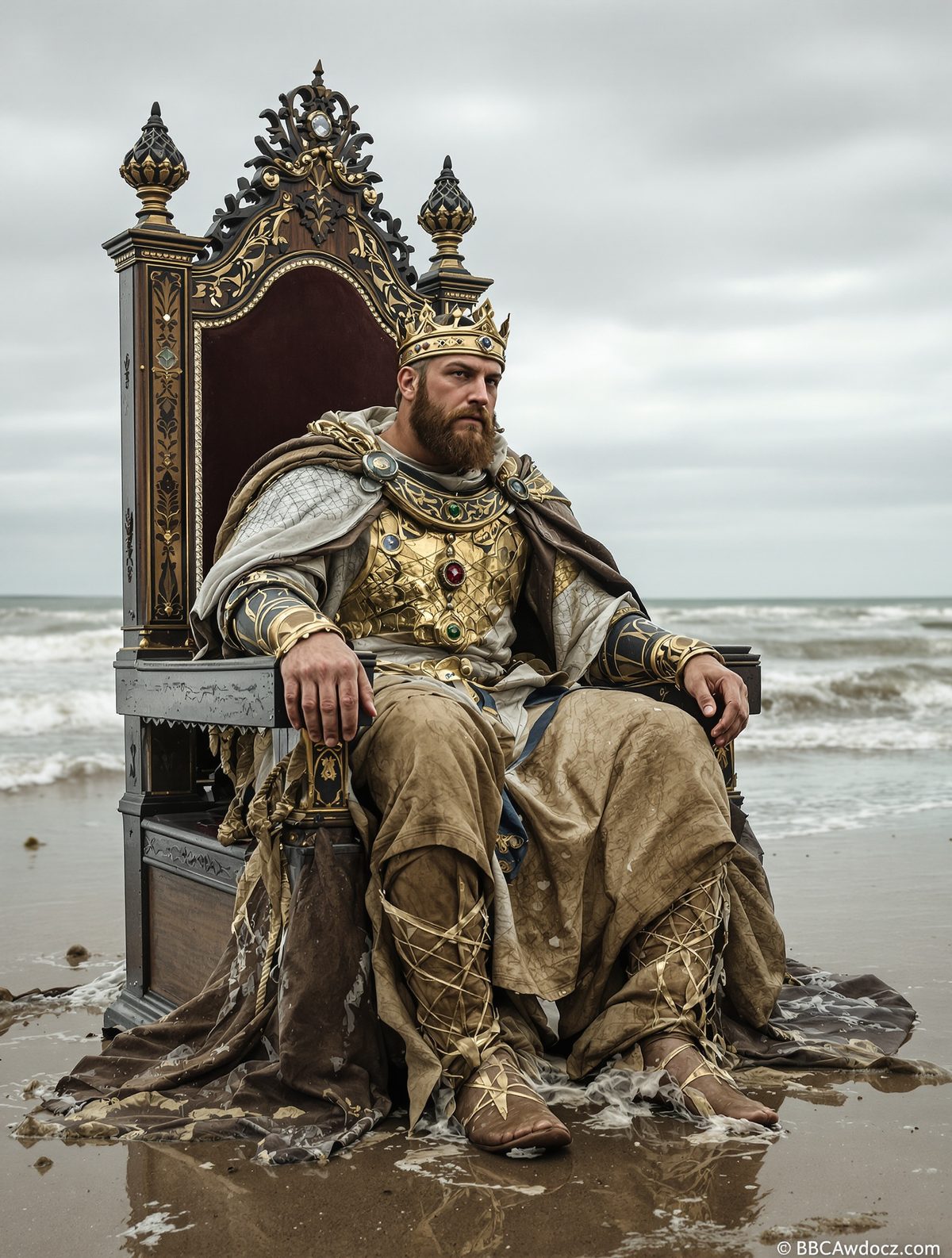
What followed was medieval theater at its finest. Cnut ordered his servants to carry his throne—likely a magnificent affair of carved oak inlaid with gold and precious stones—down to the water's edge. The king then seated himself with all the ceremony of a formal court session, while his bewildered courtiers arranged themselves around him like confused extras in a very expensive play.
The tide was coming in—Cnut had timed this perfectly. As the first waves began to kiss the sand near his feet, the king raised his voice with all the authority that had commanded armies and conquered nations:
"Sea!" he declared, "I command you to come no further! Do not dare to wet the feet and robes of your lord!"
The waves, displaying a shocking lack of respect for royal authority, continued their advance. Cold seawater swirled around the throne's base, soaked through the king's shoes, and began to darken the hem of his royal robes. Cnut sat perfectly still, maintaining his commanding posture even as the North Sea demonstrated its complete indifference to human hierarchy.
For several long, soggy minutes, the most powerful man in northern Europe sat in the rising tide like a very dignified scarecrow, while his courtiers watched in fascinated horror.
The Lesson That Echoed Through Centuries
Then, as dramatically as he had begun, Cnut stood. Water cascaded from his robes, his feet squelched in waterlogged shoes, and his expression—according to chroniclers—was one of profound satisfaction. He turned to his courtiers, who had been struck speechless by this extraordinary performance, and delivered what may be the most important speech about power ever given by a medieval king:
"Let all the inhabitants of the world know that the power of kings is vain and worthless, and that none is worthy of the name of king but God, in whose hand are heaven and earth and sea, and all that in them is, according to His will."
The silence that followed was deafening. Here was their god-king, voluntarily demonstrating his own limitations. Their divine ruler had just proved he was thoroughly, undeniably human.
But Cnut wasn't finished. He commanded that his crown be removed and placed on a crucifix, declaring that he would never wear it again. From that day forward, the crown of England would rest in a place of honor in a church, while Cnut ruled with a simple circlet—a permanent reminder that earthly power has its limits.
This wasn't just medieval performance art—it was a masterclass in political psychology. In one soggy afternoon, Cnut had deflated his courtiers' dangerous fantasies, established clear boundaries around royal power, and positioned himself as a wise ruler who understood his place in the cosmic order.
The Ripple Effects of Wet Feet
The story spread like wildfire through medieval Europe, but something fascinating happened in the telling. Over the centuries, the tale gradually inverted. By the Tudor period, many people believed that Cnut had actually expected the waves to obey him—that this was the story of an arrogant king humbled by nature, rather than a wise ruler teaching his court a lesson.
This medieval game of telephone reveals something profound about how we remember power. We're more comfortable with stories about arrogant rulers getting their comeuppance than we are with tales of leaders who voluntarily acknowledge their limitations. The idea of a king deliberately demonstrating his own humanity is so unusual that subsequent generations literally couldn't believe it.
But the original story—the true story—is far more remarkable. Here was a man who controlled the largest maritime empire in Europe, who could summon fleets and move armies, who held life and death power over millions of subjects, choosing to sit in cold seawater to make a point about humility.
The lesson worked, too. Contemporary sources suggest that Cnut's court became notably less sycophantic after the Southampton demonstration. Flattery didn't disappear—this was still the Middle Ages—but the wilder claims about divine power mysteriously evaporated.
Why a Medieval Beach Scene Still Matters
Nearly a thousand years later, Cnut's soggy throne remains one of history's most powerful images. In our age of social media echo chambers and executive yes-men, the Viking king's lesson feels startlingly contemporary. How many modern leaders surround themselves with people who tell them only what they want to hear? How many convince themselves that their success exempts them from ordinary human limitations?
The beach at Southampton still exists, though it's now overlooked by container cranes and ferry terminals rather than medieval castles. The tides still come and go twice daily, utterly indifferent to human authority, just as they did when Cnut made his point. But the lesson he taught—that true power lies in understanding your limitations—remains as relevant as ever.
In a world where leaders often seem to believe their own publicity, perhaps we need more kings willing to drag their thrones to the beach. After all, the waves are still not taking orders from anyone.