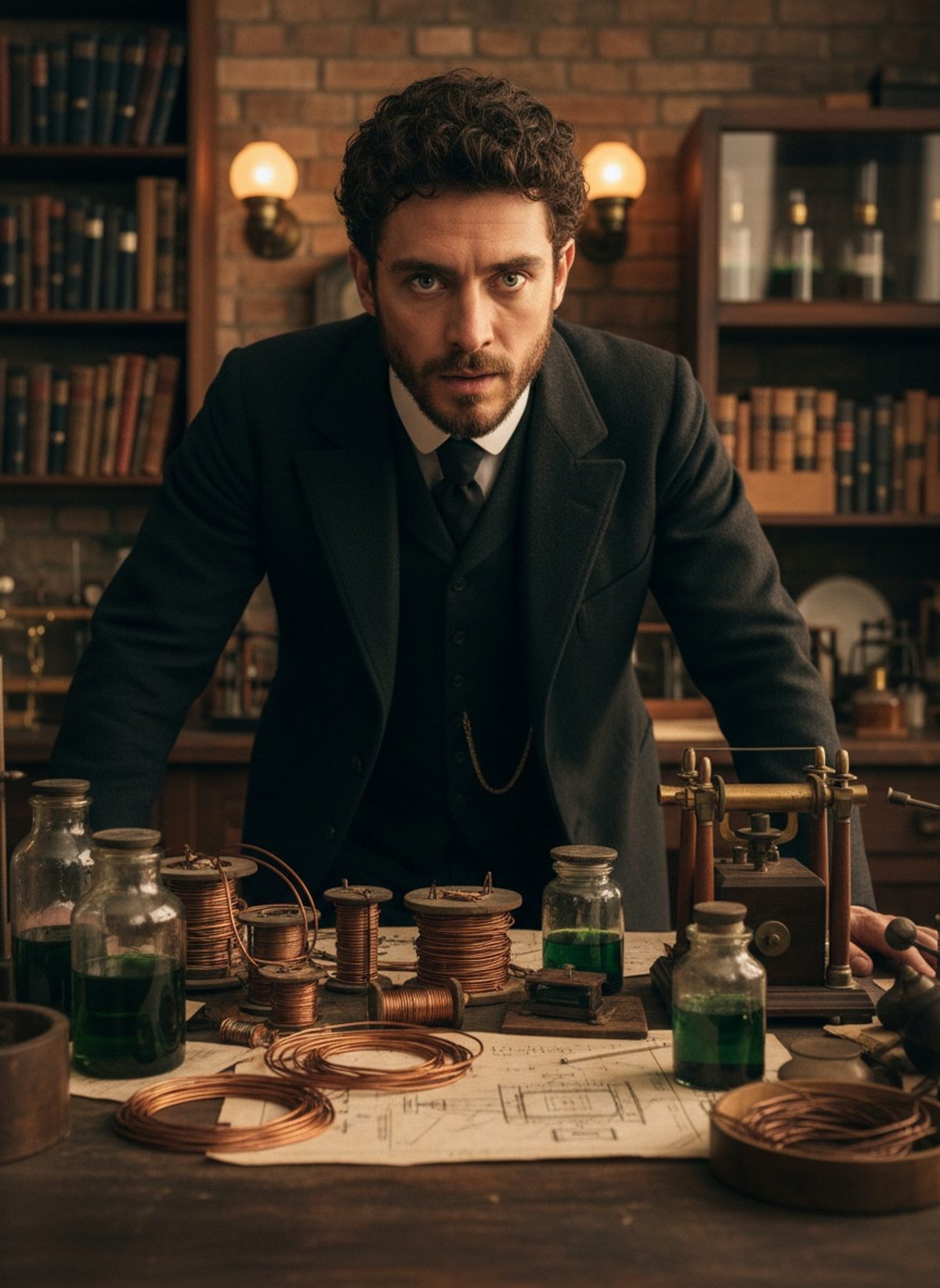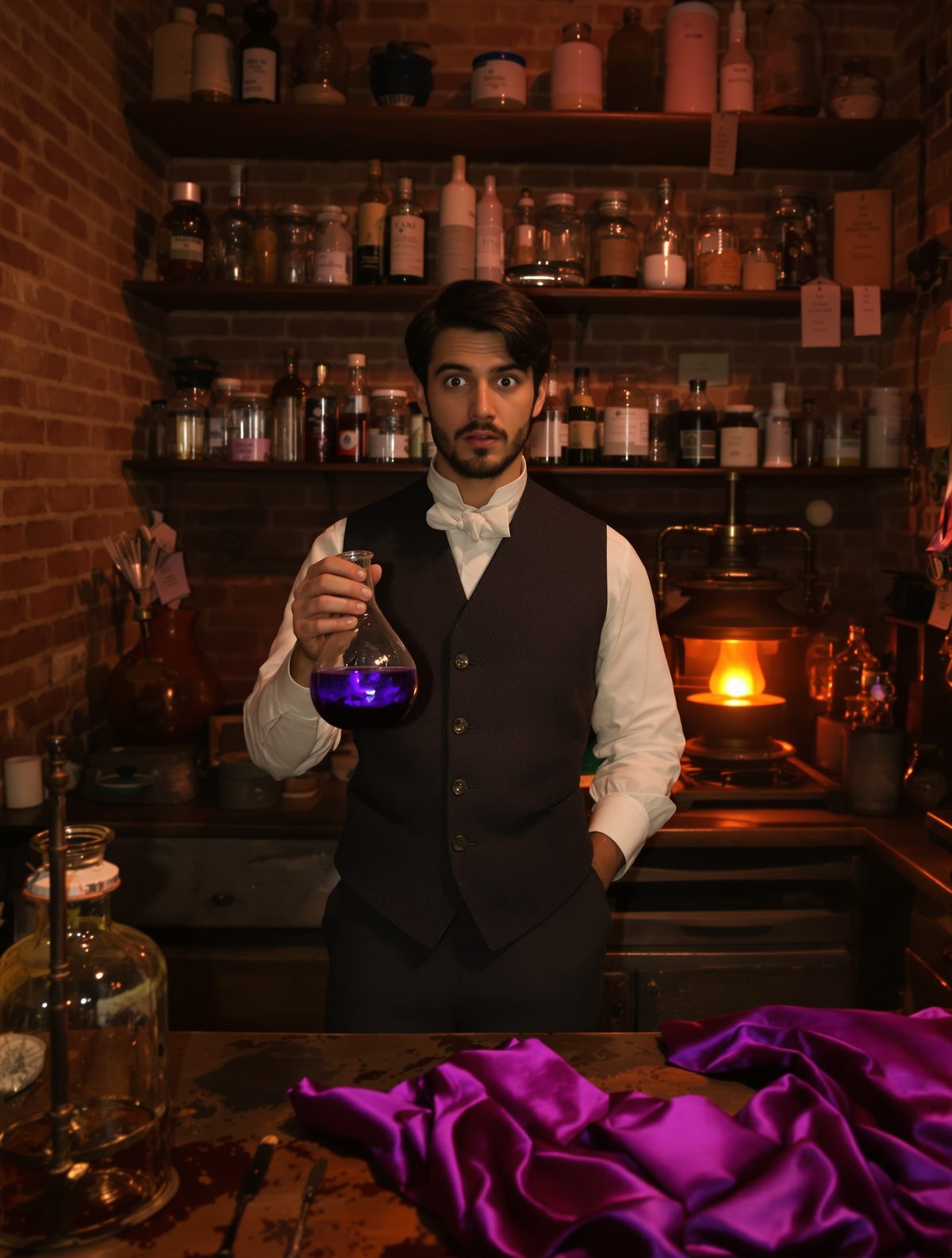
Imagine a spring evening in Victorian London. The year is 1856. Outside, the streets are bustling with the chatter and clamor of city life. But in one dimly lit apartment, an 18-year-old chemistry student named William Perkin is hunched over vials and glassware, striving to make a breakthrough that could save millions from the scourge of malaria. What he doesn't know yet is that his humble attempt to synthesize quinine—a costly and critical treatment for the disease—will inadvertently give birth to a revolution of a different kind. This is the fascinating and unexpected tale of how William Perkin stumbled upon the world's first synthetic dye, transforming not just the color palette of fashion but laying the groundwork for a new era in science and industry.
An Accidental Alchemy
In that modest London laboratory, it wasn't uncommon to find Perkin experimenting late into the night. The young chemist, under the tutelage of the respected German chemist August Wilhelm von Hofmann at the Royal College of Chemistry, had a burning ambition. The problem at hand was the synthesis of quinine, a substance derived from the bark of the Cinchona tree and then the only known effective treatment for malaria. With the British Empire extending its presence in the malarial tropics, a synthetic alternative would be nothing short of revolutionary—and profitable.
Perkin’s attempts, inspired by his observations during the Easter break, seemed frustrating at best. But on this particular evening, he added a bit more aniline to his concoction—a compound he hoped would be a stepping stone to quinine. Instead of the alkaloid he hoped to see, he found himself staring at a dark, oily sludge. It's a testament to his curiosity that Perkin didn’t discard this murky residue immediately. Instead, he did something that would change history: he washed his failure with alcohol. In doing so, Perkin unearthed a vivid purple solution that clung persistently to his fingers. It was a fortuitous, accidental alchemy.
The Birth of a Fashion Rainbow
This serendipitous discovery came during an age known for its drab and dreary color schemes, severely limited by reliance on natural dyes that faded quickly and cost a fortune. Yet, through his discovery, Perkin unlocked the secret to a vibrant and stable shade of purple aptly named mauveine, after the mallow flower. Until that point, purple had been a color exclusively reserved for the wealthiest echelons of society, synonymous with royalty and power, often derived from tyrannical quantities of sea snails or lichens.
Read next: The Day a Miner's Son Gave the World Safe Light
Perkin’s mauveine allowed for mass production. Imagine: almost overnight, garments, ribbons, and accessories began emerging in this rich, majestic hue. Queen Victoria herself donned a mauveine gown in 1862, sealing its fate among the fashionable elite. Mauve madness swept the continent, kicking off a vivid saga known as the “mauveine period,” and cementing Perkin’s place as a name whispered in the corridors of haute couture.
Scientific and Commercial Ripples
What started as a stumble quickly elevated Perkin not only into the fashion world but into the scientific community and business sector. By 1857, at just 19, Perkin obtained a patent for his mauve dye. He then aptly pivoted from scientist to entrepreneur and, with the support of his father and brother, established the commercial-scale production of his new dye.
This was no small feat; it was the dawn of an entirely new industry. From a single accidental discovery arose a sprawling synthetic dye industry, which was a precursor to the modern chemical industry. The ramifications went well beyond fabric—enter the age of synthetics. Pharmaceuticals, plastics, photographs, and more began benefiting from Perkin's paved path. With greater variety and stability, synthetic dyes triggered a cascade of innovation and a paradigm shift in manufacturing and consumer culture.
The Legacy of Mistakes
Perkin’s story is one that moves beyond serendipitous discovery. It is also about embracing mistakes, about the unexpected opportunities lying in the errors we might otherwise disregard. His name might not have become synonymous with malaria treatment, as he initially intended, but his discovery created a vivid new reality for multiple industries. Today, his legacy is both visible in the brilliant spectrum of colors we take for granted and as a cultural symbol that science, no matter how advanced, always leans on curiosity, perseverance, and a brave spirit willing to sift through sludge for its secret treasures.
The Colorful Threads of Tomorrow
Today, as we close the pages of William Perkin's story, it's humbling to consider that a moment of chance in 1856 would become a cornerstone of chemical ingenuity and industrial growth. It challenges us to think: what other unsung discoveries are waiting in darkened corners of labs and studios, potentially vibrant answers to problems old and new?
The world owes more to Perkin's dark sludge than beautifully dyed silks and the explosion of fashion shades. His adventure tickles the imagination and gently reminds us that behind every great innovation is a human story—a glorious mess of ambition, failure, and serendipity. An enduring testament that sometimes, just sometimes, the greatest revolutions come not from perfection, but by coloring outside the lines.