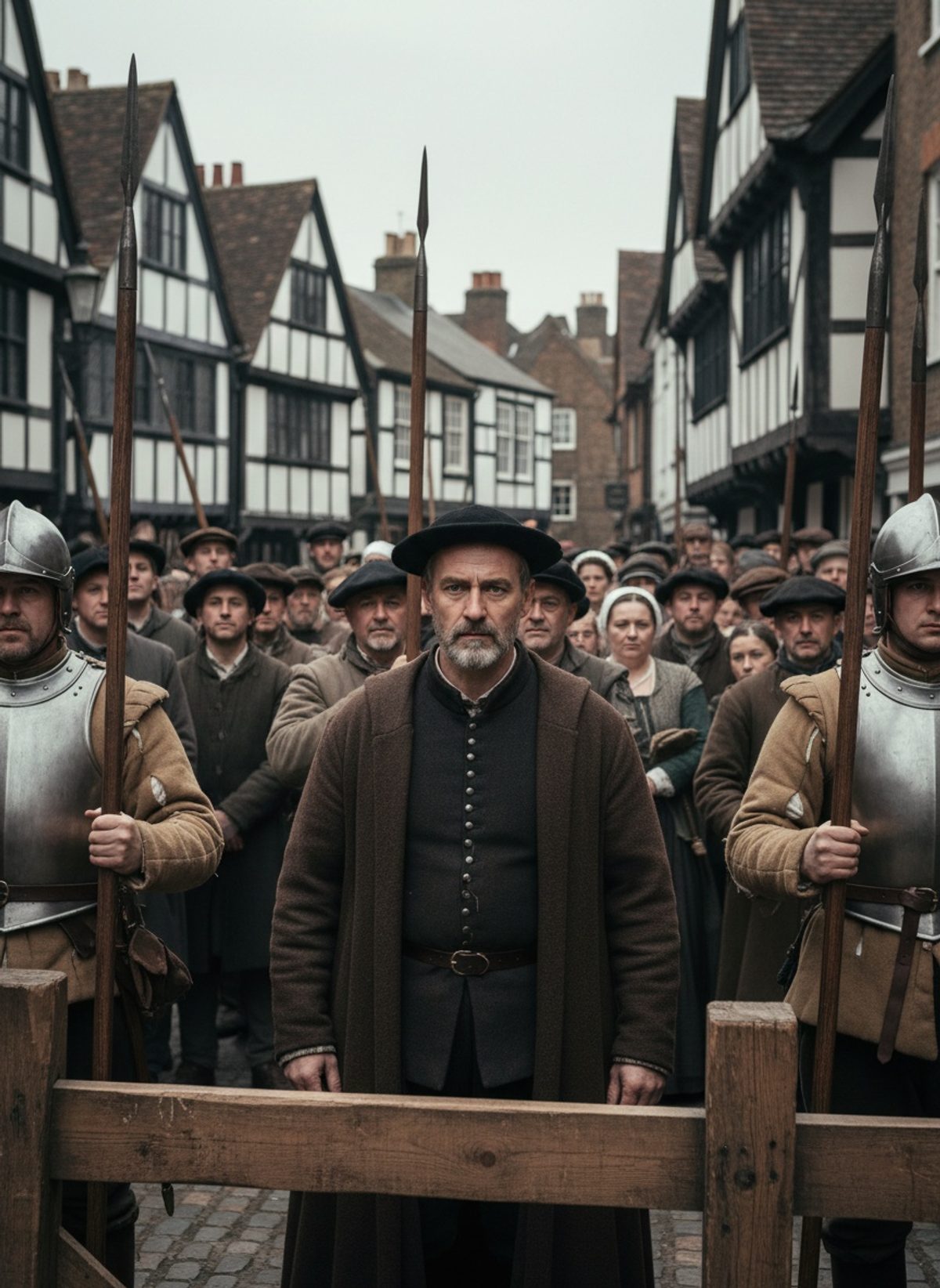
Amidst the solemn, echoing halls of a 16th-century English church, the Holy Bible sat securely confined — literally locked away from the parishioners eager to hear its sacred words. Bound in Latin, it remained as incomprehensible to the average Englishman as the chants of far-off Rome. This overwhelming sense of an unseen but ever-present barrier is the backdrop for one of the most daring and dangerous tales of Tudor England — the story of the indomitable William Tyndale and his mission to transform divine scripture into the common tongue.
The Spark of a Revolutionary Mind
Born around 1494 in the unassuming village of Stinchcombe, Gloucestershire, William Tyndale’s early life didn’t hint at the seismic shift he would herald. Tyndale was a prodigious student, immersing himself in the rigors of theology and linguistics at Magdalen Hall, Oxford — the later heart of Reformation thought. His scholarly pursuits led him to master not just Latin, but also Greek and Hebrew, enabling him to engage with the oldest scriptures in their original forms.
In 1523, upon realizing that his fellow Englishmen lived spiritually shackled by ignorance of God’s word, Tyndale boldly sought support from the Bishop of London to translate the Bible into English. His plea rebuffed, Tyndale resolved not to succumb to ecclesiastical inertia. Instead, he would challenge the very foundations of the Church’s authority, igniting a spark that would eventually blaze throughout England and beyond.
A Bible for the People: The Exodus Begins
By 1524, Tyndale had left England, seeking the freedom to pursue his translation abroad. In the bustling city of Worms — a hub of European intellectual and religious ferment — Tyndale found refuge. Under the shadows of its ancient churches, he deftly translated the New Testament, grounding his work in the trusted Greek texts, rather than relying on the error-riddled Latin Vulgate.
Read next: The Day a Stuart King Walked Calmly to His Own Execution
With the help of the printing press — a revolutionary device that cast printed sheets at a speed and volume unimaginable a generation prior — Tyndale’s English translation of the New Testament was completed in 1525. This clandestine operation involved subterfuge and skill; his infamous Bible, now printed in compact volume format, was primed for smuggling. Hidden within bales of wool and sacks of flour, these banned books infiltrated England, passed hand to eager hand.
The Fury of Kings and Cardinals
As volumes of the Tyndale Bible flowed into the island nation, so too did the rage of England’s elite. King Henry VIII and Cardinal Wolsey, protectors of the faith and status quo, could not abide this defiance. Tyndale’s work not only threatened the clergy’s authority but also the very social order that bound medieval England.
In the face of such peril, Tyndale’s resolve only strengthened. He remarked that he aimed to open even the "ploughboy’s" eyes to God’s word. This vision of a spiritually democratic world clashed spectacularly with a realm that thrived on exclusive privilege. The bishops began feverishly ordering copies to be bought up and burned in public bonfires — all in vain, for every destroyed book seemed to multiply by the hundreds.
The Fugitive’s Final Stand
Across the continent, Tyndale remained a fugitive, evading capture by a threadbare margin. Moving from place to place — Antwerp to Hamburg, then Marburg — his pen never rested, translating and publishing tracts that challenged the clergy’s doctrines.
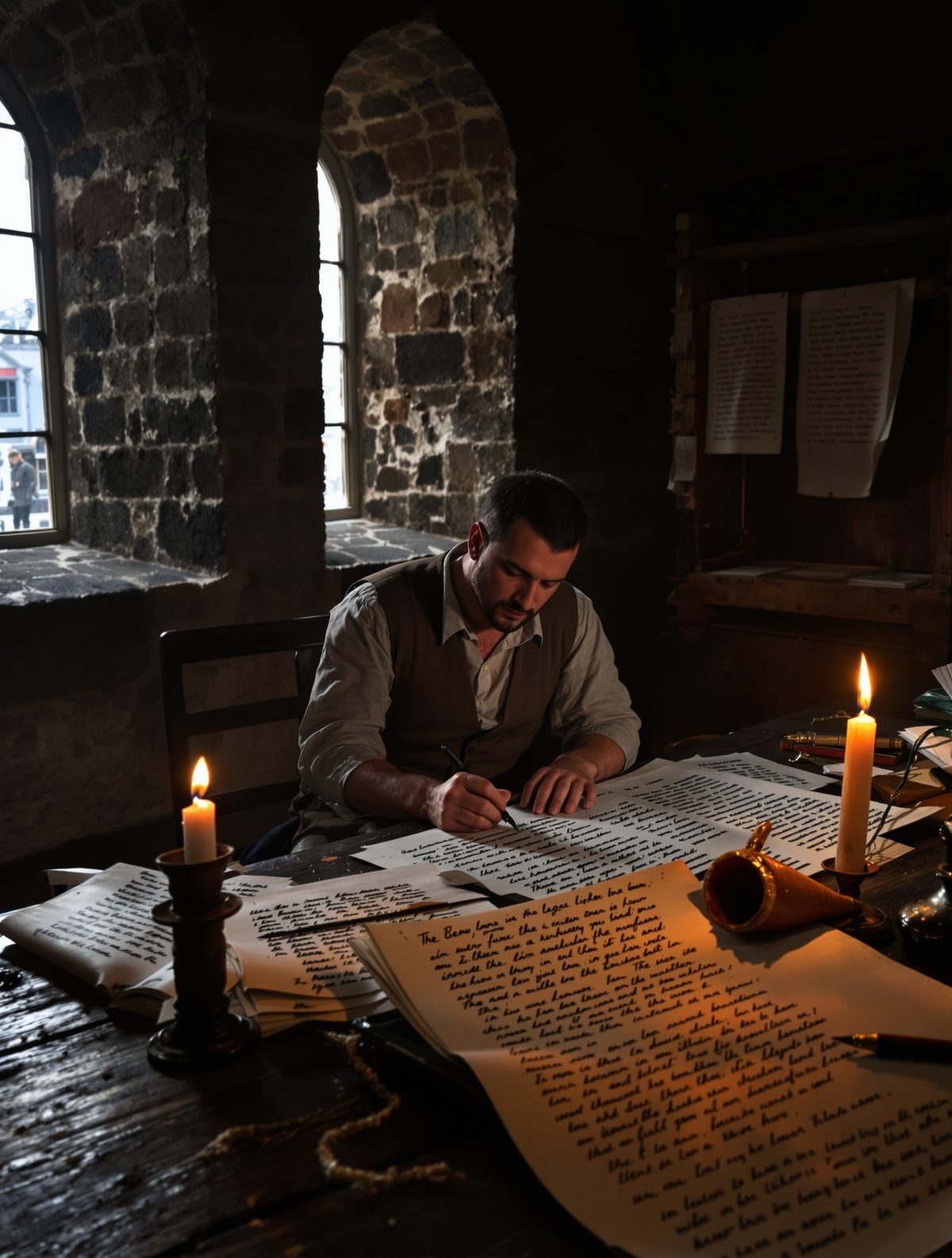
In an unexpected twist, an Englishman named Henry Phillips — motivated by debt and betrayal — infiltrated Tyndale’s circle, ensnaring him through deceit. In May 1535, Tyndale was captured and imprisoned in Vilvoorde Castle near Brussels. For nearly a year and a half, he remained confined in the castle’s damp, oppressive cell.
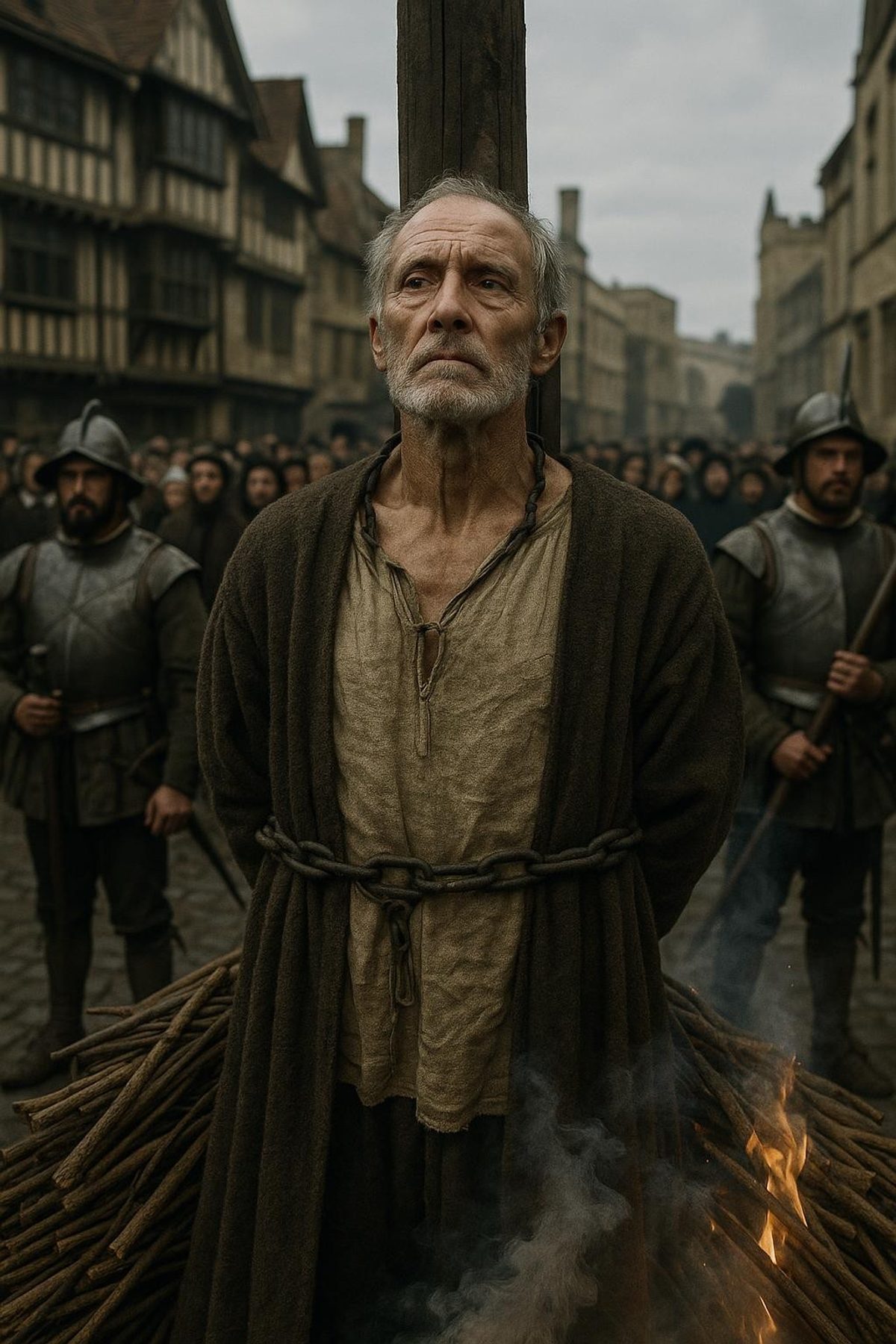
Even in chains, his intellect and spirit shone as he continued to write, imploring the authorities for something as simple as a warmer cloak and his beloved books. Finally, on October 6, 1536, Tyndale was brought to the stake, strangled, and burned. According to witnesses, his last fervent prayer was, “Lord, open the King of England’s eyes.”
Legacy of the Liberated Word
Tyndale’s sacrifice would not be in vain. The ships carrying his incendiary translations docked safely on English shores, igniting a yearning for religious truth that would ripple through generations. Only 75 years later, King James I would commission the eponymous Authorized Version of the Bible — the King James Bible — much of which owes linguistic and theological fidelity to Tyndale’s pioneering work.
Tyndale’s martyrdom stirred the nascent Reformation, leaving an indelible mark on the English tongue and Protestant theology. His translation profoundly influenced the language, rhythm, and literary eloquence of the English language itself, illuminating sacred texts for countless believers.
Today, as we stand on the precipice of the digital era, one cannot help but ponder the power of Tyndale’s rebellion. His story underscores the enduring impact of accessibility and knowledge, echoing throughout history and resonating in the constant quest for truth and understanding.
As we turn the pages of our Bibles, perhaps we might remember the man whose quiet courage unlocked the sacred text for millions, acknowledging that the pursuit of wisdom often comes with formidable costs — but also the most profound rewards.